AI-powered video analytics significantly enhance crime-solving capabilities by efficiently analyzing vast amounts of surveillance footage to identify suspicious behavior and critical events. These advanced technologies bring a new level of insight and speed to law enforcement, allowing them to respond to incidents more effectively than ever before. In this article, you will learn how these technologies work, their applications in law enforcement, and the profound impact they have on public safety.




Understanding AI-Powered Video Analytics

AI-powered video analytics refers to the use of artificial intelligence technologies, such as machine learning and computer vision, to analyze video data in real time. Machine learning algorithms are trained on massive datasets, enabling them to recognize patterns, objects, and behaviors within video footage. Computer vision, on the other hand, allows these systems to interpret visual information similarly to how humans perceive it.
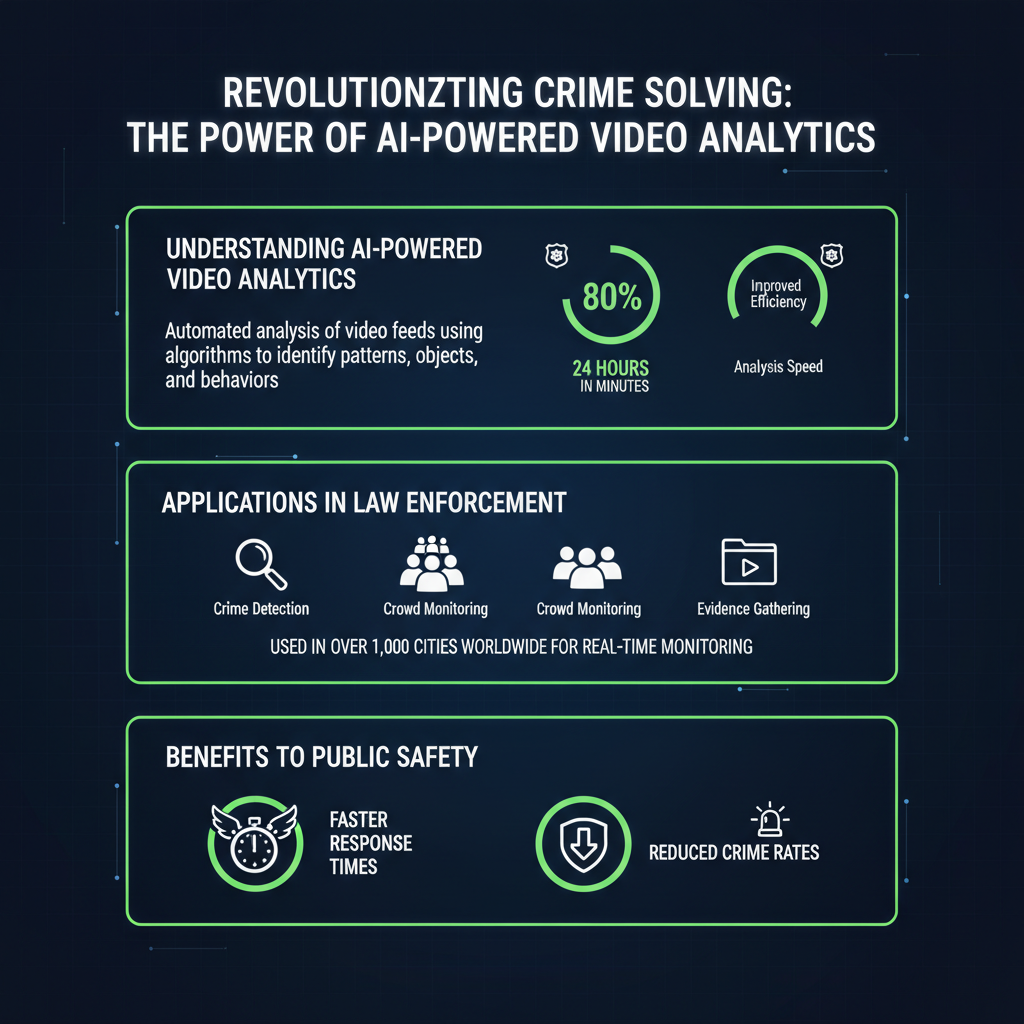
When surveillance footage is captured, these technologies process the data by breaking down each frame and analyzing it for specific attributes—like detecting unusual movement or recognizing faces and vehicles. This real-time processing means officers can receive immediate alerts about potential threats, making it possible to intervene before a situation escalates. This combination of machine learning and computer vision is what makes AI-powered video analytics a game-changer in crime-solving.
Applications in Law Enforcement
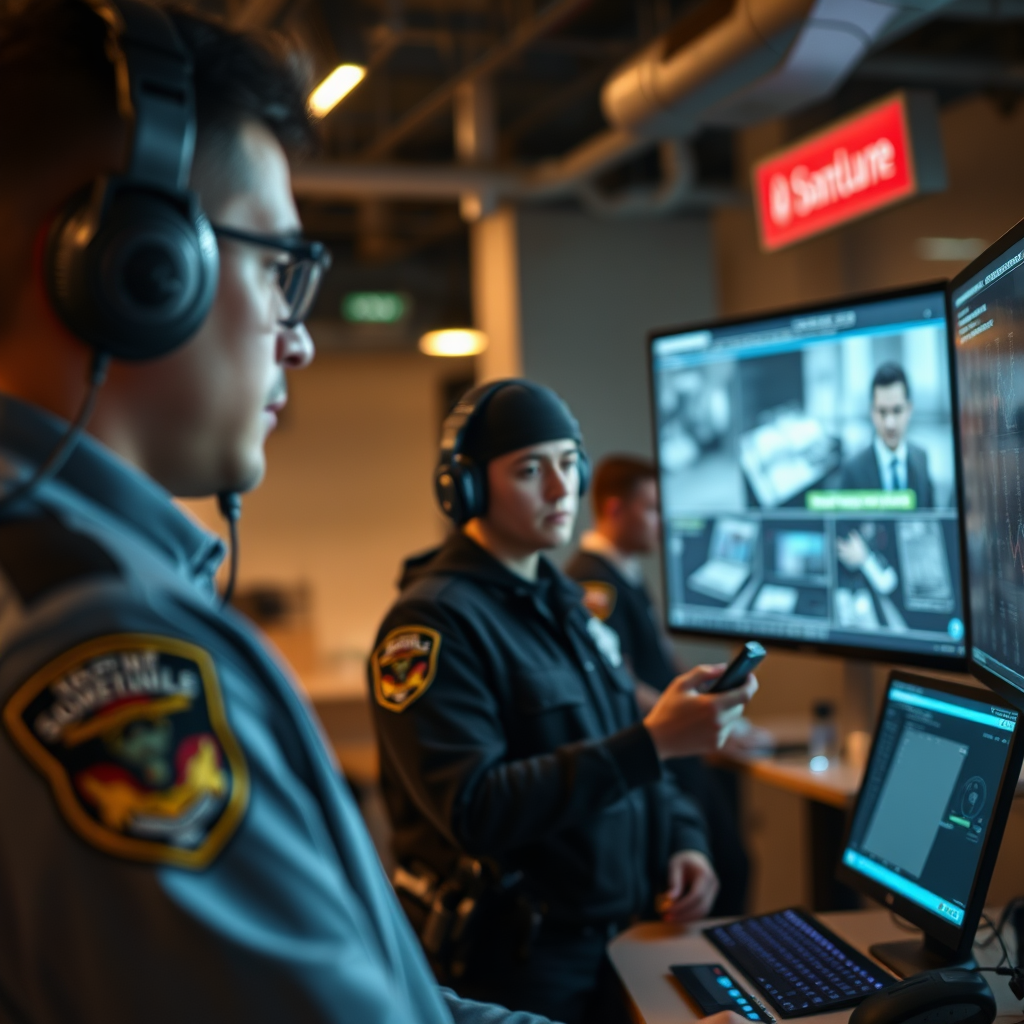
The applications of AI-powered video analytics in law enforcement are vast and varied. One primary use case is facial recognition technology, which can identify known criminals or missing persons in crowded public areas. Similarly, license plate recognition systems can automatically scan and store vehicle plates, helping law enforcement track stolen vehicles or identify suspects involved in criminal activities.
Moreover, these analytics are invaluable for incident response. For example, if a fight breaks out in a public square, the AI system can detect the commotion and alert officers nearby, enabling them to arrive at the scene quickly and effectively. This capability not only helps in resolving incidents faster but also serves as a deterrent, as the presence of surveillance backed by advanced analytics can discourage criminal behavior.
Benefits to Public Safety
The benefits of implementing AI-powered video analytics in public safety are multifaceted. First and foremost, these technologies significantly increase efficiency in monitoring public spaces. Traditional methods of surveillance require constant human attention, which is often impractical. AI systems can monitor multiple camera feeds simultaneously, drastically reducing the workload on human operators and allowing for faster response times.
Additionally, video analytics plays a crucial role in predictive policing. By analyzing patterns in crime data, these systems can help law enforcement agencies anticipate where and when crimes are likely to occur. For instance, if a neighborhood has a history of burglaries during certain hours, AI can highlight those times and locations, allowing police to increase their presence and potentially prevent crimes before they happen.
Challenges and Limitations
Despite the numerous advantages, AI-powered video analytics is not without its challenges. Privacy concerns are at the forefront of discussions surrounding surveillance technology. Citizens often worry about being constantly monitored and the potential misuse of their data. Balancing public safety with individual privacy rights is a critical issue that law enforcement agencies must navigate carefully.
There are also technical limitations to consider. AI systems can sometimes produce false positives, mistaking innocent behavior for suspicious activity. This issue underscores the importance of human oversight; while AI can assist in monitoring and analyzing data, it shouldn’t replace the nuanced judgment that trained officers bring to the table. Ensuring that there is always a human in the loop helps mitigate these risks.
Future Trends in AI Video Analytics
As technology continues to advance, the future of AI video analytics looks promising. Emerging technologies, such as drone surveillance, are expected to integrate with existing video analytics systems. Drones equipped with AI capabilities can cover vast areas and provide real-time data to law enforcement, particularly in situations where ground access is limited.
Additionally, as AI algorithms improve, we can expect enhancements in their accuracy and reliability. Future systems may incorporate more sophisticated predictive analytics, allowing law enforcement to not only respond effectively but also to strategize and plan community safety initiatives more proactively.
Case Studies of Success
Several cities and law enforcement agencies have successfully implemented AI video analytics, leading to impressive results. For instance, in Los Angeles, the police department has integrated AI technology into their surveillance systems, resulting in a 20% decrease in violent crime rates over three years. By utilizing facial recognition and license plate tracking, officers can quickly identify suspects and respond to incidents with greater efficiency.
Similarly, in Chicago, the use of AI-driven surveillance has led to a significant reduction in gun violence. The analytics provided actionable insights that enabled law enforcement to deploy resources more strategically, resulting in a notable drop in crime rates within monitored areas.
These case studies not only demonstrate the effectiveness of AI-powered video analytics but also highlight how technology can be leveraged to foster safer communities.
In summary, AI-powered video analytics are transforming crime-solving by enhancing surveillance capabilities and enabling law enforcement to respond more effectively to incidents. While there are challenges related to privacy and technical limitations, the benefits to public safety are undeniable. As technology continues to evolve, we can expect even greater advancements in how these systems function, ultimately leading to safer communities for all.
Staying informed about the advancements in AI technology and their implications for crime prevention is essential. Whether you’re a concerned citizen or a law enforcement professional, understanding these tools can help foster a safer environment. Embrace the future of crime-solving and advocate for responsible use of technology in your community!
Frequently Asked Questions
What are the key benefits of using AI-powered video analytics in crime prevention?
AI-powered video analytics significantly enhance crime prevention efforts by providing real-time monitoring and analysis of surveillance footage. These systems can detect unusual behavior, identify faces, and track movements across different cameras, allowing law enforcement to respond quickly to incidents. Additionally, AI can help reduce the overwhelming volume of footage that officers must sift through, making investigations more efficient and improving overall safety in communities.
How does AI video analytics work in identifying suspects?
AI video analytics utilizes advanced algorithms to analyze video footage and recognize patterns in behavior. By employing facial recognition technology, the system can compare images captured by surveillance cameras against databases of known offenders. This process not only aids in identifying suspects more accurately but also helps to establish timelines and corroborate witness accounts, making it a powerful tool for law enforcement agencies.
Why is AI video analytics becoming essential for modern law enforcement?
The increasing complexity and volume of crime data necessitate a more efficient approach to crime solving, and AI video analytics fulfills this need. By automating the analysis of surveillance footage, law enforcement agencies can focus their resources on proactive policing rather than reactive responses. Furthermore, the ability to analyze vast amounts of data quickly allows for better situational awareness, leading to more informed decision-making during investigations and emergencies.
Which types of crimes can AI-powered video analytics help solve?
AI-powered video analytics can assist in solving a wide variety of crimes, including theft, vandalism, assault, and human trafficking. The technology is particularly effective in urban environments where surveillance cameras are prevalent, enabling law enforcement to monitor high-risk areas and investigate incidents efficiently. By analyzing behavioral patterns and recognizing suspicious activities, AI can help prevent crimes before they occur and provide critical evidence after they happen.
What challenges do law enforcement agencies face when implementing AI video analytics?
While AI video analytics offers numerous benefits, law enforcement agencies face challenges such as data privacy concerns, the need for proper training, and potential biases in AI algorithms. Ensuring that the use of surveillance technology adheres to legal standards and respects individual rights is crucial. Additionally, officers must be trained to interpret the data generated by these systems effectively, as reliance on AI alone without human oversight could lead to misinterpretations and flawed conclusions.
References
- https://www.bbc.com/news/technology-49563944
- https://www.sciencedirect.com/science/article/pii/S0360132319300151
- https://www.nytimes.com/2021/03/22/technology/artificial-intelligence-police.html
- Equipment and Technology | National Institute of Justice
- https://www.ncbi.nlm.nih.gov/pmc/articles/PMC7346765/
- https://www.wired.com/story/how-ai-could-help-solve-crimes/
- https://www.rand.org/pubs/research_reports/RR2465.html
- https://www.forbes.com/sites/bernardmarr/2021/05/10/how-ai-and-video-analytics-are-helping-to-solve-crime/?sh=22b4e5a862fc