Creating immersive 360-degree educational videos is significantly enhanced by artificial intelligence, which streamlines production, personalizes content, and improves viewer engagement. AI technologies are transforming the landscape of educational video creation, making learning experiences more dynamic and accessible. With the integration of AI, educators can produce captivating content that caters to diverse learning styles, enhances interactivity, and ultimately fosters a more enriching educational environment.
Understanding 360-Degree Educational Videos

360-degree educational videos are immersive visual experiences that allow viewers to explore a scene from all angles, giving them a sense of presence and engagement that traditional videos cannot offer. These videos are typically shot with specialized cameras that capture panoramic views and can be viewed on various devices, including virtual reality headsets, smartphones, and computers. The key features of 360-degree videos include interactivity, where viewers can choose their perspective and navigate through the content, and a more profound emotional connection, as learners feel like they are part of the environment.
The benefits of immersive learning experiences for students are numerous. Research shows that engagement levels increase significantly when learners can interact with content in a meaningful way. For example, students studying environmental science can virtually explore a rainforest, seeing the ecosystem’s complexity firsthand, which can lead to better retention of information and a deeper understanding of the subject matter. The immersive quality of 360-degree videos helps to create memorable learning experiences, catering to various learning styles and encouraging active participation.
The Impact of AI on Video Production
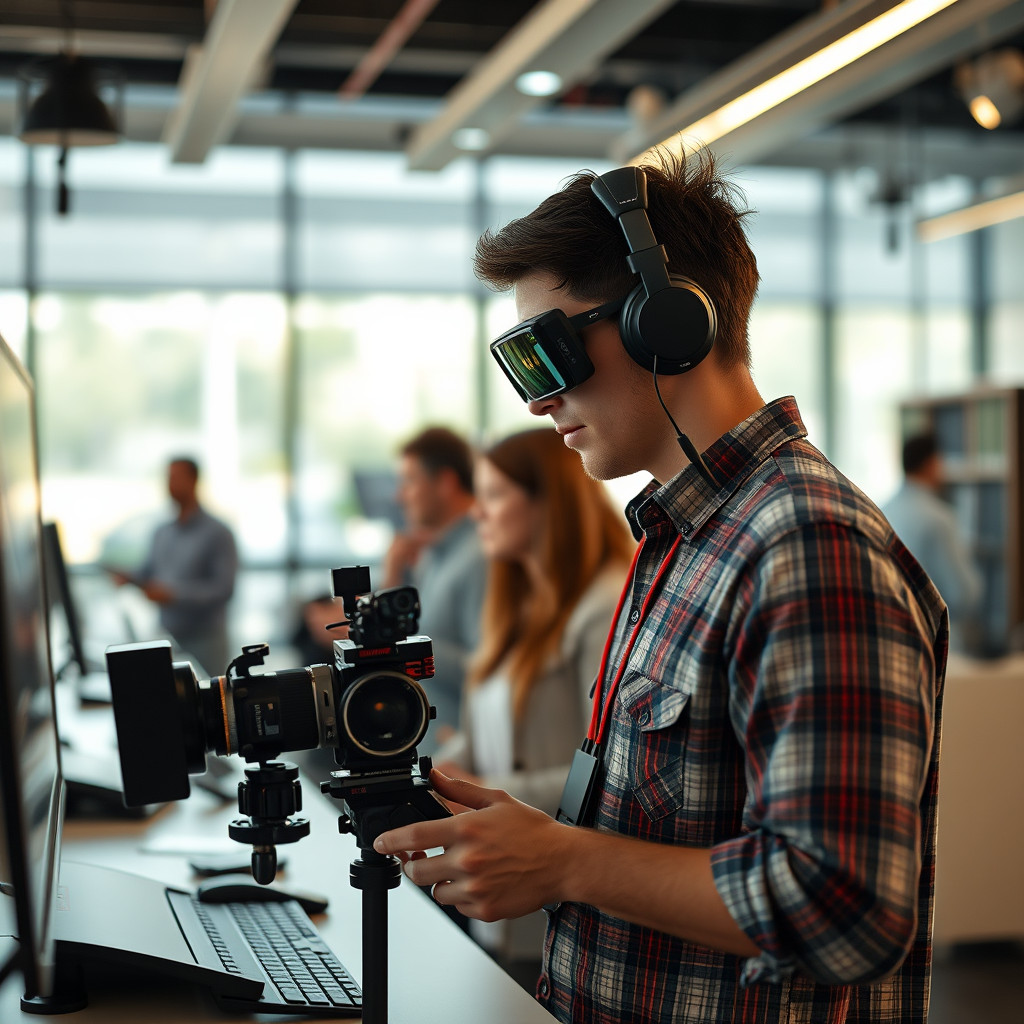
Artificial intelligence streamlines the video production process, making it more efficient and less time-consuming. AI tools can automate various aspects of video editing, such as cutting, color correction, and sound mixing, which traditionally require substantial manual effort. This automation allows educators and content creators to focus on the creative aspects of video production rather than getting bogged down in technical details.
Additionally, AI-driven analytics enhance content relevance and quality by analyzing viewer engagement data. These analytics can provide insights into which parts of a video hold viewers’ attention and which sections may lead to disengagement. For instance, AI can track how long viewers stay engaged with specific segments of a video, allowing educators to adjust their content accordingly. By leveraging this data, creators can produce videos that are not only visually appealing but also resonate with their audience, ensuring a higher quality learning experience.
Personalization and Adaptive Learning
One of the most exciting applications of AI in education is its ability to tailor content to individual learning styles. With AI, educational platforms can analyze a learner’s progress, preferences, and performance metrics to deliver customized content that suits their unique needs. This personalization is particularly crucial in 360-degree educational videos, where different learners may benefit from different perspectives or types of interaction.
For example, platforms like Smart Sparrow use AI to create adaptive learning experiences that adjust in real time based on student feedback and performance. In the context of 360-degree videos, this means that a student struggling with a concept might receive additional, targeted content that reinforces that specific topic within the immersive environment. This level of personalization helps to ensure that each learner has the best chance of success, making education more inclusive and effective.
Enhancing Viewer Engagement
AI also plays a vital role in enhancing viewer engagement through various interactivity techniques. For instance, AI algorithms can enable branching narratives in 360-degree videos, allowing viewers to make choices that impact the storyline. This interactivity keeps learners engaged and encourages them to explore different outcomes. By actively involving students in their learning process, educators can foster a sense of ownership and excitement about the material.
Several case studies highlight the effectiveness of AI-enhanced content in boosting engagement. For instance, a pilot program at a university that incorporated AI-driven 360-degree videos into its curriculum reported a 40% increase in student participation compared to traditional teaching methods. Students were not only more engaged but also showed improved test scores and retention rates. These findings underscore the potential of AI to transform educational experiences and keep learners motivated.
Challenges and Considerations
While the integration of AI in educational video creation offers many advantages, it also comes with challenges. One potential drawback is the over-reliance on AI tools, which might limit the creative input of educators and content creators. If AI systems take over too much of the production process, there’s a risk that videos may lack the personal touch and creativity that human creators bring to the table.
Moreover, ethical considerations surrounding AI-generated content must be addressed. Issues such as data privacy, bias in AI algorithms, and the potential for misinformation are concerns that educators and content creators must navigate carefully. Ensuring that AI tools are used responsibly and ethically is paramount for maintaining trust and integrity in educational content.
The Future of AI in Education
Looking ahead, the future of AI technologies in immersive education appears promising. As AI continues to evolve, we can expect advancements in machine learning algorithms that will allow for even more sophisticated personalization and engagement strategies. Innovations such as improved natural language processing may enable AI to create more interactive narratives that feel natural and intuitive for learners.
Upcoming trends in 360-degree video production may include enhanced integration with augmented reality (AR) and virtual reality (VR) experiences, allowing learners to interact with their environment in real time. These developments could lead to unprecedented learning opportunities, blending the physical and digital worlds in ways that were previously unimaginable.
As technology continues to evolve, educators and content creators should embrace these innovations to improve educational outcomes. By exploring the latest AI tools and considering how they can elevate educational video projects, we can create learning experiences that are not only engaging but also deeply impactful.
In summary, AI is revolutionizing the creation of 360-degree educational videos by enhancing production efficiency, personalizing learning experiences, and increasing viewer engagement. The combination of immersive content and intelligent algorithms has the potential to transform how we teach and learn. By harnessing the power of AI, educators can craft captivating educational experiences that resonate with diverse learners and foster a love for knowledge.
Frequently Asked Questions
What is the role of AI in creating immersive 360-degree educational videos?
AI plays a crucial role in enhancing the production of immersive 360-degree educational videos by automating various processes such as video stitching, content analysis, and scene recognition. It can optimize the video quality through machine learning algorithms, ensuring clearer visuals and more engaging experiences. Additionally, AI can assist in personalizing educational content based on the viewer’s preferences and learning styles, making the experience more interactive and effective.
How does AI enhance viewer engagement in 360-degree educational videos?
AI enhances viewer engagement in 360-degree educational videos by utilizing data analytics to tailor content to individual learning preferences and behaviors. It can create interactive elements, such as quizzes and branching scenarios, allowing viewers to actively participate in their learning journey. By analyzing viewer interactions, AI can suggest related content, keeping learners invested and motivated throughout the educational experience.
Why should educators use AI-generated 360-degree videos in their teaching methods?
Educators should consider using AI-generated 360-degree videos because they provide a highly immersive learning environment that can significantly boost retention and understanding of complex subjects. These videos allow students to explore topics in a virtual space, enhancing their observational and analytical skills. Furthermore, the integration of AI enables scalable production of high-quality content that can adapt to various educational needs and curricula, making learning more accessible for diverse student populations.
What are the best practices for integrating AI in the production of 360-degree educational videos?
The best practices for integrating AI in the production of 360-degree educational videos include utilizing AI tools for automated video editing and optimizing content delivery based on audience analytics. It’s essential to ensure that the educational objectives are clear and that AI-driven features, such as interactive elements, are user-friendly and enhance learning rather than distract from it. Regularly updating content based on viewer feedback and performance metrics will also help maintain engagement and educational value.
Which industries can benefit most from AI-driven 360-degree educational videos?
Various industries can benefit from AI-driven 360-degree educational videos, including healthcare, manufacturing, education, and tourism. In healthcare, these videos can simulate medical procedures for training purposes, while in manufacturing, they can provide immersive safety training experiences. The education sector can leverage these videos for remote learning and enhanced student engagement, while the tourism industry can use them to showcase destinations in an interactive format, appealing to potential travelers before they book.
References
- 360-degree video
- https://www.educause.edu/research-and-publications/books/educause-review/2019/november/the-potential-of-virtual-reality-in-higher-education
- https://www.edutopia.org/article/how-360-video-immersive-learning
- https://www.nsf.gov/news/special_reports/ai/index.jsp
- Frontiers | Expansive Learning for Teacher Educators- The Story of the Norwegian National Researc…
- https://www.sciencedirect.com/science/article/pii/S0360131519300146
- https://www.techlearning.com/how-to/12-ways-to-use-360-video-in-the-classroom
- https://www.npr.org/sections/ed/2020/09/23/916693489/immersive-education-using-virtual-reality-to-enhance-learning
- https://www.educationcorner.com/what-is-immersive-learning.html
- https://www.theguardian.com/education/2020/nov/30/how-immersive-technology-can-enhance-learning-in-the-classroom