The rise of AI-powered search engines is revolutionizing the way we access information online, rendering traditional web search methods increasingly outdated. These innovative search solutions leverage advanced algorithms and machine learning to deliver more accurate, personalized results that cater to individual user needs. As a result, users can enjoy a more efficient and engaging search experience, making it essential to understand how these technologies work and what they mean for the future of online searching.
Understanding AI-Powered Search Engines

AI-powered search engines utilize sophisticated algorithms that analyze user queries in real-time, allowing them to deliver highly relevant results that match user intent. Unlike traditional search engines that primarily rely on keyword matching, AI systems focus on understanding the context and nuances of queries. This means that when users ask open-ended questions or use natural language, AI can interpret their inquiries more effectively.
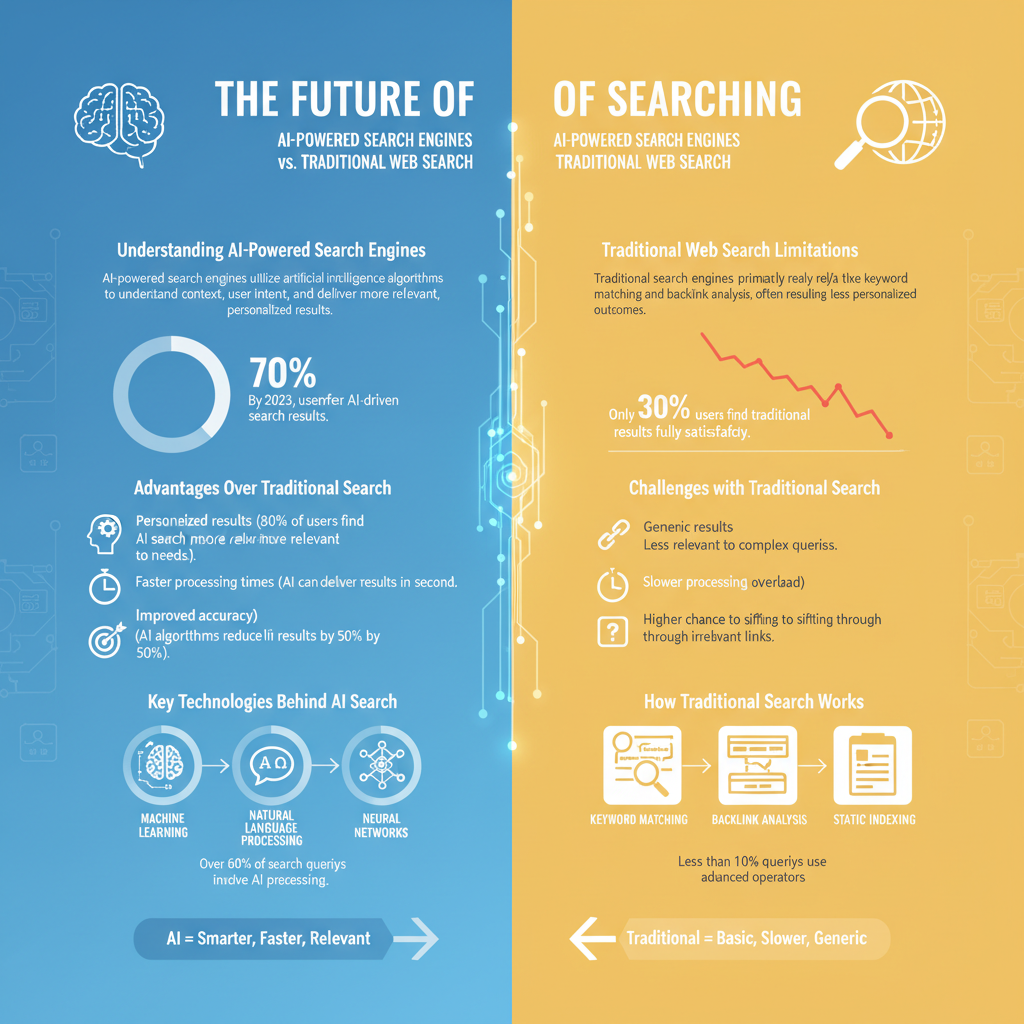
Furthermore, machine learning plays a crucial role in enhancing search accuracy. These systems continuously learn from user interactions and behavior, adapting over time to provide increasingly tailored results. For example, if a user frequently searches for vegan recipes, the AI will recognize this pattern and prioritize similar content in future searches, offering a more customized experience.
Advantages Over Traditional Search

One of the most significant advantages of AI-powered search engines is their speed and efficiency. AI algorithms can process vast amounts of data in mere milliseconds, allowing users to receive results almost instantaneously. This contrasts sharply with traditional search engines, which may take longer to sift through data and may not provide the most relevant results.
Additionally, AI’s ability to deliver personalized results is a game changer. By analyzing individual user profiles, preferences, and past interactions, AI can serve up content that is not only relevant but also aligns with a user’s unique interests. For example, a user who frequently searches for travel blogs will receive recommendations that reflect their travel interests, making their online experience much more enjoyable and efficient.
Key Technologies Behind AI Search
Two key technologies driving the success of AI-powered search engines are Natural Language Processing (NLP) and Semantic Search. NLP enables these search engines to understand and interpret user queries in a way that mimics human understanding. This means they can discern the intent and context behind a question, leading to better result accuracy. For instance, when a user types “best Italian restaurants nearby,” an AI-powered search engine understands that they are looking for dining options in their vicinity rather than generic information about Italian cuisine.
On the other hand, Semantic Search focuses on the underlying meaning behind search queries rather than just matching keywords. This approach allows the search engine to consider factors such as synonyms, related concepts, and user context, leading to richer and more meaningful search results. For example, if someone searches for “how to bake a cake,” the AI might provide links to recipes, video tutorials, and even baking tips, creating a comprehensive resource for the user.
Impact on User Experience
The enhanced capabilities of AI-powered search engines lead to a significantly improved user experience. With more accurate and relevant search results, users are likely to feel satisfied with the information they receive, reducing the time spent sifting through irrelevant content. This improvement in user experience is essential in an age where attention spans are shorter, and users expect quick access to the information they seek.
Moreover, the integration of voice search and virtual assistants is becoming increasingly prevalent in AI-powered search engines. Users can now speak their queries instead of typing, making the search process even more convenient. For instance, asking a voice assistant, “What’s the best way to remove a stain from a shirt?” allows for hands-free searching and immediate access to practical solutions, further enhancing the overall user experience.
Challenges and Considerations
However, the rise of AI-powered search engines is not without its challenges. One major concern revolves around privacy issues. The collection and utilization of personal data to provide tailored search results can raise ethical questions about user consent and data security. Users may feel uneasy knowing that their searches are being tracked and analyzed, leading to a demand for greater transparency and control over personal information.
Another consideration is the potential for users to become overly reliant on AI technology. As search engines become more intuitive and capable of anticipating user needs, there’s a risk that critical thinking skills may diminish. Users might expect AI to provide answers for them without engaging in the problem-solving process themselves. Encouraging users to strike a balance between leveraging AI technology and developing their analytical skills is crucial for maintaining cognitive engagement.
The Future of Search Engines
Looking ahead, the integration of AI with emerging technologies such as augmented reality (AR) and the Internet of Things (IoT) will further revolutionize how we search for information. Imagine being in a new city and using AR glasses to overlay information about nearby attractions based on your preferences—this blend of AI and AR could transform the search experience into something immersive and interactive.
Furthermore, continuous advancements in AI are likely to lead to even more intuitive and user-friendly search experiences. As AI becomes better at understanding human language, emotions, and context, users can expect an increasingly seamless interaction with search engines. This evolution will not only enhance the way information is retrieved but also foster deeper connections between users and the digital landscape.
The emergence of AI-powered search engines is reshaping the landscape of information retrieval, pushing traditional search methods to the sidelines. As users become accustomed to faster, more personalized results, it’s crucial to stay informed about these advancements and adapt to the evolving digital world. By embracing AI search technologies, we can enhance our online experience and navigate the vast sea of information with ease. So why not explore these powerful tools today and see how they can elevate your search experience?
Frequently Asked Questions
What are the main benefits of AI-powered search engines over traditional web search?
AI-powered search engines offer several advantages over traditional web search. They utilize advanced algorithms and machine learning to deliver more relevant and personalized search results, improving the user experience. Additionally, AI can analyze vast amounts of data quickly, allowing for real-time updates and more accurate information retrieval, which traditional search engines may struggle to achieve.
How do AI-powered search engines understand user intent better than traditional search engines?
AI-powered search engines leverage natural language processing (NLP) and machine learning techniques to interpret user queries more effectively. By analyzing context, user behavior, and historical data, these search engines can discern the underlying intent behind a query, leading to more relevant results. This contrasts with traditional search engines that often rely on keyword matching, which may not fully capture user intent.
Why are businesses increasingly adopting AI-powered search engines for their websites?
Businesses are increasingly adopting AI-powered search engines to enhance user engagement and improve conversion rates. By providing more accurate and personalized search results, these engines can help users find products or information faster, leading to higher satisfaction and increased sales. Furthermore, AI tools can gather insights on user behavior, which can inform marketing strategies and improve overall website performance.
Which industries benefit the most from implementing AI-powered search technology?
Industries such as e-commerce, healthcare, finance, and education benefit significantly from AI-powered search technology. E-commerce sites use it for product recommendations and improved navigation, while healthcare applications can help patients find relevant information quickly. In finance, AI can assist users in navigating complex data, and in education, it enhances learning by providing tailored resources based on student needs.
What challenges do companies face when transitioning from traditional search engines to AI-powered search engines?
Companies may encounter several challenges when transitioning to AI-powered search engines, including the high initial investment in technology and the need for skilled personnel to manage AI systems. Additionally, there may be concerns regarding data privacy and the ethical use of AI algorithms. Organizations must also ensure that their existing data is clean and structured for optimal AI performance, which can require significant effort and resources.
References
- Artificial intelligence
- https://www.bbc.com/news/technology-66050718
- https://www.nytimes.com/2023/03/14/technology/ai-search-engines.html
- https://www.sciencedirect.com/science/article/pii/S1877050919319710
- https://www.forbes.com/sites/bernardmarr/2023/05/02/how-ai-is-revolutionizing-search-engines/?sh=7b5a3b2e5a8a
- https://www.theguardian.com/technology/2023/mar/15/how-ai-is-changing-the-way-we-search-the-internet
- https://www.microsoft.com/en-us/research/publication/understanding-the-impact-of-ai-on-web-search/
- https://www.aarp.org/research/topics/technology/info-2023/ai-search-engines.html
- https://www.wired.com/story/how-ai-is-replacing-google-search/