

With a groundbreaking advancement in battery technology, smartphones can now last up to three days on a single charge. This innovation not only enhances user convenience but also addresses long-standing concerns about battery life and performance. Imagine not having to scramble for a charger during a busy day or worrying about your battery dying while you’re out and about! This article delves into the details of this breakthrough, its implications for users, and what it means for the future of mobile technology.
The Breakthrough Technology

The new battery technology, known as solid-state batteries, has made significant strides in recent years, evolving from laboratory prototypes to commercially viable solutions. Unlike traditional lithium-ion batteries, which use liquid electrolytes, solid-state batteries employ a solid electrolyte, offering greater energy density and safety. This development allows for more energy to be stored in a smaller space, which is crucial for devices where size and weight matter.
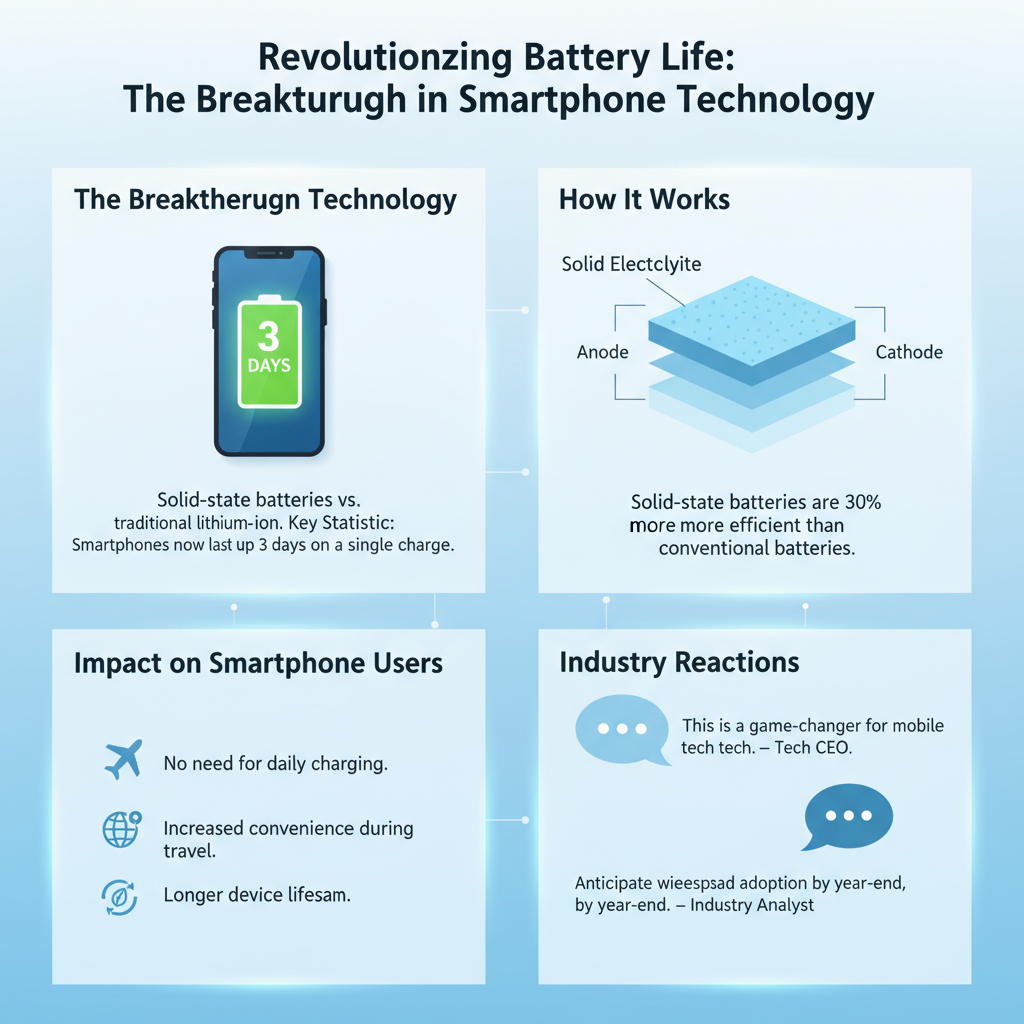
Not only do solid-state batteries promise longer life, but they also come with improved thermal stability, which reduces the risk of overheating and potentially catastrophic failures. Major tech companies have been investing heavily in this technology, as it allows for faster charging times and longer lifespans—key factors that consumers increasingly demand. For instance, some prototypes showcase the ability to charge 80% in just 15 minutes, a game-changer for those always on the go.
How It Works

At the heart of this breakthrough is the science behind solid-state batteries. Traditional batteries rely on liquid electrolytes that can be unstable, especially at high temperatures. By using a solid electrolyte, manufacturers can create a battery that is not only more efficient but also safer. The solid electrolyte facilitates faster ion movement, which translates to quicker charging and discharging cycles.
The materials used in solid-state batteries are also noteworthy. Many manufacturers are experimenting with advanced materials like lithium sulfide or sodium-ion compounds, which can outperform conventional options. These materials are not only more efficient but also more cost-effective in the long run, making solid-state batteries a sustainable choice for the future. Furthermore, research is ongoing to enhance the recharge cycle and overall lifespan, with some estimates suggesting that these new batteries could last up to 10 years.
Impact on Smartphone Users
For smartphone users, the implications of extended battery life are profound. Imagine being able to use your device for three full days without needing to plug it in. This means more time for streaming videos, gaming, or using productivity apps without the constant worry of finding a power outlet. Frequent travelers and outdoor enthusiasts will particularly benefit from this technology, as it reduces the need for power banks and chargers during trips.
Moreover, longer battery life could significantly change how we interact with our devices. Users might feel more confident in using power-hungry applications without the fear of rapid battery drain. This could lead to an increase in smartphone features that rely on constant connectivity, such as augmented reality and advanced gaming, ultimately enriching the user experience.
Industry Reactions
The tech industry has reacted positively to the news of this battery breakthrough. Experts are praising the potential of solid-state batteries to revolutionize mobile technology, with many noting that this could be the most significant advancement since the introduction of lithium-ion batteries. Analysts predict that this technology could lead to a new wave of innovation in not just smartphones, but also electric vehicles and wearable technology.
Major smartphone manufacturers are already exploring partnerships with battery technology firms to integrate solid-state batteries into their upcoming models. Companies like Apple and Samsung have been rumored to be in advanced discussions, with expectations that we may see the first smartphones utilizing this technology as early as next year. The competitive landscape of the smartphone market is likely to shift dramatically as brands race to adopt this cutting-edge technology.
Future Trends in Battery Technology
As we look to the future, the implications of this breakthrough extend beyond just smartphones. The success of solid-state batteries could catalyze research into even more advanced energy storage solutions, such as lithium-sulfur or even magnesium-based batteries. These alternative technologies promise to deliver even higher energy densities and longer lifespans, potentially leading to a future where devices last a week or more on a single charge.
Additionally, the push for sustainability will likely drive innovations in battery recycling methods, allowing for more efficient recovery of valuable materials. As the world becomes increasingly conscious of environmental issues, the development of eco-friendly battery solutions will be critical for manufacturers looking to maintain consumer trust and loyalty.
Consumer Tips for Maximizing Battery Life
While the new battery technology promises to extend your smartphone’s life to three days, there are still practical steps you can take to maximize your device’s battery health. First, keep your software updated; manufacturers often release optimizations that can enhance battery performance.
Second, consider adjusting your brightness settings and using battery saver modes when possible. Reducing the number of apps running in the background can also contribute to battery longevity. It’s wise to avoid extreme temperatures, as both cold and heat can negatively impact battery health. Lastly, if you’re fortunate enough to own a device with this new technology, be sure to follow any specific care guidelines provided by the manufacturer to ensure your battery lasts as long as possible.
With this significant advancement, smartphone users can look forward to a more convenient and reliable experience. The implications of this technology extend beyond just longer battery life; it could reshape the entire mobile industry. Keep an eye on developments as manufacturers begin to adopt this new technology, and consider how it might change your smartphone habits in the near future. The future of mobile technology is bright, and we can’t wait to see how these innovations will enhance our daily lives!
Frequently Asked Questions
What are the key features of the new battery technology that extends phone life to 3 days?
The groundbreaking battery technology utilizes advanced lithium-sulfur chemistry, which significantly enhances energy density compared to traditional lithium-ion batteries. This innovation allows smartphones to store more power in a smaller footprint, resulting in extended battery life of up to three days on a single charge. Additionally, the new batteries are designed to be more efficient with energy usage, reducing the frequency of charging and improving overall device performance.
How does this new battery technology affect smartphone charging times?
With the implementation of this advanced battery technology, charging times are expected to improve dramatically. The new batteries can support rapid charging capabilities, meaning users can attain a significant charge in a shorter period. This convenience allows for quick top-ups throughout the day, ensuring that even with extended life, users can maintain their devices with minimal downtime.
Why is extending phone battery life to 3 days important for users?
Extending phone battery life to three days addresses a significant pain point for many users: battery anxiety. With longer-lasting batteries, users can rely on their devices for longer periods without the constant need to recharge, which is especially beneficial for those who travel, work remotely, or use their phones heavily throughout the day. This advancement can enhance productivity, reduce stress, and improve the overall user experience.
What types of smartphones are likely to feature this new battery technology?
Major smartphone manufacturers are currently exploring the integration of this new battery technology into their upcoming models. Flagship devices from brands like Apple, Samsung, and Google are likely candidates, as these companies continuously seek to innovate and improve user experiences. Additionally, mid-range smartphones may also benefit from this technology as it becomes more widely available, making it accessible to a larger audience.
Which brands are leading the charge in developing this breakthrough battery technology?
Several tech companies and research institutions are at the forefront of developing this innovative battery technology. Brands like Tesla and Panasonic are heavily investing in lithium-sulfur research, while established smartphone manufacturers such as Samsung and Apple are collaborating with battery technology startups. These partnerships are essential to ensure that the new battery technology can be effectively implemented and scaled for consumer devices in the near future.
References
- https://www.bbc.com/news/technology-58057666
- https://www.sciencedirect.com/science/article/pii/S2211285521000638
- https://www.nature.com/articles/s41560-020-00709-6
- https://www.reuters.com/technology/battery-technology-innovation-promise-longer-lasting-devices-2021-08-30/
- https://www.forbes.com/sites/bernardmarr/2021/09/06/the-future-of-battery-technology/
- https://www.wired.com/story/battery-technology-advances/
- https://www.nytimes.com/2021/09/02/technology/battery-life-smartphones.html
- https://www.energy.gov/articles/battery-technology-and-its-future