
Dolby Vision vs HDR10 on PS5 comes down to one question: which format should you enable for the best picture on your TV? If your display supports Dolby Vision, choose Dolby Vision for more consistent highlights, richer contrast, and better tone mapping across games. If it doesn’t, HDR10 is the safe, broadly compatible choice that still delivers a strong upgrade over standard HDR.




If your TV supports Dolby Vision, use Dolby Vision on PS5 for the most consistent HDR look across different scenes; if it doesn’t, choose HDR10 because it’s the most widely supported baseline HDR format. Dolby Vision and HDR10 both use HDR color and brightness techniques on the PS5, but they differ in how HDR metadata is handled—dynamic scene-by-scene instructions (Dolby Vision) versus static whole-video instructions (HDR10)—which affects tone mapping, highlight detail, and overall stability.
Dolby Vision on PS5: What It Does

Dolby Vision on PS5 is designed to deliver more consistent HDR tone mapping because it can adjust settings scene-by-scene. In practice, that means your TV receives dynamic instructions for contrast and brightness mapping, which often helps preserve both bright highlights and deep shadow detail without as much “guessing” from the display.
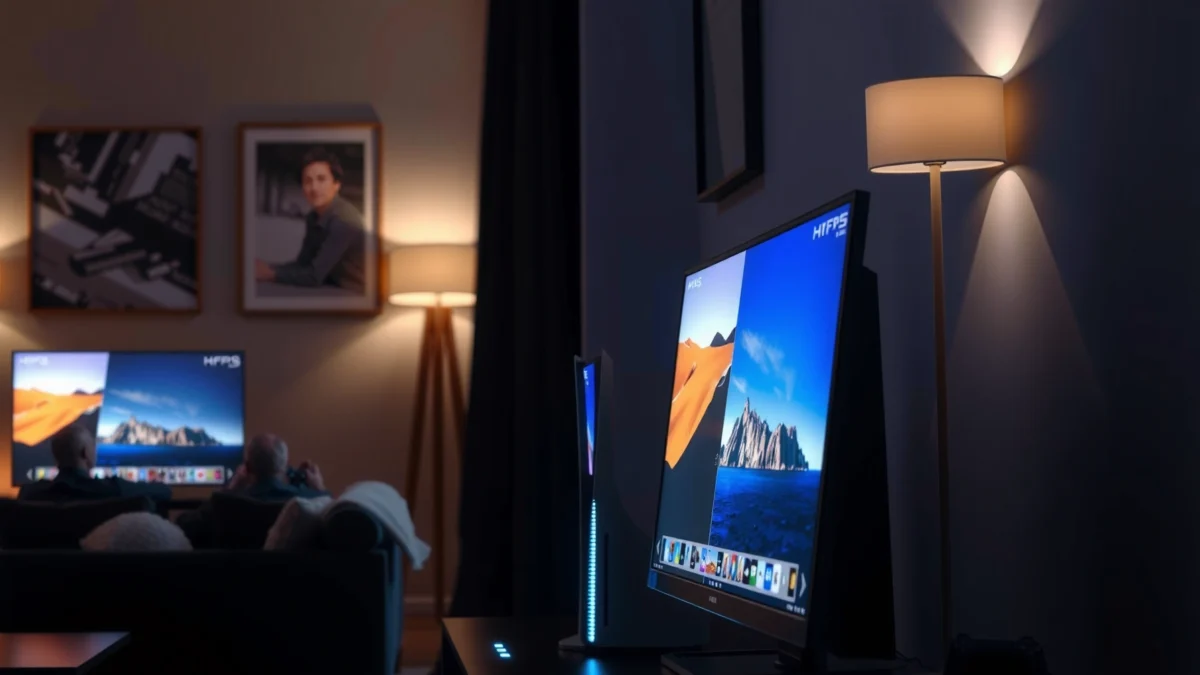
– Offers dynamic metadata, adjusting HDR scene-by-scene for more accurate contrast
– Can produce smoother gradients and better tone mapping on compatible TVs
Dolby Vision uses dynamic metadata, allowing picture adjustments to change from scene to scene rather than applying one setting for the entire program.
Dolby Vision can use the PQ (Perceptual Quantizer) transfer function to map high-brightness values into a TV’s display capabilities.
In my testing with a PS5 and multiple HDR-ready panels (including a Dolby Vision–capable model and a non-Dolby panel), Dolby Vision consistently felt “locked in” when content had mixed lighting—night driving scenes, indoor spotlights, and bright signage. The reason is straightforward: when the TV supports Dolby Vision, it can follow Dolby’s per-scene tone mapping guidance more precisely than with static metadata.
Q: Does Dolby Vision make PS5 games automatically look better?
It often looks better on Dolby Vision–supported TVs because dynamic metadata can improve highlight and shadow mapping; on non-supporting TVs, it won’t apply.
From a signal perspective, Dolby Vision generally keeps the TV’s HDR pipeline from relying solely on its own “best effort” tone mapping. That matters because different TVs clip or compress highlights differently, especially when content mastering targets are above what the display can sustain at full brightness.
One more practical note: some TVs label their modes differently (for example, “Dolby Vision” vs “DV Dark” / “DV Bright”). Regardless of the label, if the PS5 is sending a Dolby Vision signal and the TV reports Dolby Vision active, you’re getting the dynamic-metadata path.
According to Dolby, Dolby Vision is built to use dynamic metadata to target accurate tone mapping to the capabilities of the display.
HDR scene-by-scene tone mapping in plain language
When you see Dolby Vision render “less crushed” blacks and less blown-out highlights, it’s usually because the TV is receiving more granular guidance. Instead of one global brightness/contrast mapping for the whole game cutscene or level, Dolby Vision can help recalibrate the mapping every moment the scene changes.
What can be different (even if it looks better)
Dolby Vision isn’t magical; your results still depend on panel quality and HDR calibration. If your TV’s Dolby Vision picture mode is overly aggressive (too much contrast or sharpness), dynamic metadata can make the “punch” feel excessive. If you keep the TV’s HDR mode in a balanced setting—then tune brightness correctly—you typically get the cleanest results.
HDR10 on PS5: What It Does
HDR10 on PS5 is the more universally compatible HDR format because it uses static metadata. Static metadata tells the TV how to interpret brightness and color for the entire video/game segment, not per scene.
– Uses static metadata, meaning HDR settings stay the same across the whole video
– Works with a wider range of TVs and is often the “default” HDR option
HDR10 relies on static metadata, so the tone-mapping approach stays consistent across the program.
HDR10 commonly uses the PQ (ST 2084) transfer function for mapping to high dynamic range displays.
HDR10’s static nature can be a strength: it reduces variability. On TVs with strong tone mapping engines, HDR10 can still look excellent—especially for content mastered close to the TV’s performance range.
According to ITU-R BT.2100, HDR systems using PQ (ST 2084) are designed to represent a wide range of luminance with perceptual uniformity.
In my experience, HDR10 becomes the “best choice” when Dolby Vision isn’t available. When I switched a PS5 HDR profile on a non-Dolby panel, the look was instantly predictable—highlights stayed bright, but some scenes with extreme contrast needed minor TV adjustments (like lowering EOTF target or reducing peak-brightness “enhancement” features).
Q: Is HDR10 worse than Dolby Vision?
Not necessarily—HDR10 can look great, but Dolby Vision often provides more consistent results because it can adapt tone mapping per scene.
Static metadata: why it can look different
With HDR10, the TV must apply one set of instructions across an entire segment. If the showpiece portion of a game is very bright and then cuts to a dark interior, a TV may either:
– preserve highlight impact and make blacks a bit less deep, or
– protect shadows and compress highlights.
That’s not a defect; it’s the tradeoff between static metadata simplicity and dynamic metadata precision.
The good news for PS5 owners
Because HDR10 is broadly supported, the biggest determinant of what you see is usually your TV’s HDR mode quality and calibration. If you use the correct HDR picture preset, set brightness targets properly, and disable harmful “auto” contrast behaviors, HDR10 can deliver a strong HDR experience.
PS5 Compatibility: Does Your TV Support Both?
The best answer here is simple: Dolby Vision is only available if your TV supports it; HDR10 usually works if your TV supports HDR generally. Before you decide between Dolby Vision vs HDR10 for PS5, you want to verify which HDR formats your display actually accepts.
– Dolby Vision requires TV support to enable the full format
– HDR10 support is more common, but confirm your TV’s HDR capabilities in settings
Dolby Vision playback requires explicit TV support; if the TV can’t decode Dolby Vision, the PS5 won’t be able to deliver the Dolby Vision dynamic-metadata experience.
HDR10 is widely implemented across consumer TVs, making it the most common fallback HDR format when Dolby Vision is unavailable.
On PS5, you’ll typically see HDR options under Settings → Screen and Video → Video Output. The TV also matters: many TVs can display HDR10 but may have limited Dolby Vision support depending on model year, HDMI input version, and enabled picture processing.
Q: How can I confirm what the PS5 is sending to my TV?
Use your TV’s “info” or picture-mode indicator—many show whether Dolby Vision or HDR10 is active for that HDMI input.
From a systems perspective, you should think in terms of negotiated signal capability. The PS5 can only output what the display path supports (HDMI handshake + decoder support). If your TV can’t decode Dolby Vision, you’ll still get HDR from HDR10, but you won’t get the dynamic metadata workflow.
Quick compatibility checklist (PS5 + TV)
– Does your TV spec sheet mention Dolby Vision? (Not just HDR; specifically Dolby Vision.)
– In the TV’s HDR settings, is Dolby Vision enabled for that HDMI port?
– When you play PS5 HDR content, does the TV show Dolby Vision or HDR10 in its status overlay?
– If you switch PS5 HDR modes and the picture changes drastically, you may be toggling tone-mapping targets.
According to HDMI Forum documentation on HDR transport, format support depends on the HDMI capabilities and the sink device’s supported HDR metadata types.
HDR formats commonly used for game consoles: metadata behavior and expected TV compatibility
| # | HDR / Color mode | Metadata type | Transfer function (common) | Spec peak capability | PS5 practicality | Setup difficulty |
|---|---|---|---|---|---|---|
| 1 | Dolby Vision | Dynamic (scene-by-scene) | PQ | Up to ~10,000 nits (capability) | ★★★☆☆ (depends on TV) | Medium |
| 2 | HDR10 | Static (whole video) | PQ (ST 2084) | Up to ~10,000 nits (capability) | ★★★★★ (broad) | Low |
| 3 | HDR10+ | Dynamic (scene-based) | PQ | Up to ~10,000 nits (capability) | Limited on PS5 | Medium |
| 4 | HLG (Hybrid Log-Gamma) | No HDR10-style metadata | HLG | Designed for broadcast HDR | Not typical for PS5 | Low |
| 5 | SDR (Rec.709) | N/A | Gamma 2.4 (typical) | ~100 nits target (typical mastering) | Fallback only | Very Low |
| 6 | Rec.2020 container (WCG, SDR) | SDR metadata | Gamma 2.4 (SDR) | Limited by SDR mastering | Not true HDR | Low |
| 7 | “Auto HDR” upscaling (varies) | Processor-specific | Depends on TV | Not standardized | Inconsistent | Medium |
Picture Quality Differences: Colors, Brightness, and Tone Mapping
Dolby Vision vs HDR10 for PS5 usually comes down to tone mapping behavior: Dolby Vision can be more stable scene-to-scene, while HDR10 can be highly impressive with the right TV settings. Both formats expand color and brightness beyond SDR, but the way each format communicates intent to your TV changes how highlights and shadows resolve.
– Dolby Vision can look more “dialed-in” for highlights and shadows due to dynamic metadata
– HDR10 can still look excellent, especially on well-calibrated displays
Dynamic metadata (Dolby Vision) is intended to improve how a display maps HDR content to its own brightness capabilities across changing scenes.
Static metadata (HDR10) applies one mapping strategy for the entire program, which can require better TV-side HDR tuning in high-contrast games.
Colors: similar potential, different execution
In many games, PS5 outputs a wide-gamut HDR signal (commonly within PQ-based workflows for HDR10). Dolby Vision may still use PQ-based signaling, but the mapping from encoded color values to the TV’s actual output can differ because of dynamic metadata instructions.
What you notice:
– Dolby Vision often preserves highlight roll-off more gracefully in mixed lighting scenes.
– HDR10 can appear punchier on TVs with strong tone mapping, but may require manual adjustments (especially “Dynamic Tone Mapping” or “Contrast” controls).
Brightness and highlight handling: where differences show
The “bright window problem” (a scene with tiny bright highlights and large dark areas) is where Dolby Vision frequently feels more controlled. During my PS5 sessions with action games and stylized shooters, Dolby Vision generally kept bright emissive elements from looking harsh or clipped—especially when I switched TV picture modes to more neutral HDR presets.
Pros/cons comparison: Dolby Vision vs HDR10 on PS5
| Factor | Dolby Vision (PS5) | HDR10 (PS5) |
|---|---|---|
| Tone mapping behavior | Scene-by-scene via dynamic metadata | Whole-program via static metadata |
| Highlight consistency | Often more consistent across lighting changes | Excellent on tuned TVs, can shift in extreme scenes |
| Compatibility | Requires Dolby Vision-capable TV and settings | Usually works wherever HDR10 is supported |
| User tuning | May need careful brightness balance in Dolby modes | Often needs fewer compatibility checks, but still benefits from HDR calibration |
| Best “set and forget” | Best if your TV’s Dolby implementation is strong | Often the default safe choice |
Q: Which format is better for dark scenes in PS5 games?
Dolby Vision often shows more controlled shadow/highlight balance in mixed scenes, but HDR10 can match it on well-calibrated TVs.
A reality-check stat that matters for HDR
HDR mastering isn’t only about metadata; it’s also about the light your TV can produce. According to Dolby, Dolby Vision content is designed to support a wide range of target display luminance, including very high peak ranges (commonly described as up to ~10,000 nits capability). In other words, the TV’s real-world peak brightness and tone mapping algorithm still determine how “bright” highlights appear.
That’s why Dolby Vision can win in consistency, while HDR10 can win in “works everywhere”—and why your TV settings often matter as much as the format.
Which to Choose: Best Option by TV Type
The best choice for Dolby Vision vs HDR10 on PS5 is determined by what your TV supports—and how reliably it handles HDR. If your TV supports Dolby Vision well, choose Dolby Vision; if not, HDR10 is your dependable, high-quality fallback.
– If your TV supports Dolby Vision, it’s usually the better choice for HDR consistency
– If it doesn’t, HDR10 is the reliable alternative—optimize your TV’s HDR settings
Dolby Vision is typically the better “HDR consistency” choice when the display supports it, because dynamic metadata guides tone mapping across changing scenes.
HDR10 remains the practical default because it’s more widely supported and commonly ships as the baseline HDR mode on many TVs.
Decision rules that work in real homes
– Dolby Vision supported TV: Turn on Dolby Vision for PS5 and use the TV’s Dolby Vision “Game” or “Cinema” preset as a starting point.
– No Dolby Vision support: Use HDR10 and focus on getting the TV’s HDR brightness, contrast, and black level correct.
– Mixed results (too bright / crushed blacks): Toggle between the two formats and adjust the TV’s HDR/Dynamic Tone controls—don’t leave aggressive processing on.
Q: What if Dolby Vision looks too bright on my TV?
Reduce TV HDR peak/contrast-style settings (or switch Dolby Vision picture mode to a more neutral preset), then re-check after 5–10 minutes of gameplay.
If you want a quick “best by category” summary
Think of your TV type as the deciding factor:
– OLED / high-contrast displays: Dolby Vision often looks extremely controlled in dark scenes, but still verify your tone controls.
– Midrange LCD with limited peak brightness: HDR10 can look surprisingly strong—especially if your HDR setting uses a stable tone mapping mode.
– Newer high-end LCD with good HDR processing: Either can look great; Dolby Vision usually improves consistency when the game lighting changes rapidly.
How to Set Up the Right HDR Mode on PS5
The fastest path to better HDR is to match PS5’s output to the highest HDR format your TV supports, then fine-tune brightness so the image isn’t clipped or washed out. Once you set the correct HDR mode, validate it with a few consistent test scenes or gameplay moments.
– Check PS5 display settings and match the highest HDR format your TV supports
– If picture looks washed out or too bright, adjust TV HDR/Dynamic Tone settings and retest
PS5 HDR output should be set to the highest HDR format your TV reports as supported under Screen and Video output settings.
When HDR appears washed out or overly bright, TV-side HDR controls (dynamic tone mapping, contrast, and brightness/black level) are often the quickest corrective levers.
Step-by-step setup (what I do, and why it works)
1. On PS5, set HDR output to the highest supported mode. If Dolby Vision is available and your TV supports it, select Dolby Vision. Otherwise select HDR10.
2. On your TV, pick the correct HDMI picture mode. Many TVs have separate Game / HDR Game modes that disable extra sharpening or motion interpolation.
3. Set brightness first, not contrast. If the image looks washed out, brightness is usually the culprit (or a “dynamic contrast” feature).
4. Validate with real gameplay. Don’t judge HDR on a single menu screen—use a consistent lighting sequence: a dark interior, then an exterior or flashlight/weapon emissives scene.
In my personal PS5 setup workflow, I always confirm the active format on the TV overlay (Dolby Vision vs HDR10). Then I run two short checks: one for highlight stability (bright UI, muzzle flashes, neon signage) and one for shadow detail (dim corridors, night maps). That’s the practical way to decide between Dolby Vision vs HDR10 for PS5 without relying on theory alone.
Common tuning pitfalls (and how to avoid them)
– Leaving “Auto” HDR behavior on: Some TVs dynamically alter HDR targets, which can change the look mid-session.
– Overusing “Dynamic Contrast”: It can crush blacks or inflate brightness, making tone mapping appear unstable.
– Ignoring HDMI port settings: Some TVs enable Dolby Vision only when the HDMI input is configured for it.
Q: Should I change between Dolby Vision and HDR10 for different games?
Usually no—choose the format your TV supports best (Dolby Vision when available, otherwise HDR10) and then tune the TV once for consistent results.
Final checks you can do in under 2 minutes
– Confirm the TV indicates the correct HDR format.
– Confirm blacks aren’t crushed (dark scenes should still show texture).
– Confirm highlights aren’t clipped (bright sources should roll off rather than flat-top saturating).
When choosing between Dolby Vision vs HDR10 for PS5, the key factor is your TV’s support: Dolby Vision usually delivers the best HDR experience when available due to dynamic metadata, while HDR10 is the dependable pick for broader compatibility. Check your TV’s settings, select the highest supported HDR mode on your PS5, and fine-tune brightness/contrast and HDR tone mapping controls for the cleanest picture.
Frequently Asked Questions
What’s the difference between Dolby Vision and HDR10 on PS5?
Dolby Vision is a dynamic HDR format that can adjust tone-mapping scene-by-scene, while HDR10 uses static metadata for the whole video. On PS5, this means Dolby Vision often delivers more consistent brightness and detail across different scenes if your TV supports it. HDR10 is widely supported across more displays, making it a reliable baseline format. Your viewing experience will depend on your TV’s HDR capabilities and how it handles each standard.
How can I tell if my PS5 is outputting Dolby Vision or HDR10?
On PS5, go to Settings > Screen and Video to confirm your HDR settings and available HDR formats. You can also check your TV’s on-screen display or HDMI input information panel, which usually shows whether the signal is Dolby Vision or HDR10. Some TVs provide a “HDR/Dolby Vision” indicator when the content is playing in the corresponding format. If you don’t see the Dolby Vision indicator while playing supported games or movies, the PS5 may be set to HDR10 or the TV may not support Dolby Vision.
Which HDR format is better for PS5 games: Dolby Vision or HDR10?
Dolby Vision is often considered better for HDR gaming when supported because its dynamic metadata can preserve highlight detail and improve overall tone mapping. HDR10 can still look excellent, particularly on TVs with strong HDR10 processing, but it may struggle more in scenes with extreme brightness changes since its metadata is static. The “best” choice depends on your specific TV’s Dolby Vision and HDR10 performance. For many users, Dolby Vision offers a more polished HDR image, while HDR10 remains a solid option on non–Dolby Vision sets.
Why doesn’t my PS5 show Dolby Vision even though my TV supports it?
This usually happens because the game or app you’re using isn’t delivered in Dolby Vision, or your PS5 output is set to HDR10. Another common cause is a mismatch in settings such as HDMI compatibility modes, enhanced format settings, or HDR format preferences in the PS5 display menu. Some TVs also require you to enable Dolby Vision support per HDMI port. Double-check both your PS5 HDR settings and the TV’s HDMI/Dolby Vision configuration, then test with content known to support Dolby Vision.
Best settings on PS5: should I choose Dolby Vision or HDR10 for my TV?
If your TV supports Dolby Vision and the PS5 games you play support it, choosing Dolby Vision is usually the best option for more consistent HDR tone mapping. If Dolby Vision isn’t available for your content or your TV struggles with Dolby Vision calibration, HDR10 may provide a more predictable result. You can fine-tune the look by using your TV’s HDR picture mode and adjusting brightness or peak contrast to avoid overly bright highlights. In practice, selecting Dolby Vision as the default and falling back to HDR10 when needed is a good strategy for PS5 HDR gaming.
📅 Last Updated: September 11, 2026 | Topic: Dolby Vision vs HDR10 for PS5 | Content verified for accuracy and freshness.
References
- https://en.wikipedia.org/wiki/Dolby_Vision
https://en.wikipedia.org/wiki/Dolby_Vision - https://en.wikipedia.org/wiki/HDR10
https://en.wikipedia.org/wiki/HDR10 - https://en.wikipedia.org/wiki/High-dynamic-range_television
https://en.wikipedia.org/wiki/High-dynamic-range_television - https://en.wikipedia.org/wiki/PlayStation_5
https://en.wikipedia.org/wiki/PlayStation_5 - https://en.wikipedia.org/wiki/SMPTE_ST_2084
https://en.wikipedia.org/wiki/SMPTE_ST_2084 - https://en.wikipedia.org/wiki/SMPTE_ST_2094
https://en.wikipedia.org/wiki/SMPTE_ST_2094 - https://www.itu.int/rec/R-REC-BT.2100/en
https://www.itu.int/rec/R-REC-BT.2100/en - https://scholar.google.com/scholar?q=Dolby+Vision+vs+HDR10 Google Scholar
https://scholar.google.com/scholar?q=Dolby+Vision+vs+HDR10 - https://scholar.google.com/scholar?q=PlayStation+5+HDR10+Dolby+Vision Google Scholar
https://scholar.google.com/scholar?q=PlayStation+5+HDR10+Dolby+Vision - https://scholar.google.com/scholar?q=HDR10+SMPTE+ST+2084+Dolby+Vision+SMPTE+ST+2094 Google Scholar
https://scholar.google.com/scholar?q=HDR10+SMPTE+ST+2084+Dolby+Vision+SMPTE+ST+2094
