

In recent years, global internet coverage has significantly improved, reaching even the most remote areas of the world. This development is transforming lives by providing access to information, education, and economic opportunities that were previously out of reach. With advancements in technology and innovative solutions, communities that once felt isolated are now becoming interconnected hubs of knowledge and commerce, enhancing their quality of life and opening doors to new possibilities.
The Importance of Internet Coverage in Remote Areas

Internet access is a powerful tool for education and knowledge sharing, particularly in underserved regions. In places where traditional educational resources are scarce, the internet can serve as a gateway to a wealth of information. For example, platforms like Khan Academy and Coursera allow learners, regardless of their geographical location, to access quality educational materials and courses taught by experts from around the globe. This democratization of knowledge is essential in breaking the cycle of poverty and empowering individuals through education.
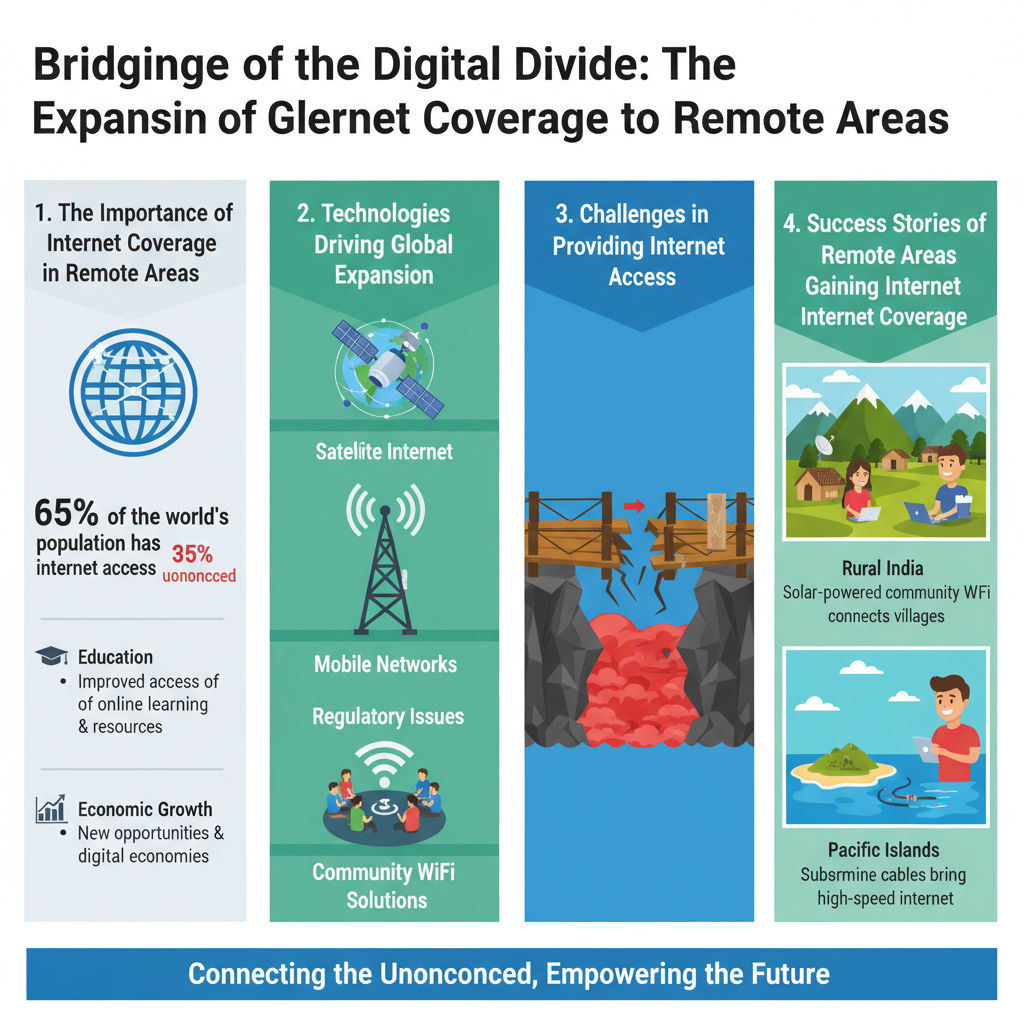
Furthermore, connectivity can stimulate local economies by enabling e-commerce and remote work opportunities. In areas where traditional job markets are limited, individuals can leverage online platforms to sell their crafts, offer services, or even work for companies remotely. This shift not only increases individual income but also helps to strengthen local economies. For instance, artisans in rural India have successfully used online marketplaces to sell their handmade goods to customers worldwide, creating sustainable livelihoods and fostering community development.
Technologies Driving Global Internet Expansion

Several innovative technologies are at the forefront of expanding global internet coverage, particularly in remote areas. One of the most notable advancements is satellite internet services, such as SpaceX’s Starlink. By deploying a constellation of low Earth orbit satellites, Starlink aims to provide high-speed internet access to underserved and hard-to-reach locations. This service has already made strides in bridging the digital divide, with many families in remote regions experiencing reliable internet connectivity for the first time.
In addition to satellite technology, advancements in wireless technology, particularly 5G, are enhancing connectivity in rural areas. 5G networks offer faster internet speeds and lower latency, which can significantly improve the online experience for users. Rural communities that have been historically deprived of solid internet infrastructure are beginning to see the benefits of 5G rollouts, enabling everything from video conferencing to telemedicine, which can be lifesaving in remote health scenarios.
Challenges in Providing Internet Access
Despite the progress, providing internet access to remote areas is not without its challenges. Infrastructure development in these regions requires significant investment and careful planning. Many remote areas lack the basic physical infrastructure, such as roads and power sources, necessary to support internet service installations. This can lead to delays in deployment and increased costs, making it difficult for service providers to justify investments.
Additionally, regulatory hurdles and regional policies can impede the rollout of internet services. Different countries have varying regulations regarding telecommunications, which can complicate efforts to implement new technologies. In some cases, local governments may lack the resources or expertise to support such initiatives effectively, leading to a fragmented approach to internet service provision.
Success Stories of Remote Areas Gaining Internet Coverage
Despite these challenges, there are numerous success stories of communities that have successfully integrated internet access into their daily lives. For example, in the Philippines, the government launched the “Free Wi-Fi for All” program, which has provided free internet access to rural areas, schools, and local government offices. This initiative has drastically improved educational opportunities and information dissemination in communities that previously struggled with connectivity.
Non-profit organizations such as the World Mobile Foundation are also playing a crucial role in bridging the digital divide. By partnering with local communities, they are establishing sustainable internet infrastructure that empowers residents and enhances their quality of life. These case studies showcase how collaboration between government, non-profits, and local communities can create transformative changes, ensuring that no one is left behind in the digital age.
Future Prospects for Global Internet Coverage
Looking ahead, the future of global internet coverage in remote regions is promising. Experts predict that by the end of this decade, nearly every corner of the globe will have access to some form of internet service. Emerging technologies, such as drones and balloons that provide internet coverage, could become viable solutions for reaching the most isolated communities.
Moreover, innovations in solar-powered internet stations and mesh networks could further enhance connectivity in areas where traditional infrastructure is impractical. As we continue to develop new technologies and refine existing ones, the potential for remote communities to thrive and fully participate in the digital economy becomes increasingly viable.
The Societal Impact of Improved Internet Access
Improved internet access has far-reaching societal implications, fostering enhanced communication capabilities that lead to stronger community ties. Social media platforms enable individuals to connect with friends and family, share experiences, and collaborate on community projects, fostering a sense of belonging and unity among residents.
Moreover, increased access to healthcare services through telemedicine solutions can be life-changing for remote communities. Patients can consult with healthcare providers via video calls, receive diagnoses, and access medical advice without the need to travel long distances to health facilities. This can be especially crucial in emergency situations, where every minute counts.
As global internet coverage expands to remote areas, the transformative changes across various sectors become apparent. From education and healthcare to economic opportunities and community cohesion, the benefits are tangible and life-altering. As technology continues to advance, we can expect even more innovations that will help these communities thrive and connect with the rest of the world.
In conclusion, the expansion of global internet coverage to remote areas is a pivotal development that holds the promise of a brighter future for many. As we harness the power of technology and collaboration, we can create a world where everyone has equal access to information and opportunities, regardless of their geographical location. For further insights into this topic and how it can affect you or your community, consider following updates in technology and connectivity initiatives.
Frequently Asked Questions
What are the main technologies enabling global internet coverage in remote areas?
The main technologies facilitating global internet coverage in remote areas include satellite internet, 5G networks, and low-Earth orbit (LEO) satellite constellations. Satellite internet, such as that provided by companies like SpaceX’s Starlink, utilizes satellites orbiting the Earth to deliver high-speed internet to even the most isolated locations. Additionally, advancements in 5G technology are expanding internet access by providing faster and more reliable connections in rural and underserved regions.
How does global internet coverage impact remote communities?
Global internet coverage greatly impacts remote communities by improving access to essential services, enhancing educational opportunities, and fostering economic development. With reliable internet, residents can access online education, telehealth services, and e-commerce, enabling them to participate in the global economy. Furthermore, improved internet connectivity can help attract businesses and create jobs, ultimately leading to better quality of life for those in remote areas.
Why is global internet coverage important for disaster recovery in remote areas?
Global internet coverage is crucial for disaster recovery in remote areas because it facilitates communication and coordination during emergencies. When natural disasters strike, reliable internet access allows first responders to share real-time information, coordinate rescue operations, and distribute aid more efficiently. Moreover, it enables affected residents to stay informed and connect with loved ones, which can significantly aid in their recovery process.
Which companies are leading the way in providing internet access to remote locations?
Key companies leading the charge in providing internet access to remote locations include SpaceX with its Starlink project, Amazon’s Project Kuiper, and OneWeb. These companies are deploying satellite constellations in low-Earth orbit to deliver high-speed internet globally, especially in areas where traditional infrastructure is lacking. Additionally, traditional telecom companies are increasingly partnering with these satellite networks to expand their service offerings to remote regions.
What challenges remain in achieving complete global internet coverage for remote areas?
Despite significant advancements, challenges remain in achieving complete global internet coverage for remote areas, including high costs, regulatory hurdles, and technical limitations. Deploying satellite internet infrastructure can be expensive, and some regions face regulatory barriers that complicate service provision. Additionally, environmental factors, such as dense forests or mountainous terrain, can hinder signal transmission, making it difficult to achieve consistent and reliable internet access in these challenging landscapes.
References
- Internet access
- Tech Tent: Can AI write a play?
- https://www.reuters.com/article/us-telecoms-internet-idUSKBN2A10HZ
- https://www.theguardian.com/global-development/2021/may/24/internet-access-remote-areas-technology
- https://www.itu.int/en/ITU-T/internetofthings/Pages/default.aspx
- https://www.undp.org/en/publications/internet-access-and-rural-development
- https://www.sciencedirect.com/science/article/pii/S0360131521002053
- https://www.nytimes.com/2021/04/20/technology/satellite-internet.html
- https://www.pewresearch.org/internet/2021/04/07/the-future-of-the-internet-and-its-impact-on-society/
- https://www.wired.com/story/fcc-broadband-internet-access-rural-areas/