

The use of AI technology has revolutionized the fight against manipulated videos in news and media, providing essential tools that analyze content for signs of deception. As digital media proliferates, the potential for misinformation has surged, making it crucial for AI to step in to preserve the integrity of information consumed by the public. In this article, we will explore the methodologies employed by AI to detect deepfakes and other alterations, shedding light on the tools and techniques that ensure the trustworthiness of visual information.
Understanding Video Manipulation

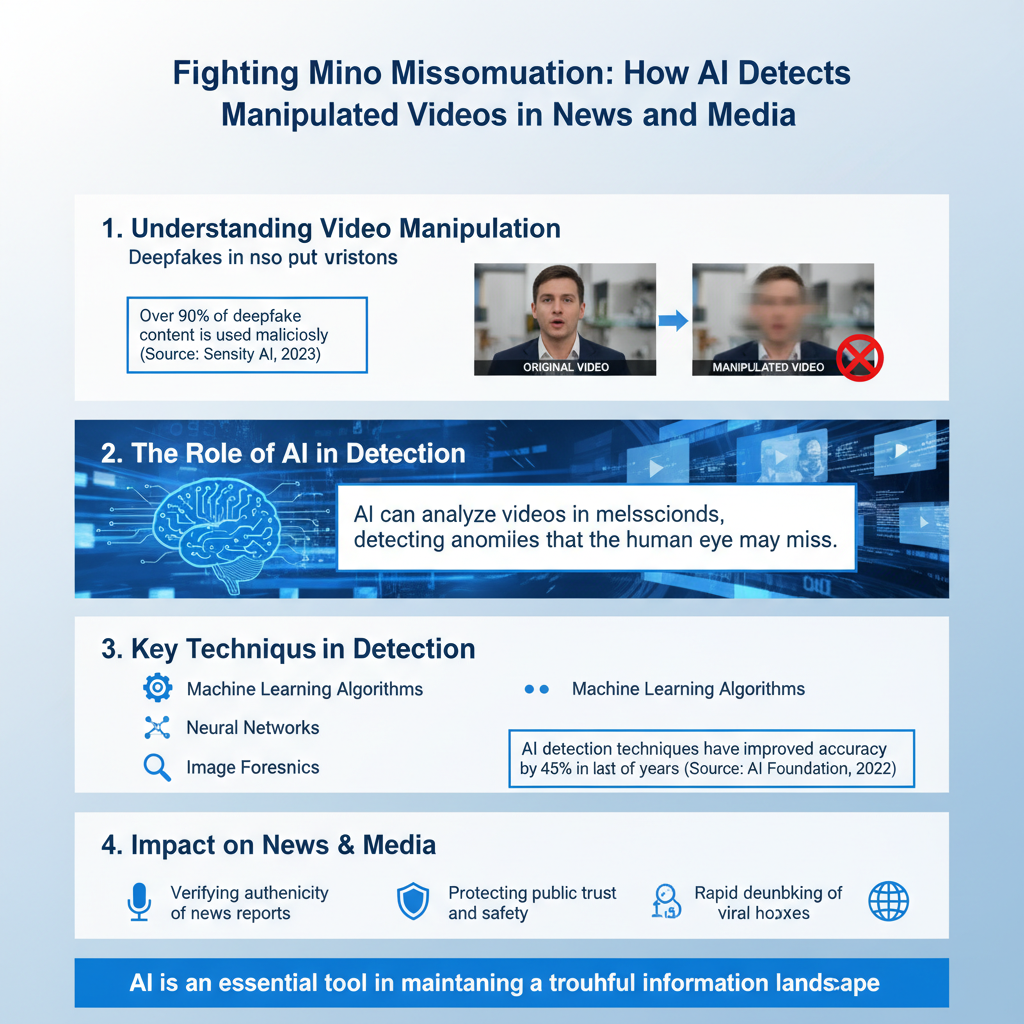
Manipulated videos are digital recordings that have been altered to misrepresent reality. One of the most prominent techniques used in this realm is deepfakes—videos that leverage artificial intelligence to create realistic-looking fake content, often swapping faces or altering speech. For instance, imagine a video where a public figure appears to say something they never uttered; this is the kind of deception that deepfake technology can achieve. The implications of such alterations are significant, as they can skew public perception and propagate misinformation, leading to societal confusion, distrust in media, and even political ramifications. In a world where visual content often dictates our beliefs and opinions, understanding and identifying these manipulations is more critical than ever.
The Role of AI in Detection
AI algorithms play a vital role in detecting inconsistencies in video data that may indicate manipulation. These sophisticated systems are designed to analyze various components of video files, including audio, visuals, and metadata, to identify signs of tampering. Machine learning models, a subset of AI, are particularly effective in this regard. They are trained on extensive datasets comprising both authentic and manipulated videos, allowing them to learn the subtle differences that might escape the naked eye. For example, a model might learn that genuine videos tend to have consistent pixel patterns and motion fluidity, while manipulated videos may display abrupt changes or unnatural sequences. This ability to discern authenticity from deception enhances the reliability of news and media content, instilling confidence in viewers.
Key Techniques Used by AI
One of the most prominent techniques employed by AI in video manipulation detection is facial recognition systems. These systems can analyze facial movements and expressions to identify unnatural behavior that could suggest manipulation. For example, if a person is seen smiling in a video but their eyes convey sadness, this inconsistency might raise a red flag for the AI system. Furthermore, AI can conduct a pixel-level analysis to detect changes in lighting and shadows that may indicate alterations. If a shadow does not align with a person’s movement or if the lighting appears inconsistent across different elements in a scene, these discrepancies can signal manipulation. By utilizing these advanced techniques, AI can effectively highlight videos that warrant further scrutiny.
Challenges in Video Analysis
Despite the advancements made in AI technology, there are still significant challenges in accurately detecting all forms of video manipulation. One limitation is the sheer diversity of manipulation techniques available, from simple edits to complex deepfake algorithms. As these editing techniques continue to evolve, they pose a growing challenge to AI detection capabilities. Moreover, the sophistication of some manipulations makes them difficult for even advanced AI systems to discern. For instance, new deepfake technologies can create videos that are almost indistinguishable from real footage, complicating the detection process. Furthermore, the reliance on large datasets for training can also lead to biases in detection, as AI might struggle to identify manipulations that differ from what it has learned. Consequently, while AI is a powerful tool, it is not infallible, and ongoing research and development are necessary to keep pace with emerging threats.
Case Studies and Real-World Applications
There have been several high-profile instances where AI has successfully identified manipulated videos, showcasing the technology’s potential in real-world applications. One notable example occurred during the 2020 U.S. presidential election, where several deepfake videos circulated on social media. AI-driven tools were employed by fact-checkers and news organizations to analyze these videos, ultimately debunking false claims and preventing misinformation from spreading. In another instance, researchers at the University of California utilized AI to analyze videos shared on social platforms, successfully flagging manipulated content before it gained traction. As media organizations increasingly recognize the value of AI tools in verifying content, many are integrating these systems into their verification processes, enhancing the credibility of their reporting.
Future Trends in AI Detection
Looking ahead, the future of AI detection in video manipulation holds exciting possibilities. Advancements in technology may enable real-time detection of manipulated videos, allowing viewers to receive immediate alerts about potential misinformation as they consume content online. This could be particularly beneficial in live broadcasting scenarios, where the risk of manipulated videos is high. However, as AI continues to develop, ethical considerations must also be addressed. Transparency in how AI algorithms are trained and how they operate will be paramount to building trust with the public. Additionally, the potential for misuse of AI in creating even more sophisticated manipulations necessitates a balanced approach, ensuring that the technology is used responsibly to promote truth and accuracy in media.
The ability of AI to identify manipulated videos is crucial in combating misinformation and preserving the truth in media. As technology continues to evolve, staying informed and utilizing AI-based tools will be vital for both consumers and content creators in ensuring the authenticity of visual information. By embracing these innovations, we can foster a more informed society that values truth and integrity in the content we consume.
Frequently Asked Questions
How does AI detect manipulated videos in news and media?
AI detects manipulated videos through a combination of machine learning algorithms and computer vision techniques. These systems analyze various video attributes, such as pixel inconsistencies, frame rates, and audio-visual synchronization. By comparing these characteristics against a database of known manipulations, AI can identify alterations or deepfakes that may mislead viewers.
What are the most common techniques used by AI to identify fake videos?
The most common techniques used by AI to identify fake videos include deep learning, facial recognition, and anomaly detection. Deep learning models are trained on vast datasets to recognize patterns typical of manipulated content, while facial recognition algorithms can identify inconsistencies in facial movements or expressions. Anomaly detection helps to spot unusual patterns in video frames that deviate from the norm, indicating possible manipulation.
Why is it important for news organizations to use AI for video verification?
It is crucial for news organizations to use AI for video verification to maintain credibility and combat the spread of misinformation. As manipulated videos can easily mislead audiences and sway public opinion, utilizing AI technology helps ensure that the content shared is authentic and trustworthy. This not only protects the organization’s reputation but also fosters informed decision-making among viewers.
Which AI tools are best for detecting fake videos in media?
Some of the best AI tools for detecting fake videos include Sensity AI, Deepware Scanner, and Amber Video. These tools leverage advanced algorithms to analyze video content for signs of manipulation, such as unnatural facial movements or suspicious editing artifacts. By employing these specialized AI solutions, news organizations can enhance their ability to verify video authenticity effectively.
How can individuals verify the authenticity of videos they encounter online?
Individuals can verify the authenticity of videos by using reverse image search tools, checking multiple news sources, and utilizing AI-based verification platforms. By conducting a reverse image search, users can trace the origins of specific video frames, while cross-referencing information across reputable media outlets can help confirm or debunk claims. Additionally, employing AI tools specifically designed for video verification can provide valuable insights into the video’s authenticity.
References
- https://www.bbc.com/news/technology-50812983
- https://www.nytimes.com/2020/01/22/technology/deepfakes-video-manipulation.html
- https://www.technologyreview.com/2020/01/24/844330/deepfake-video-ai-fake-news-media/
- https://www.nist.gov/news-events/news/2020/12/nist-releases-new-tool-help-detect-manipulated-videos
- https://www.theguardian.com/media/2020/jan/20/deepfake-technology-what-is-it-and-how-it-works
- https://www.sciencedirect.com/science/article/pii/S0957417420302232
- https://www.wired.com/story/what-are-deepfakes/
- https://www.aps.org/publications/apsnews/202002/deepfakes.cfm
- https://www.npr.org/2020/01/23/798707215/how-a-i-detects-deepfakes-using-digital-forensics
- https://www.itu.int/en/ITU-T/focusgroups/deepfakes/Pages/default.aspx