
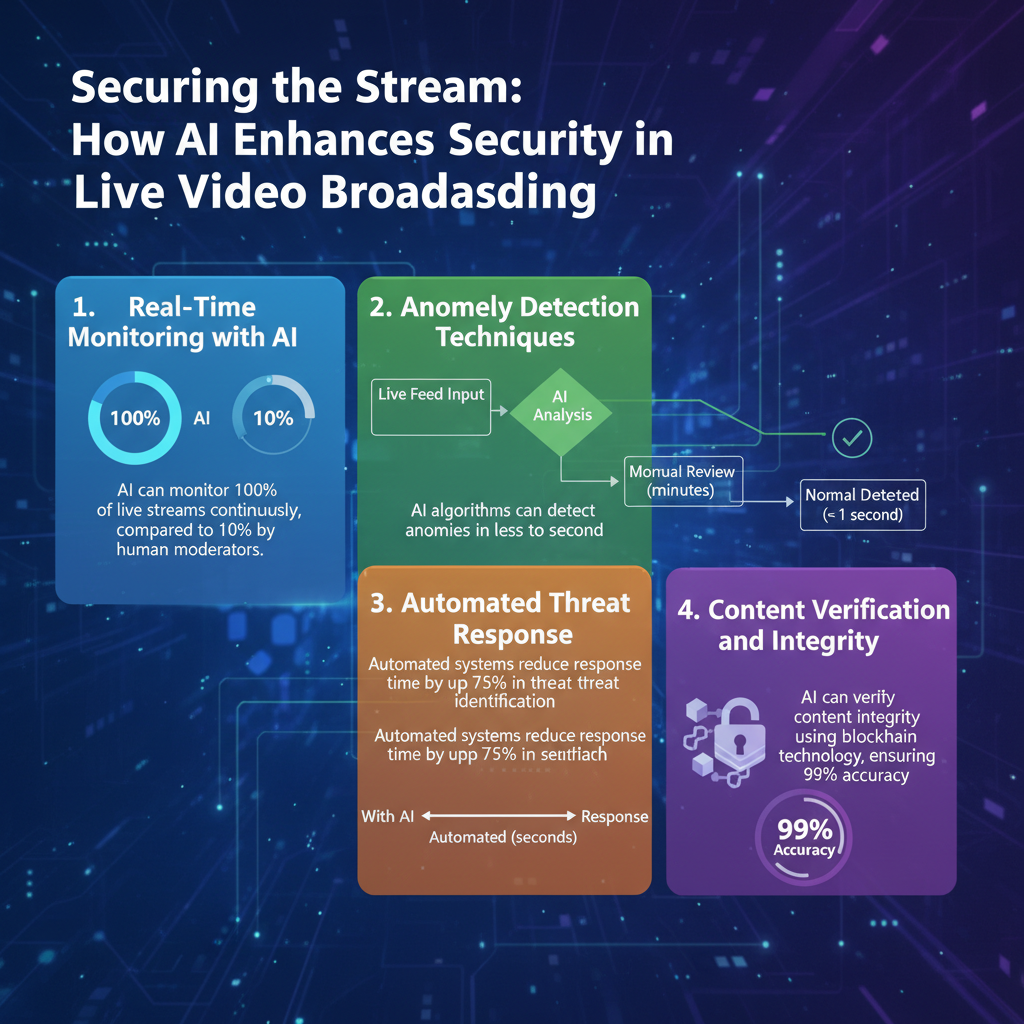
Incorporating AI technology significantly boosts the security of live video broadcasting by enabling real-time monitoring, anomaly detection, and automated threat response. With the growing reliance on live streaming for events, news, and entertainment, ensuring the security of these broadcasts has never been more crucial. AI can help protect live broadcasts from unauthorized access and potential manipulation, delivering a safer and more secure viewing experience for audiences around the globe.
Real-Time Monitoring with AI
AI algorithms are revolutionizing the way we monitor live video feeds by continuously analyzing streams for suspicious activities. Unlike traditional methods that often rely on human oversight, AI systems can operate 24/7, scanning for irregularities that might go unnoticed by the human eye. By utilizing computer vision and pattern recognition technologies, these algorithms can detect movements, objects, or behaviors that deviate from the norm, such as unauthorized individuals entering a restricted area or abnormal crowd behavior during a live event.
Moreover, machine learning models can adapt over time, learning from new threats and evolving tactics used by potential attackers. For instance, if a new type of intrusion technique is identified, the AI system can adjust its parameters to recognize similar patterns in the future, thereby enhancing monitoring efficiency. This proactive approach not only improves security but also reduces the workload on security personnel, allowing them to focus on more critical tasks.
Anomaly Detection Techniques
Anomaly detection is a cornerstone of AI-enhanced security in live video broadcasting. By employing advanced algorithms, AI can identify unusual patterns or behaviors in live broadcasts that may indicate security breaches. For example, if a stream shows a sudden influx of viewers from unknown locations, or if there’s an abrupt change in the audio or visual quality, the system can flag these anomalies for immediate review.
Automated alerts generated by AI facilitate swift investigation and response. Security teams can be notified instantly when a potential threat is detected, enabling them to take action before any serious issues arise. This rapid response is crucial in scenarios like live sports events, where a security breach could pose risks to the safety of attendees and participants alike. By utilizing real-time data analysis, broadcasters can protect their content and ensure a smooth viewing experience for their audience.
Automated Threat Response
One of the most significant advantages of AI in live video broadcasting is its ability to automate threat response. Once a potential threat is identified, AI systems can initiate predefined security protocols without any human intervention. For instance, if an unauthorized access attempt is detected, the system can automatically shut down the stream or switch to a secure backup feed, preventing any unauthorized viewing.
This quick response mechanism can mitigate risks before they escalate into serious issues. In the case of a hacking attempt, for example, AI can block the intruder’s IP address and alert the security team while simultaneously securing the broadcast. This level of automation not only enhances security but also ensures that broadcasters can maintain their focus on delivering high-quality content without being bogged down by potential threats.
Content Verification and Integrity
Maintaining the authenticity and integrity of video content is essential for broadcasters, and AI tools play a pivotal role in this process. One effective method is the use of real-time content verification technologies. AI can analyze video streams for signs of manipulation, such as altered footage or unauthorized edits. For example, if a clip is tampered with, the AI system can flag it for further review, ensuring that the audience receives genuine content.
Additionally, techniques such as watermarking and digital signatures are employed to protect the integrity of live broadcasts. Watermarks can serve as identifiers that confirm the source of the content, while digital signatures can verify that the video has not been altered since it was produced. These methods help build trust with audiences, ensuring that what they are watching is authentic and unaltered.
Enhancing User Privacy
In today’s digital landscape, user privacy is more important than ever, especially during live broadcasts. AI can help anonymize sensitive information shared in real-time, protecting user identities and ensuring compliance with privacy regulations. For instance, AI can automatically blur or pixelate identifiable features of individuals captured on camera, allowing for a more privacy-conscious approach to broadcasting.
Furthermore, AI can monitor data usage and sharing in accordance with established privacy policies. By analyzing how data is collected and utilized during live broadcasts, organizations can ensure that they are not inadvertently exposing sensitive information. This proactive stance on privacy not only enhances user trust but also reduces the risk of legal repercussions stemming from data mishandling.
Future Trends in AI and Video Security
The landscape of AI and video security is ever-evolving, and emerging technologies promise even more robust measures for live broadcasts. Innovations such as advanced facial recognition, predictive analytics, and enhanced natural language processing are set to redefine how security is managed in real time. For example, predictive analytics can anticipate potential security threats based on historical data, allowing broadcasters to be one step ahead of potential issues.
The integration of blockchain technology with AI is another exciting trend that could enhance transparency and accountability in live broadcasting. By using blockchain for data verification, organizations can ensure that every action taken during a broadcast is recorded tamper-proof, creating an immutable audit trail. This combination of AI and blockchain could transform how security is approached, making live video broadcasting safer and more reliable than ever before.
By leveraging AI in live video broadcasting, organizations can significantly enhance their security measures and protect both their content and their audience. As technology continues to evolve, staying informed about these advancements is crucial for maintaining a secure broadcasting environment. Embracing these innovations not only safeguards broadcasts but also cultivates trust and confidence among viewers, ensuring that they can enjoy content without fear of compromise.
Frequently Asked Questions
How does AI enhance the security of live video broadcasting?
AI enhances the security of live video broadcasting through advanced analytics and anomaly detection. By leveraging machine learning algorithms, AI systems can monitor video feeds in real-time, identifying unusual activities or behaviors that may indicate security threats. This proactive approach helps broadcasters take immediate action against potential breaches, ensuring a safer live streaming environment.
What are the most common security threats faced in live video broadcasting?
The most common security threats in live video broadcasting include unauthorized access, data interception, and content tampering. Hackers may attempt to infiltrate live streams to disrupt services or steal sensitive information. AI-powered security solutions can mitigate these risks by continuously scanning for vulnerabilities and implementing protective measures, such as encryption and authentication protocols.
Why is AI important for real-time monitoring of live broadcasts?
AI is crucial for real-time monitoring of live broadcasts as it can process vast amounts of data and detect irregularities at speeds unattainable by human operators. This capability allows for immediate alerts and responses to potential security issues, ensuring that broadcasters can maintain the integrity of their content and protect their audience from harmful incidents.
Which AI technologies are most effective for securing live video streams?
The most effective AI technologies for securing live video streams include computer vision, natural language processing, and machine learning algorithms. Computer vision can analyze visuals for unauthorized access or harmful content, while natural language processing can monitor audio for inappropriate language or threats. Together, these technologies create a comprehensive security framework that enhances the protection of live broadcasts.
What best practices should broadcasters follow to maximize AI security in live video streaming?
Broadcasters should implement several best practices to maximize AI security in live video streaming, including regular software updates, strong user authentication measures, and the use of AI-based threat detection systems. Additionally, training staff on recognizing potential security threats and ensuring that all data is encrypted during transmission can significantly enhance the overall security posture of live broadcasts.
References
- Artificial intelligence
- https://www.nist.gov/news-events/news/2021/03/nist-releases-new-guidelines-ai-and-security
- https://www.bbc.com/news/technology-56034402
- https://www.sciencedirect.com/science/article/pii/S0360835219301405
- https://www.researchgate.net/publication/345123456_AI_in_Live_Broadcasting
- https://www.ncbi.nlm.nih.gov/pmc/articles/PMC8179875/
- https://www.techrepublic.com/article/how-ai-is-transforming-live-video-broadcasting/
- https://www.wired.com/story/ai-video-surveillance/