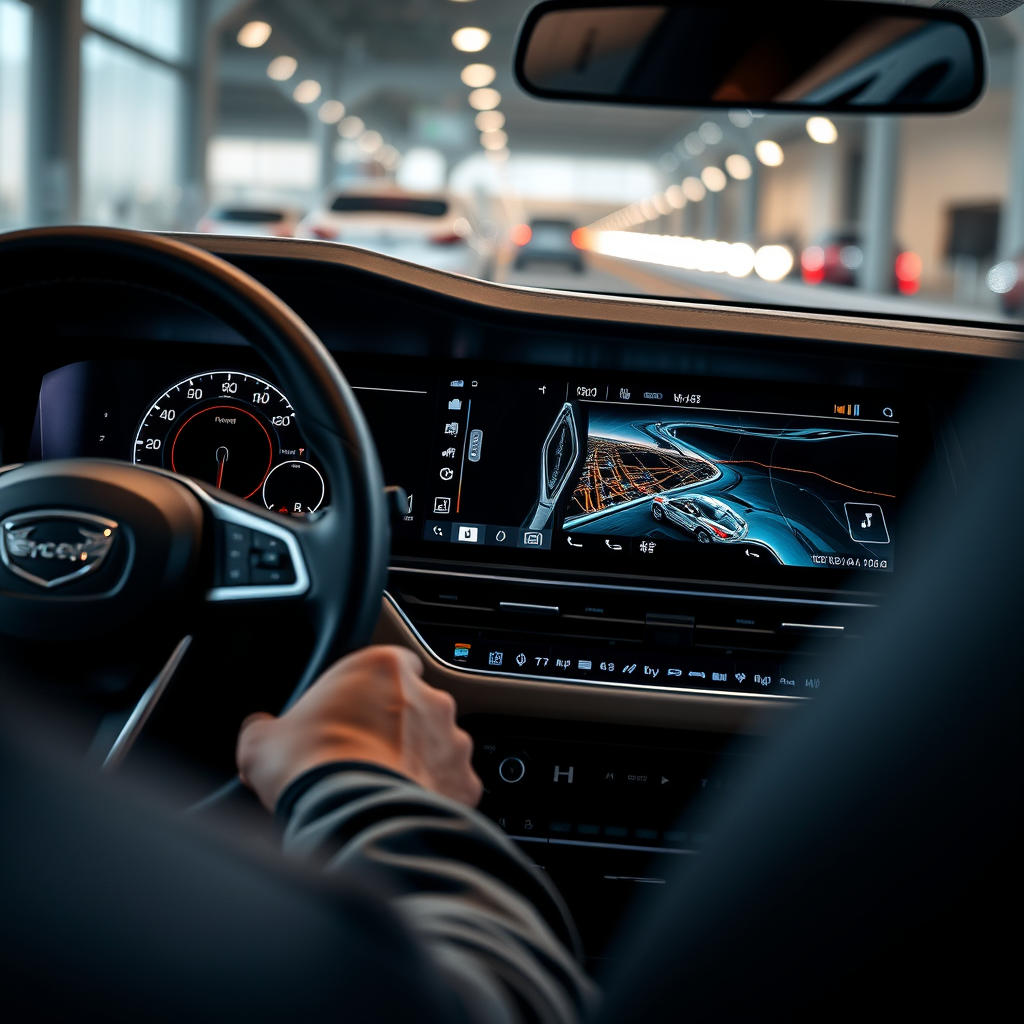

The evolution of car display dashboards has transformed the way we interact with our vehicles, making them more intuitive and user-friendly. Over the years, dashboards have progressed from basic analog gauges to sophisticated digital interfaces that not only provide driving information but also enhance the overall driving experience. This article delves into the significant milestones in dashboard development, the shift towards digitalization, and the exciting trends shaping the automotive industry today.
The Early Days: Analog Dashboards

In the early days of automobile design, dashboards were a straightforward collection of analog gauges. These gauges, often made from metal and glass, displayed vital information such as speed, fuel level, and engine temperature using needles that pointed to values on a circular dial. The simplicity of these analog dashboards offered a no-frills approach, where functionality was prioritized over aesthetics.
The early dashboard designs were often utilitarian, reflecting the materials of the time. For example, dashboards were commonly crafted from painted metal or wood veneers, giving a classic yet rustic feel to vehicles. Each element was designed for durability, allowing for easy readability under various driving conditions. While they served their purpose effectively, these dashboards lacked the innovation and versatility that would come with technological advancements in later decades.
The Rise of Digital Displays

The late 20th century marked a significant turning point with the introduction of digital displays, which began to replace traditional analog gauges in many vehicles. Digital dashboards provided several advantages, including enhanced readability, customization, and the ability to present a wider array of information. For instance, the use of LCD screens allowed for clear visibility, even in low-light conditions, and provided a crisp display of data.
One of the early examples of digital dashboards can be traced back to the 1980s with the introduction of the 1982 Cadillac Seville, which featured an early form of a digital instrument panel. This innovative design allowed drivers to access speed, fuel level, and other information in a way that was visually appealing and easy to understand. As technology progressed, more manufacturers began to adopt this approach, leading to the widespread popularity of digital displays in the 1990s and beyond.
Integration of Infotainment Systems
With the dawn of the 21st century, car dashboards began evolving even further as they merged with infotainment technologies. This integration transformed dashboards from mere information centers to multifunctional command hubs. Today’s dashboards frequently feature large touchscreen displays that serve as the central interface for various functions, including GPS navigation, music streaming, and smartphone connectivity.
For example, the Tesla Model S revolutionized the dashboard experience by offering a 17-inch touchscreen that controls nearly all aspects of the vehicle. Drivers can adjust climate controls, access navigation, and even monitor vehicle performance, all from one interface. This shift not only changed the layout of dashboards but also redefined user expectations, as drivers now seek comprehensive connectivity and entertainment options while on the road.
User-Centric Design and Aesthetics
As car manufacturers have come to recognize the importance of user experience, dashboard design has increasingly emphasized ergonomics and aesthetics. Modern dashboards are now crafted with the driver’s comfort and convenience in mind, featuring intuitive layouts that reduce distraction and enhance functionality.
Trends in dashboard aesthetics have also evolved, with many manufacturers offering customizable interfaces that allow drivers to choose colors, themes, and layouts that suit their personal preferences. For instance, brands like BMW and Audi have introduced ambient lighting options that can change colors based on the driver’s mood, creating a more personalized atmosphere within the vehicle. This emphasis on user-centric design not only makes driving more enjoyable but also fosters a deeper emotional connection between the driver and their vehicle.
Safety Features and Driver Assistance
In recent years, dashboards have taken on a crucial role in enhancing vehicle safety through the integration of alerts and notifications. Modern dashboards are equipped with advanced driver assistance systems (ADAS) that provide real-time feedback and warnings to help prevent accidents. For instance, features such as lane departure warnings, collision detection, and adaptive cruise control are prominently displayed on dashboards, ensuring that drivers are informed and aware of their surroundings.
A notable example is the heads-up display (HUD) technology, which projects vital information like speed and navigation directions onto the windshield, allowing drivers to keep their eyes on the road. This innovative feature not only improves safety but also enhances the overall driving experience by reducing the need for drivers to shift their gaze away from the road.
The Future of Car Dashboards
Looking ahead, the future of car dashboards is poised for exciting technological advancements. With the rise of autonomous vehicles, dashboards are expected to evolve into interactive platforms that provide a wealth of information and entertainment options for passengers. Imagine a dashboard that transforms into a virtual assistant, offering personalized travel tips, entertainment suggestions, or even the ability to conduct video calls during commutes.
Furthermore, advancements in artificial intelligence (AI) and machine learning are likely to influence dashboard functionality. Future dashboards may learn from driver behavior, offering tailored experiences that evolve with individual preferences. Additionally, augmented reality (AR) could become a common feature, overlaying navigation directions or safety alerts onto the real-world view, further enhancing the driving experience.
Conclusion: The Dashboard of Tomorrow
As car display dashboards continue to evolve, they are becoming more than just information centers; they are integral to the driving experience. The journey from traditional analog gauges to advanced digital interfaces illustrates the remarkable advancements in technology, design, and user experience. By staying informed about these trends, consumers can make educated choices when selecting vehicles that align with their preferences and needs. Keep an eye on the latest innovations for a glimpse into the future of automotive interiors, as the dashboard of tomorrow promises to be smarter, safer, and more user-centric than ever before.
Frequently Asked Questions
What are the key milestones in the evolution of car display dashboards?
The evolution of car display dashboards can be traced back to the early 20th century when basic analog gauges provided essential information like speed and fuel levels. The introduction of digital displays in the 1980s marked a significant shift, allowing for more information to be presented in a user-friendly format. The 2000s saw the rise of multifunction displays that integrated GPS navigation, media controls, and vehicle diagnostics, while the latest advancements include touchscreen interfaces and heads-up displays (HUDs) that enhance driver safety and accessibility.
How have modern car display dashboards improved driver safety?
Modern car display dashboards have significantly improved driver safety through features like heads-up displays that project important information onto the windshield, allowing drivers to keep their eyes on the road. Additionally, many dashboards now include real-time alerts for speed limits, navigation prompts, and even vehicle diagnostics, reducing the need for drivers to take their eyes off the road. The integration of voice command systems also enables hands-free control of navigation and media, further minimizing distractions.
Why are touchscreen dashboards becoming the standard in new cars?
Touchscreen dashboards are becoming the standard in new cars due to their versatility and user-friendly interface. They allow for seamless integration of various functionalities, including navigation, entertainment, and vehicle controls, all in one place. Moreover, as consumers become accustomed to smartphone technology, the familiar swipe and tap features of touchscreens enhance the overall user experience, making it more intuitive and engaging for drivers and passengers alike.
What are the best features to look for in a modern car display dashboard?
When selecting a modern car display dashboard, look for features such as high-resolution displays for better visibility, customizable interfaces that allow personalization of layouts, and compatibility with smartphone integration systems like Apple CarPlay and Android Auto. Additionally, consider functionalities such as voice recognition, GPS navigation, and driver assistance alerts that can significantly enhance both convenience and safety while driving.
Which car brands are leading the way in dashboard technology innovation?
Several car brands are at the forefront of dashboard technology innovation, including Tesla, Mercedes-Benz, and Audi. Tesla is renowned for its minimalistic design and large touchscreen interfaces that offer over-the-air updates, while Mercedes-Benz is known for its MBUX system that uses AI to enhance user interaction. Audi’s Virtual Cockpit provides a fully customizable digital instrument cluster, showcasing how leading brands are continually pushing the boundaries of dashboard technology to improve the driving experience.
References
- https://en.wikipedia.org/wiki/Automotive_instrument_cluster
- https://www.sciencedirect.com/science/article/pii/S2351978918310328
- News | American Association for the Advancement of Science (AAAS)
- https://www.theguardian.com/technology/2021/jan/19/cars-dashboard-display-technology
- https://www.nytimes.com/2020/02/07/business/technology/car-dashboards.html
- https://www.wired.com/story/car-dashboard-evolution/
- https://www.nhtsa.gov/equipment/vehicle-dashboards
- https://www.automotiveengineeringonline.com/articles/8999-the-evolution-of-the-automotive-dashboard