
Generative AI is transforming the landscape of virtual video world creation by allowing developers to craft immersive environments rapidly and with minimal manual input. This cutting-edge technology utilizes sophisticated algorithms to produce breathtaking visuals and intricate narratives, enabling creators to build entire ecosystems with unprecedented ease. In this article, we’ll delve into how generative AI is revolutionizing video production, the numerous advantages it offers, and its far-reaching implications for the future of digital storytelling.

![VideoPad Video Editor Free - Create Stunning Movies and Videos with Effects and Transitions [Download]](https://m.media-amazon.com/images/I/810xsDCJ4eL._SL500_.png)

Understanding Generative AI

Generative AI refers to a subset of artificial intelligence that focuses on creating new content by learning from existing data. At its core, this technology is based on the principle of generating outputs that mimic real-world data, allowing for the creation of unique and realistic virtual environments. One of the most popular methodologies behind generative AI is Generative Adversarial Networks (GANs). GANs consist of two neural networks—the generator and the discriminator—that work in tandem to produce new data. The generator creates images or sounds, while the discriminator evaluates them against real data. This back-and-forth process continues until the generator produces content that is indistinguishable from actual inputs, leading to stunning outputs perfect for video worlds.
The Process of Creating Virtual Worlds
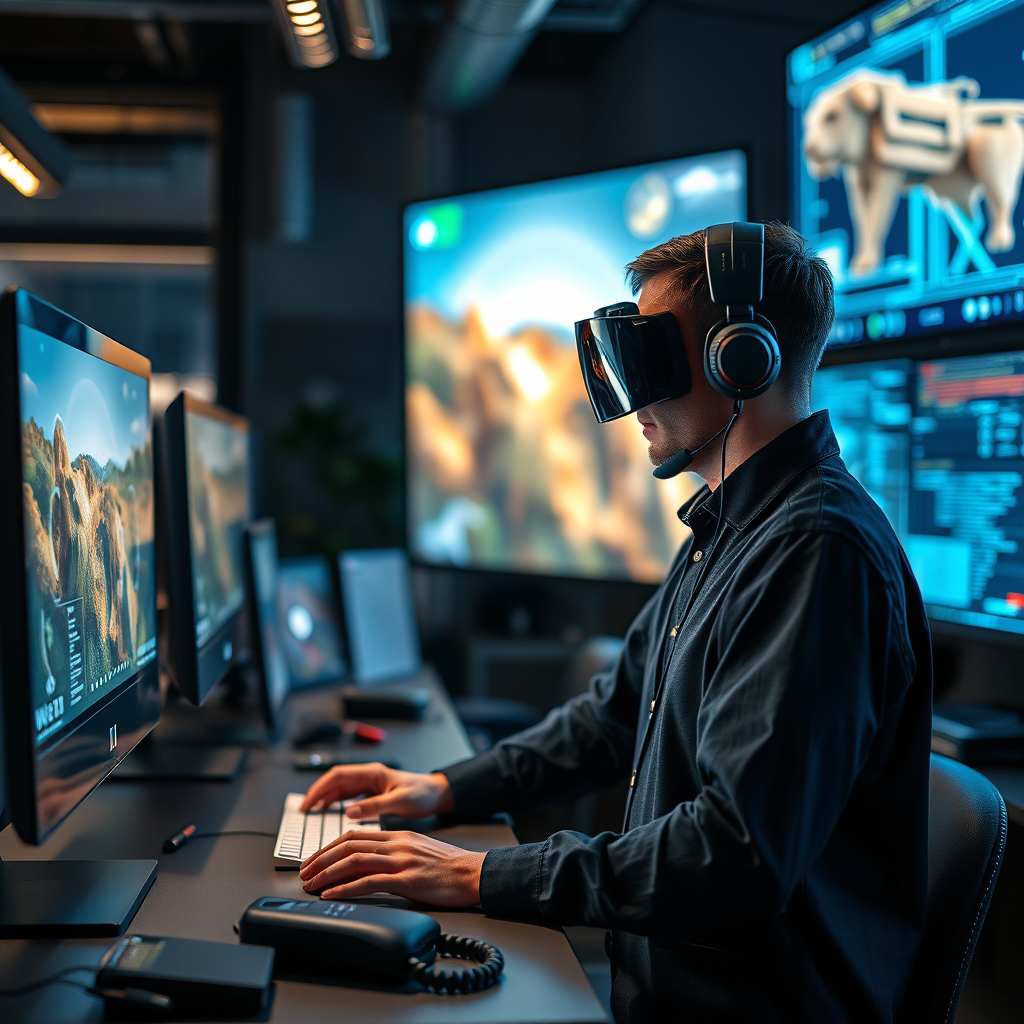
Creating virtual worlds using generative AI involves several steps that streamline the development process:

1. Data Collection: Developers gather datasets relevant to the desired virtual environment. This might include images, sounds, or even 3D models that represent elements of the world to be created.
2. Training the Model: Using the collected data, the generative AI model is trained. For instance, a GAN would be fed with images of forests, cities, or any relevant scenery to learn common patterns and features.
3. Content Generation: Once trained, the model can generate new images and even animations based on the learned data. Developers can modify parameters to create variations, allowing for diverse environments.
4. Integration and Refinement: The generated content is then integrated into video production software. Tools like Unreal Engine and Unity are increasingly incorporating generative AI capabilities, allowing developers to refine and enhance the generated visuals further.
5. Finalization and Testing: After the virtual world is built, it undergoes testing to ensure that it meets the aesthetic and functional requirements before being finalized for public consumption.
Popular tools that facilitate this process include NVIDIA’s GauGAN for landscape generation, Runway ML for creative media, and OpenAI’s DALL-E for image generation. These platforms empower creators with accessible tools to bring their virtual worlds to life.
Advantages of Using Generative AI in Video Production
The advantages of incorporating generative AI into video production are numerous:
– Reduction in Production Time and Costs: Traditional video production can be a time-consuming and costly endeavor, often requiring extensive resources for environment design and scene creation. Generative AI drastically cuts down this time, enabling creators to produce high-quality content in a fraction of the time and budget.
– Enhanced Creativity: With generative AI, the limits of imagination are stretched. The technology allows for algorithm-driven design possibilities that can lead to unique and innovative outcomes. Rather than being restricted by traditional methods, creators can explore new avenues and generate ideas that may not have been conceived through manual design.
For instance, films like “The Lion King” (2019) and video games such as “No Man’s Sky” have utilized aspects of generative AI to create expansive worlds that are both visually stunning and engaging. This opens up a treasure chest of creative possibilities for filmmakers and game developers alike.
Real-World Applications and Case Studies
Generative AI has already made its mark across various industries:
– Gaming: The gaming industry has been one of the early adopters of generative AI. Titles like “Minecraft” utilize procedural generation to create vast landscapes that players can explore, ensuring that no two experiences are the same. Additionally, game studios like Ubisoft are experimenting with AI to generate realistic NPC behaviors and dialogue.
– Film and Animation: In the realm of film, projects like “Love, Death & Robots” have employed generative techniques to create visually striking short films with diverse animation styles. This not only enhances storytelling but also reduces the workload for animators.
– Virtual Reality (VR) and Augmented Reality (AR): Companies such as Oculus and Magic Leap are utilizing generative AI to create immersive VR and AR experiences that transport users to entirely new worlds, making interactive storytelling more accessible and engaging.
These applications demonstrate the versatility and potential of generative AI across various sectors, enhancing creativity and efficiency.
Challenges and Limitations
Despite its promising capabilities, generative AI is not without challenges:
– Ethical Considerations: The use of AI-generated content raises questions about ownership, authenticity, and the potential for misuse. For example, AI can produce deep fakes or misleading content, leading to ethical dilemmas regarding consent and representation.
– Technical Challenges: Developers integrating generative AI often face hurdles such as ensuring the quality and coherence of generated content. Maintaining control over the output and refining the model to produce consistently high-quality results can be complex and requires ongoing adjustments and improvements.
Furthermore, biases present in the training data can result in skewed outputs, leading to a lack of diversity or misrepresentation in generated environments. Developers must be vigilant in curating datasets to mitigate these issues.
The Future of Generative AI in Video Worlds
Looking ahead, the future of generative AI in video production is bright and full of potential:
– Advancements in Technology: As machine learning and AI technologies continue to evolve, we can expect improvements in the capabilities of generative models. Enhanced algorithms may allow for even more realistic and complex outputs, moving closer to photorealism in virtual environments.
– Trends in Audience Engagement: Interactive storytelling is gaining traction, and generative AI will play a crucial role in this evolution. Audiences may soon enjoy personalized experiences where the narrative adapts based on viewer choices, creating a dynamic and engaging storytelling approach.
As creators become more familiar with generative AI tools, we can anticipate an explosion of innovation, leading to new genres and formats that redefine how stories are told in the digital age.
The advent of generative AI is set to redefine how virtual video worlds are created and experienced. By embracing this technology, creators can harness its capabilities to produce stunning, interactive environments that captivate audiences like never before. As the industry evolves, those interested in digital storytelling should stay informed about these trends and consider exploring generative AI tools to enhance their own projects. The future is here, and it’s filled with endless possibilities!
Frequently Asked Questions
What is generative AI and how does it create virtual video worlds?
Generative AI refers to algorithms that can create content autonomously, including images, videos, and even entire virtual environments. By leveraging vast datasets and complex neural networks, generative AI tools can analyze existing media to generate new, realistic video worlds. This technology uses deep learning models to understand spatial relationships, lighting, and textures, allowing creators to build immersive environments that can be used in gaming, virtual reality, and film.
How can businesses benefit from using generative AI for virtual video worlds?
Businesses can harness generative AI to create cost-effective virtual video worlds for marketing, training, and product visualization. This technology allows for rapid prototyping and iteration, reducing the time and resources required for traditional video production. Additionally, brands can create engaging content that captivates their audience, enhances user experience, and builds a strong online presence through interactive and immersive storytelling.
Why are virtual video worlds important for the future of entertainment and media?
Virtual video worlds are reshaping the entertainment landscape by providing immersive experiences that enhance storytelling and engagement. They allow creators to explore limitless creative possibilities and deliver content that is interactive and customizable, catering to diverse audiences. As technology advances, these virtual environments are becoming increasingly realistic and accessible, paving the way for new forms of media that blend the physical and digital worlds.
What are the best tools available for creating generative AI video worlds?
Some of the best tools for creating generative AI video worlds include Unreal Engine, Unity, and NVIDIA Omniverse. These platforms offer powerful features for rendering realistic graphics and integrating AI capabilities to generate environments dynamically. Additionally, tools like RunwayML and DeepArt.io provide user-friendly interfaces for creators who may not have extensive programming knowledge, making it easier to experiment with generative AI in video production.
Which industries are most likely to benefit from generative AI in virtual video world creation?
Several industries stand to benefit significantly from generative AI in creating virtual video worlds, including gaming, film, advertising, and education. In gaming, developers can craft expansive and interactive environments, while filmmakers can use this technology for seamless visual effects and set design. Moreover, educational institutions can create virtual classrooms that offer immersive learning experiences, helping students engage more deeply with the material.
References
- Generative art
- https://www.bbc.com/news/technology-64252410
- https://www.theguardian.com/technology/2023/jan/11/ai-generated-video-revolution-creating-entirely-virtual-worlds
- https://www.sciencedirect.com/science/article/pii/S0040162521004983
- Generative AI Won’t Revolutionize Game Development Just Yet | WIRED
- https://www.nytimes.com/2023/04/01/technology/generative-ai-video.html
- https://www.technologyreview.com/2023/05/14/1063317/generative-ai-video-creation/
- https://www.microsoft.com/en-us/research/publication/generative-ai-creating-virtual-worlds-in-video-games/
