
The future of AI-powered auto-dimming displays is set to dramatically improve our screen experiences by creating a more responsive and adaptive interaction with technology. By intelligently adjusting brightness and contrast based on surrounding light and user preferences, these advanced displays will enhance both visibility and comfort in various settings. This article will delve into the technological advancements, applications, and implications of AI in auto-dimming displays, providing you with a comprehensive understanding of how these innovations are poised to change the way we use screens.




Understanding Auto-Dimming Technology
Traditionally, auto-dimming displays have relied on basic light sensors to adjust brightness levels based on the amount of ambient light present. While this technology has provided some benefits, such as reducing glare and improving visibility in bright environments, it comes with limitations. For instance, standard sensors may struggle to accurately gauge varying light conditions or fail to consider user preferences, leading to suboptimal viewing experiences.
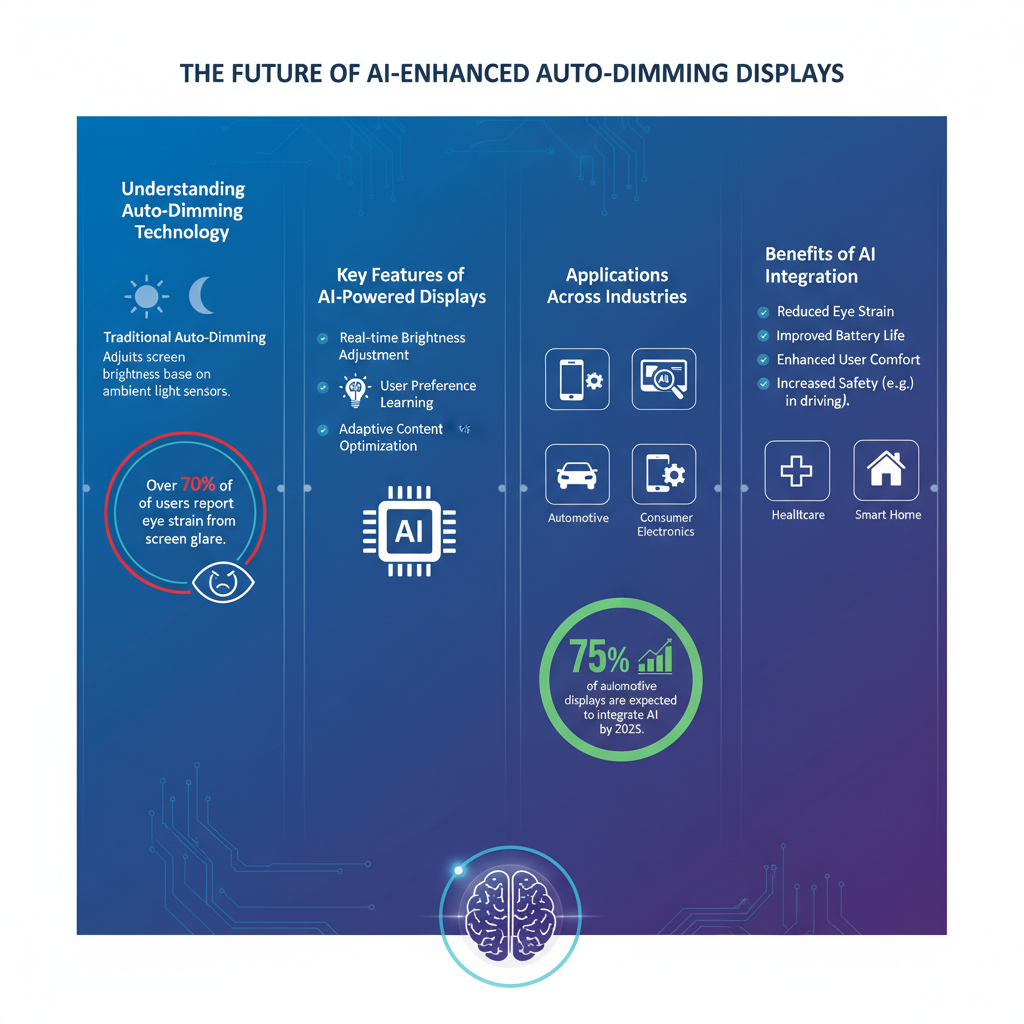
Enter artificial intelligence. AI enhances the responsiveness and efficiency of auto-dimming displays by utilizing advanced algorithms and machine learning techniques. These improvements allow for real-time adjustments that account not only for ambient light but also for the specific context in which the display is being used. For example, an AI system can learn that a user prefers a warmer color temperature during the evening hours, making the display more comfortable to look at during those times. This level of personalization and adaptability is a game-changer, paving the way for a seamless user experience that traditional auto-dimming technologies simply cannot match.
Key Features of AI-Powered Displays
One of the most significant advantages of AI-powered displays is their enhanced light-sensing capabilities. These displays can analyze the surrounding environment in real time, adjusting brightness and contrast dynamically to ensure optimal visibility. For instance, if you step from a brightly lit room into a dimly lit hallway, the display can instantly adapt, ensuring that you can see the screen clearly without straining your eyes.
Moreover, user customization options harnessing machine learning make these displays truly unique. By analyzing user behavior and preferences, AI can tailor the display settings to individual needs. For example, if you frequently use your device in a specific lighting condition, the AI can learn this preference and automatically adjust the display settings accordingly. This level of personalization not only enhances comfort but also adds a layer of convenience, allowing users to focus on their tasks without having to constantly fiddle with settings.
Applications Across Industries
The potential applications of AI-enhanced auto-dimming displays span multiple industries, making this technology incredibly versatile. In consumer electronics, smartphones and televisions are prime candidates for these advancements. Imagine watching your favorite show on a smart TV that seamlessly adjusts its brightness based on the time of day or the amount of natural light in the room. Not only would this enhance the viewing experience, but it would also conserve energy by reducing unnecessary brightness in darker environments.
In the automotive industry, AI-powered displays are being integrated into vehicle dashboards and infotainment systems. These displays can adjust in real-time to changing lighting conditions, enhancing safety and comfort while driving. For example, during bright daylight, the display can increase its brightness to ensure information is easily readable, while dimming during nighttime to prevent blinding glare. By improving visibility of critical information, AI-enhanced auto-dimming displays can contribute to safer driving experiences.
Benefits of AI Integration
Integrating AI into auto-dimming displays brings a plethora of benefits. One of the most notable advantages is improved energy efficiency, which can lead to longer battery life in portable devices. By automatically adjusting brightness based on environmental conditions, these displays consume less power, ultimately benefiting users who rely on their devices throughout the day.
Additionally, reduced eye strain is a significant benefit of AI integration. Constantly adjusting to different lighting conditions can be taxing on our eyes, leading to discomfort and fatigue. AI-powered displays alleviate this issue by adapting in real-time, ensuring that users can maintain comfortable viewing experiences regardless of their surroundings. Whether you are working late into the evening or using your device in bright sunlight, these displays promise to enhance your visual comfort.
Challenges and Considerations
Despite the many advantages of AI-enhanced auto-dimming displays, several challenges and considerations must be addressed. One potential concern is privacy. As these displays rely on data collection to personalize user experiences, there is a risk of mismanagement or misuse of sensitive information. It is essential for manufacturers to prioritize data protection and transparency, ensuring users are informed about how their data is used and stored.
Another challenge is the need for standardization across devices and manufacturers. With various brands and models adopting different approaches to AI integration, users may experience inconsistencies in performance and functionality. Establishing industry standards can help streamline user experiences and ensure that consumers benefit from the best possible technology, regardless of their device.
Future Trends and Innovations
As we look ahead, several exciting trends and innovations are on the horizon for AI-enhanced auto-dimming displays. One of the most promising developments is the integration of more advanced sensors that can not only detect light but also recognize user emotions and reactions. This could lead to displays that adapt not just to external conditions but also to the user’s current mood, creating a truly immersive and personalized experience.
Furthermore, as augmented and virtual reality technologies continue to advance, the role of AI in developing more adaptive and intelligent interfaces will be crucial. Future displays may incorporate features that allow for seamless transitions between virtual and real-world environments, enhancing the overall user experience in ways we can only begin to imagine.
The advancements in AI-powered auto-dimming displays are set to enhance user experience significantly, making devices smarter and more responsive to our needs. As technology continues to evolve, staying informed about these trends will be crucial for consumers and manufacturers alike. By exploring the latest developments, we can better appreciate how these innovations will benefit us, paving the way for a future where our interactions with screens are more intuitive and enjoyable than ever before.
Frequently Asked Questions
What are AI-powered auto-dimming displays and how do they work?
AI-powered auto-dimming displays are advanced screen technologies that automatically adjust brightness based on environmental lighting conditions and user interaction. Using sensors and machine learning algorithms, these displays analyze surrounding light levels and user preferences to optimize visibility and reduce glare. This results in a more comfortable viewing experience, enhancing usability for devices like smartphones, tablets, and automotive dashboards.
Why should I consider an AI-powered auto-dimming display for my devices?
Considering an AI-powered auto-dimming display offers multiple benefits, including improved eye comfort and battery efficiency. By dynamically adjusting brightness, these displays reduce strain on the eyes in varying light conditions, making them ideal for prolonged use. Additionally, they can help conserve battery life by decreasing brightness when ample ambient light is available, which is particularly advantageous for portable devices.
How do auto-dimming displays enhance user experience in different environments?
Auto-dimming displays significantly enhance user experience by adapting to various lighting environments, such as bright sunlight or dim indoor settings. In bright conditions, the display increases brightness for better visibility, while in dark environments, it reduces brightness to prevent eye strain and conserve battery. This adaptability ensures that users can interact with their devices comfortably, regardless of the surrounding light conditions.
What are the best applications for AI-powered auto-dimming display technology?
The best applications for AI-powered auto-dimming display technology include smartphones, tablets, laptops, and automotive displays. In smartphones and tablets, it enhances user comfort during reading or gaming, while in laptops, it can improve battery life. In vehicles, these displays ensure that information is clearly visible to drivers in varying light conditions, which contributes to safer driving experiences.
Which brands are leading the market in AI-powered auto-dimming displays?
Leading brands in the market for AI-powered auto-dimming displays include Apple, Samsung, and LG. These companies have integrated advanced auto-dimming technology into their devices to enhance user experience and device performance. By continuously innovating their display technologies, these brands are setting industry standards for brightness adjustment and overall visual quality, making them top choices for consumers seeking high-performance screens.
References
- Display device
- https://www.sciencedirect.com/science/article/pii/S1369702119302056
- https://www.nature.com/articles/s41598-019-46026-y
- https://www.techrepublic.com/article/how-ai-is-improving-display-technology/
- https://www.researchgate.net/publication/337154839_AI-Enhanced_Display_Technologies_for_Smart_Devices
- https://www.semanticscholar.org/paper/AI-in-Display-Technology-A-Review-Patel-Pandey/6e6c6b3f7fbcf6c7d4f1e1c75c879d3a0b7e4c1e
- https://www.bbc.com/future/article/20210614-the-future-of-screen-technology
- https://www.edn.com/what-is-auto-dimming-display-and-how-does-it-work/
