


The future of live sports broadcasting is bright, thanks to the revolutionary integration of AI analytics. These advanced technologies are set to enhance viewer engagement, provide real-time insights, and completely transform how fans experience their favorite sports. As we delve into the ways AI is reshaping live sports broadcasts, you’ll discover the exciting possibilities this integration brings for both fans and the industry as a whole.
The Role of AI in Sports Broadcasting

AI plays a crucial role in modern sports broadcasting by analyzing vast amounts of data from various sources, including player statistics, historical performance, and even social media sentiment. AI algorithms can quickly process this information to deliver real-time insights during live broadcasts. For example, during a basketball game, AI can provide immediate statistics on player efficiency ratings or shooting percentages, giving commentators and fans a deeper understanding of the game dynamics.
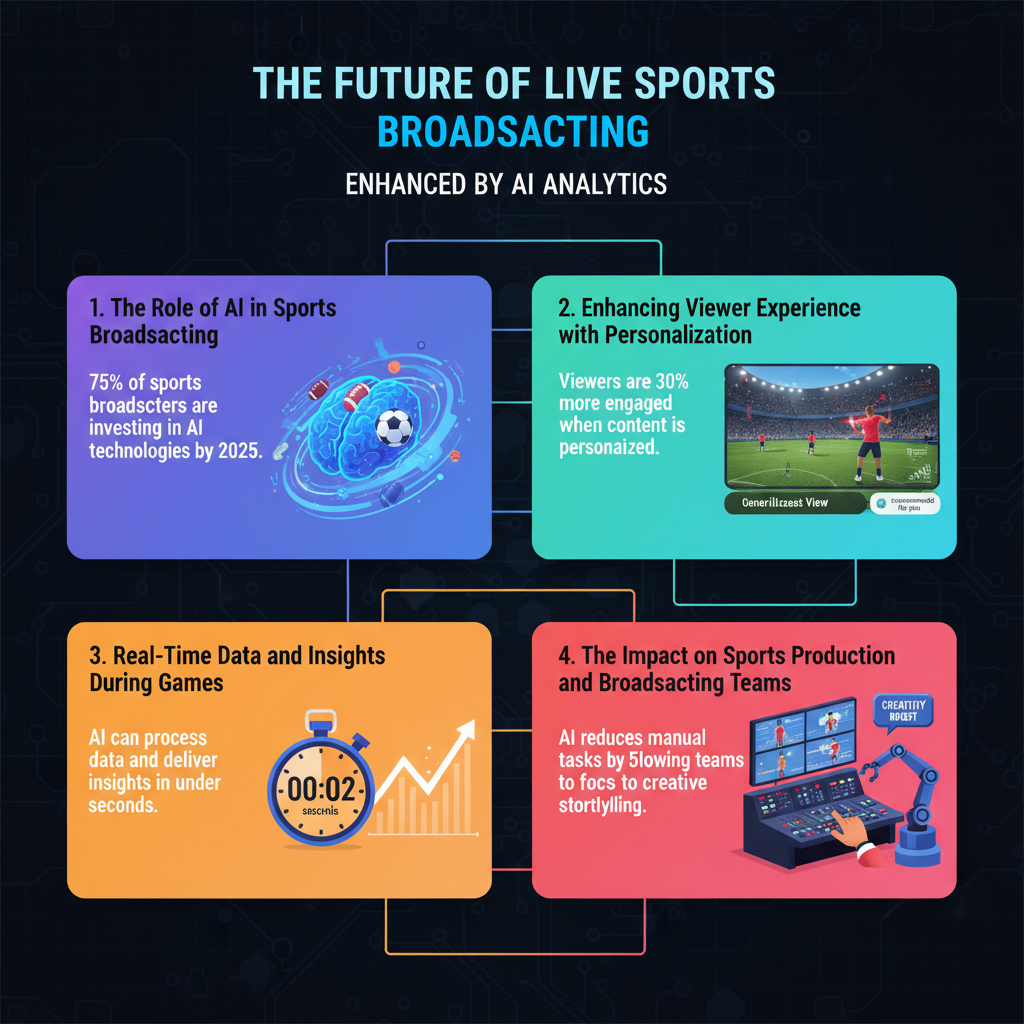
Machine learning techniques take this a step further by enabling predictive analytics. By studying patterns and trends from historical data, AI can aid in discussing game strategies, such as predicting a team’s likelihood to play aggressively in the second half based on previous performances. This not only enriches the commentary but also enhances fans’ understanding of the game, making them feel more connected to the action.
Enhancing Viewer Experience with Personalization

One of the most exciting applications of AI in sports broadcasting is the ability to personalize content based on viewer preferences. AI can analyze individual viewing habits, such as the types of sports and teams a fan follows, and tailor recommendations accordingly. This creates a unique experience for each viewer, ensuring that they receive content that resonates with their interests.
For instance, if a viewer frequently watches highlights of soccer goals scored by a specific player, AI can suggest similar videos or even real-time updates on that player’s performance during a live match. Additionally, smart recommendations for player stats, game predictions, and even trivia related to the match keep audiences engaged throughout the broadcast, making them feel like part of the action rather than passive observers.
Real-Time Data and Insights During Games
Imagine watching a live football match and receiving instantaneous analytics about each player’s performance—this is becoming a reality thanks to AI. With AI-driven tools, commentators can access advanced metrics, such as player tracking data, to provide a richer narrative during broadcasts. This data can include real-time insights on player speed, distance covered, and passing accuracy, which helps to enhance the storytelling aspect of the game.
Moreover, fans at home can gain access to these same advanced metrics through their devices, allowing them to analyze player performance in real-time. This level of engagement not only keeps viewers informed but also fosters deeper discussions among fans, both online and offline, about strategies and player effectiveness throughout the game.
The Impact on Sports Production and Broadcasting Teams
The implementation of AI tools in sports broadcasting is not just beneficial for viewers; it also streamlines production processes for broadcasting teams. By automating certain aspects of content creation, such as data visualization and highlight generation, AI reduces the costs and time required to produce high-quality broadcasts. This efficiency allows production teams to focus on creativity and storytelling rather than getting bogged down by repetitive tasks.
Furthermore, AI facilitates enhanced collaboration among teams. By translating complex data into digestible formats, AI tools make it easier for producers, commentators, and analysts to communicate effectively. A seamless integration of AI-generated insights into the broadcast helps create a more cohesive viewing experience, ensuring that audiences receive the best possible coverage.
Predictive Analytics for Future Events
AI doesn’t just enhance the current viewing experience; it also has significant implications for predicting future events in sports. By leveraging historical data, AI can forecast outcomes such as game results, player performance, and even injury probabilities. This capability allows broadcasters to engage in more informed discussions about the potential outcomes of upcoming matches.
For example, sports networks can utilize AI predictions to enhance their betting segments, providing viewers with statistical insights that can influence their wagering decisions. Additionally, teams can leverage these insights for strategic decisions, such as determining the best times to trade players or adjust their game strategies based on predicted matchups.
Ethical Considerations and Challenges
While the integration of AI in sports broadcasting offers numerous benefits, it also raises important ethical considerations. One of the primary concerns is data privacy and consent from viewers. Broadcasting companies must navigate the complex landscape of data collection practices to ensure that they are respecting viewer privacy while still delivering personalized content.
Moreover, ensuring the accuracy of AI-generated content is paramount to maintaining credibility in sports journalism. Misleading statistics or incorrect predictions can have significant repercussions, so it’s essential for broadcasters to implement robust checks and balances in their AI systems. Transparency in how AI is used and how data is sourced will be critical in maintaining trust with audiences.
The Future Landscape of Live Sports Broadcasting
Looking ahead, the integration of AI across all levels of sports broadcasting is expected to increase dramatically. As technology continues to evolve, we can anticipate broadcasts that feature immersive experiences, such as augmented reality (AR) overlays powered by AI analytics. Imagine being able to see player stats in real-time as you watch them on your screen or even engaging with virtual replays that allow you to analyze plays from multiple angles.
Additionally, AI will continue to refine the personalization of content, tailoring not just highlights but entire broadcasts to individual viewer preferences. As fans increasingly demand more tailored and engaging experiences, broadcasters who leverage AI effectively will be well-positioned to lead the industry into this exciting new era.
By embracing AI analytics, the future of live sports broadcasting is set to be more engaging, insightful, and personalized than ever before. As fans and broadcasters alike adapt to these changes, it’s essential to stay informed about emerging technologies and trends that will shape the sports landscape. Keep an eye on these developments to fully enjoy and engage with the evolving world of sports broadcasting.
Frequently Asked Questions
What role does AI analytics play in the future of live sports broadcasting?
AI analytics is set to revolutionize live sports broadcasting by providing real-time data analysis, enhancing viewer engagement, and personalizing content. By leveraging machine learning algorithms, broadcasters can analyze player performance, predict game outcomes, and deliver tailored highlights to fans. This integration not only enriches the viewing experience but also allows teams and coaches to make data-driven decisions on the field.
How can AI improve viewer engagement during live sports events?
AI enhances viewer engagement by offering personalized experiences and interactive features during live sports events. Through AI-driven recommendations, fans can receive customized content such as player stats, interactive polls, and real-time updates tailored to their preferences. Additionally, AI-powered chatbots can facilitate conversations and answer fan queries, creating a more immersive and engaging environment for viewers.
Why should sports broadcasters invest in AI technology for live events?
Investing in AI technology for live sports broadcasting offers numerous advantages, including improved operational efficiency, enhanced viewer experience, and the ability to gather actionable insights. AI tools can streamline production processes, reduce costs, and deliver compelling content that attracts and retains viewers. Furthermore, as audiences increasingly demand smarter and more interactive viewing options, broadcasters who adopt AI will have a competitive edge in the evolving landscape of sports media.
What are the best AI tools for live sports analytics?
Some of the best AI tools for live sports analytics include IBM Watson, Amazon SageMaker, and Stats Perform. These platforms offer advanced analytics capabilities, enabling broadcasters to analyze vast amounts of data in real-time, generate actionable insights, and create engaging content. By utilizing these tools, sports organizations can enhance their broadcasting strategies and provide fans with rich, data-driven experiences.
Which sports are most likely to benefit from AI analytics in live broadcasting?
While all sports can benefit from AI analytics, fast-paced sports like basketball, soccer, and football stand to gain the most due to the high volume of data generated during games. These sports require real-time analysis for player performance, strategic adjustments, and fan engagement. Additionally, sports with extensive historical data, such as baseball and tennis, can leverage AI to enhance predictive analytics and improve broadcasting quality.
References
- Broadcasting of sports events
- https://www.bbc.com/news/technology-58682004
- https://www.reuters.com/article/us-sports-media-ai-idUSKCN1V10ZP
- https://www.forbes.com/sites/bernardmarr/2020/06/01/how-ai-is-changing-the-future-of-sports-broadcasting/
- https://www.technologyreview.com/2020/07/29/1006619/how-ai-is-changing-sports-broadcasting/
- https://www.ncbi.nlm.nih.gov/pmc/articles/PMC7403635/
- https://www.sportsvideo.org/2021/04/22/the-impact-of-ai-analytics-on-sports-broadcasting/
- https://journals.sagepub.com/doi/full/10.1177/2158244020980584



The Role of AI in Developing Virtual Sports Commentators