

Transparent display devices are changing the way we interact with technology, allowing users to see both information and the environment around them simultaneously. These innovative displays are not only aesthetically pleasing but also functional, making them perfect for various applications like retail, advertising, and smart home technology. In this article, we’ll explore the latest advancements in transparent display technology, their diverse applications, and what the future holds for this exciting field.
Overview of Transparent Display Technology

Transparent displays are defined by their ability to present images and videos while allowing light to pass through, creating a see-through effect. This technology typically utilizes advanced methods like organic light-emitting diodes (OLEDs) or liquid crystal displays (LCDs), which can be designed to be partially transparent. Unlike traditional displays that rely on opaque screens, transparent displays provide a unique blend of digital content and real-world visibility, enhancing user interaction and engagement.
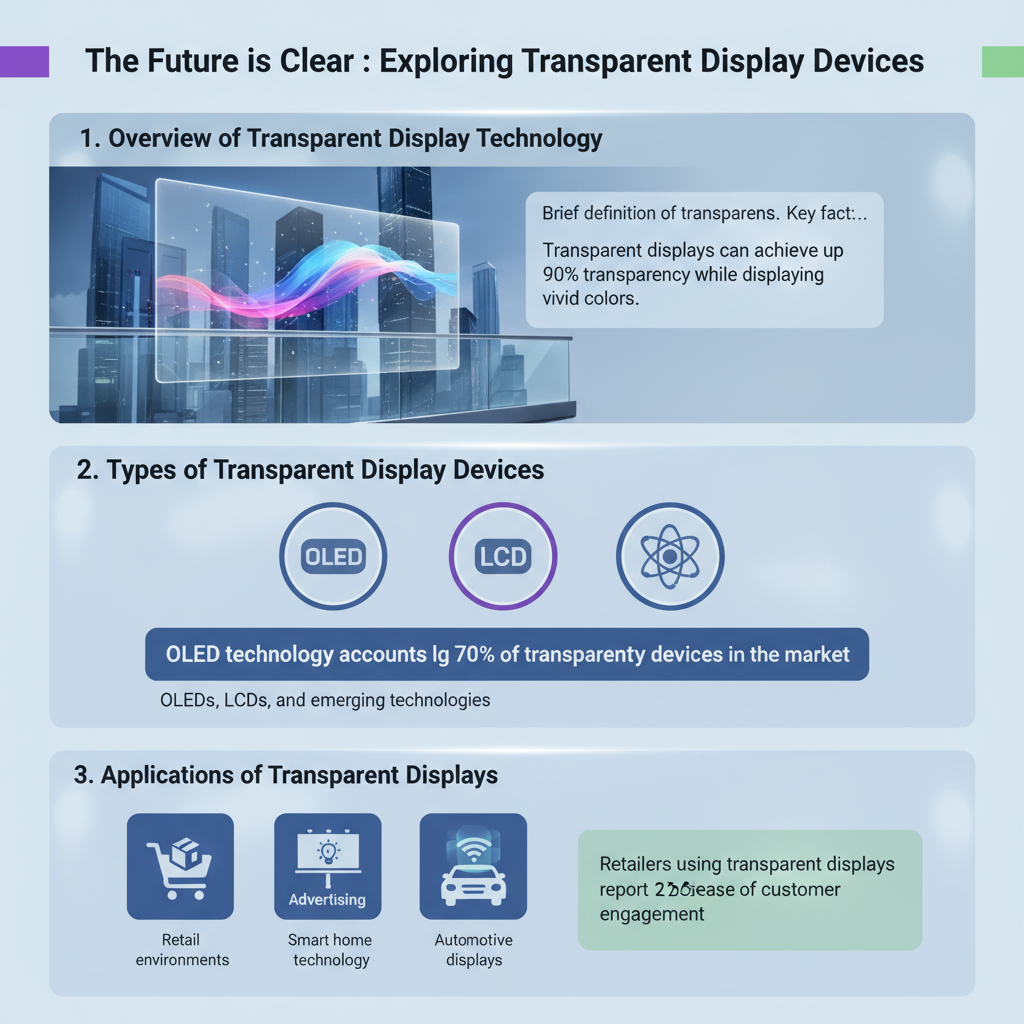
The key difference between transparent and traditional displays lies in their design and functionality. Traditional screens, such as LCDs or LEDs, require a solid backing that blocks out the surrounding environment. In contrast, transparent displays utilize cutting-edge materials and technologies to maintain a level of transparency, allowing users to see through them without obstructing their view. This capability opens up a world of possibilities for creating interactive environments in various settings.
Types of Transparent Display Devices

When it comes to transparent display devices, there are several types to consider, each with its own unique features and advantages. Here’s a brief overview of the most common types:
1. OLED Displays: Organic light-emitting diode technology allows for vibrant colors and high contrast ratios. OLED transparent displays are incredibly thin and can achieve a high level of transparency, making them ideal for applications where aesthetic appeal is crucial. Their flexibility also allows for creative implementations in architecture and design.
2. LCD Displays: Liquid crystal displays can be made transparent using special films that allow light to pass through. While typically bulkier than OLEDs, they are more common in commercial applications due to their lower cost and established manufacturing processes. However, they may not achieve the same level of transparency or color vibrancy as OLEDs.
3. Projection-Based Displays: These systems use projectors to display images onto a transparent surface, such as glass. While they can offer a large display area and are versatile in terms of content, their effectiveness can be influenced by ambient light conditions. This type of display is often used in exhibitions and advertising, where flexibility is a priority.
Each type of transparent display offers distinct advantages that cater to specific needs, whether it’s for enhancing customer experiences in retail or creating immersive environments in smart homes.
Applications of Transparent Displays
Transparent displays have found their way into various sectors, each leveraging their unique capabilities to enhance user engagement and improve experiences. Here are some notable applications:
– Retail and Advertising: Retailers are increasingly using transparent displays to create eye-catching advertisements that allow customers to view products behind the screen. For instance, a transparent OLED display can showcase a product while simultaneously displaying promotional content. This not only draws attention but also integrates product visibility with marketing efforts, enhancing overall customer engagement.
– Smart Homes: In smart home technology, transparent displays can be integrated into windows or kitchen surfaces, providing real-time information like weather updates, notifications, or even recipes while maintaining a clear view of the outdoors. Imagine a kitchen countertop that can show cooking instructions while allowing you to see your guests in the living room!
– Automotive Industry: Transparent displays are also making waves in the automotive sector, where they can be used as heads-up displays (HUDs) in vehicles. This technology allows drivers to access navigation, speed, and safety information without taking their eyes off the road, enhancing safety and convenience.
These applications demonstrate how transparent displays can revolutionize customer interaction, making everyday experiences more engaging and informative.
Market Trends and Growth Predictions
The market for transparent display devices is rapidly evolving, with several trends shaping its trajectory. Currently, the landscape is characterized by increasing investments in research and development, leading to innovative products entering the market. The rise of smart cities and the Internet of Things (IoT) is also driving demand for transparent displays, as they align perfectly with the vision of interconnected and interactive environments.
Furthermore, industry analysts predict significant growth in the transparent display market over the next few years. According to market research, the sector is expected to expand at a compound annual growth rate (CAGR) of over 25% by 2028. This growth will be fueled by advancements in display technologies, lower manufacturing costs, and a surge in consumer awareness regarding the benefits of transparent displays.
Emerging trends include the integration of augmented reality (AR) features into transparent displays, enhancing their functionality and appeal. As technology continues to advance, we can expect to see even more creative and innovative uses for transparent displays across various industries.
Challenges Facing Transparent Display Technology
Despite the exciting potential of transparent display technology, several challenges still need to be addressed. One of the primary technical limitations is image quality. Achieving high resolution and clarity while maintaining transparency can be difficult, as the transparency can sometimes compromise the vibrancy of colors and sharpness of images.
Additionally, brightness is a concern. Transparent displays often struggle to compete with ambient light, making it challenging to present content clearly in well-lit environments. Manufacturers are working on solutions to enhance brightness levels while maintaining transparency, but this remains a hurdle.
Market acceptance and consumer awareness are other significant challenges. Many consumers are still unfamiliar with transparent display technology and its benefits. As a result, manufacturers must invest in marketing efforts to educate potential users and demonstrate the value of these devices in everyday life.
Leading Manufacturers and Products
As the market for transparent displays grows, several key players are emerging as leaders in the industry. Companies like LG Display, Samsung, and Panasonic are pioneering advancements in transparent display technology, each offering unique products that showcase the potential of this innovative medium.
– LG Display: Known for its cutting-edge OLED technology, LG has developed transparent OLED displays that are being used in retail and commercial spaces to create stunning visual experiences.
– Samsung: With its range of transparent displays, Samsung is making strides in both consumer and commercial markets, focusing on integrating these devices into smart homes and interactive advertising.
– Panasonic: Panasonic’s transparent displays are being utilized in various industries, including automotive and retail, where they provide innovative solutions for enhancing customer engagement.
These manufacturers are at the forefront of the transparent display revolution, providing products that not only meet current market demands but also push the boundaries of what is possible with display technology.
Future Developments in Transparent Displays
The future of transparent displays is bright, with ongoing research and development paving the way for exciting advancements. Researchers are exploring new materials and manufacturing techniques to improve transparency, brightness, and color accuracy. Innovations such as flexible and rollable displays are also being developed, which could lead to even more creative applications in architecture and product design.
Predictions for the coming years suggest that transparent displays will become more commonplace, integrating seamlessly into everyday life. We could see advancements in augmented reality features that allow users to interact with digital content in more meaningful ways, creating immersive experiences that blend the physical and digital worlds.
As transparent display technology continues to evolve, it will undoubtedly open up new possibilities for how we engage with information and interact with our environments.
As transparent display devices gain traction in various sectors, they promise to revolutionize how we interact with technology. From enhancing advertising strategies to integrating into daily life, their potential is vast. Stay informed and consider how these advancements could benefit your personal or business needs.
Frequently Asked Questions
What are transparent display devices and how do they work?
Transparent display devices are innovative screens that allow users to see images and videos while still being able to view objects behind the display. These devices typically use OLED or LCD technology combined with special materials that enhance transparency. By adjusting the brightness and contrast, they can project vivid content without obstructing the view, making them ideal for various applications such as retail displays, advertising, and smart home solutions.
How are transparent displays being used in retail environments?
In retail environments, transparent displays are being used to enhance customer engagement and create unique shopping experiences. For example, stores can showcase products behind the screen while simultaneously displaying promotional content or product information on the transparent display. This not only attracts customers’ attention but also encourages them to interact with products, ultimately leading to increased sales and a more immersive shopping experience.
Why are transparent displays gaining popularity in the tech market?
Transparent displays are gaining popularity due to their ability to blend digital content with the physical world, creating a seamless user experience. As technology advances, consumers are increasingly seeking innovative solutions that enhance interactivity and engagement. Additionally, industries such as automotive and architecture are exploring transparent displays for their aesthetic appeal and practicality, leading to a growing demand across multiple sectors.
Which brands are leading the market in transparent display technology?
Leading brands in the transparent display market include LG, Samsung, and Panasonic, each offering cutting-edge solutions tailored for various applications. LG, for instance, has developed OLED transparent displays that are particularly popular in commercial settings, while Samsung focuses on high-resolution transparent screens for advertising and information display. These brands are continuously innovating to improve display quality, durability, and energy efficiency, positioning themselves at the forefront of this emerging technology.
What are the potential challenges of using transparent display devices?
While transparent display devices offer exciting opportunities, they also come with potential challenges. One significant issue is the limited visibility in bright light conditions, which can affect content readability. Additionally, the technology may require a higher price point compared to traditional displays, making it less accessible for small businesses. Furthermore, the durability and long-term performance of transparent displays are still being assessed, which may pose concerns for widespread adoption in various industries.
References
- See-through display
- https://www.bbc.com/news/technology-59965803
- https://www.sciencedirect.com/science/article/pii/S136970121930122X
- https://www.theguardian.com/technology/2021/jun/07/transparent-display-technology
- https://www.forbes.com/sites/bernardmarr/2021/01/18/what-is-transparent-display-technology-and-how-is-it-being-used/
- https://www.digitaltrends.com/computing/transparent-displays-technology/
- https://www.nature.com/articles/s41598-020-69182-5