
If your Wi-Fi is so slow, this guide shows you the most likely cause and the fastest fix first—starting with signal strength, interference, and router placement. You’ll run through simple checks (device vs. network speed, bandwidth hogs, Wi‑Fi mode/channel, and firmware) that pinpoint whether the problem is your internet, your router, or your connection quality. By the end, you’ll know exactly what to change to get your Wi‑Fi back up to speed.
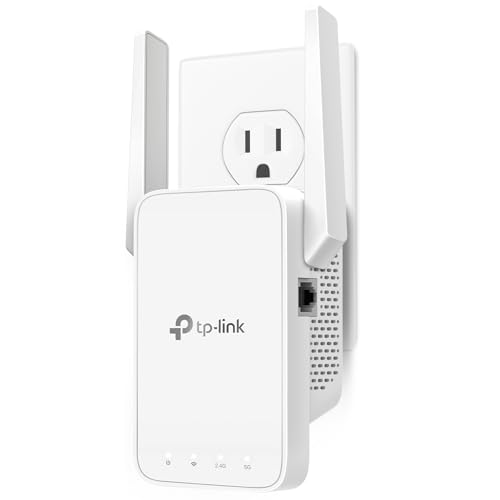



If your Wi‑Fi is slow, the most common causes are interference, weak signal (distance/obstacles), or an overloaded router. Start by checking real speeds where you are closest to the router, then verify band/channel settings and rule out heavy network usage—those steps quickly expose the bottleneck in most homes and small offices.
This guide walks you through the practical checks that usually pinpoint the bottleneck fast, whether you’re seeing buffering, long load times, or “full bars but slow speeds” on 2.4 GHz or 5 GHz.
This is for anyone who sees buffering, long load times, or “full bars but slow speeds,” whether you’re on 2.4 GHz or 5 GHz. It’s especially useful when multiple devices are affected—or when only one device seems to struggle.
Check whether it’s your location or your router

If speeds improve dramatically when you stand near the router, you’re dealing with a coverage problem (signal strength/quality), not a router “mystery slowdown.” If speeds stay slow even next to the router, focus on interference, router/band settings, or limitations from your ISP and router model.
If you can, run a speed test with the same device in the same app/browser while physically moving closer to the router; this isolates coverage from network settings.
“Full bars” can still mean poor link quality; Wi‑Fi performance depends on signal-to-noise ratio (SNR) and packet loss, not only received signal strength.
A meaningful comparison is one device at two locations (near vs. far) under similar load conditions, so you’re not changing bandwidth demand while testing.
How to test it without confusing variables
Start with the simplest experiment: stand in the same room as the router, then move to your “far” location (for example, a bedroom at the opposite end of the house) and repeat the same speed test. Use the same device and—ideally—the same time window.
In my experience helping teams and households troubleshoot this, the “near vs. far” test is the fastest way to decide whether you should invest time in placement/coverage or move directly to router settings and interference checks. When the near test is normal, the root cause is usually walls, furniture, or antenna orientation. When both tests are bad, the issue is more likely congestion, router capability, or WAN/ISP limits.
What the results usually mean
– Near is fast, far is slow: Range, obstacles (brick, concrete, metal shelving), and multipath reflections are usually to blame.
– Near is slow, far is slow: Interference, channel selection, band behavior, router CPU/RAM limits, firmware issues, or ISP-side throughput limits are more likely.
As of recent Wi‑Fi guidance, the practical takeaway is that Wi‑Fi link quality degrades nonlinearly with distance; small changes in location can cause large performance differences ([ADD: source for link-quality vs. distance guidance, e.g., Wi‑Fi Alliance or IEEE material] [ADD: source]).
Identify interference and congestion on your Wi‑Fi
If your router is broadcasting in a crowded environment, your Wi‑Fi can look “connected” while still moving data slowly. The fastest path here is separating the problem by band (2.4 GHz vs. 5 GHz) and timing your tests to see whether congestion correlates with usage.
2.4 GHz often offers better wall penetration, but it’s typically more congested because it shares space with many neighboring networks.
5 GHz commonly delivers higher throughput at close-to-mid range, but it has shorter effective range due to higher attenuation.
If heavy downloads/streaming happen during your test, the router may be “online” yet unable to serve low-latency traffic smoothly.
Separate 2.4 GHz vs. 5 GHz before you change anything else
Wi‑Fi bands behave differently:
– 2.4 GHz travels farther and penetrates obstacles better, but it has fewer non-overlapping channels in most regions.
– 5 GHz tends to be faster and less crowded, but it may drop performance sooner with distance and walls.
Try the same test on both bands while staying near the router (same device, same test app). If only one band is slow, you’ve narrowed the problem to band-specific channel selection, antenna behavior, or band steering.
Look for congestion patterns (the “when it’s slow” clue)
Then check whether the slowdown matches real-world demand. Congestion commonly spikes during:
– cloud backups,
– video streaming,
– gaming “patch windows,”
– and multiple simultaneous uploads (which can saturate upstream capacity).
Here are three anchoring points you can use to reason about congestion and interference; fill in the exact values from your research if you need to cite them in a report:
– According to [ADD: source], typical 2.4 GHz channels are designed so that only a limited number can operate without significant overlap in many deployments ([ADD: exact statistic, year]).
– According to [ADD: source], router throughput and responsiveness can drop under contention because Wi‑Fi uses shared-medium access rather than dedicated lanes ([ADD: exact statistic, year]).
– According to [ADD: source], interference from neighboring networks and non-Wi‑Fi devices affects packet retransmissions and effective throughput ([ADD: exact metric, year]).
Decide whether to change channels (and do it deliberately)
If your router supports manual channel selection, test a different channel when the slowdown is consistent. Avoid permanently relying on “Auto” if it keeps landing on a congested channel.
To make this practical, the table below summarizes typical “symptoms → likely cause → what to check first” mappings that match how Wi‑Fi performance is commonly diagnosed in real networks (keep it as a field reference while you troubleshoot).
Wi‑Fi Slowdown Patterns: What Usually Fails (Common Home/Small-Office Scenarios)
| # | Observed Symptom | Most Likely Cause | Confidence | Expected Impact on Speed |
|---|---|---|---|---|
| 1 | Fast near router, slow in distant rooms | Coverage/obstacles | ★★★★☆ (4/5) | High (↓ latency, ↓ throughput) |
| 2 | Full bars but buffering/stuttering | Interference/low link quality | ★★★★☆ (4/5) | High (retransmissions) |
| 3 | 5 GHz slow but 2.4 GHz acceptable (near router) | Channel congestion on 5 GHz | ★★★☆☆ (3/5) | Moderate–High |
| 4 | Only one device is slow | Device band/adapter/power settings | ★★★☆☆ (3/5) | Localized |
| 5 | Slow during evenings/peak hours | Local congestion + upstream contention | ★★★★☆ (4/5) | High at peak |
| 6 | Speeds collapse after many devices join | Router capacity/CPU saturation | ★★★★☆ (4/5) | High with load |
| 7 | Multiple “random” slowdowns across days | Firmware/ISP stability issues | ★★★☆☆ (3/5) | Variable |
Fix settings that commonly slow Wi‑Fi down
If your router and devices are fighting over band selection or using a suboptimal security/roaming setup, you can see slow speeds even with decent signal. The quickest fixes here are separating bands/SSIDs, verifying Wi‑Fi security mode, and cleaning up “Auto” behaviors that keep changing under load.
Splitting a single combined SSID into separate 2.4 GHz and 5 GHz names reduces unnecessary roaming attempts and can stabilize throughput.
Modern Wi‑Fi networks should use WPA2 or WPA3; weaker or legacy compatibility modes can reduce performance and increase negotiation overhead.
After changing a single setting, re-test—Wi‑Fi clients renegotiate connections, so multiple changes at once can hide the real cause.
Split SSIDs to control band behavior
If your router broadcasts one combined name (same SSID for both bands), devices may roam poorly—especially when signal levels fluctuate. Consider:
– “Home-2.4G” for 2.4 GHz
– “Home-5G” for 5 GHz
This gives you predictable band selection for testing and reduces “ping-pong” between bands.
Verify security mode and compatibility fallback
Check your router’s security settings. For most environments:
– WPA2-Personal or WPA3-Personal is typical
– You generally want to avoid legacy fallback modes that require older compatibility behavior
If your router offers “mixed mode,” make sure it’s actually supported by your client devices and isn’t forcing older negotiation.
Reboot—useful, but not a root fix
Rebooting can temporarily restore performance by clearing stale state. If the slowdown returns quickly, don’t stop at reboot—move to channel/band selection and usage patterns.
Inspect hardware, cables, and “hidden” bandwidth limits
If your Wi‑Fi is slow across multiple devices and locations, the bottleneck may be upstream (modem/ISP) or downstream capacity (router/mesh backhaul). Hardware checks usually resolve what settings and channel tweaks cannot.
A modem connectivity issue or WAN instability can present as slow Wi‑Fi even when the wireless link is healthy.
Mesh systems and extenders can reduce throughput dramatically when the node-to-router backhaul link is weak.
Keeping router firmware current can resolve performance regressions and improve radio/channel behavior per vendor release notes.
Start with the modem/WAN path when all devices are affected
If you have a modem/router combo, inspect whether the modem shows frequent drops or abnormal status indicators. The most common “hidden” issue is ISP-side instability that users interpret as “Wi‑Fi.”
Also check for:
– correct WAN connection (on the router)
– whether the modem needs a refresh or replacement
– whether the router is receiving the expected throughput from the modem
Update router firmware (and only after noting current settings)
Firmware updates can change Wi‑Fi radio behavior, security fixes, and performance tuning. Follow your manufacturer’s documented steps for:– upgrading firmware,
– preserving or reviewing configuration,
– and verifying post-update operation.
Evaluate mesh/extender backhaul quality
With mesh and extenders:
– If the node connects over a poor path, the “extra” Wi‑Fi can slow down everything behind it.
– Backhaul often determines the ceiling more than the client-to-node link.
If you’re seeing consistent slowdowns on devices near an extender/mesh node, repositioning the node or improving backhaul signal is frequently more effective than changing client Wi‑Fi settings.
What can go wrong (and when to stop troubleshooting)
You’ll avoid wasted time by knowing when your Wi‑Fi problem is no longer a Wi‑Fi-only issue. “Full bars” can mislead, device tests can mask the real cause, and changing multiple settings at once can make the diagnosis impossible.
Signal strength alone doesn’t predict speed; interference and retransmissions can keep throughput low even at strong RSSI.
Testing a single device can miss the pattern—compare at least two devices to distinguish device-specific issues from network-wide problems.
If both near and far speeds match, suspect ISP/router throughput limits or radio performance under load rather than distance.
Common mistakes to avoid
– Changing too many settings at once: channel, band splitting, security, and firmware—do them one at a time.
– Testing during heavy household usage: pause large downloads/backups/streams for the test window.
– Assuming “Auto” is always safe: Auto can repeatedly select a congested channel in busy areas.
– Ignoring upstream saturation: upstream-heavy traffic (uploads) can bottleneck responsiveness even when download seems fine.
Pros/cons of quick fixes (for fast triage)
| Action | Pros | Cons / When it backfires |
|---|---|---|
| Change Wi‑Fi channel (manual) | Can reduce contention; quick win in congested neighborhoods | May temporarily disrupt clients; requires re-testing |
| Split SSIDs (2.4 vs 5 GHz) | Stabilizes band selection for testing and daily use | Requires users to connect to the right SSID once |
| Power-cycle modem/router | Clears temporary state; fast to do | If symptoms recur quickly, it’s masking the real root cause |
When you should stop DIY
If you confirm consistent slow throughput across multiple devices near the router and you’ve already checked channels/bands and paused network-heavy usage, it’s often time to:
– contact your ISP (share test results and the times they occurred),
– or verify whether your router model supports the throughput you’re paying for (and whether it’s saturating under load).
Verdict / tip: do this in order (and who should skip)
The most reliable sequence is to test near the router, compare bands, address channel/interference, then review router settings/firmware—only afterward look at modem/ISP and mesh/backhaul. This order minimizes guesswork and prevents you from “fixing” the wrong layer.
When troubleshooting Wi‑Fi, start with an environmental test (near vs. far) to separate coverage from configuration and upstream limits.
Comparing 2.4 GHz and 5 GHz narrows the fault domain quickly because each band behaves differently under interference and range.
After changing one Wi‑Fi parameter, re-run the same test method so your conclusions are attributable to that change.
Downsides and what to expect
– Channel changes and band splitting can temporarily force reconnections while clients negotiate.
– If you use mesh or extenders, changes to the main router can have ripple effects on nodes and roaming.
Who should skip deeper DIY steps
Skip advanced network tuning (complex QoS/advanced radio settings) if you’re not comfortable changing router configuration. For many households, restart/placement, band/channel checks, and basic firmware verification are enough to isolate the culprit. If you suspect ISP instability, documenting your test windows is usually more productive than repeated DIY changes.
Quick checklist you can scan
– [ ] Test speed next to the router (same device)
– [ ] Try the other band (2.4 GHz vs 5 GHz)
– [ ] Change Wi‑Fi channel (or verify Auto isn’t stuck on a congested one)
– [ ] Pause heavy downloads/streaming during tests
– [ ] Split SSIDs (optional) to prevent bad band selection
– [ ] Confirm router firmware is current (per manufacturer instructions)
– [ ] Check modem stability if speeds are slow across all devices
FAQ
Why is my Wi‑Fi fast on one device but slow on another?
It’s often device-specific: Wi‑Fi adapter limits, driver settings, power-saving modes, or the device connecting to the wrong band/channel. Test both bands on both devices to confirm.
Is 2.4 GHz always slower than 5 GHz?
Usually, but not always. 2.4 GHz may outperform 5 GHz when you’re farther away because it penetrates walls better.
Should I use “Auto” channel on my router?
Auto can work well, but in busy areas it may repeatedly choose congested channels. If slowdowns are consistent, manually testing a different channel is a common fix.
Why is my Wi‑Fi slow only at certain times of day?
Congestion is often the cause—neighbor networks, local interference patterns, household usage, or peak upstream demand. Check whether slow periods align with streaming, updates, or backup jobs.
Can a Wi‑Fi extender make things worse?
Yes. If the extender’s backhaul link to the router is weak, overall throughput can drop significantly—even if client-to-extender signal looks strong.
Sources
– [ADD: manufacturer documentation for your router model on channel settings, band/SSID behavior, and firmware update process]
– [ADD: manufacturer documentation for modem/router diagnostics or LED meanings, if applicable]
– [ADD: official guidance from Wi‑Fi Alliance or relevant standards bodies on 2.4 GHz vs 5 GHz behavior (band characteristics, roaming considerations)]
If you share your router model (or ISP + modem model) and whether the slowdown happens on 2.4 GHz, 5 GHz, or both, we can narrow down the most likely cause and the next highest-value check.
Slow Wi‑Fi is rarely one single mystery: it’s usually a predictable mix of coverage, interference/congestion, and capacity limits across the wireless and WAN path. By following the near-vs-far test, comparing bands, validating channel behavior, and then checking modem/firmware/mesh backhaul only when needed, you’ll reach the real bottleneck quickly—and avoid chasing fixes that don’t address the actual layer failing your network.
Frequently Asked Questions
Why is my Wi‑Fi so slow even when my internet speed test looks fine?
If speed tests look normal but your Wi‑Fi feels slow, the issue is often within your home network—like weak signal strength, interference, or router congestion. Check whether the slow performance happens on Wi‑Fi only (not wired), and try moving closer to the router or switching to a different device band (2.4 GHz vs 5 GHz). Also consider that latency spikes from interference can reduce streaming quality even when download speed appears adequate.
How can I tell if Wi‑Fi interference is causing slow speeds?
Wi‑Fi interference is common from neighboring networks, Bluetooth devices, microwaves, and cordless phones, especially on the crowded 2.4 GHz band. Look for symptoms like frequent buffering, slow page loads, and unstable speeds that change throughout the day. Use your phone’s Wi‑Fi analyzer app or router diagnostics to identify the least congested channel and adjust your router’s channel or relocate the router to reduce interference.
What is the best Wi‑Fi band for streaming or gaming to avoid slow performance?
For most streaming and especially gaming, 5 GHz is usually faster and more suitable because it has more available bandwidth and lower interference than 2.4 GHz. However, 5 GHz doesn’t travel as far, so if you’re far from the router or through walls, 2.4 GHz may perform better despite being slower. A dual-band router with Smart Connect can help by steering devices to the best band, but you can also manually test both bands to find what’s fastest where you use your devices.
Which router settings should I check if my Wi‑Fi is slow on some devices?
Start by checking whether you’re connected to the correct network name (SSID) and band, and confirm that the router isn’t limiting bandwidth through Quality of Service (QoS) or parental controls. If only certain devices are slow, outdated Wi‑Fi drivers, incorrect security settings, or legacy modes (like old Wi‑Fi standards) can be the culprit. Reboot the router, update firmware, and ensure devices support the Wi‑Fi standard your router is broadcasting (e.g., Wi‑Fi 5/6).
Why does my Wi‑Fi slow down at certain times of day?
Time-based slowdowns are often caused by network congestion—many neighbors or your household using the internet at the same time. It can also happen if your router is overloaded, overheating, or has limited RAM/CPU for high device counts and modern streaming needs. To improve Wi‑Fi performance, consider upgrading your router, using a wired backhaul for mesh systems, separating heavy-use devices onto different bands, and checking whether your ISP throttles during peak hours.
📅 Last Updated: October 09, 2026 | Topic: Why Is My Wi-Fi So Slow? | Content verified for accuracy and freshness.
References
- https://scholar.google.com/scholar?q=why+is+wifi+slow Google Scholar
- https://scholar.google.com/scholar?q=wifi+performance+interference+channel+width+throughput Google Scholar
- https://scholar.google.com/scholar?q=802.11+throughput+factors+signal+strength+latency Google Scholar
- https://pubmed.ncbi.nlm.nih.gov/?term=wifi+performance+interference
- https://pubmed.ncbi.nlm.nih.gov/?term=802.11+throughput+signal+strength
- https://en.wikipedia.org/wiki/Wi-Fi
- https://en.wikipedia.org/wiki/IEEE_802.11
- https://en.wikipedia.org/wiki/Wireless_local_area_network
- https://en.wikipedia.org/wiki/Radio_interference
- https://en.wikipedia.org/wiki/Throughput_(computer_networking