
Wi-Fi 6 mesh is the better choice for busy homes with many connected devices, while Wi-Fi 5 mesh can be the smarter buy for lighter use at a substantially lower price. The deciding factors are network congestion, device compatibility, internet speed, and cost—not the generation number alone. This comparison answers whether Wi-Fi 6 mesh will deliver a meaningful upgrade in your home or whether Wi-Fi 5 mesh is enough.


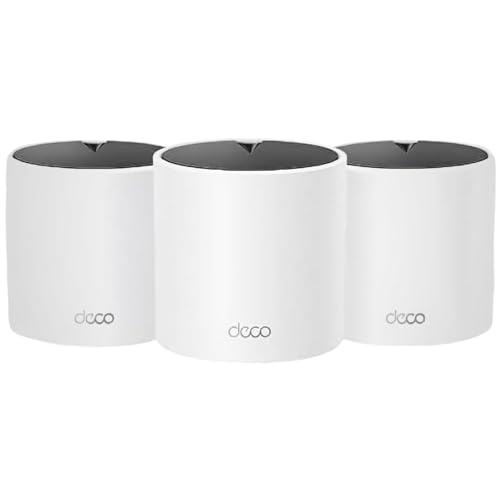
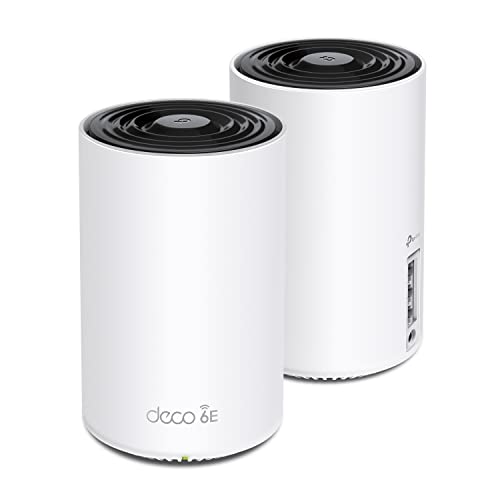
Wi-Fi 6 mesh is generally the better choice for a new network, especially in homes with many active devices, but a reliable Wi-Fi 5 mesh system may not need replacing. The upgrade’s value depends on your devices, internet connection, and how the mesh nodes connect—not just the Wi-Fi generation.
This comparison is for anyone choosing a new mesh system or deciding whether to keep an existing one. Focus on the problems you actually need to solve: slow downloads, buffering during busy periods, or rooms with unreliable coverage.
What Changes Between Wi-Fi 6 Mesh and Wi-Fi 5 Mesh?

Wi-Fi 6 changes how wireless connections operate; mesh describes how multiple access points work together to cover a home. Neither label, by itself, tells you how well a particular system will perform.
Wi-Fi 6 identifies wireless capabilities, while mesh describes a network architecture that uses multiple access points.
Wi-Fi 5 corresponds to IEEE 802.11ac, while Wi-Fi 6 corresponds to IEEE 802.11ax. According to the [Wi-Fi Alliance’s Wi-Fi CERTIFIED 6 documentation](https://www.wi-fi.org/discover-wi-fi/wi-fi-certified-6), Wi-Fi 6 introduces capabilities including orthogonal frequency-division multiple access, or OFDMA, which helps schedule transmissions efficiently among compatible devices.
Wi-Fi 6 also supports improvements such as higher-order modulation and Target Wake Time, which can help supported devices manage power consumption. These capabilities depend on implementation, client support, and operating conditions; they do not guarantee faster downloads everywhere.
Wi-Fi 6 can improve efficiency in busy networks, but its benefits depend on compatible devices and supported features.
Ethernet ports, dedicated backhaul radios, parental controls, and software-support periods are model-specific, not automatic Wi-Fi 6 advantages. The following manufacturer specifications illustrate those differences—not measured performance or a ranking.
Seven TP-Link Deco Models: Wireless Classes and Wired Connections
| # | Mesh model | Generation / class | Ethernet ports per unit | Ethernet backhaul |
|---|---|---|---|---|
| 1 | Deco M4 | Wi-Fi 5 / AC1200 | 2 × Gigabit | Supported |
| 2 | Deco M5 | Wi-Fi 5 / AC1300 | 2 × Gigabit | Supported |
| 3 | Deco M9 Plus | Wi-Fi 5 / AC2200 | 2 × Gigabit | Supported |
| 4 | Deco X20 | Wi-Fi 6 / AX1800 | 2 × Gigabit | Supported |
| 5 | Deco X55 | Wi-Fi 6 / AX3000 | 3 × Gigabit | Supported |
| 6 | Deco X60 | Wi-Fi 6 / AX3000 | 2 × Gigabit | Supported |
| 7 | Deco X90 | Wi-Fi 6 / AX6600 | 1 × 2.5 Gigabit + 1 × Gigabit | Supported |
Speed and Coverage Depend on More Than the Wi-Fi Label
A faster mesh system cannot remove an internet-plan bottleneck, and Wi-Fi 6 does not automatically reach farther than Wi-Fi 5. Separate internet performance, local wireless speed, and coverage before deciding what to replace.
Internet downloads are limited by the slowest relevant connection, including the internet service, router ports, backhaul, and client link.
Backhaul is the connection carrying traffic between mesh nodes. Wireless backhaul uses radio airtime; Ethernet backhaul uses network cables. When client traffic and backhaul share radio resources, traffic must compete for airtime. A dedicated backhaul radio can help, while Ethernet can remove that wireless constraint.
According to TP-Link’s Deco M4 specifications, each unit has two Gigabit Ethernet ports (2026 comparison). According to TP-Link’s Deco X55 specifications, each unit has three Gigabit ports (2026 comparison). According to TP-Link’s Deco X90 specifications, each unit includes one 2.5-Gigabit port (2026 comparison). These are published specifications, not test results; linked sources appear below.
Wired backhaul can improve a mesh network without changing the Wi-Fi generation used by client devices.
Place wireless nodes where they still receive a strong upstream signal—not inside the dead zone. Walls, floors, metal furniture, and neighboring networks affect performance. Follow the manufacturer’s placement guidance and test alternative locations before adding more nodes.
Will Your Existing Devices Benefit?
Older devices can generally connect to Wi-Fi 6 mesh, but they cannot use wireless capabilities their hardware does not support. Backward compatibility also depends on suitable security settings and working device drivers.
A Wi-Fi 5 device connected to a Wi-Fi 6 mesh system still uses the wireless capabilities supported by that device.
Check the specifications for important laptops, phones, televisions, and work devices. Look for 802.11ax/Wi-Fi 6 or 802.11ac/Wi-Fi 5, plus supported bands and channel widths. Windows users can also inspect the wireless adapter in Device Manager; manufacturer specifications are usually clearer than connection-speed readings.
Older clients may benefit indirectly from improved backhaul or reduced contention, but that is different from gaining Wi-Fi 6 features.
Matching Wi-Fi generations does not establish mesh compatibility between different products.
For the Deco systems listed above, TP-Link documents support for combining different Deco models. However, available features can depend on the main Deco and participating hardware. This does not mean Deco nodes can form one mesh with arbitrary third-party access points.
What Can Go Wrong With an Upgrade?
An upgrade can disappoint when it replaces the hardware but leaves the actual bottleneck untouched. Diagnose the connection path before attributing buffering or disconnections to Wi-Fi 5.
Weak node-to-node connectivity can remain a bottleneck after replacing Wi-Fi 5 mesh with Wi-Fi 6 mesh.
Use a simple isolation method: compare a wired connection at the main router, Wi-Fi near the main node, and Wi-Fi near a satellite. Repeat during both quiet and busy periods. Poor wired results suggest investigating the internet service, modem, or router first; problems isolated to one device suggest checking that client.
Advertised AC and AX speed classes combine theoretical radio rates rather than describing one device’s internet download speed.
Buying solely by those labels can overlook Ethernet limits, shared backhaul, and support quality. Also check whether a security-mode change could prevent older smart-home devices from reconnecting.
Verdict: Upgrade for a Clear Need, Not Just a Newer Label
Favor Wi-Fi 6 mesh for a new purchase when its backhaul, ports, support, and price fit the household. Keep Wi-Fi 5 mesh when everyday performance remains dependable and security support is adequate.
Wi-Fi 6 mesh is a sensible upgrade when it addresses a demonstrated capacity or hardware limitation.
- Reasons to upgrade
- Better supported efficiency features, suitable backhaul options, and potentially more capable ports or management tools.
- Reasons to wait
- Equipment cost, installation effort, reconnecting devices, and limited gains when the internet service or older clients remain the bottleneck.
A well-functioning Wi-Fi 5 mesh network does not require replacement solely because Wi-Fi 6 is newer.
In 2026, also consider remaining software support rather than treating either generation as a guarantee of longevity. A discounted system with uncertain security maintenance may be poor value.
A Quick Checklist Before You Decide
Keep the current network unless a specific limitation justifies changing it. Use this checklist to separate troubleshooting from purchasing.
– Keep your current system: Coverage is reliable, busy-period performance is acceptable, and there is no specific problem to fix.
– Investigate before buying: Check device compatibility, node placement, backhaul options, and internet performance.
– Consider upgrading: Persistent capacity problems remain after troubleshooting, and the proposed system addresses those limitations.
Testing near the main node and a satellite helps distinguish internet-service problems from mesh-link problems.
A useful upgrade plan identifies both the current bottleneck and the replacement feature intended to resolve it.
Sources to Support the Comparison
Official standards documentation explains generation-level capabilities; manufacturer specifications establish what individual systems actually support. Hardware revisions and regional versions should be checked before purchase.
– Wi-Fi capabilities and interoperability: [Wi-Fi Alliance: Wi-Fi CERTIFIED 6](https://www.wi-fi.org/discover-wi-fi/wi-fi-certified-6).
– Wi-Fi 5 model specifications: TP-Link [Deco M4](https://www.tp-link.com/us/home-networking/deco/deco-m4/#specifications), [Deco M5](https://www.tp-link.com/us/home-networking/deco/deco-m5/#specifications), and [Deco M9 Plus](https://www.tp-link.com/us/home-networking/deco/deco-m9-plus/#specifications).
– Wi-Fi 6 model specifications: TP-Link [Deco X20](https://www.tp-link.com/us/home-networking/deco/deco-x20/#specifications), [Deco X55](https://www.tp-link.com/us/home-networking/deco/deco-x55/#specifications), [Deco X60](https://www.tp-link.com/us/home-networking/deco/deco-x60/#specifications), and [Deco X90](https://www.tp-link.com/us/home-networking/deco/deco-x90/#specifications).
– Backhaul: [TP-Link Deco Ethernet backhaul guidance](https://www.tp-link.com/us/support/faq/1794/).
– Node placement: [TP-Link Deco placement guidance](https://www.tp-link.com/us/support/faq/1446/).
– Mixed-model compatibility: [TP-Link: Can different Deco models work together?](https://www.tp-link.com/us/support/faq/2248/).
– Software support:
Manufacturer specifications describe supported capabilities, not guaranteed household throughput.
Mesh compatibility and software-support commitments must be checked for the exact products under consideration.
Wi-Fi 6 mesh is usually the stronger starting point for a new network, while Wi-Fi 5 mesh can still be sufficient for a home that already runs smoothly. Before replacing anything, identify your main limitation, check your devices and backhaul, and compare systems that solve that specific problem.
Frequently Asked Questions
What are the main differences between Wi‑Fi 6 mesh and Wi‑Fi 5 mesh?
Wi‑Fi 6 mesh systems (802.11ax) typically offer higher throughput, better efficiency in crowded areas, and improved performance for many connected devices compared with Wi‑Fi 5 mesh (802.11ac). Wi‑Fi 6 also supports features like OFDMA and Target Wake Time that can reduce latency and improve battery life for compatible phones and IoT devices. In real homes, the biggest gains are usually seen when multiple people stream, game, or use wireless devices at the same time.
How much faster is Wi‑Fi 6 mesh than Wi‑Fi 5 mesh in everyday use?
Raw speed benchmarks can look dramatic, but everyday improvements often depend on your internet plan, device capabilities, and how busy your Wi‑Fi environment is. If you have Wi‑Fi 6-capable client devices and many simultaneous connections, Wi‑Fi 6 mesh can feel noticeably more responsive and stable. If most of your devices only support Wi‑Fi 5, the speed difference may be smaller, though Wi‑Fi 6 mesh can still help with congestion and smoother performance.
Why does Wi‑Fi 6 mesh perform better for gaming and video calls?
Gaming and video calls benefit from lower latency and more efficient use of airtime, which Wi‑Fi 6 mesh systems are designed to improve. Features like OFDMA help the network serve multiple devices more effectively rather than forcing them to take turns inefficiently. In addition, Wi‑Fi 6 mesh often handles interference and device contention better in busy homes, leading to fewer stutters, drops, and jitter.
Which is best for large homes: Wi‑Fi 6 mesh or Wi‑Fi 5 mesh?
For large homes, the “best” choice depends on your layout and backhaul setup, but Wi‑Fi 6 mesh is generally a strong option because it can maintain performance across more simultaneous users and devices. If your mesh supports dedicated wireless backhaul or wired Ethernet backhaul, Wi‑Fi 6 can better leverage that capacity while reducing congestion between nodes. However, if you’re mostly streaming on a single device at a time and have fewer wireless clients, a well-designed Wi‑Fi 5 mesh may still provide solid coverage.
Best upgrade choice—should I buy Wi‑Fi 6 mesh if I already have Wi‑Fi 5 devices?
If your current devices are mostly Wi‑Fi 5, you can still benefit from a Wi‑Fi 6 mesh through improved overall stability, better handling of multiple connections, and less Wi‑Fi congestion. The biggest performance gains show up when you add Wi‑Fi 6 clients over time (new phones, laptops, gaming devices, and newer smart home hubs). If budget allows, Wi‑Fi 6 mesh is typically the more future-proof investment, especially if your home has many devices or experiences frequent slowdowns.
📅 Last Updated: October 16, 2026 | Topic: Wi-Fi 6 Mesh vs Wi-Fi 5 Mesh | Content verified for accuracy and freshness.
References
- Wi-Fi 6
- IEEE 802.11ac
- Wireless mesh network
- IEEE SA – IEEE 802.11ax-2021
- IEEE SA – IEEE 802.11ac-2013
- Wi-Fi® (MAC/PHY) | Wi-Fi Alliance
- https://scholar.google.com/scholar?q=Wi-Fi+6+mesh+network+performance Google Scholar
- https://scholar.google.com/scholar?q=802.11ax+vs+802.11ac+throughput+latency Google Scholar
- https://scholar.google.com/scholar?q=Wi-Fi+mesh+network+802.11s+evaluation Google Scholar




One thought on “Wi-Fi 6 Mesh vs Wi-Fi 5 Mesh: Key Differences”