
Wi-Fi 6E mesh adds the less congested 6 GHz band, but does it justify paying more than Wi-Fi 6 mesh? Wi-Fi 6E mesh wins when compatible devices or a strong 6 GHz backhaul can use that extra capacity; Wi-Fi 6 mesh is the better value when price and coverage through walls matter more. Here’s how device support, backhaul, and home layout determine which system you should buy.
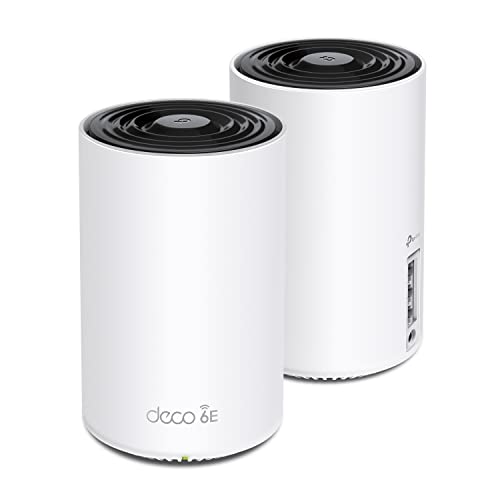



Wi-Fi 6E mesh is worth considering if you have compatible devices and need access to the less-congested 6 GHz band; Wi-Fi 6 mesh is often the better-value choice when coverage and cost matter more. Wi-Fi 6E does not automatically provide longer range or faster internet: device compatibility, mesh backhaul, and your home’s layout determine whether the upgrade helps.
This guide is for anyone choosing a new mesh system or deciding whether to replace an existing Wi-Fi 6 setup. The most useful comparison is between systems that suit your home and devices—not simply whichever standard is newer.
What Wi-Fi 6E Mesh Adds to Wi-Fi 6

Wi-Fi 6E extends Wi-Fi 6 into the 6 GHz band. It adds access to spectrum, rather than upgrading every aspect of wireless performance.
Wi-Fi 6E uses Wi-Fi 6 technology in the 6 GHz band; ordinary Wi-Fi 6 devices cannot connect to that additional band.
According to the [Wi-Fi Alliance’s Wi-Fi 6 documentation](https://www.wi-fi.org/discover-wi-fi/wi-fi-certified-6), Wi-Fi 6E identifies devices capable of operating in 6 GHz. That additional spectrum can provide more room for wide channels without competing directly with older 2.4 GHz and 5 GHz clients.
Two connections matter in a mesh network: the client connection, between a device and a node, and backhaul, the connection between mesh nodes. A system can use 6 GHz for compatible clients, wireless backhaul, or both, depending on its design and settings.
A Wi-Fi 6E mesh system can benefit older devices indirectly when its additional band improves the connection between mesh nodes.
Availability also depends on location. According to the [Federal Communications Commission](https://www.fcc.gov/document/fcc-opens-6-ghz-band-wi-fi-and-other-unlicensed-uses), its 2020 U.S. decision opened 1,200 MHz between 5.925 and 7.125 GHz for unlicensed use, subject to operating rules. Other countries permit different allocations. Check the exact regional model and your national regulator’s current restrictions before importing equipment.
Where Performance Differences Actually Matter
Wi-Fi 6E’s clearest potential advantage is additional wireless capacity in congested environments—not universally higher speeds. A nearby compatible laptop may benefit substantially, while an older television across several walls may see little improvement.
The practical advantage of Wi-Fi 6E depends on usable 6 GHz signal strength and local congestion, not merely the presence of another band.
Walls, floors, distance, and node placement can outweigh spectrum advantages. Reinforced concrete, metal-backed insulation, and utility cupboards can obstruct either system. The 6 GHz band generally offers less coverage margin than lower-frequency bands under comparable conditions, making clear paths between nodes particularly valuable.
Internet speed is a separate constraint. Faster wireless transfers to a local network storage device do not prove that downloads from the internet will accelerate. The broadband service, modem, router ports, and remote server can each impose a ceiling.
A faster mesh network cannot increase an internet connection beyond the capacity supplied by the internet service provider.
For a useful comparison, apply an A/B testing method: retain the same node locations, test device, and test times; measure both local transfers and internet performance. Record connection stability as well as peak throughput.
Check Devices and Backhaul Before Comparing Systems
Check your devices and each system’s backhaul design before comparing advertised speeds. The Wi-Fi label alone does not establish compatibility, wired capacity, or how efficiently satellites communicate.
A device needs explicit Wi-Fi 6E or compatible Wi-Fi 7 support to connect directly to a mesh system’s 6 GHz network.
Check each phone and laptop’s exact model, regional specifications, wireless adapter, and operating-system requirements. “Wi-Fi 6” is not equivalent to “Wi-Fi 6E.” Older devices can normally continue using the mesh system’s supported 2.4 GHz or 5 GHz networks.
For backhaul, distinguish dedicated wireless capacity from shared capacity used by clients and nodes. Confirm whether enabling 6 GHz client access changes backhaul behavior. Ethernet backhaul, where supported, connects nodes by cable and avoids wireless backhaul contention.
Ethernet backhaul reduces dependence on wireless signal quality between mesh nodes, but port speeds still limit wired throughput.
The following manufacturer-specified examples show why exact hardware matters. According to [TP-Link’s Deco XE75 Pro specifications](https://www.tp-link.com/us/deco-mesh-wifi/product-family/deco-xe75-pro/#specifications), each unit has one 2.5 Gbps port and two Gigabit ports. That configuration is not equivalent to having multiple multi-gigabit connections.
Seven Deco Mesh Models: U.S. Manufacturer Specifications
| # | Model / Official Source | Frequency Bands | Ethernet Ports per Unit | Fastest Port |
|---|---|---|---|---|
| 1 | Deco X20 | 2.4 + 5 GHz | 2 × Gigabit | 1 Gbps |
| 2 | Deco X55 | 2.4 + 5 GHz | 3 × Gigabit | 1 Gbps |
| 3 | Deco X60 | 2.4 + 5 GHz | 2 × Gigabit | 1 Gbps |
| 4 | Deco X68 | 2.4 + 5 + 5 GHz | 2 × Gigabit | 1 Gbps |
| 5 | Deco XE75 | 2.4 + 5 + 6 GHz | 3 × Gigabit | 1 Gbps |
| 6 | Deco XE75 Pro | 2.4 + 5 + 6 GHz | 1 × 2.5G + 2 × Gigabit | 2.5 Gbps |
| 7 | Deco XE200 | 2.4 + 5 + 6 GHz | 1 × 10G + 2 × Gigabit | 10 Gbps |
These are specification examples, not performance rankings. According to TP-Link’s Deco X55 specifications, each unit provides three Gigabit Ethernet ports. Port count matters when connecting wired backhaul, computers, and switches simultaneously.
For a 2026 purchase, also compare firmware support, security-update policies, and whether parental controls or security features require payment.
What Can Go Wrong With Either Choice
Poor placement can undermine either standard. A satellite needs a strong connection upstream; placing it where the existing signal has already disappeared often reproduces the problem.
A wireless mesh satellite should sit where it can still receive a useful upstream signal, not simply inside the room with the weakest coverage.
Place satellites between the router and the target area, then adjust using the system’s connection-quality indicators. Avoid enclosing nodes in cabinets or positioning them behind large metal objects. If a difficult wall separates nodes, Ethernet backhaul may be more effective than buying a newer wireless standard.
A system relying heavily on 6 GHz wireless backhaul may struggle across obstructed paths. Some systems can use alternative bands, but fallback behavior varies.
Advertised aggregate wireless rates combine theoretical radio capacities and do not represent the internet speed available to one device.
A well-positioned tri-band Wi-Fi 6 system can therefore outperform a poorly positioned Wi-Fi 6E kit. Radio design, antenna configuration, firmware, and backhaul all influence the outcome.
Which Mesh Type Should You Choose?
Choose Wi-Fi 6E when compatible devices, congestion, and workable node placement make the additional band useful. Choose Wi-Fi 6 when economical coverage matters more than accessing 6 GHz.
Wi-Fi 6E is most compelling when the additional spectrum addresses an identifiable capacity or interference problem.
– Wi-Fi 6E advantages: Additional spectrum for compatible clients or backhaul; useful capacity in suitable layouts.
– Wi-Fi 6E drawbacks: Potentially higher cost; limited direct benefit for older clients; placement-sensitive 6 GHz links.
– Wi-Fi 6 advantages: Often economical coverage; broad client compatibility; capable wired-backhaul options.
– Wi-Fi 6 drawbacks: No 6 GHz access; potentially more competition on existing bands.
Compare equivalent node counts and required ports, not unlike-for-like starter kits.
A reliable Wi-Fi 6 network does not need replacement unless an upgrade addresses a specific limitation.
Neither standard alone fixes difficult building materials or poor placement. Skip the upgrade if your current network already meets coverage, reliability, and throughput needs.
Save This Buying Checklist
Use this checklist to compare complete installations rather than headline specifications.
– Devices: Check which devices can use Wi-Fi 6E and which remain on existing bands.
– Home and backhaul: Identify wall obstacles, workable node locations, and whether Ethernet connections between nodes are possible.
– Total cost: Compare required nodes, ports, subscription costs, and return policy—not just the entry-level kit.
The correct mesh node count depends on construction and placement, not floor area alone.
A return policy allows buyers to evaluate mesh performance in the building where the system must operate.
Sources Behind the Comparison
Primary documentation establishes capabilities; it does not establish measured performance in a particular home. Use the regional specifications matching the hardware being purchased.
– Standards: [Wi-Fi Alliance: Wi-Fi CERTIFIED 6](https://www.wi-fi.org/discover-wi-fi/wi-fi-certified-6).
– Hardware: Official TP-Link specifications linked individually in the data table.
– Backhaul: [TP-Link: Deco Ethernet backhaul guidance](https://www.tp-link.com/us/support/faq/1794/).
– Regulation: [FCC: Opening the 6 GHz band for unlicensed use](https://www.fcc.gov/document/fcc-opens-6-ghz-band-wi-fi-and-other-unlicensed-uses). Outside the United States, consult the relevant national regulator.
Manufacturer specifications describe supported features; they are not substitutes for independent or in-home performance measurements.
Permission to use 6 GHz spectrum depends on national regulations and the equipment’s operating category.
Choose Wi-Fi 6E mesh for a clear compatibility or congestion benefit, not simply because it is newer. Choose Wi-Fi 6 mesh when it meets your coverage needs at a better total cost. Before buying, check your devices, plan node placement, and compare the exact systems’ backhaul options and specifications.
Frequently Asked Questions
What is the difference between Wi-Fi 6E mesh and Wi-Fi 6 mesh?
Wi-Fi 6 mesh uses the traditional 2.4 GHz and 5 GHz bands, while Wi-Fi 6E mesh adds the 6 GHz band for extra spectrum. That extra band typically means less interference, more available channels, and better performance for high-bandwidth devices like streaming and gaming. In practice, both support Wi-Fi 6 features like OFDMA and better efficiency, but 6E gives you more room to operate.
How do I know if my devices support Wi-Fi 6E mesh?
To use a Wi-Fi 6E mesh network, your phone, laptop, tablet, or smart TV must have a Wi‑Fi 6E (or “6 GHz capable”) wireless adapter. Check the device specs for “Wi‑Fi 6E” or “6 GHz,” or look for the option to connect to a “6 GHz” SSID in your Wi‑Fi settings if your router supports it. If your devices don’t support 6E, they can still connect to the 2.4 GHz/5 GHz radios on a 6E mesh system, but you won’t get the 6 GHz benefits.
Why is a Wi-Fi 6E mesh often better for crowded neighborhoods or multi-user homes?
In dense areas, the 2.4 GHz and 5 GHz bands are more crowded, which can lead to interference and slower speeds. Wi‑Fi 6E opens the 6 GHz band, which is generally less congested and can improve consistency for real-time traffic. On a mesh system, that translates to more stable performance across rooms when your client devices support 6 GHz.
Which should I choose for best performance: Wi-Fi 6E mesh or Wi-Fi 6 mesh?
Choose Wi‑Fi 6E mesh if you have Wi‑Fi 6E-capable devices and want better speeds and reduced congestion, especially for 4K/8K streaming, cloud gaming, and frequent video calls. Choose Wi‑Fi 6 mesh if most of your devices are older, you’re on a tighter budget, or you primarily rely on 2.4 GHz/5 GHz for coverage. For many households, Wi‑Fi 6E is the “future-proof” option, while Wi‑Fi 6 can still deliver excellent results with strong placement and enough nodes.
What should I look for when comparing Wi-Fi 6E mesh and Wi-Fi 6 mesh systems?
Compare each system’s number of radios, whether it uses dedicated backhaul (especially important for multi-node mesh performance), and its total throughput ratings. Look for features like automatic band steering, strong coverage/beamforming, and easy roaming support so devices switch nodes smoothly. Also confirm the manufacturer supports your specific 6E setup (6 GHz Wi‑Fi mode), since some environments and client devices may affect how much of the benefit you’ll actually see.
📅 Last Updated: October 16, 2026 | Topic: Wi-Fi 6E Mesh vs Wi-Fi 6 Mesh | Content verified for accuracy and freshness.
References
- Page Not Found | Federal Communications Commission
- Wi-Fi® (MAC/PHY) | Wi-Fi Alliance
- Wi-Fi 6
- Wireless mesh network
- https://scholar.google.com/scholar?q=Wi-Fi+6E+mesh+network Google Scholar
- https://scholar.google.com/scholar?q=Wi-Fi+6E+vs+Wi-Fi+6+6+GHz+mesh Google Scholar
- https://scholar.google.com/scholar?q=IEEE+802.11ax+6GHz+mesh+networking Google Scholar



