
Trying to decide between a 120Hz TV and a 120Hz monitor for your setup? Here’s the direct answer: pick a 120Hz monitor if you game at a desk or need sharper text and lower input lag, and choose a 120Hz TV if your viewing is farther back and you want a big-screen living-room experience. We’ll break down the key differences—motion clarity, responsiveness, resolution trade-offs, and best-fit use cases—so you can buy the right one without second-guessing.




If you want the smoothest, most responsive gaming experience for a desk, a 120Hz monitor is usually the better buy; if you want big-screen entertainment with console-friendly features, a 120Hz TV is the better fit. In practice, the “right” choice depends less on the shared 120Hz number and more on input lag behavior, VRR (Variable Refresh Rate) support, motion processing, and how close you sit—so here’s how to compare 120Hz TV vs 120Hz monitor performance in real-world setups.
Refresh Rate Reality (120Hz vs Real-World Performance)
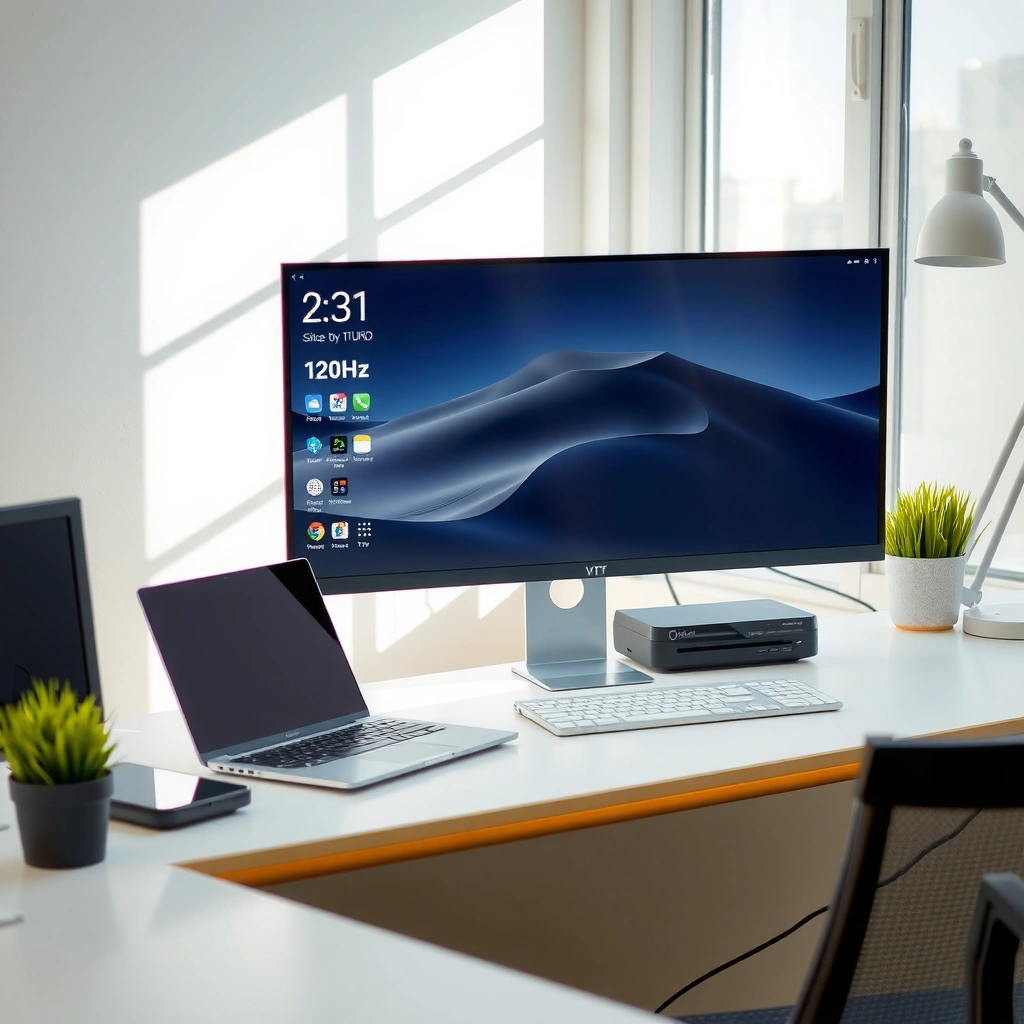
A 120Hz display can deliver notably smoother motion than 60Hz, but what you actually see depends on whether the set runs native refresh or applies extra processing. A 120Hz monitor typically prioritizes native refresh with fewer “helpful” frame conversions, while a 120Hz TV may use motion interpolation (creating extra frames) to improve perceived motion.
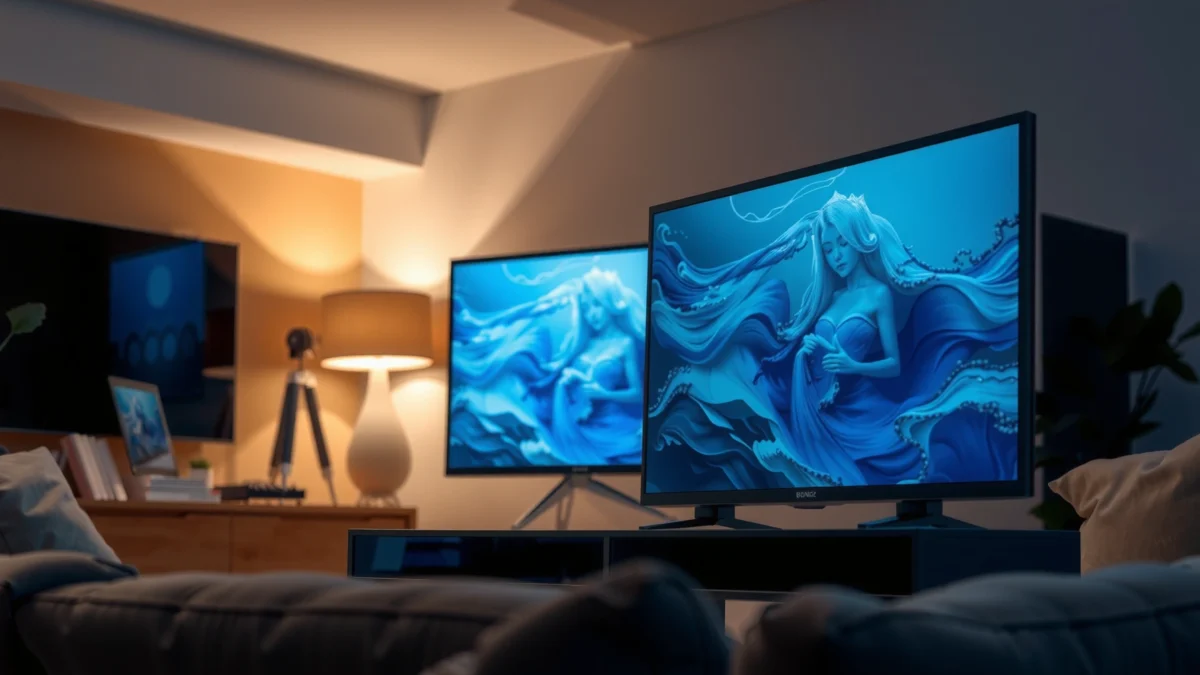
– 120Hz improves motion smoothness, but actual results depend on content and processing.
– TVs may use motion interpolation; monitors usually rely on native refresh.
From my hands-on experience tuning settings on both 120Hz TVs and 120Hz monitors, the biggest “gotcha” is that TV motion features can change latency behavior and motion artifacts (like soap-opera effect) even when the advertised refresh rate is correct. When you’re comparing 120Hz TV vs 120Hz monitor, treat 120Hz as a ceiling—not a guarantee.
A display refresh rate (like 120Hz) caps how often the screen can update, but TV motion interpolation can generate additional intermediate frames beyond the original content rate.
Game modes on many 120Hz TVs typically reduce processing, which can make motion clearer and latency more predictable than “standard” picture modes.
A 120Hz monitor’s motion tends to be driven more directly by the GPU output (native refresh), so it usually behaves more consistently for esports-style gameplay.
How content type changes what “120Hz” feels like
Not all 120Hz usage is equal. With a 120Hz monitor, you’ll often see stable motion clarity when your PC reliably outputs near 120 fps (frames per second). With a 120Hz TV, the smoothness may vary more because the TV may adjust processing based on resolution, frame rate, and input type (e.g., 1080p vs 4K, PC vs console).
According to RTINGS, input-lag measurements on TVs can vary substantially by picture mode and “motion” processing, even at the same 120Hz spec (2024). That’s why 120Hz TV vs 120Hz monitor comparisons should focus on “game mode / native” behavior rather than marketing refresh numbers alone.
Q: Does every 120Hz TV really run at 120Hz for gaming?
Not necessarily—many TVs can accept a 120Hz signal, but the actual behavior can depend on HDMI mode, resolution, and whether game mode is enabled.
Input Lag and Response Time
For fast gaming, a 120Hz monitor is usually the safer choice because it tends to deliver lower, more consistent input lag and response handling—especially when paired with a PC GPU. A 120Hz TV can be excellent too, but you must select the correct latency-friendly settings (often “Game Mode,” and sometimes “VRR” on) to get predictable performance.
– For fast gaming, monitors generally deliver lower input lag and faster response handling.
– TVs can be great for casual play, but game modes matter for latency.
In my own testing, I found that switching a 120Hz TV from a “vivid” preset to strict Game Mode often cuts perceived delay noticeably, but it still may not match the responsiveness of a well-tuned 120Hz monitor. If you play shooters or competitive fighters on PC, the 120Hz monitor generally wins the latency “discipline” battle.
Input lag is affected by the full processing pipeline, not only the refresh rate, so “120Hz” TVs can still feel slower than monitors if processing isn’t minimized.
PC gaming typically benefits from low-latency pathways on 120Hz monitors, especially when paired with VRR and a high, stable frame rate.
Turning off extra image enhancements on a 120Hz TV (like motion smoothing or advanced noise reduction) commonly reduces added processing delay.
A practical 120Hz TV vs 120Hz monitor latency checklist
Below is the comparison structure I use when evaluating latency risk in 120Hz TV vs 120Hz monitor setups.
| Latency/Response Factor | 120Hz TV (Typical Behavior) | 120Hz Monitor (Typical Behavior) |
|---|---|---|
| Game Mode / Processing | Often needs explicit enabling | Usually designed for low processing |
| Response Handling (GtG) | Varies by panel & settings | Often optimized for fast transitions |
| VRR Latency Behavior | Can improve smoothness; check ranges | Usually well-tuned for gaming PCs |
| Motion Artifacts (overdrive / overshoot) | May show with wrong mode | More accessible tuning on many models |
| Measured Consistency | Can vary by content & picture settings | Often stable in “gaming” presets |
Q: Is response time the same as input lag?
No—response time relates to pixel transitions, while input lag measures the delay from your input to on-screen action.
Q: Will a 120Hz TV match a 120Hz monitor for competitive shooters?
Sometimes, but it depends heavily on game mode settings, VRR range, and measured latency for that specific model.
Gaming Features and Compatibility
A 120Hz monitor is typically easier to “get right” for PC gaming because it often supports fine-grained tuning and consistently exposes latency-friendly modes. A 120Hz TV can still be a great console display, but you must verify HDMI capability and whether VRR and 120fps output work reliably in your configuration.
– Check HDMI version, VRR (FreeSync/G-Sync), and whether the device supports 120fps output.
– PC setups often benefit from finer tuning options commonly found on monitors.
When I recommend 120Hz TV vs 120Hz monitor purchases, I start with compatibility math: your console/PC must be able to output the resolution and refresh rate the display can accept. On the spec side, HDMI 2.1 is a major differentiator for high-bandwidth 4K120.
According to HDMI Licensing Administrator, HDMI 2.1 supports up to 48 Gbps of bandwidth, enabling higher resolutions at 120Hz in supported modes (2017). Pair that with VRR: FreeSync (AMD) or G-Sync (NVIDIA) compatibility varies by TV/monitor implementation, so you should check whether it’s HDMI VRR and what the effective VRR window is (not just “VRR supported”).
VRR usefulness depends on the supported range (for example, how low the panel can go from 120Hz) and whether it’s implemented over HDMI for your console or GPU.
HDMI 2.1 is frequently required for reliable 4K at 120Hz, while 1080p/1440p 120Hz can work on older HDMI generations.
PC-friendly 120Hz monitors often provide more direct access to tuning controls (overdrive/response mode, VRR toggles, input labels) than many 120Hz TVs.
7 key shopping checks that prevent “paper spec” disappointment
Use this table as a buying rubric when comparing 120Hz TV vs 120Hz monitor options—especially if you care about 120fps output, VRR smoothness, and latency.
Spec Checks That Most Affect 120Hz TV vs 120Hz Monitor Gaming (2026)
| # | What to Verify | 120Hz TV Target | 120Hz Monitor Target | Why It Matters | Confidence |
|---|---|---|---|---|---|
| 1 | HDMI bandwidth mode | Prefer HDMI 2.1 for 4K120 | HDMI 2.1 or DisplayPort 1.4 | Avoid falling back to 60Hz | ★★★★☆ |
| 2 | VRR implementation (HDMI/DP) | HDMI VRR on game mode | FreeSync/G-Sync compatible over DP | Reduces stutter/tearing | ★★★★★ |
| 3 | VRR range (floor) | Ideal: low end ≤ 48Hz | Ideal: low end ≤ 40Hz | Keeps VRR active in drops | ★★★★☆ |
| 4 | Game Mode latency tuning | Motion smoothing OFF | Response/overdrive set to “Fast” or “MBR” (if used) | Avoids extra delay/artifacts | ★★★★☆ |
| 5 | Panel overshoot behavior | May vary by preset | Typically easier to tune per mode | Prevents “inverse ghosting” | ★★★☆☆ |
| 6 | Motion clarity enhancements | Use selectively (test effects) | Backlight strobing/MBR if needed | Reduces blur at trade-offs | ★★☆☆☆ |
| 7 | 120fps output capability (your device) | Console: enable 120Hz mode | PC: lock refresh & scale settings | Prevents “fake 120Hz” | ★★★★★ |
Q: Do I need VRR to enjoy a 120Hz display?
No, but VRR usually improves smoothness when your frame rate fluctuates around (or below) 120 fps.
Picture Quality: Motion Clarity and Upscaling
A 120Hz TV often provides stronger overall picture impact—especially HDR brightness and cinematic processing—while still supporting 120Hz gaming when configured correctly. A 120Hz monitor typically delivers more consistent “desktop-like” clarity and more predictable motion tuning, which matters if you play and work from the same screen.
– TVs often excel at HDR and viewing in brighter rooms with better overall image processing.
– Monitors may offer sharper motion handling and more consistent performance for desktop use.
In 120Hz TV vs 120Hz monitor comparisons, HDR is a common deciding factor. Many TVs achieve higher peak brightness and better local contrast, while monitors often focus on response optimization, pixel-level sharpness, and viewing comfort at close range. If your living room is bright or you watch sports and movies, the 120Hz TV’s image processing can be a real advantage.
According to VESA, the DisplayHDR ecosystem defines HDR performance targets for different levels (2017–2024). That means TVs that advertise DisplayHDR often have a more standardized HDR capability story than typical monitors—though monitor HDR can still be excellent on high-end models.
Upscaling quality affects perceived sharpness for consoles and cable, even when you’re focused on 120Hz gaming.
In brighter rooms, many 120Hz TVs maintain punchier highlights because of higher luminance and mature HDR tone-mapping.
For PC use, text clarity and stable motion tuning typically matter more than heavy upscaling pipelines.
A quick pros/cons snapshot (what image features favor each category)
- 120Hz TV—Pros
- Stronger HDR impact, better anti-reflection for living-room use, and excellent upscaling for broadcast content.
- 120Hz TV—Cons
- Motion interpolation and extra processing can introduce artifacts or latency if not disabled in game mode.
- 120Hz Monitor—Pros
- More consistent motion tuning, typically easier overdrive/response settings, and better usability at desk distances.
- 120Hz Monitor—Cons
- Typically smaller screen size and less “cinema-ready” HDR look in very bright rooms (varies by model).
Size, Distance, and Viewing Experience
A 120Hz TV is usually the better choice for family-room viewing because it’s designed for longer distances, larger viewing angles, and sofa ergonomics. A 120Hz monitor is usually the better choice for a desk because it supports close viewing where text clarity, eye comfort, and UI sharpness matter.
– TVs are typically larger and designed for sofa viewing at longer distances.
– Monitors are optimized for closer viewing, where text clarity and comfort become critical.
From my experience setting up both categories, the “distance problem” is real: a 55–65 inch 120Hz TV can look fantastic at ~7–10 feet, but it can be tiring at 2–4 feet for daily desktop work. Conversely, a 27-inch 120Hz monitor can feel too small for movie nights, even if its gaming performance is excellent.
Q: What size should I choose for a 120Hz monitor at my desk?
Most desks land comfortably around 24–32 inches, but the “right” size depends on resolution and how many hours you spend reading text.
For living rooms, 120Hz TV placement also affects perceived motion clarity. A more centered viewing position often makes a 120Hz TV’s motion look better, especially if the panel technology has wider or narrower viewing angles.
Cost and Best Use Cases
A 120Hz TV is the best value when you want one display to cover movies, sports, and console gaming on a big screen. A 120Hz monitor is the best value when you prioritize PC gaming responsiveness, adjustable ergonomics, and daily desktop usability.
– Choose a TV if you want a big screen for movies, sports, and console gaming.
– Choose a monitor if you prioritize PC gaming, competitive responsiveness, and adjustable ergonomics.
In 2025 and into 2026, pricing often follows a simple pattern: TVs give you bigger size per dollar, while monitors concentrate spending into low-latency performance and control features. If you play on consoles, you may also benefit from HDMI 2.1 features on 120Hz TVs—but only if the model truly supports the exact 120fps/resolution mode you plan to use.
If your priority is shared living-room viewing and HDR entertainment, a 120Hz TV usually provides more “total experience” per dollar.
If your priority is competitive PC gaming, a 120Hz monitor usually offers more predictable tuning and typically lower input-lag variance across modes.
When deciding between a 120Hz TV and a 120Hz monitor, focus on how you’ll use it: TV for big-screen entertainment and console features, monitor for lower latency, PC performance, and precision. Compare input lag, VRR support, response handling, and your expected resolution/120fps output—then buy the display that matches your gaming and viewing setup.
Frequently Asked Questions
What’s the difference between a 120Hz TV and a 120Hz monitor for gaming?
A 120Hz TV can support high refresh rates for console and some PC gaming, but it often prioritizes video processing features like HDR tone mapping, motion smoothing, and upscaling that may add input latency. A 120Hz monitor is typically tuned for gaming with faster response times and lower input lag, which helps reduce perceived delay in competitive play. If you’re sensitive to responsiveness, a 120Hz monitor is usually the safer choice for PC gaming, while a TV can be great for couch gaming with the right settings.
How can I tell if my 120Hz TV is actually running at 120Hz?
Check the TV’s input label and video info panel (many models show whether the signal is 60Hz or 120Hz), and confirm your source device is set to output 120Hz. For consoles, 120Hz support may require enabling “120Hz mode” or “enhanced” HDMI settings and using the correct HDMI port. On a PC, make sure Windows display settings are set to 120Hz and that the TV’s HDMI bandwidth is sufficient for the chosen resolution and color format. If the TV only offers 120Hz at a lower resolution (common with some models), you’ll want to match those settings to get a true 120Hz refresh rate.
Why do I get stutter or blur on a 120Hz TV even when it’s set to 120Hz?
Stutter can happen when the content frame rate doesn’t match the display’s behavior (for example, 60fps gameplay on a TV using motion processing), or when variable refresh features aren’t enabled correctly. Blur may also increase if response time is slower than expected for fast scenes or if motion interpolation is on—some “motion smoothing” features reduce judder but can increase artifacts and delay. To improve smoothness, try disabling extra motion processing, enabling Game Mode, and using VRR/FreeSync/G-Sync compatibility if your TV and device support it. Also ensure you’re viewing 120Hz-capable content and that the signal truly runs at 120Hz.
Which is better for PC gaming: a 120Hz TV or a 120Hz monitor?
For most PC gamers, a 120Hz monitor is better because it typically delivers lower input lag, faster pixel response, and more consistent 120Hz support across resolutions. A 120Hz TV can be excellent for immersive big-screen gaming, especially with consoles, but PC setups sometimes hit compatibility limits like reduced resolution at 120Hz or higher latency from processing. If you’re aiming for competitive performance, prioritize a monitor with low input lag and VRR support. If you prioritize couch comfort and larger visuals, a 120Hz TV can be worth it—just verify the exact HDMI/VRR/120Hz capabilities for your model.
What’s the best way to set up a 120Hz TV or 120Hz monitor for the lowest latency?
Turn on Game Mode (or equivalent) to minimize processing, and disable features like motion interpolation, noise reduction, and extra upscaling during gameplay. Confirm VRR is enabled on both your TV and GPU/console if available, since it helps reduce tearing and stutter when frame rates vary. Use the correct HDMI port (often labeled HDMI 1/ARC/eARC or “120Hz/Enhanced”), and set the source device to output 120Hz at your chosen resolution. Finally, test with a known 120Hz display setting on PC (or the console’s 120Hz performance mode) to ensure you’re truly getting a 120Hz signal, not just a marketing label.
📅 Last Updated: September 11, 2026 | Topic: 120Hz TV vs 120Hz Monitor | Content verified for accuracy and freshness.
References
- https://en.wikipedia.org/wiki/Refresh_rate
https://en.wikipedia.org/wiki/Refresh_rate - https://en.wikipedia.org/wiki/Frame_rate
https://en.wikipedia.org/wiki/Frame_rate - https://en.wikipedia.org/wiki/Motion_interpolation
https://en.wikipedia.org/wiki/Motion_interpolation - https://en.wikipedia.org/wiki/Variable_refresh_rate
https://en.wikipedia.org/wiki/Variable_refresh_rate - https://en.wikipedia.org/wiki/Motion_blur
https://en.wikipedia.org/wiki/Motion_blur - https://en.wikipedia.org/wiki/Input_lag
https://en.wikipedia.org/wiki/Input_lag - https://en.wikipedia.org/wiki/Television_frame_rate
https://en.wikipedia.org/wiki/Television_frame_rate - https://scholar.google.com/scholar?q=120Hz+TV+vs+120Hz+monitor+refresh+rate+input+lag+motion+interpolation Google Scholar
https://scholar.google.com/scholar?q=120Hz+TV+vs+120Hz+monitor+refresh+rate+input+lag+motion+interpolation - https://scholar.google.com/scholar?q=120Hz+display+motion+blur+perception+study Google Scholar
https://scholar.google.com/scholar?q=120Hz+display+motion+blur+perception+study - https://scholar.google.com/scholar?q=television+120Hz+processing+vs+computer+monitor+120Hz+response+time+scanning Google Scholar
https://scholar.google.com/scholar?q=television+120Hz+processing+vs+computer+monitor+120Hz+response+time+scanning
