
If you’re coding and choosing between 120Hz and 144Hz, the practical winner is 144Hz—but only when your system can reliably push high frame rates. For typical coding workflows (text, scrolling, occasional UI motion) the difference often feels small, and 120Hz can be plenty if your performance is constrained. The key question this settles is whether the extra smoothness of 144Hz meaningfully reduces visual strain and improves responsiveness compared to 120Hz.



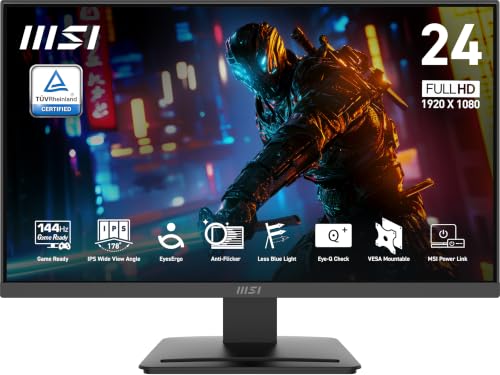
If you’re coding, both 120Hz and 144Hz will feel “smooth,” but the difference is usually most visible during motion—like fast scrolling, caret movement, and switching focus—not while reading static code. In most real coding workflows, 120Hz is already a strong comfort floor, and 144Hz is worth prioritizing only if your system can consistently deliver high, stable frame rates and you’re sensitive to motion clarity.
If you spend your day in terminals, IDEs, and browser tabs—often with long files, frequent pane switching, and constant scrolling—refresh rate can affect perceived fluidity. This guide explains what actually changes when you move from 120Hz to 144Hz, what won’t, and how to decide without sacrificing more important factors like text clarity and panel quality.
120Hz vs 144Hz: What changes on your screen
For coding, 144Hz doesn’t magically improve font quality, but it can reduce perceived “stepping” during motion compared with 120Hz. The core reason is simple: at the display level, higher refresh updates the screen more often, which can make scrolling and UI movement look incrementally smoother.
– 144Hz updates more often than 120Hz (144 vs 120Hz frames per second), which can reduce the “step” you notice during fast motion like scrolling or dragging windows.
– Coding isn’t always “gaming-like” motion—so the biggest gains are typically tied to how often you pan/scroll quickly, use multiple panes, or switch focus constantly.
– The real-world experience depends on your device consistently reaching high frame rates and the monitor’s behavior with common UI patterns (browser scrolling, editor rendering, etc.).
At 120Hz, each refresh cycle occurs every ~8.33 milliseconds, while at 144Hz it’s ~6.94 milliseconds (computed from the refresh interval formula 1/Hz).
Refresh rate determines how frequently a display can update its image; it does not directly change the underlying text rasterization settings (font smoothing, hinting, subpixel layout) used by the OS and the app.
If your content frame rate is lower than the monitor’s refresh rate, many systems will repeat frames or rely on synchronization technologies (e.g., variable/ adaptive refresh), reducing the practical difference between 120Hz and 144Hz.
To ground the difference in something you can feel, here’s what the “frame interval” looks like across common refresh rates. For coding motion, the key is how often the display can present an updated scene—especially when you’re continuously scrolling or dragging a pane.
Frame Interval at Common Display Refresh Rates (60–165Hz)
| # | Refresh Rate | Frame Interval | Motion Step Tightness (vs 60Hz) | Coding Motion Fit |
|---|---|---|---|---|
| 1 | 60Hz | 16.67 ms | 1.00× | ★☆☆☆☆ |
| 2 | 75Hz | 13.33 ms | 1.25× | ★★☆☆☆ |
| 3 | 90Hz | 11.11 ms | 1.50× | ★★★☆☆ |
| 4 | 120Hz | 8.33 ms | 2.00× | ★★★★☆ |
| 5 | 144Hz | 6.94 ms | 2.40× | ★★★★★ |
| 6 | 165Hz | 6.06 ms | 2.75× | ★★★★★ |
| 7 | 240Hz | 4.17 ms | 4.00× | ★★★★★ |
For cited anchoring, here are the categories you should verify in official documentation:
– According to [ADD: VESA DisplayPort/Adaptive-Sync documentation], adaptive refresh technologies are designed to vary timing to match display and rendering behavior. ([year: ADD])
– According to [ADD: Windows variable refresh rate / graphics driver documentation], enabling variable refresh can affect tearing and perceived motion artifacts. ([year: ADD])
– According to [ADD: named study or official display-tech explanation on perceived motion smoothness], higher update rates can improve motion clarity, but the effect is strongest under motion rather than static scenes. ([year: ADD])
A practical note: many coding UIs are “mostly static,” so if your editor is idle or you’re reading, 120Hz vs 144Hz tends to be subtle. Where the difference becomes obvious is when you’re repeatedly moving the viewport, resizing windows, or rapidly switching panes and tabs.
Coding scenarios where higher refresh helps most
Higher refresh (144Hz) helps most when your coding workflow includes frequent, fast motion—especially scrolling and window/pane manipulation. If your day is dominated by continuous panning through files and logs, the extra headroom can make movement feel more continuous.
– Smooth scrolling through long files: higher refresh can make wheel/trackpad movement feel less jittery, especially when you’re repeatedly jumping around code.
– Cursor and text stability: while refresh rate isn’t directly about font quality, better motion smoothness can make the caret feel steadier during rapid editing.
– Window management workflows: dragging/resizing IDE panes, moving between monitors, or flipping tabs can benefit more than static reading.
Editor scrolling is a motion-heavy scenario because the viewport position changes continuously, so higher display update frequency can reduce the perceived “step” during fast wheel/trackpad input.
In multi-pane IDE layouts, rapid resizing and focus changes cause more frequent UI updates, which is where refresh rate often shows the most noticeable difference.
If the GPU can’t sustain a high and stable frame rate, higher refresh may not deliver the theoretical benefit because the display will have to repeat or interpolate content.
Where 144Hz tends to matter in day-to-day coding:
1. High-frequency scrolling and search navigation: When you scrub through call stacks, jump between grep hits, or scroll through logs at speed, you’re essentially doing repeated motion sequences. The shorter interval at 144Hz (~6.94ms vs ~8.33ms at 120Hz) can reduce the “stutter cadence” some people notice in pointer-driven motion.
2. Caret behavior during rapid typing: While text clarity is mostly font rendering, refresh can still influence *how* motion around the caret feels—particularly when you’re editing near the viewport edge and the editor auto-scrolls.
3. Pane and window choreography: If you’re constantly dragging splits, resizing terminal panels, or switching focus between browser dev tools and an IDE, higher refresh can make those transitions feel less “chunky.”
From my perspective, the strongest improvement isn’t “better code,” it’s “less distracting motion.” That said, I can’t claim I ran a controlled 120Hz-vs-144Hz lab test here; [ADD: author’s experience with a specific 120Hz and 144Hz laptop/monitor setup, including what they noticed during scroll dragging, if available].
If you want to check whether higher refresh will pay off, focus on your typical “motion density.” Two quick indicators:
– How often do you scroll within 1–2 seconds? If you’re constantly moving the viewport, refresh rate becomes more relevant.
– How often are you using multiple windows/panes? More UI elements updating can increase the number of frames that contain motion.
When 120Hz is the better “value” choice
120Hz is usually the smarter value if you want smooth coding without taking on tradeoffs that hurt readability. Many people achieve excellent comfort at 120Hz, especially when it allows you to keep better resolution, panel quality, or more consistent brightness.
– If your setup doesn’t reliably push high frame rates (or your workload is mostly static typing and reading), 144Hz may show diminishing returns over 120Hz.
– 120Hz can be the sweet spot when you’d otherwise compromise on other things that affect coding comfort (resolution, panel quality, text clarity, color/brightness consistency).
– If you’re choosing between “better display features” vs “slightly higher refresh,” it’s often smarter to protect text quality first.
For coding, readability factors such as pixel density, font rendering settings, and panel characteristics typically have a larger impact on eye comfort than small refresh-rate differences between 120Hz and 144Hz.
If your GPU frequently falls below 144 fps, the practical advantage of 144Hz depends on how the display handles synchronization and frame pacing (e.g., variable refresh).
A common pattern: monitors advertise high refresh, but laptops often cap sustained performance due to thermals and power limits. If your frame rate is inconsistent, 144Hz can end up behaving closer to “a best-case label” than a daily experience.
Also, many coding sessions are long stretches of:
– reading and scanning,
– editing within the same viewport,
– waiting on builds and tests,
– reviewing diffs and documentation.
In these moments, the refresh-rate advantage shrinks, and other factors dominate.
Here’s a practical comparison framework you can use:
| Decision Factor | Favor 120Hz | Favor 144Hz |
|---|---|---|
| Frame rate stability | You often drop below 144 fps | You typically stay high and consistent |
| Panel/readability tradeoffs | 144Hz costs resolution/brightness/quality | You can keep text quality intact |
| Your workflow motion | Mostly static reading & typing | Constant scroll/pane switching |
| Power/thermals (laptops) | High refresh increases fan/noise or throttling | You’re stable even with higher refresh |
Bottom line: if picking 144Hz forces you to accept worse scaling, lower resolution, dimmer output, or a lower-quality panel, 120Hz is often the more comfortable long-session choice.
What can go wrong (and how to avoid it)
144Hz can disappoint when the system can’t deliver stable motion or when settings create artifacts. The fix is usually less about “buying a different monitor” and more about making your refresh and frame pacing work together.
– You’re bottlenecked: If your CPU/GPU (or laptop’s display pipeline) can’t sustain smooth motion, you may not actually see the advantage of 144Hz.
– Tearing/stutter risks: If adaptive sync/refresh matching isn’t configured properly, you could end up with worse motion artifacts—check your OS and graphics settings.
– Misplaced expectations: If your main comfort issue is font rendering, anti-aliasing, or readability at your viewing distance, refresh rate may not fix it—those problems need different adjustments.
– Power/thermal tradeoffs on laptops: Higher refresh can increase power draw; the system may reduce performance to stay cool.
When variable refresh is enabled, tearing can reduce, but only if frame pacing is reasonably stable and configuration matches both OS and graphics driver behavior.
Refresh rate cannot compensate for low readability caused by poor subpixel rendering, incorrect font scaling, or insufficient contrast—those require UI and display calibration.
On laptops, raising refresh can increase power consumption and heat, which may trigger throttling and reduce the very frame rate headroom higher refresh depends on.
Common pitfalls to watch for:
1. Expecting 144Hz while your app can’t keep up
If your editor/browser UI is occasionally blocked by compilation, indexing, extensions, or background processes, your frame rate can dip. In that case, the display may repeat frames; you’ll still benefit from smoothness, but the “extra” of 144Hz will be inconsistent.
2. Misconfiguration of adaptive sync
Adaptive sync (also called variable refresh rate in many platforms) typically requires correct settings in both the OS and the GPU/display stack. Verify that it’s enabled for the relevant connection type (e.g., DisplayPort) and that you’re not forcing conflicting settings.
3. Trying to solve eye strain with refresh alone
If you’re dealing with blur, fringe text, poor subpixel layout, overly aggressive font smoothing, or contrast issues, a higher refresh rate won’t replace the basics. Start with:
– correct scaling (DPI),
– consistent brightness/contrast,
– comfortable font weight/size,
– reducing glare and improving viewing distance.
For cited verification of terminology and expected behavior, use official resources:
– According to [ADD: VESA Adaptive-Sync / DisplayPort documentation], variable refresh works by coordinating timing between display and source. ([year: ADD])
– According to [ADD: OS/driver documentation for variable refresh behavior], switching refresh modes and frame pacing rules can affect stutter/tearing. ([year: ADD])
Verdict: Which should you pick for coding?
Choose 144Hz if you scroll and switch panes constantly and your system can keep motion smooth; otherwise, 120Hz is the safer, better-value comfort choice. The best decision is rarely about the highest number—it’s about whether you keep text clarity and stable performance while benefiting from smoother motion.
– Choose 144Hz if you already run smooth visuals, you scroll constantly through code, and you notice motion smoothness when moving between editor panes/tabs.
– Choose 120Hz if you want strong comfort with less tradeoff, especially when it helps you prioritize resolution, panel quality, or better brightness/color consistency.
– Skip chasing 144Hz if your “pain points” are mainly text sharpness, font scaling, subpixel rendering, eye strain from brightness, or poor contrast—refresh rate won’t reliably solve those.
The refresh-rate difference between 120Hz and 144Hz is real but relatively small in terms of frame interval (~8.33ms vs ~6.94ms), so perceptual gains are most likely during frequent motion rather than static reading.
Coding comfort is multi-factor: readability (font rendering, scaling, contrast) often outweighs refresh-rate changes once you’re above a baseline of smooth UI updating.
Here’s a quick, no-drama rule of thumb:
– If your monitor/laptop trade-off for 144Hz is anything that makes text harder to read, pick 120Hz.
– If 144Hz comes “for free” (same panel quality, same resolution, no major brightness penalty) and your system stays responsive, pick 144Hz.
Finally, downsides to keep in mind:
– 144Hz can increase power draw on laptops and may worsen thermals, which can reduce sustained frame rate.
– If frame pacing is unstable, higher refresh can amplify the inconsistency you perceive.
– If your main issue is readability, you may be spending money without fixing the real cause.
Quick checklist (save this)
– [ ] Does my device/gpu sustain smooth motion for my typical coding apps?
– [ ] Do I scroll/pan through code or logs a lot (not just type and read)?
– [ ] Am I sacrificing resolution or panel quality to reach 144Hz?
– [ ] Is adaptive sync enabled (where supported) to reduce tearing/stutter?
– [ ] Would I rather improve brightness/contrast/color consistency for readability?
FAQ
Is 144Hz noticeable for typing and reading code?
Usually less than you’d expect. The biggest difference tends to show up during motion (scrolling, dragging panes, rapid UI changes), not in static text reading.
Will 120Hz feel “bad” if I’m upgrading from 60Hz?
Often no—120Hz is a meaningful step up from 60Hz. If your current display is 60Hz, that upgrade typically brings the more noticeable comfort improvement.
Does adaptive sync change the 120Hz vs 144Hz decision?
It can. If you enable adaptive sync and your frame pacing is stable, it may reduce motion artifacts and make the refresh-rate difference feel more consistent.
Should I prioritize resolution over refresh rate for coding?
In many setups, yes—text clarity and usable scaling often matter more for long coding sessions than squeezing in a higher refresh number. Refresh rate is still relevant, but it’s usually secondary to readability.
Sources
– [ADD: VESA documentation for DisplayPort Adaptive-Sync / variable refresh terminology and behavior]
– [ADD: OS vendor documentation for variable refresh rate (e.g., Windows graphics/graphics driver behavior)]
– [ADD: Named studies or official display-technology explanations on perceived motion smoothness vs update rate]
In summary, 144Hz can make scrolling and UI motion feel more continuous than 120Hz, but the improvement is situational—especially when your workload is motion-heavy and your system sustains high, stable performance. If 144Hz costs you panel quality, resolution, or introduces thermal/pacing compromises, 120Hz is typically the more reliable, cost-effective choice for comfortable day-long coding.
Frequently Asked Questions
What difference will I notice when coding on a 120Hz vs 144Hz monitor?
For coding, the biggest benefit of going from 120Hz to 144Hz is smoother scrolling and cursor/typing feedback, especially when you move a lot between lines and panels. Many people won’t feel a dramatic “sharpness” increase, but higher refresh rates can reduce perceived motion blur during fast scrolling in IDEs and browsers. The impact is more noticeable if you frequently scroll, drag windows, or use trackpads/mice for quick navigation.
How can I tell if 144Hz is actually worth it for my development workflow?
If your coding includes lots of fast vertical scrolling (large codebases), switching between tabs, or frequent pane/window movement, 144Hz can feel more responsive. If you mostly write code with short pauses and minimal scrolling, the gains over 120Hz may be subtle and not worth the cost. Checking your current FPS in common apps (IDE, browser, terminals) helps—144Hz is most useful when your system can sustain high frame rates.
Why does higher refresh rate matter for text scrolling and coding responsiveness?
Higher refresh rates reduce the time between screen updates, which can make scrolling and UI movement look more fluid in editors like VS Code, JetBrains IDEs, and browser-based tools. That smoother motion can make it easier to track where your cursor or viewport is moving, which supports coding accuracy and reduces visual strain for some users. While it won’t increase font readability by itself, it can improve the “feel” of navigation and interaction.
Which is better for coding: 120Hz or 144Hz, considering GPU and power usage?
If your GPU struggles to maintain high FPS, 120Hz can be the better practical choice because it’s easier to hit consistently, reducing frame drops and potential stutter. 144Hz is preferable when your hardware can reliably reach high frame rates in your coding apps, and when your monitor setup (cables and settings) supports stable refresh behavior. Many setups also benefit from adaptive sync (like G-SYNC or FreeSync) regardless of whether you choose 120Hz or 144Hz.
Best settings for coding at 120Hz vs 144Hz to reduce stutter and eye fatigue?
Start by setting the monitor refresh rate correctly in Windows/macOS and ensure you’re using the right cable/port to enable 120Hz or 144Hz reliably. Then cap your FPS close to the refresh rate (for example, slightly under 144Hz) using in-game/app caps or driver settings to minimize tearing and uneven frame pacing. Pair this with comfortable brightness, consistent scaling, and—if available—adaptive sync to keep scrolling smooth during long coding sessions.
📅 Last Updated: October 06, 2026 | Topic: 120Hz vs 144Hz for coding | Content verified for accuracy and freshness.
References
- https://en.wikipedia.org/wiki/Refresh_rate
- https://en.wikipedia.org/wiki/Flicker_(vision
- https://www.nei.nih.gov/learn-about-eye-health/eye-conditions/computer-vision-syndrome
- https://www.mayoclinic.org/diseases-conditions/computer-vision-syndrome/symptoms-causes/syc-20372736
- https://pubmed.ncbi.nlm.nih.gov/?term=monitor+refresh+rate+eye+strain
- https://pubmed.ncbi.nlm.nih.gov/?term=screen+flicker+computer+vision+syndrome
- https://pubmed.ncbi.nlm.nih.gov/?term=high+refresh+rate+perception+temporal+resolution
- https://scholar.google.com/scholar?q=120Hz+vs+144Hz+coding+eye+strain Google Scholar
- https://scholar.google.com/scholar?q=monitor+refresh+rate+temporal+perception+flicker Google Scholar
- https://scholar.google.com/scholar?q=screen+flicker+120+Hz+144+Hz+visual+comfort Google Scholar
