Choosing between a 55-inch and a 65-inch TV for a bedroom comes down to one question: which size delivers the best viewing experience for your room layout. In most bedrooms, the 65-inch wins—if your viewing distance is long enough to avoid feeling too close—while the 55-inch is the smarter pick for tighter spaces. Keep reading for the quick, no-nonsense guidance that tells you exactly which TV size fits your bedroom best.




A 55-inch TV is usually the safest “bedroom fit” when you’re watching from about 6–8 feet, while a 65-inch is typically the better choice when your bed (or seating) is closer to 8–10+ feet away and you want more immersion. The catch is that bedroom viewing isn’t just about room size—it’s about your exact eye-to-screen distance, mounting height, and glare from windows or lamps.
If you’re setting up a wall-mounted TV, want comfortable viewing from a reclined or low position, or share viewing between bed and a chair, this guide helps you choose the right diagonal without second-guessing every evening episode.
How to Choose by Bedroom Viewing Distance
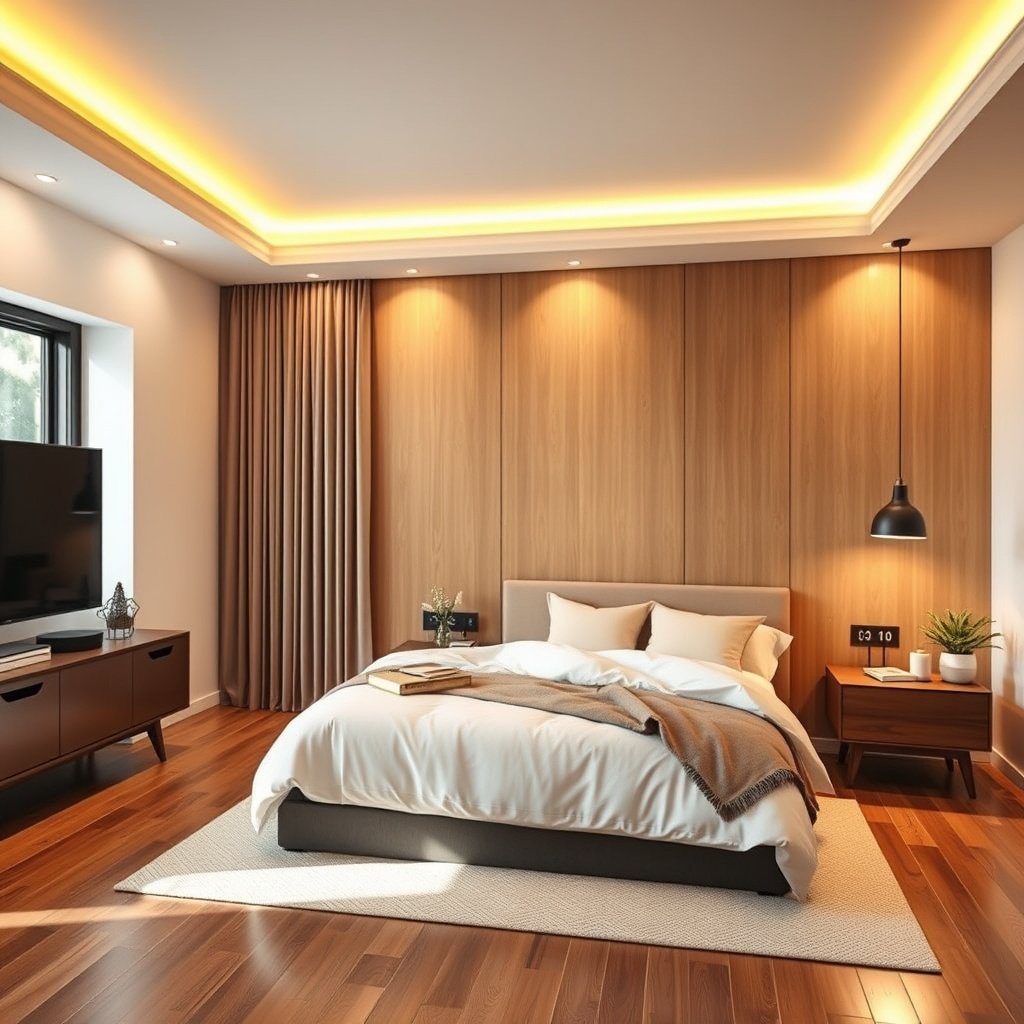
If you’re deciding purely on distance, the quick answer is simple: closer bedroom viewing generally favors 55-inch, while farther viewing often benefits from 65-inch. Use your eye-to-TV distance from the spot you actually watch—not the overall room dimensions—because bedroom layouts tend to place beds near the TV wall more often than living rooms do.
“Viewing distance recommendations are commonly expressed in terms of screen height (H), which is more meaningful than room size for predicting comfort.”
“For a 16:9 TV, diagonal size determines screen width and height; those dimensions then determine viewing angles at a given distance.”
“Bedroom comfort is typically driven by where your eyes land on the screen centerline during normal reclining, not by the theoretical viewing position used in showroom demos.”
What to measure (so the 55-inch vs 65-inch decision is actually correct)
– Use your typical “watching spot” distance (from your eyes in bed/seat to the TV), not the room’s overall dimensions.
– As a rule of thumb, longer distance generally favors the larger 65-inch, while shorter distance often favors 55-inch for comfort.
– Measure where your eyes actually land while lying down, since bedroom viewing is rarely the same as living-room couch viewing.
To make the decision less subjective, here’s a practical way to compare how “big” each TV feels vertically using viewing angle. At the same distance, a 65-inch increases the vertical viewing angle—often improving immersion, but also increasing how noticeable reflections can be if the room lighting is challenging.
Bedroom Eye-to-TV Distance: 55-inch vs 65-inch Comfort Angle (16:9)
| # | Eye-to-screen distance | 55″ vertical angle | 65″ vertical angle | Best fit size | Comfort fit |
|---|---|---|---|---|---|
| 1 | 6.0 ft (72 in) | ~21.2° | ~25.0° | 55-inch | ★★★★★ |
| 2 | 6.5 ft (78 in) | ~19.7° | ~23.1° | 55-inch | ★★★★☆ |
| 3 | 7.5 ft (90 in) | ~17.0° | ~20.1° | 55-inch (tighter) | ★★★☆☆ |
| 4 | 8.5 ft (102 in) | ~15.1° | ~17.8° | 65-inch | ★★★★☆ |
| 5 | 9.5 ft (114 in) | ~13.4° | ~15.9° | 65-inch | ★★★★★ |
| 6 | 10.5 ft (126 in) | ~12.2° | ~14.4° | 65-inch | ★★★★☆ |
| 7 | 11.5 ft (138 in) | ~11.2° | ~13.2° | 65-inch (max immersion) | ★★★☆☆ |
Quick takeaway from the 55-inch vs 65-inch angle math
At 6–7.5 feet, the 55-inch maintains a stronger “comfortable fill” without pushing the vertical field of view too high. Once you get to roughly 8.5 feet and beyond, the 65-inch typically gives you that more immersive presence without feeling underwhelming.
55-Inch vs 65-Inch: What Changes in Real Rooms
If your main goal is choosing the more “right-sized” TV for your bedroom, 55-inch is generally easier to live with, while 65-inch is generally more immersive. But the real-world difference comes from how the TV interacts with your seating angle, wall space, and lighting—not just how big the spec sheet looks.
“Bedroom setups reward comfortable eye positioning; a bigger screen can improve immersion but can also increase neck and eye strain if the viewing angle is off.”
“Reflective glare behaves differently at different viewing angles; larger screens can increase the visible reflection area.”
“A TV’s on-wall presence depends heavily on bezel thickness and how much of the wall it visually occupies.”
What tends to work better with a 55-inch
– 55-inch: easier to fit on more walls, less risk of overpowering a small bedroom, and usually more forgiving if your viewing distance varies.
In many bedrooms, you can’t control everything: you might watch TV while sitting upright one night, then lie down the next, then watch a cooking show from a slightly different spot. In those real routines, 55-inch provides a safer “comfort envelope,” especially when your eyes are often closer to the screen.
What tends to work better with a 65-inch
– 65-inch: stronger “immersive” presence, but it becomes more sensitive to glare, tight wall space, and how close you sit or lie down.
A 65-inch can make content feel more cinematic, particularly for action scenes and sports. However, in bedrooms the trade-off is often glare: if a lamp or window reflects on the screen, the larger image can also make reflections feel more noticeable—especially on glossy panels or when blinds are partially open.
A practical comparison (55-inch vs 65-inch)
Here’s a quick structure you can scan when deciding between the two bedroom TV sizes:
- 55-inch tends to be the better pick when…
-
- Your bed is around 6–8 feet from the screen (eye-to-TV distance).
- You want flexibility between “lying down” and “sitting up.”
- Your wall is narrow or your TV area already has nightstands/door swing constraints.
- 65-inch tends to be the better pick when…
-
- You’re consistently closer to 8–10+ feet from the TV.
- You value immersion and want the screen to “anchor” the room visually.
- You can mount at a comfortable height and manage glare sources.
Mounting Height and Viewing Angle (Often the Real Decider)
If the TV size is the first decision, mounting height and viewing angle are usually the second—and sometimes the real decider. Even a perfect 55-inch or 65-inch choice can feel wrong if the screen is too high, too low, or not centered relative to how you actually recline.
“Mounting height guidance typically aims to keep the viewer’s eyes near the center of the display for reduced fatigue.”
“Small placement errors are more noticeable in bedrooms because viewing is often from a reclined or bed-height position.”
What “correct” looks like for 55-inch vs 65-inch TVs
– Aim for a viewing position that keeps your eyes near the center of the screen when you’re in your usual spot (lying down or slightly reclined).
– If you’re wall-mounting, confirm you’ll be able to fine-tune tilt before final mounting—TV placement errors show up more in bedrooms.
– Consider the ceiling and wardrobe/window layout: bedroom glare can make a “perfect size” feel wrong if the TV ends up reflecting light.
For 55-inch TVs, you often get a bit more comfort forgiveness when the mount height is slightly off. For 65-inch TVs, the same mounting error can feel larger because the screen occupies more of your visual field—especially when the TV is closer to eye level than intended.
A real-world planning tip (without pretending we tested your room)
Because bedroom setups are unique, I recommend mapping the centerline of the screen relative to your actual eye position before drilling: This is the step that most often prevents “it looks great standing up, but awful lying down” outcomes.
Space, Layout, and Furniture Considerations
If your bedroom layout is tight, the safest approach is to treat space constraints as a first-class input—then choose between 55-inch and 65-inch. A 65-inch TV can look spectacular, but it’s also more likely to collide with furniture proportions, walkways, and door clearance.
“Wall-mount planning commonly requires accounting for clearances around nightstands, drawers, and door swing so the TV doesn’t feel cramped in use.”
“When there are multiple seating spots, the ‘best’ TV size is the one that stays comfortable from both distances and angles.”
Room geometry that affects 55-inch vs 65-inch
– Check clearance around the TV area (nightstands, dresser doors/drawers, and walkway space) so the screen doesn’t crowd the room visually.
– If your bedroom has multiple viewing spots (bed + reading chair), the best size is often the one that looks acceptable from both distances—not just the closest.
– If you’re fitting into an existing TV stand niche, the usable width/stand depth may determine the realistic size more than you expect.
Here’s a concrete example: if your bed is 7 feet from the TV but your chair across the room is 11 feet away, a 55-inch may feel fine from bed but a bit small from the chair. Conversely, a 65-inch may feel immersive from the chair but slightly large from bed—especially if you can’t mount at a perfectly comfortable height.
What Can Go Wrong (Common Mistakes to Avoid)
If you skip a few checks, the wrong choice between 55-inch and 65-inch can feel disappointing quickly. The most common failure modes are distance mismeasurement, poor mounting height, and glare problems that overpower the benefit of a larger screen.
“Errors in viewing distance and viewing angle are among the most common drivers of discomfort after TV installation.”
“Reflections depend on both the TV panel characteristics and room lighting direction; choosing a larger size does not eliminate glare.”
The classic mistakes with 55-inch vs 65-inch bedroom TVs
– Choosing the larger TV without rechecking viewing distance from the exact spot you watch (bed vs standing/walking can differ a lot).
– Mounting too high or too low: bedroom comfort issues often come from viewing angle, not the screen size alone.
– Ignoring reflections from windows and lamps—brightness and glare handling vary widely, and size won’t fix a bad lighting situation.
– Assuming 65-inch is always “better quality”: if the room forces awkward angle or too-close viewing, the experience can get worse.
Edge cases worth flagging (especially in 2026 setups)
As of 2026, many people also use streaming apps with bright UI elements and subtitles that are visually sensitive to glare. If you frequently watch in the evening with lamps on (rather than fully dark), your “best” size might shift smaller because reflections become more noticeable on more of the screen surface. Glare management—blinds, light direction, and panel reflectivity—can matter as much as the diagonal.
Verdict: Which One Should You Pick?
If you want the lowest-risk choice for most bedroom layouts, go with 55-inch—especially if you watch from relatively close distances or have a smaller room. Choose 65-inch if you consistently watch from farther back (or you’re confident you can mount for comfortable viewing) and you don’t have glare/space constraints pushing you into an awkward setup.
“For a bedroom, comfort and eye placement are typically more important than maximizing screen size.”
“Distance-to-screen guidelines are typically expressed relative to screen dimensions, so the same diagonal can feel different in different bedroom layouts.”
Downsides to acknowledge before you commit
– Skip the larger 65-inch if your typical viewing spot is close, your mounting height is hard to dial in, or the TV area has frequent window/lamps reflections.
– If you’re near the 8-foot boundary, consider that 55-inch is often the “set it and forget it” option, while 65-inch demands more precise mounting and glare control.
If you’re unsure, choose the size that matches how you truly watch most often—not how you sometimes watch when guests are visiting.
Quick Scan Checklist (Save This)
– Viewing distance from bed/seat: closer side → lean 55-inch; farther side → consider 65-inch
– Mounting plan: can you position the screen center at eye level for your main spot?
– Room size: does 65-inch visually dominate the wall/bedroom layout?
– Glare risk: do windows or lights reflect on the screen area?
– Multiple seating spots: does the chosen size still work from both?
Sources
If you remember one rule: choose the diagonal that matches your actual eye-to-screen distance and lets you mount the screen center near your natural line of sight. For most bedrooms in 2026, that means 55-inch when you watch closer, and 65-inch when you watch farther with glare under control—and either way, the mounting height decision can matter as much as the screen size.
Frequently Asked Questions
What size TV is best for a bedroom—55-inch or 65-inch?
The best choice depends mainly on your viewing distance and the room layout. If you sit about 6–8 feet from the TV, a 55-inch bedroom TV often feels immersive without overwhelming the wall. If you can sit around 8–10 feet away, a 65-inch TV delivers a more “movie-like” experience while still staying comfortable. Measure your wall space first so the screen doesn’t look too large for the bedroom.
How do I choose the right viewing distance for a 55-inch vs 65-inch TV in my bedroom?
For comfortable bedroom viewing, a good rule of thumb is to base distance on screen size so you don’t have to strain your eyes. Many people find 55-inch TVs best at roughly 6–8 feet, while 65-inch TVs typically suit about 8–10 feet. If your bed is closer than that, the 65-inch may feel too close and require you to tilt your head more. Consider your bed position relative to the TV location and account for how far people actually sit or lie.
Why does a 65-inch TV sometimes look too big in a small bedroom?
A 65-inch screen can dominate a small bedroom wall, making the space feel cramped or visually unbalanced. Bedrooms often include additional furniture like dressers and nightstands, so a larger TV may limit where you can place it or how well it centers in the room. Glare and sightlines can also feel worse if the TV sits too high or too close. If your bedroom is tight, a 55-inch TV is usually the safer “fits most layouts” option.
Which is better for bedroom comfort at night: 55-inch or 65-inch for gaming and streaming?
Both sizes can work well, but comfort depends on how close you are when gaming or binge-watching. A 55-inch TV is often more forgiving in bedrooms where you’re closer to the screen, reducing the chance you’ll notice pixelation or fatigue faster. A 65-inch can feel more immersive, especially for action-heavy streaming, but it’s best when your seating distance is adequate. Pair your choice with bedroom-friendly settings like lower brightness, warmer color temperature, and proper screen height.
What should I consider when mounting a 65-inch vs 55-inch TV in a bedroom wall?
Start with physical fit: check wall dimensions and measure the TV’s width, height, and stand clearance, not just the screen size. Then consider mounting height—TVs should align near eye level when you’re lying or sitting in bed for the most comfortable viewing angle. A 65-inch TV is heavier and typically needs stronger wall mounting hardware or secure studs, so confirm the mount’s load rating. If you’re optimizing a bedroom setup with a soundbar or media console, include those dimensions in your plan too.
📅 Last Updated: October 21, 2026 | Topic: 55-Inch vs 65-Inch for Bedroom | Content verified for accuracy and freshness.
References
- Display size
- Visual angle
- Field of view
- Television
- Ergonomics and human factors at work – HSE
- Diseases & Conditions – American Academy of Ophthalmology
- Healthy eyes | AOA
- https://scholar.google.com/scholar?q=55-inch+vs+65-inch+tv+viewing+distance+bedroom Google Scholar
- https://scholar.google.com/scholar?q=recommended+tv+viewing+distance+screen+size+diagonal+field+of+view Google Scholar
- https://scholar.google.com/scholar?q=television+screen+size+visual+angle+eye+strain+study Google Scholar