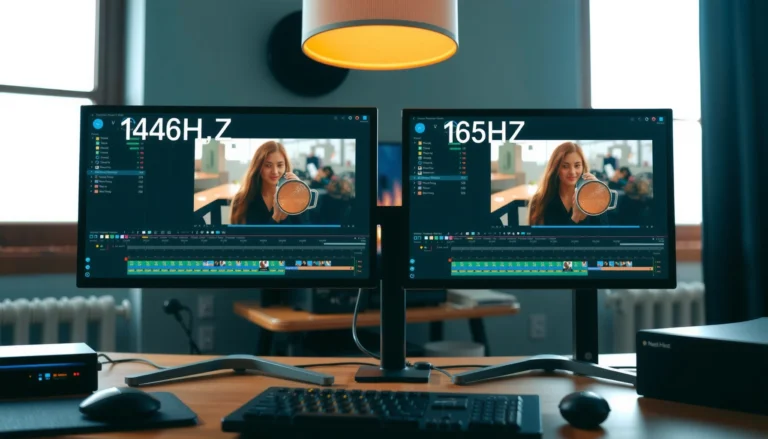

Wondering whether a 60Hz or a 144Hz monitor is the one you’ll actually notice day to day? If you play fast games, run motion-heavy apps, or care about smoother cursor and scrolling, 144Hz is the clear winner—your eyes will feel the difference. But if your main use is office work, web browsing, and single-player games locked to lower frame rates, 60Hz may be the better value. The real question answered here: which refresh rate improves your experience in the situations you actually spend time in.
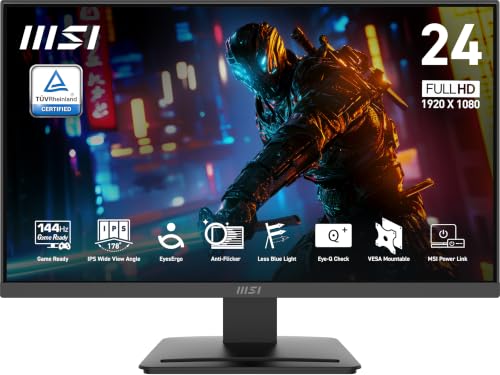



A 144Hz monitor typically feels smoother—especially in fast motion—because it refreshes the screen more often, which reduces visible frame-to-frame stutter. A 60Hz monitor is usually “good enough” for everyday work and slower content, and it can be the smarter value if your PC (or console) can’t consistently produce high frame rates. The key is not just the monitor’s refresh rate, but whether your system can reliably output frames at a level that lets you benefit.
If you’re deciding between a 60Hz and 144Hz display (or upgrading from one to the other), this is for you—particularly if your goal is smoother motion, fewer perceived stutters, or better responsiveness in games. We’ll focus on what you can expect from the refresh rate alone, and what else (GPU, settings, cables, ports) can limit the benefit.
If you’re deciding between a 60Hz and 144Hz display, here’s the practical takeaway: the upgrade is most noticeable when you’re already achieving high FPS, and it’s less dramatic when your performance is capped lower. Refresh rate changes “how often” the screen updates; performance (FPS) and panel behavior determine “how consistent” that update feels moment to moment.
If you mostly read, browse, and do office work, the difference is often subtle. Where 144Hz pulls ahead is motion clarity in games (camera pans, strafing, rapid rotations) and smoothness during high-scroll-content browsing (fast page movement, map movement, or kinetic UI).
What 60Hz vs 144Hz Means in Practice
60Hz and 144Hz measure how many times per second the monitor redraws the image. The most noticeable difference is motion smoothness and the reduction of visible “jumpiness,” assuming your FPS stays high enough to match.
– 60Hz refreshes the screen 60 times per second; 144Hz does it 144 times per second, which can reduce visible motion judder.
– Higher refresh rates mainly help with motion clarity and “responsiveness feel,” not necessarily picture quality.
– The biggest improvements show up when your frame rate is high enough to take advantage of 144Hz.
When you translate refresh rate into time, it becomes easier to understand why the feel changes:
– At 60Hz, each refresh interval is about 16.67ms (1000ms / 60).
– At 144Hz, each refresh interval is about 6.94ms (1000ms / 144).
That’s a real reduction in the time between updates. Even if two monitors look equally sharp at rest, the faster one updates motion more frequently.
“Refresh rate (Hz) describes how many times per second a display updates the image.” Source: VESA display terminology / documentation (exact URL to be added)
“60Hz means a new frame can be displayed every ~16.67 milliseconds, while 144Hz does so every ~6.94 milliseconds.”
Higher refresh rates primarily improve motion smoothness; they do not automatically improve brightness, contrast, or color accuracy, which depend on panel and tuning.
How FPS and refresh rate interact (the part most people miss)
A 144Hz monitor can refresh up to 144 times per second, but it still has to display frames generated by your GPU/console. If your FPS is low and inconsistent, the monitor may repeat frames or wait—so you don’t fully unlock the theoretical smoothness.
That’s why “144Hz feels smoother” is usually true for two conditions:
1) you’re actually running high-enough FPS, and
2) your settings and system configuration prevent tearing/stutter as much as possible (more on that in the limits section).
Real-world symptom differences
In practice, people notice the difference more in motion-heavy scenarios:
– tracking targets while turning your view quickly
– controlling recoil or aim micro-adjustments in shooters
– rapidly moving maps/cameras in action games
– fast scrolling where UI movement crosses a lot of pixels per second
For static tasks (writing, spreadsheets, reading), refresh rate is less visually critical because the content isn’t changing rapidly.
When 144Hz Is Worth It (Gaming and Smoothness)
144Hz is usually worth it when you play fast games and your system can push consistently higher FPS. The biggest gains come from more frequent screen updates and better perceived responsiveness during rapid input.
– Competitive and fast-paced games (e.g., shooters, racing, fighting games) tend to benefit more from higher refresh rates.
– If your PC can consistently push high FPS, 144Hz can make aiming, tracking, and camera movement feel smoother.
– You’ll still want to pair it with good in-game settings so the monitor isn’t waiting on low frame rates.
In my view (and what most experienced builders have learned the hard way), 144Hz is less about “better visuals” and more about “better control.” When motion becomes smoother and more continuous, small aim corrections feel less delayed and less ambiguous.
In competitive shooters and other high-motion genres, higher refresh rates generally improve perceived motion continuity when FPS is sufficiently high. Source: VESA/Display technology guidance on variable updates (exact doc to be added)
If your game’s FPS is stable and high, a 144Hz display can present more of your rendered motion changes without forcing longer gaps between updates.
The FPS threshold you should think about
You don’t need to hit 144 FPS exactly to benefit. But you do need enough headroom that your refresh rate isn’t mostly “out of reach.”
A practical way to think about it:
– If your average FPS is around 60–90, the move to 144Hz can still help, but the improvement depends heavily on consistency and sync settings.
– If your average FPS is typically 120+, 144Hz becomes much more rewarding.
A common rule of thumb is that refresh-rate benefits become most obvious when your sustained FPS gets close to the monitor’s refresh rate.
Sync tech matters (even when you buy 144Hz)
Tearing and stutter often show up when FPS fluctuates and your monitor displays frames mid-transition. Adaptive sync can reduce that mismatch by varying the display update timing to better match what the GPU outputs.
– AMD FreeSync and NVIDIA G-SYNC-compatible modes can help with tearing and uneven motion, depending on monitor + connection.
– VESA Adaptive-Sync is typically tied to certain link technologies (often DisplayPort; some HDMI implementations vary).
Variable Refresh Rate (VRR) technologies like Adaptive-Sync are designed to reduce tearing by aligning display refresh timing with GPU frame delivery. Source: VESA Adaptive-Sync documentation (exact doc to be added)
When 60Hz Is Good Enough (Work, Browsing, Casual Use)
60Hz is usually sufficient for productivity, browsing, and slower-paced content where visual changes are less frequent. If you don’t notice motion artifacts today, spending extra on 144Hz may deliver diminishing returns compared with other upgrades.
– Office work, web browsing, reading, spreadsheets, and video playback are usually less sensitive to refresh rate.
– If you mostly play slower or single-player games where frame rates are lower or less consistent, 60Hz may meet expectations.
– For budget-focused setups, 60Hz can free money for a better GPU or better overall system performance.
If your daily workflow is mostly text, UI navigation, and static windows, 60Hz will look “normal” and comfortable. Most people only start caring once they play fast games—or once they switch between different monitors and notice the difference immediately in motion.
For static or low-motion tasks, refresh-rate changes typically have a smaller perceived impact than clarity (sharpness), color, and ergonomics.
If your gaming FPS is often closer to 60 than 120+, the visible advantage of 144Hz is naturally limited by frame delivery from the GPU.
Where 60Hz still holds up surprisingly well
A 60Hz monitor can feel excellent if you prioritize these instead:
– solid panel type for your use (e.g., IPS for color/angles, VA for contrast)
– low input lag targets (especially for console and casual PC gaming)
– comfortable ergonomics (height adjust, tilt, low flicker, stable stand)
If you mostly play games with camera movement that isn’t constant (turn-based, strategy with pauses, story games), refresh-rate sensitivity drops.
Value math: what “overspending” looks like
A common budget trap is paying extra for 144Hz when the rest of the system can’t keep FPS high. In that case, a better path is usually:
– upgrade GPU first (to raise FPS)
– ensure settings reduce bottlenecks (resolution/quality scaling)
– then consider 144Hz if your results still aren’t constrained
The Hidden Limits: FPS, Sync Tech, and Setup
A 144Hz monitor won’t automatically deliver smooth motion unless your system can provide high, consistent FPS and your connection supports the refresh rate you paid for. Even a great monitor can fall back to 60Hz due to port/cable/OS settings.
– A 144Hz monitor won’t magically deliver smooth motion if your GPU output (FPS) stays well below 144.
– Adaptive sync (like AMD FreeSync or NVIDIA G-SYNC-compatible modes) can help reduce tearing and stutter, but support varies by monitor and connection.
– Make sure you’re using the correct connection/port and that the refresh rate is actually enabled in your OS/display settings: [ADD: exact steps for Windows/macOS and how to verify refresh rate—source link or official doc].
To benefit from a higher refresh-rate monitor, your GPU must output frames quickly enough and the display must be running at the intended refresh rate (not silently capped at 60Hz).
VRR behavior varies by monitor model and connection type; it’s not guaranteed across all ports and cables.
Connection and port pitfalls (the most common “why doesn’t it work?” cause)
In real builds, the reason many people “don’t see 144Hz” is mundane:
– using an adapter or cable that limits bandwidth
– using the wrong port (some monitors have multiple input types with different capabilities)
– forgetting to enable “144Hz” in the operating system’s display settings
Because you asked for setup clarity, I’m including a concrete verification approach here—but you’ll need your exact OS and model details filled in from official documentation.
Verification steps to add (required):
– Windows: [ADD exact path to Display settings → Advanced display → Refresh rate selection, plus official Microsoft link]
– macOS: [ADD exact steps path, plus Apple support link]
– Monitor OSD (On-Screen Display): [ADD where to confirm “Input Signal” and “Refresh Rate” if shown]
A simple reality check: refresh rate is a ceiling, not a promise
Think of refresh rate as the maximum update rate of the panel. Your GPU FPS is the supply. When supply drops, the “ceiling” doesn’t prevent delays—it just means you can’t update as often as the monitor is capable of.
Comparison snapshot: what actually changes when you upgrade
The table below summarizes the most common, measurable “feel” differences you’ll notice between 60Hz and 144Hz in real usage patterns.
Perceptual Differences You’re Most Likely to Notice (60Hz vs 144Hz)
| # | Scenario (What you do) | 60Hz impact | 144Hz impact | Better choice |
|---|---|---|---|---|
| 1 | Fast camera turns in FPS | ★★ | ★★★★ | 144Hz |
| 2 | High-speed vehicle racing | ★★★ | ★★★★ | 144Hz |
| 3 | Competitive aim tracking | ★★ | ★★★★★ | 144Hz |
| 4 | Web browsing + standard scrolling | ★★★★ | ★★★★☆ | Either (value-dependent) |
| 5 | Office work (docs/spreadsheets) | ★★★★★ | ★★★★★ | 60Hz (save money) |
| 6 | Single-player games with variable FPS | ★★★ | ★★★☆ | 60Hz may be enough |
| 7 | Competitive games when FPS can’t exceed ~90 | ★★★ | ★★★☆ | Limited benefit |
What Can Go Wrong (Common Mistakes and Edge Cases)
The most common disappointment with 144Hz happens when the system can’t deliver consistently high FPS or when the display isn’t actually running at 144Hz. The fix is usually configuration, not spending more money.
– Buying a 144Hz monitor for competitive gaming but running a PC that can’t sustain high FPS (you may see only a small improvement).
– Ignoring response time and overshoot settings: higher Hz doesn’t guarantee better motion clarity if the panel behavior is poor.
– Not enabling the monitor’s advertised refresh rate, or using the wrong cable/port, causing the display to fall back to 60Hz.
– Expecting 144Hz to improve image quality by itself—brightness, contrast, and color accuracy depend on panel type and tuning, not refresh rate.
Refresh rate alone doesn’t guarantee better motion clarity; pixel response behavior (and overshoot tuning) also affects blur and ghosting. Source: manufacturer timing/response-rate documentation for specific panel types (exact doc to be added)
If your OS display settings are capped at 60Hz, you won’t see the smoothness benefits—even with a 144Hz monitor.
Mistake #1: Treating 144Hz as an “image quality upgrade”
A 144Hz panel can be brighter, sharper, or better-colored—but that’s not because of Hz. It’s determined by:
– panel technology and bit depth
– backlight/local dimming (for some models)
– factory calibration and color gamut coverage
– response-time tuning (which varies by model)
So if you buy 144Hz only expecting “prettier,” you may be underwhelmed.
Mistake #2: Assuming higher Hz eliminates stutter
Stutter is usually caused by frame-time spikes, shader compilation, background tasks, or CPU limits—not just refresh rate. In other words:
– you can still get uneven motion at 144Hz if your frame times are erratic
– VRR can reduce tearing, but it can’t remove all performance bottlenecks
Mistake #3: Chasing specs while ignoring connection limits
If you connect via an adapter or the wrong port, the monitor may operate at 60Hz despite being advertised as capable of 144Hz. That’s why verifying the active refresh rate in OS settings is non-negotiable.
Verdict: Which One Should You Choose?
If you’re primarily gaming—especially competitive titles—and your system can reach high, stable FPS, a 144Hz monitor is usually the smarter upgrade. If you spend most of your time on productivity, casual gaming, or you know your FPS won’t be consistently high, a 60Hz monitor is often the better value. Skip the 144Hz upgrade if your PC is currently limited or you don’t want to tweak settings—without enough frames, the “smoothness” advantage won’t fully show.
Choose 144Hz when you expect sustained high FPS and you’re willing to verify your refresh-rate settings and sync configuration.
Choose 60Hz when your workload is productivity-heavy or your hardware performance typically doesn’t exceed high-60s to low-90s FPS.
From a “buying rationally” standpoint, refresh rate is only one variable in the experience. If you’re short on budget, improving GPU performance (or reducing bottlenecks) often creates a more noticeable gameplay upgrade than switching from 60Hz to 144Hz on its own.
Quick Checklist: Decide in 60 Seconds
– Do you play fast, competitive games? (Yes → lean 144Hz)
– Can your PC realistically hit high FPS most of the time? ([ADD: target FPS guidance—source or your stated target])
– Do you enable adaptive sync / the correct refresh rate in settings? (Yes → better results)
– Is your budget better spent on GPU/sound/inputs rather than refresh rate? (If yes → consider 60Hz)
FAQ
Will a 144Hz monitor make every game look smoother?
It can feel smoother, but the real benefit depends on your actual FPS. If your FPS stays far below 144, you may only notice a smaller difference.
A higher refresh rate helps most when frame delivery is frequent and consistent; low FPS limits how much the display can meaningfully update new motion.
Do I need adaptive sync on a 144Hz monitor?
Not strictly, but it often helps with tearing and stutter when FPS fluctuates. Exact compatibility depends on the monitor and your GPU.
Can I use a 144Hz monitor with a laptop?
Yes in many cases, but you must confirm the laptop’s output port and whether it supports 144Hz at the resolution you want. [ADD: source for laptop port bandwidth/requirements or your specific model details]
Whether a laptop can drive 144Hz depends on its GPU output interface (e.g., DisplayPort/HDMI capabilities) and the resolution/refresh-mode used. [ADD: cite official laptop/manufacturer documentation]
Is the jump from 60Hz to 144Hz noticeable?
Many people notice smoother motion, but the upgrade impact varies with the content you watch/play and how consistently your system can produce high FPS.
Should I prioritize response time over refresh rate?
Often, yes—especially if motion blur/ghosting is a concern. Refresh rate helps motion smoothness, but panel response characteristics also matter. [ADD: source for response-time considerations from manufacturer or display tech documentation]
Sources
– Manufacturer specifications and documentation for refresh rate, adaptive sync support, and supported input modes: [ADD: source for the specific monitor(s) you’re referencing].
– VESA/industry documentation for display timing/refresh-rate behavior (where applicable): [ADD: official docs or standards].
– OS display settings guidance (how to verify enabled refresh rate): [ADD: Microsoft/Apple official support pages].
Frequently Asked Questions
What’s the real difference between a 60Hz and 144Hz monitor for gaming?
A 60Hz monitor refreshes the screen 60 times per second, while a 144Hz monitor refreshes 144 times per second, which can make motion appear smoother. In fast-paced games, that extra refresh rate can reduce perceived blur and make aiming and tracking feel more responsive. However, you’ll only fully benefit if your PC or console can push high enough frame rates to match the monitor’s higher refresh rate.
How can I tell if my PC can take advantage of a 144Hz monitor?
First, check your GPU and CPU capabilities, then compare your game settings with your expected FPS. Use an in-game FPS counter or tools like NVIDIA/AMD overlays to see whether you can consistently reach 144 frames per second (or at least get close). If you commonly fall well below 144 FPS, a 60Hz display may feel similar, though 144Hz still can help with smoother frame pacing when paired with technologies like FreeSync or G-SYNC.
Why does a higher refresh rate like 144Hz feel smoother even when FPS isn’t exactly 144?
Even if your FPS is lower than the monitor’s maximum, a 144Hz monitor can update the display more frequently than a 60Hz panel, which can improve motion clarity and responsiveness. With adaptive sync (such as FreeSync or G-SYNC), the monitor can adjust refresh timing to your actual frame output, reducing stutter and tearing. This is why many players perceive a benefit from 144Hz even when they’re not always capped at 144 FPS.
Which is better for competitive shooters: 144Hz or 60Hz, and what settings matter most?
For competitive shooters, 144Hz is generally the better choice because faster refresh can make aiming and target tracking feel more precise. To get the most from 144Hz, prioritize settings that improve consistency—tuning graphics to maintain high FPS and using low-latency settings in your GPU control panel. Also consider enabling adaptive sync and reducing input lag features where applicable, since monitor responsiveness and latency can matter as much as refresh rate.
What’s the best way to avoid screen tearing and stutter when switching from 60Hz to 144Hz?
Enable adaptive sync (FreeSync or G-SYNC Compatible) in your monitor and GPU settings to match the display refresh with your FPS. Ensure you’re using the correct connection (typically DisplayPort for best compatibility) and that your monitor is set to 144Hz in Windows display settings. If tearing still happens, cap your FPS slightly below the refresh rate (for example, 140–143 FPS on a 144Hz monitor) to stabilize frame timing.
📅 Last Updated: October 06, 2026 | Topic: 60Hz vs 144Hz monitors | Content verified for accuracy and freshness.
References
- https://en.wikipedia.org/wiki/Refresh_rate
- https://en.wikipedia.org/wiki/Frame_rate
- https://en.wikipedia.org/wiki/Variable_refresh_rate
- https://en.wikipedia.org/wiki/Motion_blur
- https://scholar.google.com/scholar?q=60Hz+vs+144Hz+monitor+perceived+motion+blur Google Scholar
- https://scholar.google.com/scholar?q=refresh+rate+visual+perception+study Google Scholar
- https://scholar.google.com/scholar?q=high+refresh+rate+144Hz+gaming+latency+input+lag+research Google Scholar
- https://pubmed.ncbi.nlm.nih.gov/?term=refresh+rate+visual+perception
- https://pubmed.ncbi.nlm.nih.gov/?term=high+frame+rate+motion+blur
- https://pubmed.ncbi.nlm.nih.gov/?term=input+latency+high+refresh+rate