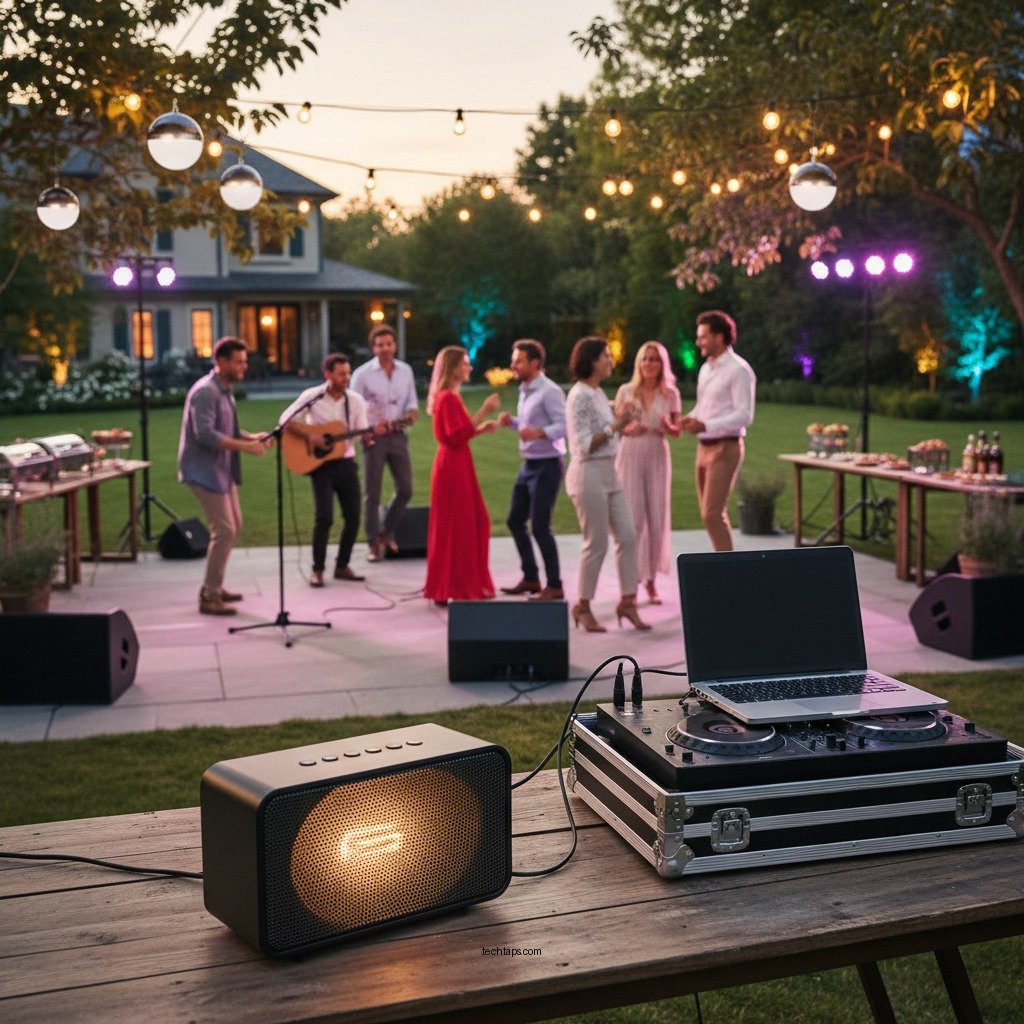

To set up wireless audio for an outdoor event or party, you’ll need to choose the right equipment, ensure proper placement, and consider environmental factors. A well-planned audio setup not only enhances the ambiance but also ensures that your guests enjoy a seamless auditory experience. This guide will walk you through the essential steps to create an immersive sound experience that enhances your gathering.
Choose the Right Equipment
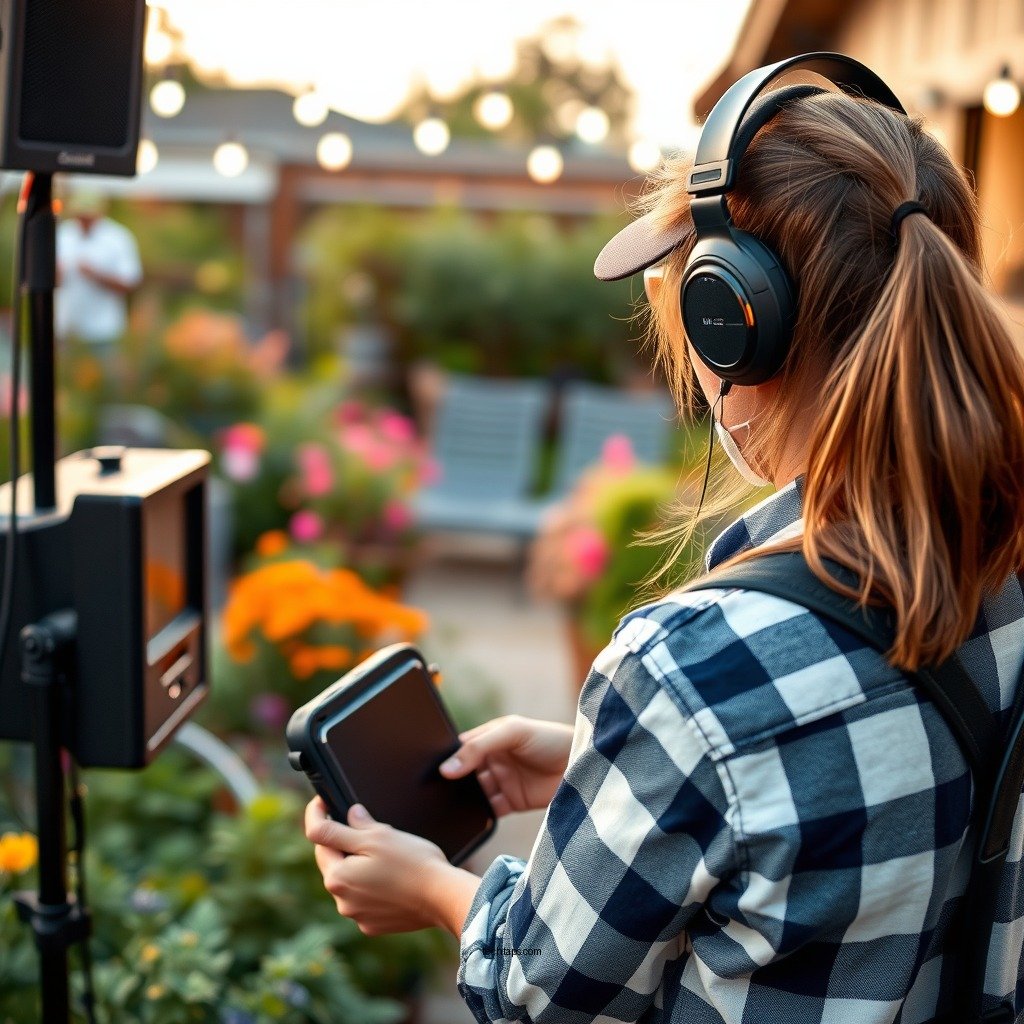
Selecting the right equipment is the cornerstone of a successful audio setup for outdoor events. Start by choosing a quality wireless speaker or sound system that suits the size of your outdoor space. For smaller gatherings, portable Bluetooth speakers may suffice, while larger events might require professional-grade sound systems with multiple speakers and subwoofers to ensure even sound distribution.
When selecting equipment, consider the compatibility with your audio sources. If your primary audio source is a smartphone or tablet, ensure the speaker system supports Bluetooth connectivity. For more robust setups, you may want to consider systems that allow for Wi-Fi streaming, which can provide better range and sound quality. Brands like JBL, Bose, and Sonos offer a range of options suitable for various event sizes and audio needs.
Plan Your Layout
Effective sound distribution is critical for outdoor events. Identify the optimal placement for your speakers to maximize sound coverage while minimizing obstructions. Ideally, you want to position speakers at a height of at least 3-4 feet off the ground, as this helps to disperse sound more evenly across the area.
Consider the direction of the speakers; they should be angled toward the audience rather than facing away or being obstructed by trees, tents, or other structures. Utilizing elevation can also enhance sound dispersion; placing speakers on elevated surfaces or stands can significantly improve audio clarity. If you can, conduct a site survey before the event to visualize the best layout.
Manage Power Sources
Power management is a critical aspect that can make or break your audio experience. Determine whether you’ll be using battery-powered speakers or if you’ll require access to electrical outlets. Battery-powered speakers offer flexibility and mobility but ensure they are fully charged before your event.
If you opt for wired systems, make sure to have outdoor-rated extension cords and power strips on hand. This will not only ensure safety but also provide reliable power throughout your event. Organize cords neatly to prevent tripping hazards, and consider using cord covers if your setup includes paths or walkways.
Top Wireless Speaker Systems for Outdoor Events (2024)
| # | Speaker Model | Battery Life | Weight | Sound Quality |
|---|---|---|---|---|
| 1 | JBL Charge 5 | 20 hours | 2.0 kg | Excellent |
| 2 | Bose SoundLink Flex | 12 hours | 0.6 kg | Very Good |
| 3 | Sonos Roam | 10 hours | 0.43 kg | Excellent |
| 4 | Ultimate Ears BOOM 3 | 15 hours | 0.9 kg | Very Good |
| 5 | Anker Soundcore Motion+ | 15 hours | 1.4 kg | Good |
| 6 | Marshall Stockwell II | 20 hours | 1.2 kg | Excellent |
| 7 | Sony SRS-XB43 | 24 hours | 2.9 kg | Excellent |
Test the Sound Quality
Before your guests arrive, conducting a sound check is essential. This not only allows you to adjust volume levels but also helps you identify any potential interference issues. Start by playing a range of audio content, from music to speeches, to ensure clarity across different sound types.
Walk around the area while the audio is playing to identify any weak spots in sound quality. If you notice areas with lower volume or clarity, consider adjusting speaker positions or adding additional speakers if necessary. It is advisable to test your audio setup during the same time of day as your event, as environmental factors such as wind and crowd noise can affect sound levels.
Address Environmental Factors
Outdoor events come with their unique set of challenges that can impact sound quality. Wind, for instance, can carry sound away from your audience, making it difficult for them to hear. If your event includes speeches or presentations, consider using windshields for microphones to minimize wind interference.
Additionally, be mindful of other noise sources, such as nearby traffic, construction, or loud conversations. Position your speakers in a way that minimizes sound obstruction, and if necessary, use barriers or landscaping to help contain noise. Secure all equipment to prevent movement from wind or accidental bumps, particularly in open areas.
Create a Playlist
A carefully curated playlist can set the perfect mood for your outdoor gathering. Start by determining the theme of your event and selecting songs that resonate with that theme. Consider using a music app that allows you to easily queue songs and make adjustments on the fly, ensuring a dynamic auditory experience.
For instance, if your event is a casual summer BBQ, a mix of upbeat pop and classic summer hits could work well. Alternatively, for a more formal gathering, consider instrumental or soft jazz tracks that create a sophisticated atmosphere. Be sure to include a variety of genres to cater to different tastes and to keep the energy flowing throughout the event.
Monitor and Adjust During the Event
As the event unfolds, it’s crucial to monitor audio levels actively. Pay attention to guest feedback regarding sound quality and be prepared to make real-time adjustments. If guests are leaning in to hear or straining to converse, it may indicate that the volume is too low or that the sound is not adequately reaching certain areas.
Additionally, be prepared to troubleshoot connectivity issues, particularly if you are using wireless systems. Having a backup plan, such as a wired connection or an alternative speaker, can be beneficial should any technical difficulties arise.
Summarizing these key steps will ensure you have a seamless audio experience for your outdoor event. With the right equipment and careful planning, your gathering will be enhanced by great sound. Make sure to test everything in advance, remain adaptable during the event, and most importantly, enjoy the celebration!
Frequently Asked Questions
What equipment do I need to set up wireless audio for an outdoor event or party?
To set up wireless audio for your outdoor event, you’ll need a reliable wireless speaker system, a smartphone or laptop for audio control, and a portable power source if your speakers are not battery-operated. Additionally, consider using microphones if you need to amplify speeches or announcements, and ensure you have a strong Wi-Fi connection or Bluetooth compatibility for seamless streaming.
How do I choose the right wireless speakers for an outdoor party?
When selecting wireless speakers for an outdoor party, look for models with weather-resistant features and a battery life that matches the duration of your event. It’s also essential to choose speakers with sufficient wattage to fill the outdoor space with sound and Bluetooth or Wi-Fi capabilities for easy connectivity. Checking user reviews can help you gauge performance in outdoor conditions.
Why is it important to test audio equipment before the event?
Testing your audio equipment before the event is crucial to ensure everything functions correctly and to avoid technical issues during the party. It allows you to check sound quality, connectivity, and battery levels, making adjustments as necessary. A thorough sound check can significantly enhance the overall experience for your guests.
What are the best practices for setting up wireless audio outdoors?
Best practices for setting up wireless audio outdoors include positioning speakers on stable surfaces and away from obstacles that could block the sound. Ensure the speakers are elevated for better sound dispersion, and avoid placing them near sources of interference like Wi-Fi routers or large metal objects. Additionally, consider using a sound level meter to help balance audio levels throughout the area.
Which types of music streaming services work best with wireless audio setups for outdoor events?
Popular music streaming services like Spotify, Apple Music, and Pandora work excellently with wireless audio setups due to their vast libraries and user-friendly interfaces. Ensure that your speakers are compatible with these services, either via Bluetooth or Wi-Fi, to allow for easy access to playlists. Using a service with offline capabilities can also be beneficial in areas with limited internet connectivity.
References
- Wireless
https://en.wikipedia.org/wiki/Wireless_audio - https://www.sciencedirect.com/science/article/pii/S2352864818301888
https://www.sciencedirect.com/science/article/pii/S2352864818301888 - https://pubmed.ncbi.nlm.nih.gov/25922011/
https://pubmed.ncbi.nlm.nih.gov/25922011/ - Google Scholar Google Scholar
https://scholar.google.com/scholar?q=Wireless+Audio+for+Outdoor+Events - Google Scholar Google Scholar
https://scholar.google.com/scholar?q=Setting+Up+Wireless+Audio+for+Parties - https://www.bbc.com/future/article/20210122-how-to-host-a-great-outdoor-party
https://www.bbc.com/future/article/20210122-how-to-host-a-great-outdoor-party - https://www.theguardian.com/lifeandstyle/2020/jul/03/how-to-throw-a-great-outdoor-party
https://www.theguardian.com/lifeandstyle/2020/jul/03/how-to-throw-a-great-outdoor-party - https://www.nature.com/articles/s41598-019-45667-3
https://www.nature.com/articles/s41598-019-45667-3 - Page Not Found – Site Help – Mayo Clinic
https://www.mayoclinic.org/healthy-lifestyle/indoor-outdoor-parties/expert-answers/outdoor-parties/faq-20057810 - https://www.cdc.gov/coronavirus/2019-ncov/daily-life-coping/events.html
https://www.cdc.gov/coronavirus/2019-ncov/daily-life-coping/events.html