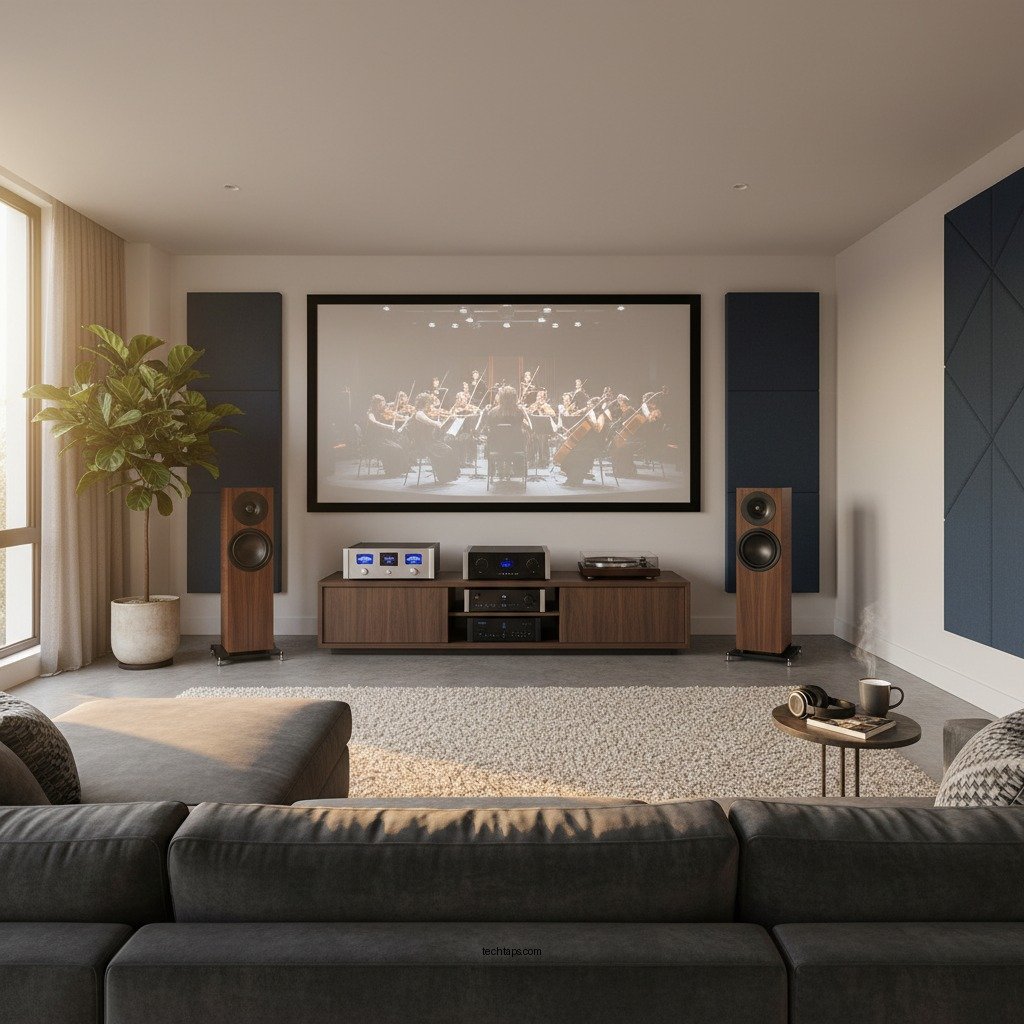

Creating a high-end home theater for an audiophile experience involves meticulous planning and careful selection of components to ensure unparalleled sound quality and immersive visuals. This guide will walk you through the essential strategies and equipment needed to transform your space into a luxurious audio-visual haven, perfect for enjoying music and movies at their best.
Selecting the Right Audio Equipment
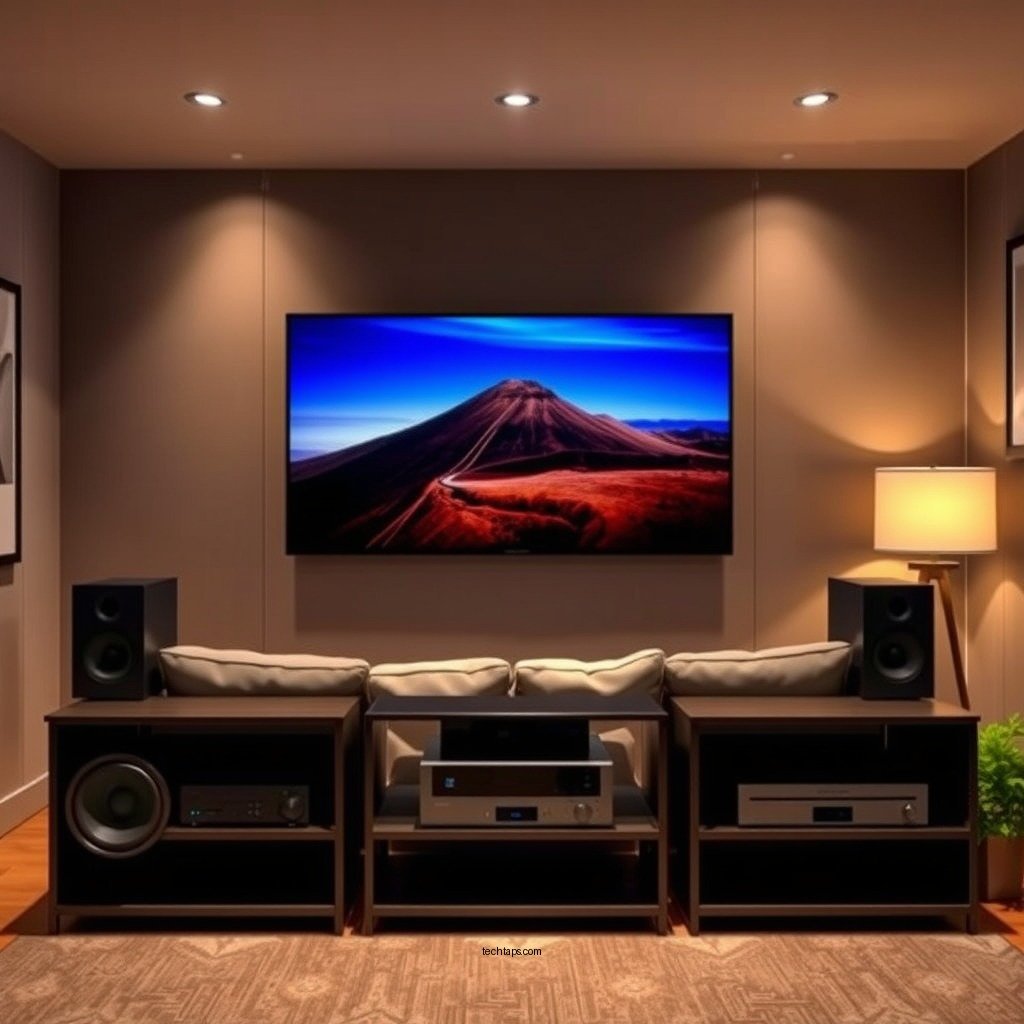
The foundation of any high-end home theater system is its audio equipment. For audiophiles, this means investing in components that deliver exceptional sound clarity and depth.
– Speakers: Choose high-fidelity speakers that suit your space and preferences. Brands like Bowers & Wilkins, Focal, and Klipsch offer a range of options that cater to different room sizes and acoustic needs. Consider whether you prefer floor-standing speakers, bookshelf models, or a combination thereof. The goal is to achieve a balanced sound that accurately reproduces the audio spectrum.
– Receiver: Investing in a quality AV receiver is crucial, as it acts as the heart of your audio system. Look for receivers that support advanced audio formats such as Dolby Atmos and DTS:X, which provide a more immersive listening experience. Popular choices include the Denon AVR-X3700H and the Yamaha RX-A3080, both known for their robust performance and versatility.
– Subwoofer: Adding a subwoofer is essential for deep bass response and overall sound enhancement. A good subwoofer can significantly elevate your listening experience, particularly for action movies and music genres that rely on low frequencies. Models like the SVS SB-2000 Pro or the REL Acoustics T/5i are renowned for their performance and integration with other audio components.
Optimizing Room Acoustics
The acoustics of your room play a vital role in the overall audio experience. Properly optimizing your environment can make a significant difference in sound quality.
– Room Shape and Size: Assess the room’s shape and size to identify potential acoustic challenges. Irregularly shaped rooms can create sound reflections and dead spots, while square rooms often result in standing waves. Consider utilizing room dimensions that promote even sound distribution.
– Soundproofing and Absorption: Use sound-absorbing materials such as acoustic panels, carpets, and heavy drapes to reduce echo and enhance sound clarity. Panels can be strategically placed on walls and ceilings to minimize reflections, while carpets can dampen sound waves on hard floors.
– Speaker and Seating Positioning: Position speakers and seating strategically for optimal sound distribution. A common guideline is to form an equilateral triangle between the main listening position and the front left and right speakers. Experiment with distances and angles to find the best setup for your specific room.
Video Quality Considerations
While audio is crucial, video quality cannot be overlooked in a high-end home theater setup.
– Projector or TV: Select a high-resolution projector or TV that complements your audio system. For projectors, consider models like the Epson Home Cinema 5050UB or the Sony VPL-VW295ES for stunning visuals. If opting for a television, OLED models from LG or Samsung provide exceptional contrast and color accuracy.
– Screen Size and Viewing Distance: Ensure proper screen size and viewing distance for an immersive experience. A general rule of thumb is to sit at a distance that is 1.5 to 2.5 times the diagonal screen size for optimal viewing comfort.
– Video Calibration: Calibrate video settings to enhance picture quality based on room lighting. Utilize tools such as a colorimeter or professional calibration services to ensure accurate color reproduction and brightness levels.
Top 7 High-End Home Theater Speakers (2024)
| # | Speaker Model | Type | Frequency Response | Price |
|---|---|---|---|---|
| 1 | Bowers & Wilkins 606 S2 | Bookshelf | 52Hz – 28kHz | $899 |
| 2 | Focal Aria 906 | Bookshelf | 45Hz – 28kHz | $1,249 |
| 3 | Klipsch RP-600M | Bookshelf | 45Hz – 25kHz | $599 |
| 4 | SVS Prime Pinnacle | Floor-standing | 28Hz – 25kHz | $1,499 |
| 5 | Monitor Audio Silver 300 | Floor-standing | 32Hz – 35kHz | $1,800 |
| 6 | Paradigm Monitor SE 6000F | Floor-standing | 32Hz – 22kHz | $1,199 |
| 7 | Elac Debut 2.0 F6.2 | Floor-standing | 38Hz – 35kHz | $649 |
Lighting and Ambiance
Creating the right ambiance is crucial for an enjoyable home theater experience.
– Dimmable Lighting: Incorporate dimmable lighting options to create the perfect viewing atmosphere. Use LED recessed lights or wall sconces that can be adjusted to enhance the cinematic experience without causing glare on the screen.
– Blackout Curtains: Employ blackout curtains to minimize glare and distractions during movie nights. These curtains not only block out external light but also help in controlling the acoustics of the room by reducing sound reflections.
– Smart Lighting Solutions: Consider smart lighting solutions that can be controlled remotely or programmed for different viewing modes. Systems like Philips Hue or Lutron Caseta allow you to create customized lighting scenes that suit different types of content, whether it’s a movie, concert, or an immersive gaming session.
System Integration and Control
An integrated home theater system allows for seamless control of all audiovisual components.
– Home Automation Systems: Explore home automation systems to streamline control of your audio-visual setup. Products like Control4 or Crestron can integrate all devices into a single interface, allowing you to manage lighting, audio, and video from a smartphone or tablet.
– Mobile Apps and Universal Remotes: Utilize mobile apps or universal remotes for seamless management of devices. These technologies can simplify the user experience by reducing the number of remotes needed and allowing for customized control layouts.
– Compatibility: Ensure compatibility between all components to avoid technical issues. Research and choose products that work well together, particularly in terms of connectivity options such as HDMI, optical audio, and wireless protocols.
Maintenance and Upgrades
To keep your high-end home theater functioning optimally, regular maintenance and upgrades are essential.
– Firmware Updates: Regularly check and update firmware for audio and video equipment. Manufacturers often release updates that enhance performance or add new features, ensuring that your system remains current.
– Cable Management: Keep cables organized and in good condition to ensure optimal performance. Use cable management solutions to prevent tangling and wear, which can degrade signal quality over time.
– Staying Informed: Stay informed about new technologies and consider periodic upgrades to enhance your system. Being aware of advancements in audio and video technologies can help you make informed decisions about future purchases.
Budgeting for Your Home Theater
Establishing a budget is critical for a successful home theater installation.
– Detailed Budget Plan: Create a detailed budget that covers equipment, installation, and decor. Include all components, from speakers to seating, and account for any additional costs such as room treatments.
– Research Options: Research various brands and models to find cost-effective options without sacrificing quality. Consider purchasing during sales events or looking for refurbished items to stay within budget.
– Future Upgrades: Plan for potential future upgrades to ensure your system remains cutting-edge. Allocate a portion of your budget for technology advancements as the home theater landscape continues to evolve.
In summary, setting up a high-end home theater for an audiophile experience requires careful selection of audio and video equipment, thoughtful room design, and advanced integration of technology. By assessing your current setup, making necessary upgrades, and investing in quality components, you can enjoy a cinematic experience from the comfort of your home. Start envisioning your dream audio-visual space today!
Frequently Asked Questions
What equipment do I need to set up a high-end home theater for an audiophile experience?
To create a high-end home theater, you’ll need a quality AV receiver, high-fidelity speakers, and a premium projector or large flat-screen TV. Additionally, consider investing in a subwoofer for deep bass, acoustic panels for sound treatment, and high-quality cables to ensure optimal audio and video performance.
How do I properly position my speakers for the best sound experience?
Speaker placement is crucial for an audiophile experience; aim to position your speakers at ear level when seated and form an equilateral triangle between the speakers and your listening position. Ensure that the front speakers are slightly toed-in toward the listener, and place the subwoofer strategically to enhance bass response without overwhelming the room.
Why is room acoustics important in a high-end home theater setup?
Room acoustics significantly impact sound quality; hard surfaces can create echoes and distortions, while soft furnishings can help absorb sound and create a balanced listening environment. To optimize acoustics, consider adding acoustic panels, rugs, and curtains, which can reduce unwanted reflections and improve the overall audio clarity in your home theater.
What is the best way to calibrate my home theater system for optimal sound?
The best way to calibrate your home theater system is to use an audio calibration tool or microphone that comes with many modern AV receivers. This process involves measuring the sound output in your space and adjusting speaker levels, distances, and equalization settings to ensure a balanced audio experience tailored to your room’s unique characteristics.
Which brands are considered top-tier for audiophile home theater equipment?
Some of the top-tier brands for audiophile home theater equipment include Bowers & Wilkins, Klipsch, and KEF for speakers, while Denon and Marantz are renowned for their AV receivers. For projection technology, brands like Sony and JVC offer exceptional image quality, making them ideal choices for a high-end home theater setup.
References
- Home cinema
https://en.wikipedia.org/wiki/Home_theater - https://www.sciencedirect.com/topics/engineering/home-theater
https://www.sciencedirect.com/topics/engineering/home-theater - https://www.bbc.com/future/article/20201015-the-science-of-sound-and-how-it-affects-us
https://www.bbc.com/future/article/20201015-the-science-of-sound-and-how-it-affects-us - https://www.nytimes.com/2021/12/15/technology/home-theater.html
https://www.nytimes.com/2021/12/15/technology/home-theater.html - https://www.theguardian.com/technology/2022/jul/14/home-theater-setup-guide
https://www.theguardian.com/technology/2022/jul/14/home-theater-setup-guide - https://www.reuters.com/technology/home-audio-setup-guide-2022-08-01/
https://www.reuters.com/technology/home-audio-setup-guide-2022-08-01/ - Google Scholar Google Scholar
https://scholar.google.com/scholar?q=high-end+home+theater+setup - Google Scholar Google Scholar
https://scholar.google.com/scholar?q=audiophile+experience+home+theater - Google Scholar Google Scholar
https://scholar.google.com/scholar?q=home+theater+sound+quality - https://www.britannica.com/topic/home-theater
https://www.britannica.com/topic/home-theater