

Smart sound systems can be a worthwhile investment for many users, particularly those who value convenience, quality, and integration with smart home technology. These systems not only provide exceptional audio experiences but also seamlessly connect with other smart devices to create a cohesive home environment. In this article, we will explore the benefits and considerations of smart sound systems to help you determine if they are the right choice for your needs.
Benefits of Smart Sound Systems

One of the primary advantages of smart sound systems is their high-quality audio experience. Many models are designed with advanced audio technology that delivers rich, immersive sound, making your favorite movies, music, and podcasts come alive. Brands like Sonos and Bose are known for their impressive sound quality, which can significantly enhance your entertainment experiences. Whether you’re hosting a gathering or enjoying a quiet evening at home, a smart sound system can elevate your audio enjoyment to new heights.
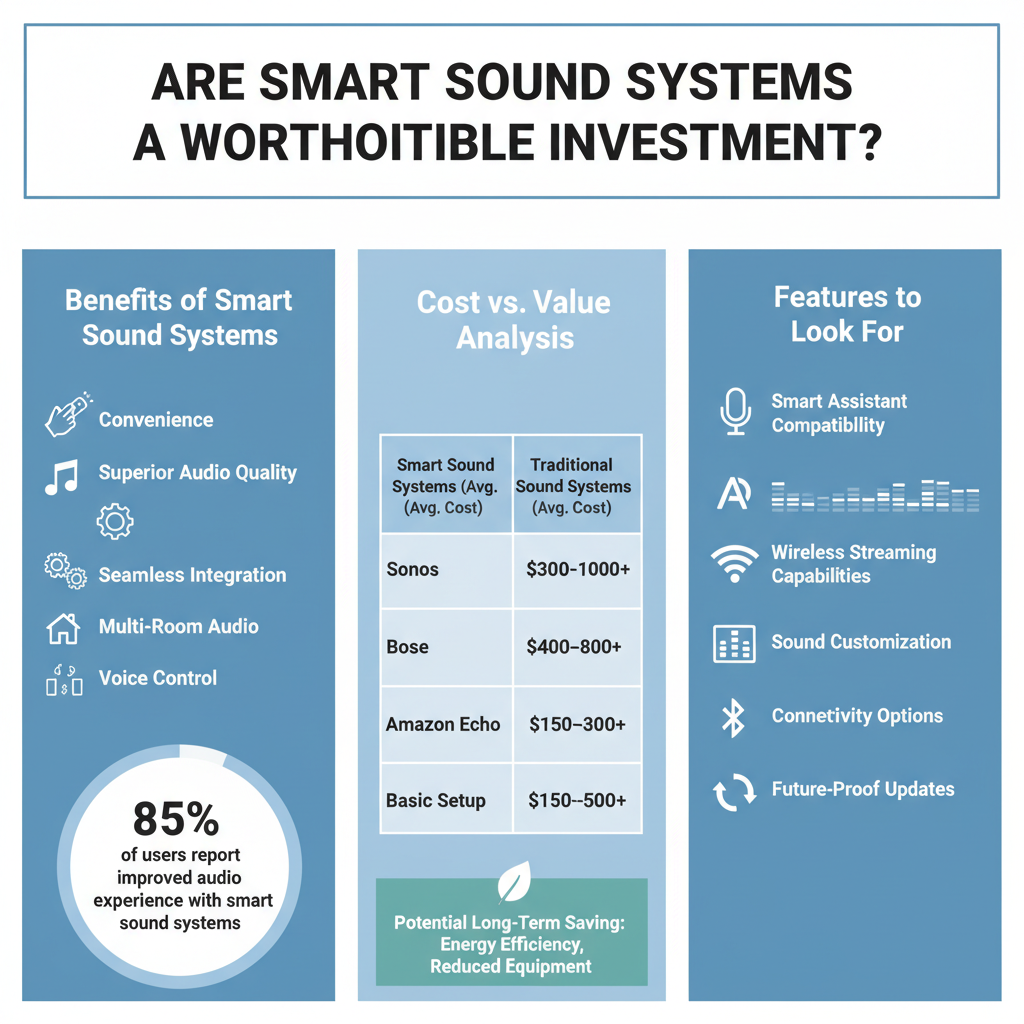
Moreover, the seamless integration with other smart devices is another compelling benefit. Most smart sound systems are compatible with a variety of platforms, such as Amazon Alexa, Google Assistant, and Apple HomeKit. This means you can easily control your music, adjust the volume, or even set the mood with just your voice. Imagine walking into your home and saying, “Play my evening playlist,” and having your sound system respond instantly, creating an inviting atmosphere without lifting a finger. This level of convenience transforms how we interact with our living spaces.
Cost vs. Value Analysis

While the initial investment in a smart sound system may be higher than traditional setups, the long-term value can justify the expense. For instance, high-quality smart speakers can range from a few hundred to over a thousand dollars, depending on the brand and features. However, when you consider the potential long-term savings — such as reduced energy consumption, the convenience of not needing multiple devices, and the ability to control your entire audio setup with one system — the cost can be offset.
Furthermore, smart sound systems often allow for multi-room setups, enabling you to expand your audio system over time. Instead of replacing an entire system, you can simply add more speakers as your budget allows. This flexibility not only saves money in the long run but also enhances your home’s overall audio experience. By investing in a smart sound system, you are not just purchasing a product; you’re investing in a versatile solution that can grow with your needs.
Features to Look For
When selecting a smart sound system, it’s essential to consider the features that matter most to you. Voice control is a significant selling point, enabling you to manage your music hands-free. Compatibility with virtual assistants like Alexa or Google Assistant allows for effortless interaction, making it easier to integrate audio control into your daily routine.
Additionally, multi-room audio capabilities should be on your checklist. This feature allows you to synchronize music across different rooms, ensuring consistent sound quality throughout your home. Brands like Sonos excel in this area, allowing you to group speakers and control them all from a single app. Other valuable features include Bluetooth connectivity, built-in streaming services, and customizable equalizer settings, which can tailor the audio experience to your specific preferences.
Common Concerns and Misconceptions
Despite their many advantages, some common concerns and misconceptions about smart sound systems can deter potential buyers. One prevalent issue is durability and lifespan compared to traditional audio systems. While it’s true that smart devices can sometimes feel less robust, leading brands often prioritize quality and durability, ensuring their products last for years with proper care.
Another concern is the perceived complexity of setup and use. Many people think that integrating a smart sound system into their home will be a challenging task. However, most modern systems are designed with user-friendliness in mind. Setup typically involves connecting the speakers to your Wi-Fi network via an app, which guides you through the process step-by-step. Additionally, once set up, using voice commands or a user-friendly app simplifies the control of your audio experience.
User Experiences and Reviews
Real-world testimonials from users often shed light on both the satisfaction and challenges associated with smart sound systems. Many users praise the sound quality and versatility, highlighting how their smart sound systems have transformed their listening experiences. For example, a user might share how they can now control their home’s audio through voice commands while cooking, making multitasking much easier.
However, some users have reported initial frustrations with setup or occasional connectivity issues. It’s essential to consider these reviews when making your decision. Comparing popular smart sound systems, like Sonos, Amazon Echo, and Google Nest, can provide valuable insights into what might work best for you. Reading through user feedback will help you understand the strengths and weaknesses of each option, allowing you to choose a system that aligns with your needs.
Future Trends in Smart Sound Technology
As technology continues to evolve, smart sound systems are poised to become even more sophisticated. One emerging trend is the development of spatial audio, which offers a more immersive listening experience by creating a three-dimensional sound field. This technology is gaining traction, particularly in music and gaming, and can significantly enhance how we experience different types of audio.
Additionally, advanced AI integration is expected to play a more prominent role in future smart sound systems. Imagine a system that learns your listening preferences over time and automatically curates playlists based on your mood or activity. This level of personalization could redefine how we interact with our audio environments, making them more intuitive and enjoyable.
Tips for Making the Right Choice
When it comes to investing in a smart sound system, it’s crucial to assess your specific needs and lifestyle. Consider how you plan to use the system — will it be primarily for music, movies, or smart home integration? Understanding your priorities will help you narrow down your options.
Additionally, take advantage of trial periods and return policies offered by many retailers. This allows you to test the sound system in your home environment, ensuring it meets your expectations before making a final commitment. Engaging with online communities or forums can also provide valuable insights and recommendations from fellow users who have gone through the purchasing process.
Smart sound systems offer a blend of convenience and audio quality that can enhance your daily life. By evaluating the benefits, costs, and user feedback, you can make an informed decision on whether to invest in this technology. If you’re ready to upgrade your audio experience, start researching and exploring the options that best suit your home. Embrace the future of audio and enjoy the convenience and quality that a smart sound system can bring to your everyday life!
Frequently Asked Questions
What are the key benefits of investing in a smart sound system?
Investing in a smart sound system offers several key benefits, including enhanced audio quality, convenience, and integration with other smart home devices. Smart sound systems typically provide high-definition sound, support for various streaming services, and voice control capabilities. Additionally, many systems can be easily integrated into your home network, allowing you to control music and audio throughout your home from a single app or device.
How do smart sound systems enhance home entertainment experiences?
Smart sound systems significantly enhance home entertainment experiences by offering immersive audio that complements video content. Many systems support multi-room setups, allowing you to synchronize music or sound effects across different areas of your home. Moreover, features like Dolby Atmos and surround sound capabilities can create a cinematic experience, making movie nights or gaming sessions much more enjoyable.
Why should I choose a smart sound system over traditional audio systems?
Choosing a smart sound system over traditional audio systems provides benefits such as ease of use, versatility, and connectivity options. Unlike traditional systems, smart sound systems offer wireless streaming, integration with voice assistants, and the ability to control multiple speakers from a smartphone or tablet. This seamless connectivity allows you to manage your audio experience effortlessly and adapt to your lifestyle, whether you’re hosting a party or enjoying a quiet evening at home.
Which smart sound system brands are considered the best for quality and performance?
Some of the best smart sound system brands known for quality and performance include Sonos, Bose, Google Nest, and Amazon Echo. Sonos is praised for its rich sound quality and multi-room capabilities, while Bose is recognized for premium audio and innovative designs. Google Nest and Amazon Echo offer great integration with their respective ecosystems, making them ideal for users already invested in smart home technologies.
How can I determine if a smart sound system is worth the investment for my needs?
To determine if a smart sound system is worth the investment for your needs, consider factors such as your audio preferences, home size, and existing technology. Evaluate your typical usage scenarios, such as music streaming, movie watching, or gaming, and assess whether a smart sound system can enhance those experiences. Additionally, research features that are important to you, such as voice control, wireless connectivity, and compatibility with other smart devices, to ensure you choose a system that fits your lifestyle.
References
- Smart speaker
- https://www.consumerreports.org/home-audio/smart-speakers-what-to-know-before-you-buy-a1002084101/
- https://www.nytimes.com/2021/07/27/technology/smart-home-devices.html
- https://www.forbes.com/advisor/home-improvement/smart-home-devices-worth-it/
- https://www.cnet.com/home/smart-home/how-smart-home-devices-can-save-you-money/
- https://www.wired.com/story/smart-home-devices-worth-the-investment/
- https://www.aarp.org/home-family/personal-technology/info-2021/smart-home-technology.html
- https://www.npr.org/2021/01/04/952490389/are-smart-home-devices-worth-the-investment-the-answer-is-complicated