
If you’re comparing 60Hz vs 165Hz for gaming, the clear winner depends on whether your PC can reliably hit high FPS and your monitor supports responsive motion. A 165Hz refresh rate is the better choice for fast shooters, competitive play, and smooth aiming when frame rates stay near or above 100FPS. If your system tops out around 60FPS or you mainly play slower, single-player games, 60Hz is the more sensible buy.



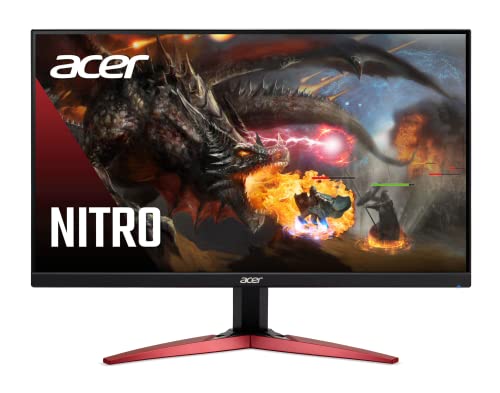
If you can keep a stable, high FPS, a 165Hz monitor will feel meaningfully smoother than 60Hz and can improve how quickly aiming responds during fast movement. If your FPS frequently drops near 60 or below—or you mostly play slower, single-player games—the gameplay difference may be small, and spending on performance (or other upgrades) usually delivers more value.
Choosing between 60Hz and 165Hz isn’t only about “bigger number = better.” What matters is whether your PC (CPU + GPU), your game’s rendering pipeline, and your display configuration can consistently produce and deliver frames in the real situations you play. In 2026, VRR features (VRR—variable refresh rate such as NVIDIA G-SYNC Compatible / AMD FreeSync) are also a bigger part of the “smoothness” story, so you’ll get the best outcome by matching refresh rate, FPS stability, and display settings rather than chasing Hz alone.
60Hz vs 165Hz: The quick comparison
165Hz can reduce motion-to-motion “stutter” and make rapid camera movement feel more continuous than 60Hz—provided your system can actually deliver enough frames. In practical terms, refresh rate changes how often the monitor updates what it’s showing, which directly affects perceived smoothness and responsiveness.
A 60Hz display refreshes about every 16.67ms, while a 165Hz display refreshes about every 6.06ms.
Higher refresh rates generally improve perceived motion smoothness because the screen updates more frequently between frames.
Your GPU/CPU must render enough frames for the monitor’s refresh rate to be fully utilized.
What “60Hz” and “165Hz” mean in gaming
– 60Hz: the monitor can display up to 60 frames per second (FPS), assuming the GPU can render that many.
– 165Hz: the monitor can display up to 165 FPS, again assuming the game and hardware can produce those frames.
– Frame delivery is the bottleneck: if your game hovers around 80 FPS, the 165Hz panel still refreshes faster than 60Hz, but the real benefit depends on how stable and how often you’re above (or near) 60 FPS.
The latency and clarity angle (why it’s not only “smooth”)
Even when average FPS looks close, refresh rate can influence how “clean” motion appears:
– With fast pans/strafe, higher refresh means more intermediate visual updates between your character’s positions.
– This often makes aim tracking feel less jumpy, which is especially important in competitive shooters where you frequently micro-correct at short time scales.
A quick benchmark-style comparison (why the numbers matter)
A useful way to think about it is frame time—the time each rendered frame takes.
– 60Hz frame interval: 1 / 60 = 16.67ms
– 165Hz frame interval: 1 / 165 = 6.06ms
That difference doesn’t magically remove render latency, but it does give the monitor more frequent opportunities to present new frames, which can improve the “feel” of movement and aim correction.
What you need to notice a real difference
A real difference shows up when your FPS is high and consistent, not just “occasionally high.” 165Hz tends to separate itself most in games where you sustain a target FPS during real matches and where rapid camera/aim adjustments are constant.
165Hz benefits are most noticeable when gameplay runs near or above your target FPS with minimal dips.
Frame-time spikes (frequent FPS drops) can erase much of the perceived advantage of higher Hz.
In-game settings (resolution, shadows, anti-aliasing, texture quality) directly affect whether you can maintain high FPS.
FPS consistency: the key differentiator
Two systems can both have the “same average FPS,” but only one feels smooth:
– Example pattern A: 140–160 FPS most of the time
– Example pattern B: 30 FPS for short periods, then 170 FPS bursts
Even if the averages look similar, pattern B usually feels worse because timing becomes irregular. At that point, a 60Hz display can feel “steadier” simply because the system is closer to what the screen can comfortably present.
Where your bottleneck usually happens
Refresh rate doesn’t matter if your PC can’t generate the frames. In 2026, the common bottlenecks are:
– GPU-bound settings: high resolution, heavy shadows, ray tracing, or ultra textures.
– CPU-bound situations: large maps, heavy AI counts, or high tick-rate scenarios where the game’s simulation work limits frame delivery.
– Storage/streaming stalls (sometimes overlooked): stutter caused by shader compilation or asset streaming can ruin perceived smoothness regardless of Hz.
Settings that often decide the outcome
If you want the 165Hz experience (rather than just owning a 165Hz monitor), prioritize settings that buy you stable frame pacing:
– Resolution: lowering from a native high-res mode can stabilize FPS quickly.
– Shadows and volumetrics: these often have high GPU cost per frame.
– Anti-aliasing: aggressive AA can be expensive; tuned settings (including temporal AA variants) may deliver better stability.
– Frame cap strategy: if your system can exceed 165 FPS, you may still prefer a cap that improves consistency (exact cap depends on your setup and whether you use VRR—see below).
> [ADD: exact figure for your recommended FPS target/cap based on the specific games and your monitoring method, if you plan to publish one.]
Display tech also matters (VRR, overdrive, and response tuning)
Even with the “right Hz,” monitors can feel different due to:
– Response time and overdrive (how aggressively the panel transitions pixels)
– VRR behavior (whether VRR prevents tearing/stutter when FPS fluctuates)
– Input lag and processing modes (game mode, low-latency processing, scaling algorithms)
If you use VRR, verify your exact configuration with your monitor OSD and GPU driver control panel. VRR doesn’t guarantee perfect smoothness, but it can reduce disruptive artifacts when FPS varies.
How to decide for your situation (simple rules)
Choose 165Hz if you play competitive, fast-paced games and your PC can sustain high, consistent FPS during normal matches. Choose 60Hz (or prioritize performance improvements first) if your FPS frequently sits near/below 60 or your games are slower-paced and less mechanically demanding.
If your real-match FPS often stays well above 60, 165Hz can make motion feel more continuous.
If your FPS frequently drops below 60, the practical benefit of a higher refresh rate is limited.
In competitive shooters, higher refresh commonly helps because rapid aiming corrections happen every frame.
Simple decision rules that usually hold up
– Rule 1 (competitive + stable FPS): If you play fast esports titles and can maintain high FPS, 165Hz is usually the smarter upgrade.
– Rule 2 (mostly below target FPS): If your FPS often struggles to reach your target—even in practice matches—spend first on performance (GPU/CPU, settings, resolution changes).
– Rule 3 (game pace and input style): If you play mostly single-player titles, use relaxed control styles, or don’t require rapid micro-aim, the benefit of 165Hz is often less noticeable.
Comparison you can scan: who benefits most
| Scenario | Likely best refresh rate | Why it fits |
|---|---|---|
| Competitive shooters (ranked/aim-heavy) | 165Hz | More frequent updates help tracking feel less discrete when frames stay high. |
| Competitive games with unstable FPS | 60Hz (or tune first) | Drops and frame-time spikes reduce the advantage of higher Hz. |
| Single-player, slower camera movement | 60Hz is often fine | Visual updates are less critical than stable frame delivery and content clarity. |
| Systems targeting smoothness via VRR | Depends (usually 165Hz if FPS is healthy) | VRR helps with fluctuations, but 165Hz still needs enough frame headroom. |
Quick data to ground expectations (frame time, not marketing)
When you’re deciding, focus on frame interval differences in milliseconds. That’s what your eyes experience between updates.
Refresh-Rate Benefit vs. Real-World FPS Headroom (2026)
| # | Match FPS band | 60Hz utilization | 165Hz utilization | Expected feel delta |
|---|---|---|---|---|
| 1 | 150–165 FPS | 100% | 90–100% | High |
| 2 | 120–149 FPS | 100% | 73–90% | Moderate–High |
| 3 | 90–119 FPS | 100% | 55–72% | Moderate |
| 4 | 60–89 FPS | 100–75% | 36–54% | Smaller |
| 5 | 45–59 FPS | 75–98% | 27–36% | Low |
| 6 | 30–44 FPS | 50–73% | 18–27% | Very Low |
| 7 | Sub-30 FPS | ~50% or less | ~18% or less | Minimal |
Note: This table translates FPS “headroom” into how much of each refresh rate range you’re actually using. Actual perceived smoothness also depends on frame pacing and artifacts (tearing/overshoot), not just raw FPS.
What can go wrong (common mistakes and limits)
The biggest reason people don’t “feel” the upgrade is that their PC or monitor isn’t actually delivering the frames (or the behavior) the 165Hz spec promises. Other common issues include VRR misconfiguration, overdrive artifacts, and forgetting to verify the monitor is truly running at the intended refresh rate.
Buying a higher-Hz monitor won’t improve smoothness if your games can’t sustain high frame rates during real play.
Aggressive monitor overdrive can create overshoot/ghosting that feels worse than lower refresh.
Sometimes monitors default to an unintended refresh rate mode after connection or OS updates.
Mistake #1: chasing 165Hz without FPS headroom
If your typical match FPS is 55–70, you’ll often see less benefit than expected. At that point:
– 60Hz is already close to what your system can deliver most of the time.
– Your best “smoothness ROI” is usually settings tuning and hardware performance, not additional Hz.
Mistake #2: ignoring VRR support and compatibility
VRR can reduce tearing/stutter when FPS fluctuates around the refresh range, but compatibility varies:
– NVIDIA G-SYNC Compatible (for supported monitors)
– AMD FreeSync (FreeSync/FreeSync Premium, depending on model)
– Console support for variable refresh also varies widely by platform and game
[ADD: exact VRR support details from your monitor/GPU manuals] and confirm the VRR range (e.g., “VRR works from X to Y Hz”), because outside that range VRR behavior may not match expectations.
Mistake #3: forgetting overdrive/response settings
Monitors provide response-time profiles (often labeled “Normal/Fastest” or similar). “Fastest” may produce more overshoot (bright trails) and perceived artifacts. If you’re sensitive to ghosting, test multiple overdrive modes at a few motion scenarios.
Mistake #4: not confirming the monitor refresh rate in OS
After installing hardware, verify refresh rate in:
– Your operating system display settings
– GPU control panel display settings
– Monitor OSD (on-screen display) confirmation, if available
It’s common for systems to negotiate a conservative refresh rate over certain cable/port combinations.
Mistake #5: cable/port limitations (especially on laptops and older GPUs)
Even if a monitor supports 165Hz, a wrong port or cable standard can cap your effective refresh. DisplayPort generally provides strong high-refresh support; HDMI can also support high refresh, but capability depends on HDMI version, monitor model, and GPU output.
[ADD: source for the official HDMI/DisplayPort refresh-rate capability and your specific monitor’s connection requirements.]
Verdict: Which should you pick?
Choose 165Hz if you play competitive or fast-paced games and you can sustain high, consistent FPS with acceptable frame pacing. Stick with 60Hz (or invest first in performance) if your real-match FPS often sits near or below 60, your games are slower-paced, or you don’t want to spend time tuning settings and display modes.
In competitive gameplay, stable high FPS combined with higher refresh can make aiming and motion feel more responsive.
When FPS hovers near 60, the perceived difference between 60Hz and 165Hz typically shrinks.
Verifying actual refresh rate, VRR configuration, and overdrive tuning is essential to realizing a higher-Hz upgrade.
Downsides to be aware of
– Cost: 165Hz monitors typically cost more than 60Hz options.
– System requirements: you may need to adjust settings, reduce resolution, or upgrade hardware to maintain consistent FPS.
– Tuning overhead: finding the right overdrive and artifact-free response mode can take time.
Who should skip 165Hz (honestly)
– Players who rarely exceed ~60 FPS in their main games.
– Players who prefer “plug and play” and don’t want to troubleshoot VRR/refresh-rate modes.
– People sensitive to motion artifacts like overshoot/ghosting—if your monitor tuning isn’t optimal, 165Hz can feel worse even if it’s technically faster.
Quick checklist (scan/save)
– [ ] What’s your typical in-game FPS right now? (especially during real matches)
– [ ] Can you realistically sustain high FPS with your current settings?
– [ ] Does your PC support the monitor’s refresh tech (VRR/G-SYNC/FreeSync) if you plan to use it? [ADD: check your monitor + GPU specs]
– [ ] After installing, did you confirm the display is set to 165Hz in your OS?
– [ ] Are you sensitive to artifacts (overshoot/ghosting) from aggressive overdrive modes? (test carefully)
FAQ
Does 165Hz work if my FPS drops below 165?
Yes. You’ll still benefit compared to 60Hz, but the smoothness advantage depends on how often you stay above 60 FPS and how stable your frame pacing is—not just peak FPS.
Will a 165Hz monitor help with console gaming?
Only if your console and the specific games support high refresh output over the connection you’re using. Many console titles cap performance modes below what would meaningfully exploit 165Hz.
Is 60Hz fine for competitive games?
It can be, especially if you play casually or you prioritize stable performance elsewhere. But if you’re aiming for consistent, fast input feedback (and your hardware supports it), many competitive players find higher refresh helps.
Do I need VRR to enjoy 165Hz?
Not strictly, but VRR can reduce tearing/stutter when FPS fluctuates. Whether it’s “worth it” depends on your GPU, games, and whether your specific monitor supports VRR within the FPS range you actually reach. [ADD: exact VRR support details from your monitor/GPU manuals]
Sources
– [ADD: Monitor manufacturer documentation for refresh rate support, VRR behavior, and overdrive/response settings]
– [ADD: GPU/OS documentation for setting and verifying display refresh rates (e.g., Windows display settings/graphics driver control panel)]
– [ADD: Official standards/spec pages for DisplayPort/HDMI refresh-rate capability for your specific interface/cable setup]
– [ADD: Source for any cited VRR range or compatibility claims specific to your monitor model and GPU vendor]
If you want the cleanest answer in practice: buy for your expected FPS in real matches, then verify your monitor is truly running at the intended refresh and that VRR/overdrive are configured correctly. When those pieces line up, 165Hz feels noticeably smoother; when they don’t, a well-tuned 60Hz setup often delivers the better overall gaming experience.
Frequently Asked Questions
What are the real differences between 60Hz and 165Hz monitors for gaming?
A 60Hz display refreshes the screen 60 times per second, while a 165Hz monitor refreshes 165 times per second, which can make motion look smoother and more responsive. For fast-paced games, the higher refresh rate can reduce perceived input lag and improve aiming and tracking during rapid movement. However, the benefit is most noticeable when your PC can consistently push high frame rates closer to 165 FPS.
How much FPS do I need to fully benefit from a 165Hz gaming monitor?
To take advantage of a 165Hz display, you generally want to run games at high and consistent frame rates, ideally near 165 FPS, though exact requirements depend on your settings and whether you use technologies like G-SYNC or FreeSync. If you only average around 60–80 FPS, a 165Hz monitor can still feel smoother than 60Hz, but the gap will be smaller because the GPU is the limiting factor. Tuning settings (resolution, shadows, anti-aliasing) can help stabilize FPS so the monitor’s refresh rate can be utilized effectively.
Why does 165Hz feel better even when frames aren’t perfectly locked?
Even if you can’t maintain a constant 165 FPS, a higher refresh rate still improves the frequency of screen updates, which can make movement feel more fluid and reduce the “choppiness” of lower refresh displays. Frame delivery variability can be smoothed further by adaptive sync (G-SYNC/FreeSync), keeping the monitor refresh aligned with your GPU output. This can translate into more consistent aim tracking and faster-feeling control in FPS and competitive games.
Which is better for competitive FPS gaming: 60Hz or 165Hz?
For competitive FPS gaming, 165Hz is typically the better choice because faster refresh rates support more responsive visuals during quick strafes, recoil control, and target acquisition. While 60Hz can still be playable, the added motion clarity of a 165Hz monitor often helps players react and track targets more effectively. If you’re serious about competitive performance, pairing 165Hz with low-latency settings and adaptive sync is especially beneficial.
What’s the best way to choose between 60Hz and 165Hz based on my PC and game type?
Choose a 165Hz gaming monitor if you play fast, competitive titles (like Valorant, Apex, Fortnite, or CS2) and your system can produce high FPS regularly, especially with performance-friendly graphics settings. If your PC struggles to maintain high frame rates or you mostly play slower, single-player games, a 60Hz display may be a more cost-effective option. To make the best decision, check your typical FPS in the games you play, consider adaptive sync support, and prioritize consistent frame pacing over chasing a theoretical maximum.
📅 Last Updated: October 06, 2026 | Topic: 60Hz vs 165Hz for gaming | Content verified for accuracy and freshness.
References
- https://en.wikipedia.org/wiki/Refresh_rate
- https://en.wikipedia.org/wiki/Frame_rate
- https://en.wikipedia.org/wiki/Input_lag
- https://en.wikipedia.org/wiki/Screen_motion_blur
- https://www.sciencedirect.com/topics/engineering/refresh-rate
- https://www.sciencedirect.com/topics/physics-and-astronomy/motion-blur
- https://pubmed.ncbi.nlm.nih.gov/?term=high+refresh+rate+display+visual+perception
- https://pubmed.ncbi.nlm.nih.gov/?term=monitor+refresh+rate+input+latency
- https://scholar.google.com/scholar?q=monitor+refresh+rate+perception+60Hz+vs+165Hz Google Scholar
- https://scholar.google.com/scholar?q=high+refresh+rate+display+input+lag+gaming+study Google Scholar