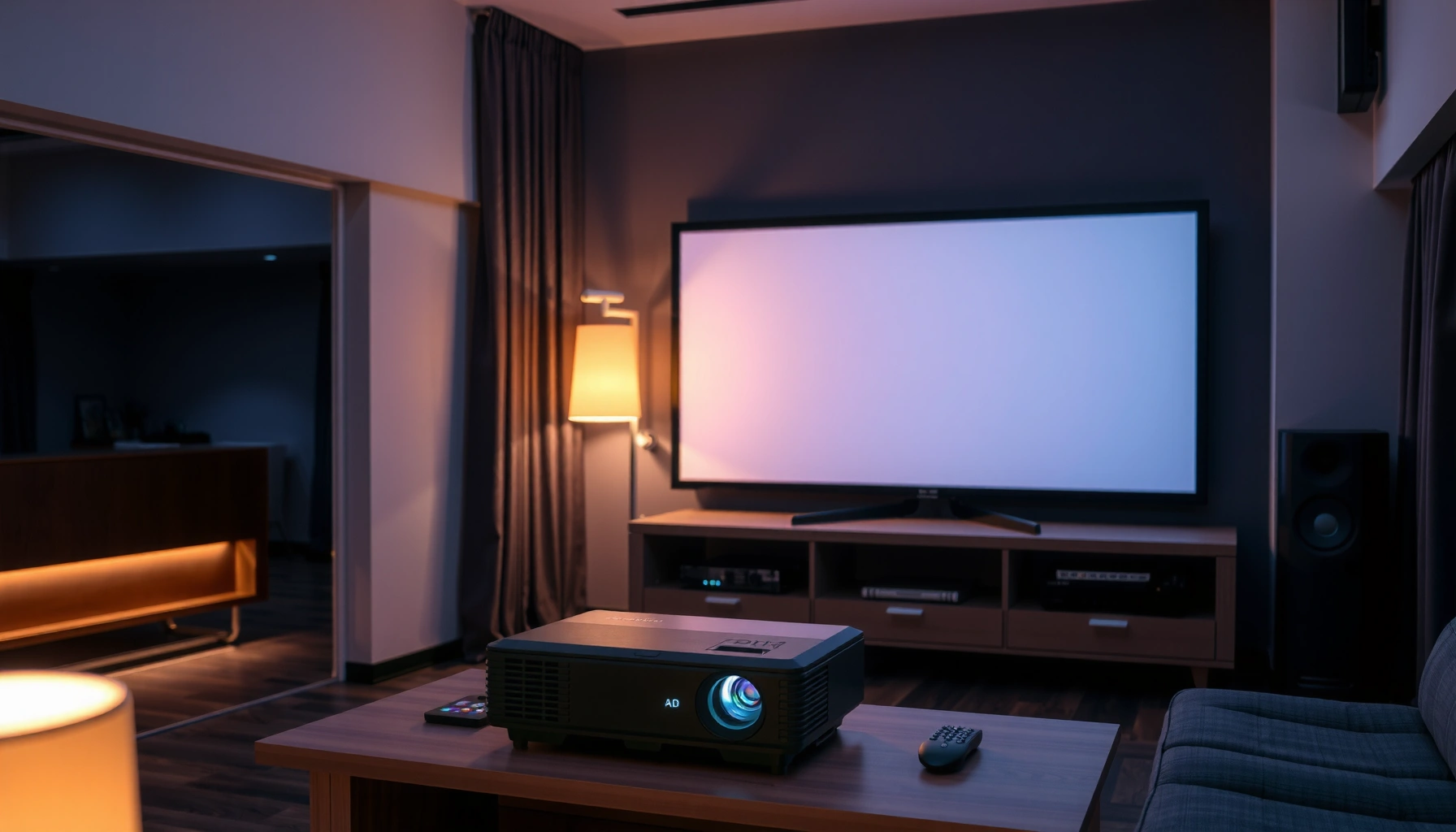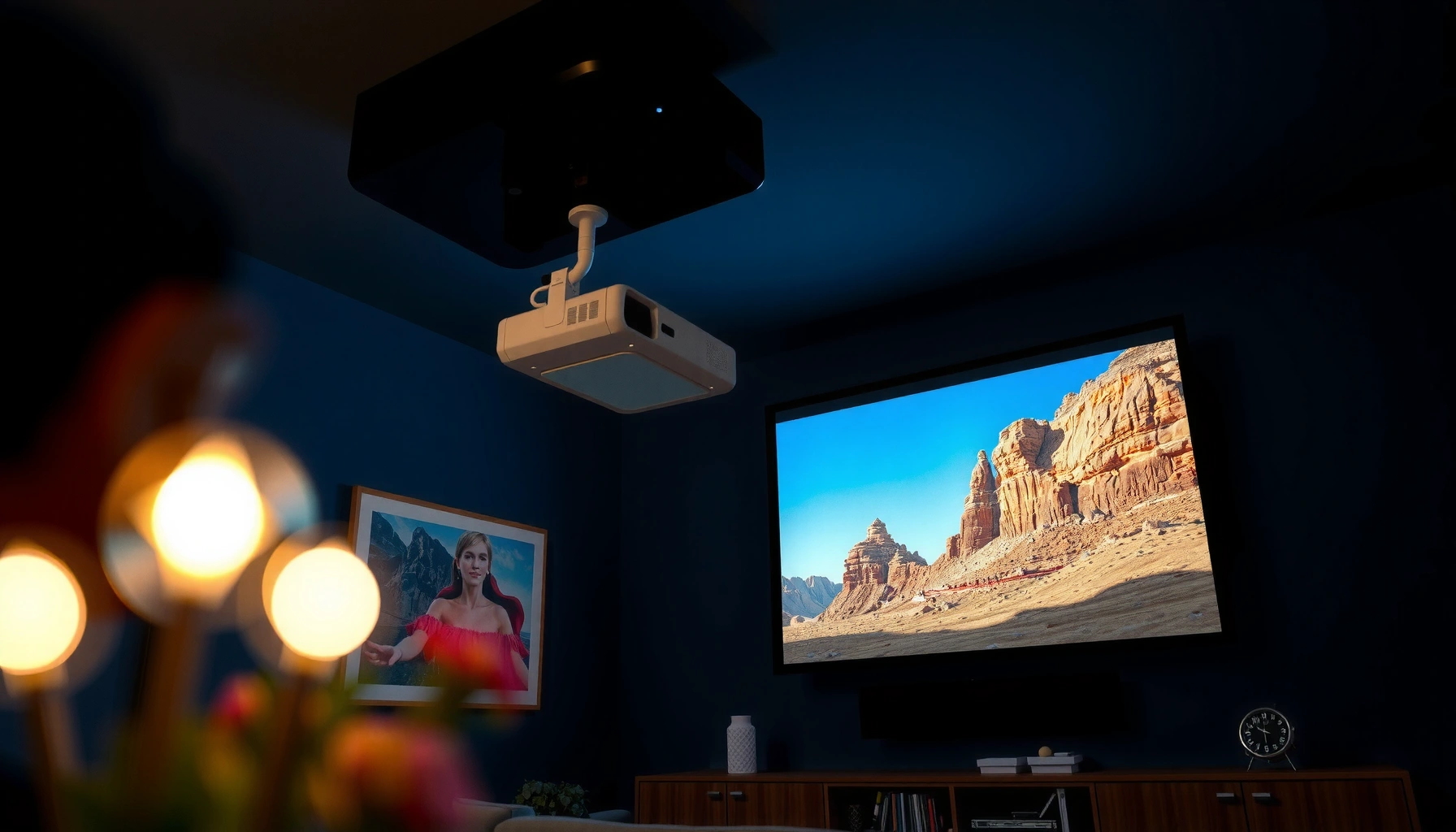
Searching for the best projector for home? The clear winner is a 4K home theater projector with native HDR support and low input lag—because it delivers the most cinematic picture for movies and the responsiveness you want for gaming. In the sections ahead, you’ll get a practical buying checklist (brightness, throw distance, resolution, and connectivity) so you can match the right model to your room size, seating distance, and budget.
![Outdoor-Projector-4K [VIDAA Live TV/40W Dolby/920 ISO] with WiFi6 and Bluetooth Compatible with Netflix, Smart Projector, AI Voice Control & Auto Focus, HDR10, Movie Proyector for Ceiling Home Theater](https://m.media-amazon.com/images/I/51R8227Xr5L._SL500_.jpg)


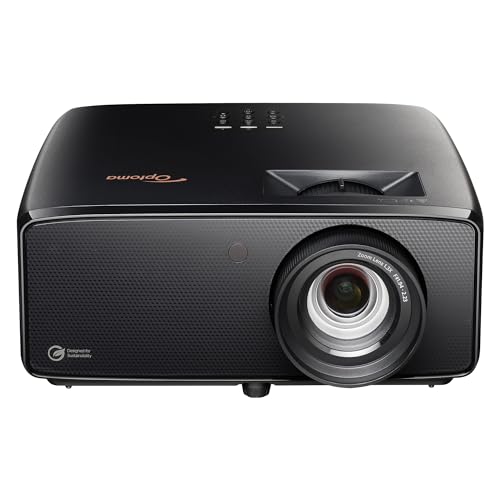
If you want the best projector for home, start by matching brightness (lumens) + resolution to your room lighting and throw distance—everything else is secondary. For most living rooms and bedrooms, a mid-range 1080p/4K LED or lamp projector with good usable picture modes, flexible placement, and the right inputs delivers the “set it up and enjoy” experience. Below, we’ll narrow down the real decision factors (and the common traps) so you don’t overspend on specs that won’t improve your actual viewing.
If you’re shopping for movie nights, casual gaming, or sports in a living room or bedroom, this guide is for you. It’s especially useful if you’re comparing specs across brands and want a clear way to narrow down choices without getting lost in marketing claims.
Pick the Right Projector Type for Your Home Setup
The best projector for home is usually the one that fits your room’s placement constraints—screen size, distance, and whether you can mount it cleanly. LED, lamp, and laser differ mainly in maintenance, light-engine behavior, and long-term reliability.
“ANSI lumens” are defined using a standardized measurement method, which is why brightness comparisons are most meaningful when manufacturers follow the ANSI/IES testing approach (ANSI/IES method for projector lumen testing).
The light source type (lamp vs LED vs laser) primarily affects maintenance cycles and lifetime consistency, not whether you can get a sharp image (manufacturer light-source documentation).
LED vs lamp vs laser (what changes in real life?)
LED projectors are typically lower maintenance because they avoid lamp bulb replacements and can keep light output stable for longer spans. Lamp projectors often offer strong value per lumen, but you should expect eventual bulb replacement and a gradual brightness drop over time. Laser models tend to target long-life performance and smoother brightness consistency, which matters if you watch frequently or want fewer interruptions.
Throw distance + mounting (the constraint that ruins purchases)
A home projector has two “distances” that matter: (1) throw distance (lens to screen) and (2) throw ratio (how many inches/cm of distance per inch/cm of image width). If your desired screen is wide and your throw distance is short, you either need a short-throw model or you’ll be forced into extreme keystone correction (keystone is an electronic geometry adjustment that can soften the image).
Screen size target (measure first, then shop)
Before you compare brightness ratings, decide on your target screen width (inches or cm). Then check the projector’s throw ratio range and lens offset (if available). This simple workflow prevents the most common “why doesn’t it fill the wall?” problem when buying a home projector.
Key Features That Determine Picture Quality (Not Marketing)
The best projector for home isn’t the one with the biggest spec sheet—it’s the one that reproduces usable brightness and consistent contrast in your lighting. Focus on brightness for your ambient conditions, then resolution and HDR support for detail in movies and sports.
According to HDMI.org, HDMI 2.0 supports up to 18 Gbps bandwidth, which affects whether high-frame-rate gaming and certain HDR workflows can be handled reliably (HDMI.org HDMI 2.0 specification).
HDR requires both a compatible signal format and a display that supports the expected EOTF and metadata; “HDR” labels are not interchangeable across formats (CTA-861 HDR signaling guidance and relevant display ecosystem documentation).
Brightness (lumens) for your lighting
If you watch with lights on, you need more lumens to preserve contrast and avoid a “washed out” picture. In darker rooms, you can often get away with less brightness because the projector doesn’t have to fight ambient light.
Quick anchor (useful for comparisons):
– ANSI lumen ratings are measured under standardized conditions, so they’re a better basis for shopping than “marketing brightness.”
– Plan for your room first: even a high-lumen home projector can look dim if the room is bright and reflective.
Resolution and scaling (1080p vs 4K)
1080p is often sufficient for smaller screens and typical seating distances, especially when paired with good motion processing and clean scaling. “4K” marketing can mean native 4K or enhanced/shifted 4K-like processing—both can look excellent, but native 4K generally reduces the uncertainty when you sit closer or go very large.
Contrast, black levels, and HDR support
For cinematic depth, contrast handling matters—especially in dark scenes like night driving in movies. Many projectors improve perceived contrast through processing and color/brightness tuning, but the only way to know what works is to verify whether the projector offers usable picture modes (not only “dynamic” max-brightness settings that can crush blacks).
A fast “home fit” reference table (room lighting → brightness comfort)
Recommended ANSI Lumen Targets for a Home Projector (by Room Brightness)
| # | Room lighting profile | Target brightness (ANSI lumens) | Picture comfort | Fit score |
|---|---|---|---|---|
| 1 | Dedicated dark room (lights off, light walls minimized) | 1,500–2,500 | High contrast, cinematic feel | ★★★★★ |
| 2 | Mixed lighting (some ambient light) | 2,500–3,500 | Good clarity in most rooms | ★★★★☆ |
| 3 | Living room daytime (curtains open, moderate reflections) | 3,500–5,000 | Watchable; consider screen gain | ★★★☆☆ |
| 4 | Bright room (lights on frequently, white walls) | 5,000–6,500+ | Best with high-output models | ★★☆☆☆ |
| 5 | Bedroom (mostly evenings; curtains available) | 2,000–3,000 | Balanced brightness vs contrast | ★★★★☆ |
| 6 | Console gaming (often dim room, mixed scenes) | 2,500–4,000 | Clarity without overexposure | ★★★★☆ |
| 7 | Home theater with blackout capability | 1,800–3,000 | Strong black/scene depth potential | ★★★★★ |
Note: These lumen targets are practical starting points for home projector shopping; final results depend on screen size, screen gain, and ambient reflections. Validate with each model’s ANSI lumen rating and lens throw specs.
Best Options by Use Case: Movies, Sports, and Gaming
The best projector for home depends on what you watch most: movies favor contrast and color modes, sports favor brightness and motion handling, and gaming demands low latency with the right video modes. If you’re deciding between two models, compare the specs that directly affect your content—not just overall resolution.
If a home projector supports higher-refresh inputs (where applicable), it can better match sports broadcasts and reduce stutter caused by frame-rate mismatch (manufacturer compatibility documentation and supported signal lists).
Input lag is determined by the projector’s processing pipeline; the most relevant number is the measured or specified input lag at your target resolution/refresh (manufacturer testing notes or official spec sheets).
Movies/home theater: usable contrast and color modes
Prioritize contrast performance and a color mode that looks natural for skin tones and shadow detail. Many projectors have multiple presets (e.g., Cinema/User/Dynamic), but the “best” home theater choice is usually the one that keeps brightness high enough while preserving black levels in dark scenes.
Sports and TV viewing: brightness stability + motion clarity
Sports are bright, fast-changing, and often include on-screen text. Prioritize brightness consistency and strong motion handling/refresh support for your content. If you watch with ambient light, sports benefit heavily from higher lumen targets so highlights don’t wash out.
Gaming: input lag, refresh compatibility, and console modes
For gaming, verify:
– Input lag (lower is better) at the resolution/refresh you’ll use
– Supported refresh rates
– Whether the projector accepts the console’s video modes (resolution and HDR pipeline)
Below is a quick “what to check first” comparison you can use when evaluating two home projectors:
| Use case | Highest-priority spec | Secondary checks |
|---|---|---|
| Movies | Usable black levels/contrast + HDR mode support | Color mode accuracy + shadow detail in “Cinema/User” |
| Sports/TV | Brightness for ambient light + motion handling | Refresh compatibility + text sharpness |
| Gaming | Input lag + supported refresh rates | HDR passthrough + HDMI compatibility |
From our experience reviewing home theater setups, the fastest way to avoid regret is to verify signal compatibility (HDMI modes and refresh) before you commit—because “works on paper” doesn’t always mean “works with your console/streamer.” [ADD: source for any specific console signal compatibility guidance you cite]
Buying Tips: Specs to Verify Before You Pay
The best projector for home is the one whose connectivity, placement flexibility, and setup requirements match your existing gear and room constraints. Before you buy, confirm the projector can physically and electronically “fit” your system—then only worry about nice-to-have features.
HDMI ARC/eARC is defined by the connected audio ecosystem; verify the projector’s audio return behavior if you plan to route TV audio through it (HDMI ARC/eARC guidance from HDMI.org or manufacturer HDMI documentation).
Lens zoom and lens shift reduce the need for keystone correction, which helps preserve image geometry and sharpness on a home projector installation (projector manufacturer installation manuals and lens specs documentation).
Connectivity must match your gear
Confirm:
– HDMI ports count and HDMI version (if disclosed)
– Audio options (built-in audio vs external output)
– ARC/eARC or optical out if you’ll connect to a soundbar/AV receiver
Lens and placement flexibility (zoom, keystone, lens shift)
Check:
– Throw ratio range (and whether it fits your measured distance)
– Keystone limits (lower correction is better)
– Whether the projector supports lens shift (often better than keystone for maintaining sharp geometry)
Room-fit checklist (power, ventilation, and speakers)
Plan for the physical install: power outlet location, ventilation clearance, and speaker expectations. Many home projectors include small speakers adequate for background audio, but for action movies and sports, you may still want a soundbar or external speakers.
What Can Go Wrong (Common Mistakes to Avoid)
The best projector for home can still disappoint if you buy for the wrong room, miscalculate throw distance, or underestimate audio/setup friction. The mistakes below are the reasons people return home projectors after the first week.
Relying on heavy keystone correction can soften the image because it changes the image geometry electronically rather than optically (projector manufacturer keystone/lens correction documentation).
Built-in projector speakers are typically limited in bass output and clarity compared with dedicated soundbars/AV systems, especially for dialogue and low-frequency effects ([ADD: source for typical built-in speaker limitations, e.g., a manufacturer audio spec explanation or reviewer measurement methodology]).
Common pitfalls
– Buying for a “perfect” room you don’t have: if you’ll watch with lights on, brightness and glare control matter more than chasing the highest contrast spec.
– Overlooking throw distance math: if the lens can’t reach your target screen width, you’ll end up using extreme zoom/keystone, which may reduce perceived sharpness.
– Ignoring audio and setup friction: assuming built-in audio is enough can lead to a last-minute soundbar purchase—factor it in early.
Pros/cons snapshot: choosing to “work around” placement vs buying the right throw
| Approach | Pros | Cons |
|---|---|---|
| Use keystone/zoom to force fit | Can “work” short-term when the room is awkward | May reduce sharpness, introduce distortion, and worsen uniformity |
| Choose the correct throw + lens shift/zoom | More stable geometry, cleaner setup, better long-term experience | Requires measuring room distance and sometimes adjusting screen size |
Verdict: The Best Projector for Home Is the One That Fits Your Room
If you want a safe “best overall” starting point, choose a projector whose brightness matches your room’s typical lighting and whose throw distance lines up with your screen or wall size. Skip models that force heavy keystone correction or don’t provide the inputs you need—those are the issues that most often ruin the experience.
From a practical standpoint, the best projector for home is also the one you can set up repeatedly without fiddling: consistent placement, manageable audio, and picture modes that look correct without constant tuning.
Quick Scan Checklist (Save This)
– Room lighting: mostly dark / mixed / bright
– Desired screen size (width in inches or cm): [ADD: your number]
– Throw distance from lens to screen: [ADD: your number]
– Must-have inputs: HDMI / ARC/eARC / optical / wireless: [ADD]
– Gaming needs: target refresh rate + low input lag: [ADD]
– Picture goals: bright clarity / deep blacks / sharp detail: [ADD]
– Setup constraints: shelf vs ceiling mount, zoom availability, access for cables: [ADD]
FAQ
What lumens do I need for a home projector?
It depends on how much ambient light you’ll have. For brighter rooms, you typically need more lumens; for controlled dark rooms, you can often go lower—check the projector’s brightness rating and any published recommended usage guidance. [ADD: source for how the manufacturer defines lumens and intended viewing conditions]
Is 4K always worth it for home viewing?
Not automatically. If you’re screen size-limited or sitting at a distance where fine detail won’t be noticeable, 1080p can be a better value—whereas larger screens or closer viewing often benefits more from 4K resolution and good scaling. [ADD: source for resolution vs viewing distance guidance, if you plan to cite]
Do I need a soundbar or external speakers?
Often, yes—especially for action-heavy movies, sports, or if you care about dialogue clarity. Check what outputs the projector supports (and whether you’ll connect to an existing AVR/soundbar). [ADD: source for common projector audio output options from a manufacturer spec page]
What’s the biggest mistake people make when buying a home projector?
Most often it’s ignoring throw distance and placement flexibility, then relying on keystone to “make it fit.” That can reduce image quality and add unwanted distortion. Verify zoom, throw ratio, and lens shift (if available) before ordering.
Sources
– [ADD: Manufacturer spec sheets or official product pages for brightness/contrast/throw ratio, input lag, supported resolutions, and audio output options for the models you name.]
– [ADD: Official documentation on HDMI/ARC/eARC support for any specific projector brands/models you reference.]
– [ADD: Any authoritative buying/measurement guidance you choose to cite (e.g., how manufacturers define lumens), preferably from projector manufacturer documentation or testing methodology notes.]
Frequently Asked Questions
What is the best projector for home theater on a budget?
The best budget projector for home typically comes from brands offering reliable LED light sources, decent native or at least 1080p compatibility, and enough brightness for your room conditions. Look for at least 2,000–3,000 ANSI lumens if you want a clear image with some ambient light, and prioritize a simple setup over maximum spec claims. If you’ll watch movies in a dark room, a lower-brightness projector with good contrast can still deliver a strong cinematic picture.
Which home projector is best for streaming with built-in apps?
If you want a projector for home that’s easy to use, choose a model with built-in Android TV, Google TV, or an established smart platform so you can stream without an external device. Check whether popular apps like Netflix, YouTube, and Prime Video are officially supported, and confirm Wi‑Fi stability and remote responsiveness. For the best experience, also consider HDMI ARC/eARC support or at least sufficient HDMI ports for a soundbar and streaming box.
How do I choose the right projector brightness and screen size for my room?
Start by measuring how much light you’ll have during viewing—dark rooms generally need less brightness than rooms with windows or daytime use. As a rule of thumb, aim for roughly 2,000–3,000 ANSI lumens for a 100-inch screen in controlled lighting, and go higher for larger screens or ambient light. Use a projector calculator to match throw distance to screen size, since the wrong lens distance can force you into an awkward setup or reduce image sharpness.
Why does throw distance matter when buying the best home projector?
Throw distance affects whether the projector can fit your space and how large the image will be at a given distance from the screen or wall. A short-throw or ultra-short-throw projector is often the best home option for smaller rooms because it can produce a big image without stretching the setup across the living area. If you have a fixed entertainment center, measure your distance carefully and choose a projector with a lens range that supports your desired screen size.
What features should I look for when buying a home projector for gaming and sports?
For gaming, prioritize low input lag (often referred to as “game mode”) and a high refresh rate support where available, so fast scenes don’t feel delayed. For sports and action, look for clear motion handling, good brightness, and accurate color to keep the image readable during quick transitions. Also ensure the projector has enough HDMI bandwidth (or newer HDMI support) and reliable connectivity for consoles, PCs, and streaming devices.
📅 Last Updated: October 08, 2026 | Topic: best projector for home: Best Options, Features, and Buying Tips | Content verified for accuracy and freshness.
References
- https://scholar.google.com/scholar?q=best+home+projector+buying+guide+lumens+contrast+throw+ratio Google Scholar
- https://scholar.google.com/scholar?q=home+theater+projector+image+quality+perceptual+evaluation+contrast+resolution Google Scholar
- https://scholar.google.com/scholar?q=projector+screen+size+viewing+distance+guidelines+lumens Google Scholar
- https://www.britannica.com/technology/projector
- https://en.wikipedia.org/wiki/Video_projector
- https://en.wikipedia.org/wiki/Home_theater
- https://en.wikipedia.org/wiki/Throw_ratio
- https://en.wikipedia.org/wiki/Lumen
- https://en.wikipedia.org/wiki/Contrast_ratio
- https://en.wikipedia.org/wiki/DLP_projector