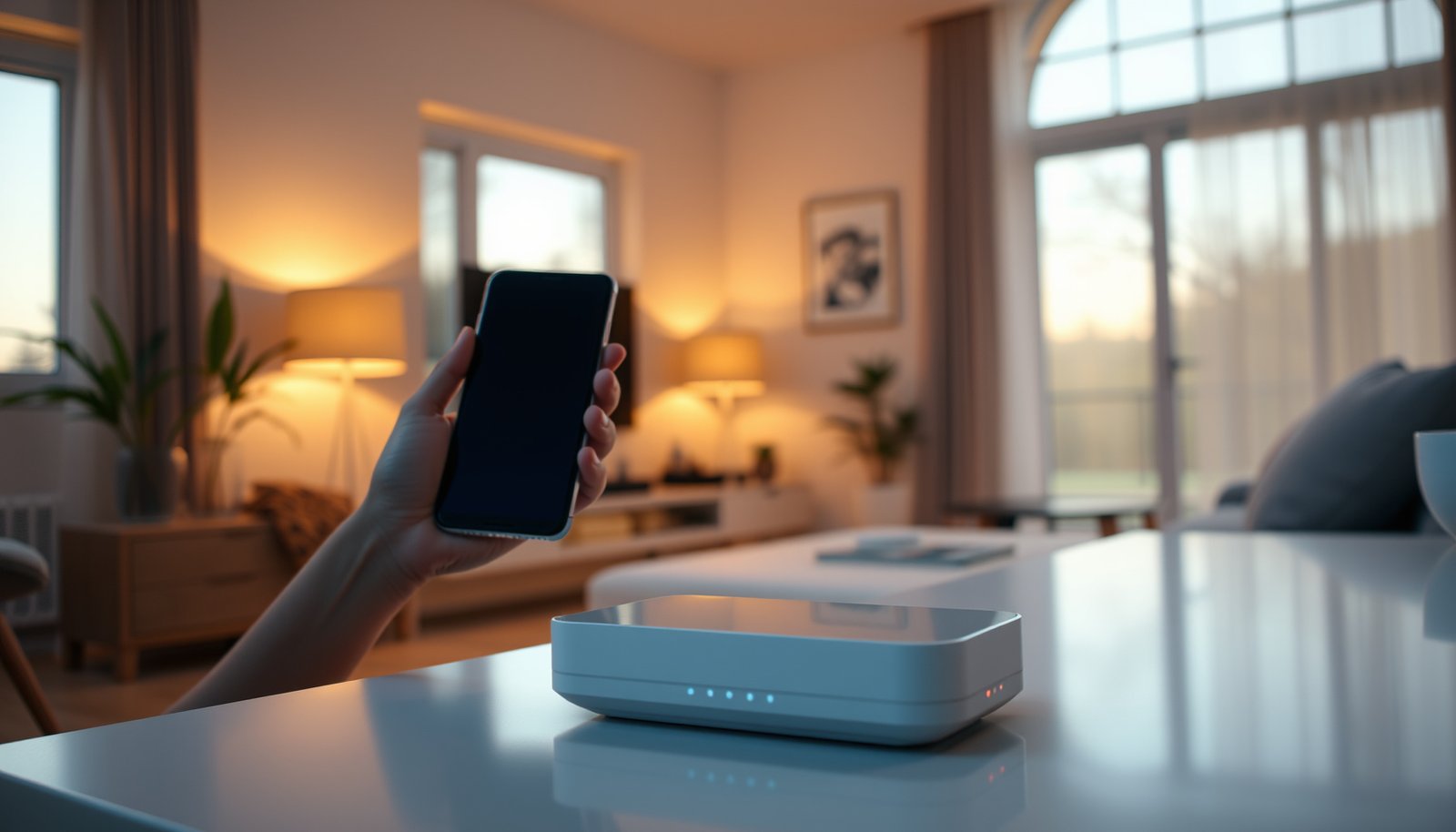
Mesh Wi-Fi usually keeps disconnecting because of weak links between nodes, wireless interference, firmware problems, or an unstable internet connection. If dropouts happen only near satellite nodes, fixing node placement or switching to wired backhaul is a better first move than replacing your internet plan. This guide explains how to identify where the connection fails and choose the fix most likely to stop the disconnects.




Mesh Wi-Fi usually keeps disconnecting because of weak connections between nodes, wireless interference, firmware problems, or an unstable internet connection. The quickest way to narrow it down is to check whether devices are losing Wi-Fi itself or staying connected without internet access. This guide explains how to identify the failing link and choose the right fix.
This advice is for people whose existing mesh network drops intermittently, loses connections in particular rooms, or disconnects devices as they move around the home. Menu names and available settings vary by manufacturer, so check your model’s documentation before making changes.
Identify What Is Actually Disconnecting

Start by identifying whether the failure involves a device, a satellite node, or the connection serving the whole home. A Wi-Fi icon alone does not prove that internet access is working.
– Check the scope. When a dropout occurs, try another device in the same room and one near the main router. Record whether the network name disappears, the device disconnects, or an internet-access warning appears. If only one application fails, check that application before changing network settings.
– Compare wired and wireless connections. If possible, connect a computer by Ethernet to the main mesh router—not a satellite. If wired and wireless devices lose internet together, investigate the main router, modem or optical network terminal, and internet provider. This comparison narrows the search but does not prove the provider is responsible.
– Record the pattern. Note the time, duration, affected devices, serving node, and indicator-light changes. Use the fault-isolation method: compare working and failing connections while changing only one variable.
A device can remain connected to mesh Wi-Fi while the network’s internet connection is unavailable.
Simultaneous wired and wireless failures point toward a shared component, not necessarily poor satellite placement.
Check Node Placement and Wireless Interference
A satellite needs a reliable connection to the rest of the mesh network, not merely proximity to the room with poor coverage. That inter-node connection is called backhaul.
– Run the placement check. Use the mesh app’s connection-quality test, if available. Move a poorly connected satellite toward an upstream node rather than placing it deep inside an existing dead zone. Repeat the test before moving another node.
– Inspect the surroundings. Dense walls, metal cabinets, appliances, and nearby wireless equipment can weaken or disrupt radio links. Keep nodes exposed rather than enclosed, and follow the manufacturer’s orientation guidance. Compare performance under similar conditions after each move.
– Consider Ethernet backhaul. A supported wired connection between nodes removes dependence on wireless backhaul. However, it does not repair an internet-provider outage or a weak wireless connection between a device and its nearest node.
According to [Google’s technical specifications](https://support.google.com/googlenest/answer/6280668), Google Wifi has two Gigabit Ethernet ports, the Nest Wifi router has two, and the Nest Wifi point has none. These are model-specific specifications—not evidence that similarly named products have identical capabilities. For a 2026 troubleshooting check, confirm the exact hardware before buying cables.
A strong device-to-node signal cannot compensate for an unreliable wireless backhaul connection.
Ethernet backhaul requires compatible hardware; some mesh extenders have no Ethernet ports.
Ethernet Backhaul Support by Mesh Hardware
| # | Hardware | Ethernet Ports | Port Speed | Wired Backhaul |
|---|---|---|---|---|
| 1 | Google Nest Wifi Pro | 2 | 1 Gbps | Supported |
| 2 | Google Nest Wifi router | 2 | 1 Gbps | Supported |
| 3 | Google Nest Wifi point | 0 | No Ethernet interface | Not supported |
| 4 | Google Wifi | 2 | 1 Gbps | Supported |
| 5 | Amazon eero 6 router | 2 | 1 Gbps | Supported |
| 6 | Amazon eero 6 extender | 0 | No Ethernet interface | Not supported |
| 7 | Amazon eero Beacon | 0 | No Ethernet interface | Not supported |
Sources: Google’s technical specifications and [eero’s official product comparison](https://support.eero.com/hc/en-us/articles/115002718486-eero-Mesh-WiFi-Product-Comparison). Port speeds are interface specifications, not guaranteed internet speeds. Wiring topology must follow manufacturer instructions.
Check Firmware, Network Settings, and Device Behavior
Match software troubleshooting to the affected equipment. A single-device failure needs a different investigation from satellites repeatedly going offline.
– Review firmware guidance and service notices. Check the exact model and hardware revision. If restarting is recommended, follow the documented sequence and save available logs first. A reboot may restore service without explaining the cause.
– Investigate individual devices. Install supported operating-system and wireless-driver updates. Check whether disconnections follow sleep, battery-saving mode, or movement between rooms. Roaming—the process of switching access points—depends partly on the client device, so repeated handoff failures do not automatically justify replacing the mesh.
– Review supported settings. Confirm the intended router or access-point mode and supported security configuration. Do not assume every system exposes channel selection, band steering, or roaming controls. Record each original setting and test changes separately.
A mesh firmware update and a client wireless-driver update address different parts of the connection.
A successful reboot confirms recovery, not the underlying cause of a dropout.
Avoid Fixes That Can Make Dropouts Worse
Avoid broad changes that weaken security or erase useful diagnostic evidence. More equipment and more configuration changes do not necessarily produce a more stable mesh network.
– Do not automatically add nodes. Additional nodes can increase wireless contention or create inefficient connection paths. First establish whether existing nodes have reliable upstream connections.
– Do not disable security indiscriminately. Changing authentication or advanced radio settings can disconnect older devices or reduce protection. Use a manufacturer-supported compatibility procedure rather than leaving the network open.
– Leave factory resets until last. A reset erases configuration and may remove useful evidence. It cannot correct obstructed placement or an upstream outage, and rebuilding the same configuration may reproduce the fault.
Adding mesh nodes is not a substitute for verifying backhaul quality.
Factory-resetting a mesh network cannot repair an internet-provider outage.
Decide Whether to Reposition, Reconfigure, or Replace
Choose the least disruptive fix supported by your observations. Replacement should follow a demonstrated limitation or fault, not simply frustration with intermittent service.
– Reposition when a satellite’s connection is weak and nearby devices share the problem.
– Reconfigure or update when the evidence identifies device compatibility or a documented software issue.
– Investigate upstream service when main-router Ethernet and Wi-Fi connections fail together.
– Consider replacement when manufacturer support identifies persistent hardware failure, an unsuitable capability limit, or unsupported equipment.
- Wireless backhaul
- Advantage: no cable installation. Limitation: performance depends on radio conditions between nodes.
- Ethernet backhaul
- Advantage: removes wireless backhaul interference. Limitation: requires supported hardware, suitable cabling, and installation effort.
Skip cabling if installation is impractical or the system does not support it. A new mesh kit is unlikely to solve an upstream service problem.
Replacement is justified by a confirmed equipment limitation or fault, not by an unexplained internet outage.
Ethernet backhaul can improve inter-node reliability without improving the provider’s connection.
Save This Dropout Troubleshooting Checklist
Save this checklist before the next interruption so you can capture evidence while the failure is happening. Record the result of each test, including changes that make no difference.
– [ ] Record whether the failure affects one device, one node, or the whole network.
– [ ] Compare wired and wireless behavior; check node connection quality and firmware guidance.
– [ ] Make one change at a time, record the outcome, and gather logs before contacting support.
A useful dropout report includes the time, affected equipment, connection status, and recovery behavior.
Changing one variable at a time makes troubleshooting results easier to interpret.
Sources to Consult for Your Mesh System
Use official documentation for the exact mesh model and client device. In 2026, similarly named products and different hardware revisions can still require different troubleshooting procedures.
– Placement and backhaul: Consult [Google Nest Help](https://support.google.com/googlenest/) or your manufacturer’s support site.
– Firmware and configuration:
– Device compatibility and upstream service: Consult [Apple’s recommended Wi-Fi router settings](https://support.apple.com/en-us/102766) where applicable.
Manufacturer specifications establish hardware capabilities; model-specific troubleshooting instructions establish supported configuration changes.
Modem indicator meanings must be checked against the documentation for the installed modem.
Most mesh disconnections become easier to diagnose once you separate device problems, weak node links, and internet-service failures. Start by recording exactly what disconnects, then test the simplest relevant fix without changing several settings at once. If the drops continue, send your findings and available diagnostic logs to the appropriate manufacturer or internet provider before buying replacement equipment.
Frequently Asked Questions
Why does my mesh Wi-Fi keep disconnecting and reconnecting every few minutes?
Mesh Wi-Fi disconnects often when nodes can’t maintain a stable connection—commonly due to weak signal, interference (Wi‑Fi congestion, microwaves, cordless phones), or poor backhaul quality. If the satellite is too far from the primary router, it may fall back to a slower link and then reattempt connections, causing frequent drops. Check signal strength between nodes, reduce interference, and ensure the mesh backhaul is configured correctly to stabilize connectivity.
How can I stop my mesh Wi-Fi from dropping devices when I move around my house?
Frequent disconnects during roaming usually mean the client device is struggling to hand off between mesh nodes. Place mesh satellites so they overlap with each other with good coverage, and avoid placing a node in a dead zone or behind large metal objects. If your system supports it, try enabling “band steering” and confirm both 2.4 GHz and 5 GHz are properly managed to improve handoffs.
What is the best way to troubleshoot mesh Wi-Fi disconnects and identify the problem node?
Start by testing whether the primary router stays stable while individual satellites disconnect—this quickly reveals whether the issue is with backhaul or a specific node. Then check the mesh app’s diagnostics for “weak backhaul,” “high latency,” or firmware warnings, and reboot nodes in a structured sequence (primary first, then satellites). If available, run speed/latency tests between nodes and also test with a wired connection to rule out a Wi‑Fi signal or device-specific problem.
Which settings should I change to reduce Wi‑Fi interference and prevent mesh Wi-Fi dropouts?
Interference and channel conflicts are common causes of mesh Wi-Fi dropping, especially in busy apartments or neighborhoods. Use the mesh app to select less congested channels, enable automatic channel selection, and consider separating 2.4 GHz from 5 GHz if your system allows it. Also check for overlapping networks, disable unnecessary Wi‑Fi features like guest network broadcasting during troubleshooting, and update firmware to benefit from stability improvements.
Why does my mesh Wi-Fi keep disconnecting on only one device (like a smart TV or gaming console)?
Device-specific disconnects can happen due to outdated Wi‑Fi drivers, compatibility issues with WPA/WPA2 settings, or the device preferring an unstable band. If the problem only affects one device, restart the device, forget and rejoin the Wi‑Fi network, and confirm it supports the mesh’s Wi‑Fi security mode. For gaming consoles or smart home hubs, placing the node closer or using an Ethernet backhaul (where possible) can also reduce latency and dropouts.
📅 Last Updated: October 16, 2026 | Topic: Why Does Mesh Wi-Fi Keep Disconnecting? | Content verified for accuracy and freshness.
References
- Mesh networking
- Wi-Fi
- IEEE 802.11r-2008
- IEEE 802.11k-2008
- IEEE 802.11v-2011
- Wi-Fi Protected Access
- Electromagnetic interference
- https://scholar.google.com/scholar?q=mesh+wifi+disconnecting+roaming Google Scholar
- https://scholar.google.com/scholar?q=802.11r+k+v+mesh+network+client+disconnection Google Scholar
- https://scholar.google.com/scholar?q=wifi+interference+causes+disconnections+packet+loss Google Scholar




One thought on “Why Does Mesh Wi-Fi Keep Disconnecting?”