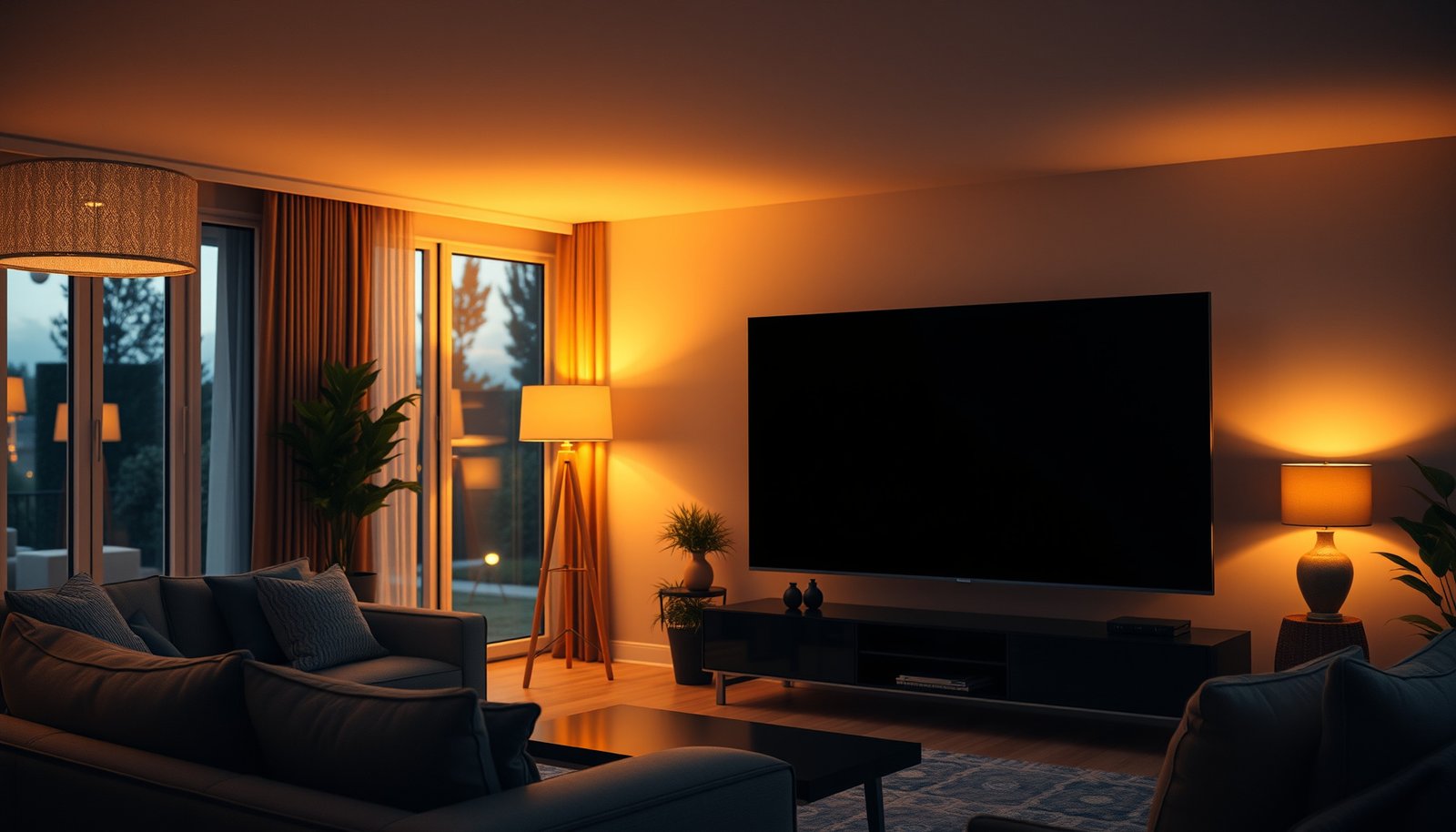
Choosing between a 40-inch vs 43-inch TV is ultimately about getting the right screen size for your room without wasting money—or sacrificing immersion. If you sit at typical distances (roughly 6–10 feet), the 43-inch model usually delivers the clearer “wow” factor with minimal downsides. This guide answers which size you should buy based on your viewing distance, room size, and budget.




A 43-inch TV is usually the better pick if you want a more noticeable upgrade in screen space, since it’s a modest step up from 40-inch. The “right” choice still depends on real fit (stand width, TV height, mounting clearance) and how comfortable your viewing distance is—not just the diagonal number. In this guide, we’ll break down what those extra inches change, what to measure before you buy, and which picture/spec priorities matter just as much (or more) in 2026.
If you’re deciding between 40-inch and 43-inch for a living room, bedroom, or gaming setup, this helps you narrow it down quickly. It’s especially useful when you’re working with limited space (narrow TV stand, tight wall mounting) and you want to avoid buying a “bigger” TV that looks right on paper but feels cramped or awkward from your seat.
40-Inch vs 43-Inch: The practical difference you’ll notice
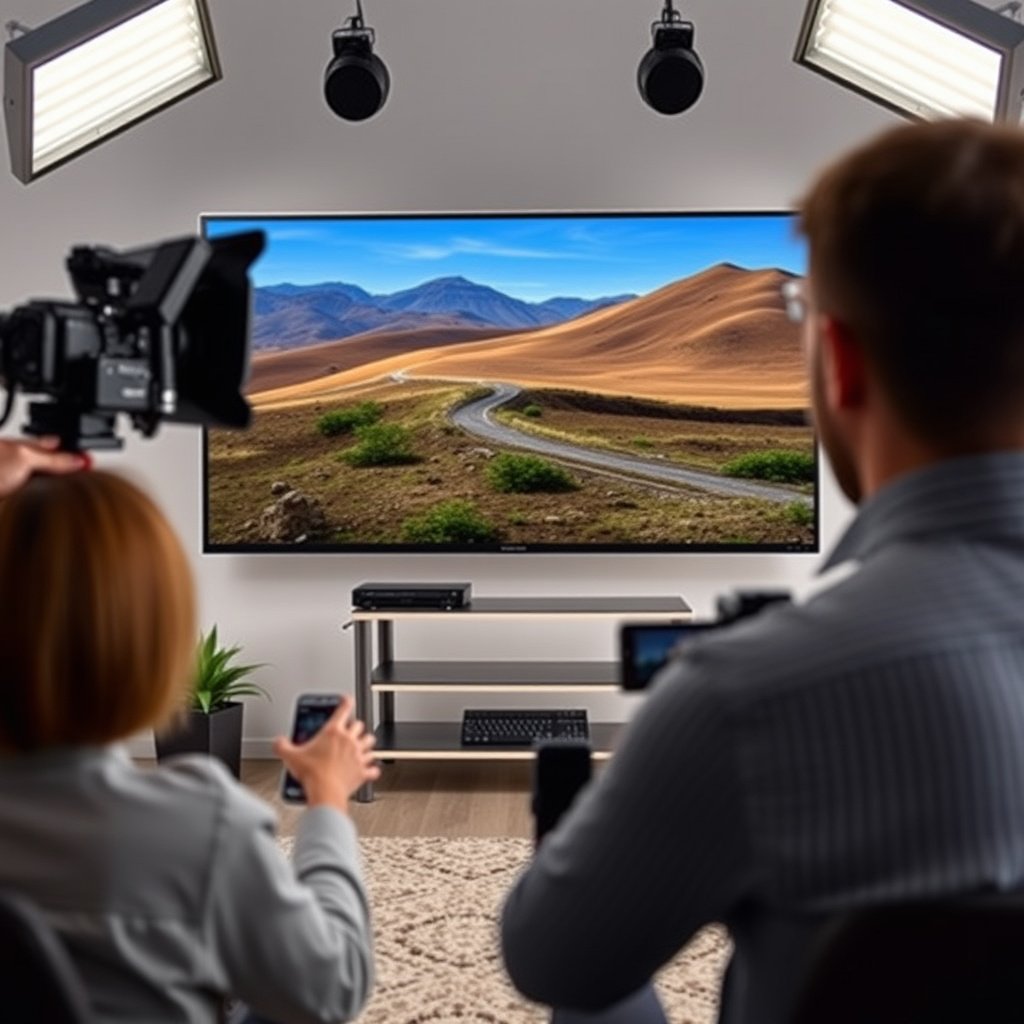
A 43-inch TV mostly improves immersion because you gain a meaningful amount of visible screen area. In real usage, that can make text sharper at a distance, sports more engaging, and games feel a touch more “present” without forcing you to redesign your whole setup.
A 43-inch set does not transform the experience on its own, though. If your 40-inch model has better HDR brightness or stronger motion handling, the smaller TV can still look better—especially for fast sports and gaming.
According to THX’s home-theater guidance, recommended viewing distance is tied to field of view (around 40° for 2D), not the TV’s marketing size alone.
In a 16:9 TV, increasing the diagonal from 40 to 43 inches increases screen area by (43/40)² ≈ 15.6%—a noticeably larger surface, even though the change is only 3 inches.
Screen width and height scale deterministically with diagonal for a 16:9 aspect ratio, so the extra size is measurable even before you compare specific brands.
What that “3 inches” translates to (beyond vibes)
On a 16:9 display, the diagonal is just the start. What you actually care about is how much wider the image becomes across your viewing angle. For many people, that’s the difference between “I can read subtitles comfortably” and “I have to lean in a bit.”
To make the difference tangible, here’s a quick 16:9 screen dimension comparison around the 40-inch range (calculated from geometry).
16:9 Screen Size Near 40-Inch TVs (Geometry + Area vs 40)
| # | Diagonal class | Screen width | Screen height | Area vs 40-inch |
|---|---|---|---|---|
| 1 | 39-inch | 34.0 in (863 mm) | 19.1 in (485 mm) | -4.94% |
| 2 | 40-inch | 34.9 in (886 mm) | 19.6 in (498 mm) | 0.00% |
| 3 | 41-inch | 35.7 in (908 mm) | 20.1 in (510 mm) | +5.06% |
| 4 | 42-inch | 36.6 in (929 mm) | 20.6 in (523 mm) | +10.25% |
| 5 | 43-inch | 37.5 in (952 mm) | 21.1 in (536 mm) | +15.56% |
| 6 | 44-inch | 38.3 in (974 mm) | 21.6 in (548 mm) | +21.00% |
| 7 | 45-inch | 39.2 in (996 mm) | 22.1 in (560 mm) | +26.56% |
Fit check: wall space and stand clearance
A 43-inch TV can look “almost the same” on a shelf label, but it often requires a more careful clearance check. The safest answer is to prioritize the furniture fit first: width between feet/stand, depth for cables/soundbar, and the height relative to your viewing position.
Even if the TV will fit physically, you can still end up with a frustrating setup if outlets, center-channel speakers, or a media console obstruct the back panel.
Mounting brackets and stands are rated by weight and supported mounting points, so you should confirm the TV’s published weight and VESA compatibility before installing.
TV “depth” is not just the screen thickness—rear panel shape and cable connections can add space needs behind the set.
Measure in three dimensions (not one)
Your measurements should include:
– Available width (especially the span between stand feet).
– Available height (including whether you’re hiding a soundbar or cables under a shelf).
– Available depth (distance from the wall to the front edge of the stand or shelf).
Viewing distance: how to pick without guessing
The best way to choose between 40-inch and 43-inch is to match the TV’s size to your actual seating distance and desired field of view. If you sit close, the 43-inch advantage can feel bigger; if you sit farther back, 3 inches becomes less obvious.
Right now (as of 2026), many buyers still choose by “feels like,” which often leads to over-sizing or an image that’s hard to take in comfortably.
According to THX, recommended viewing distance is commonly described using field of view (about 40° for a 2D viewing experience), which naturally translates to different diagonal sizes.
Field of view-based guidance helps avoid the common “diagonal-only” mistake: a larger TV can look worse if it’s too big for your viewing distance.
Use a field-of-view method (simple, reliable)
Here’s a practical method you can do without specialized tools:
1. Measure your seating distance to the screen center (in inches or centimeters).
2. Use THX’s approximate 40° target field of view to estimate whether you’ll sit inside a comfortable viewing envelope.
3. If 43-inch pushes you noticeably closer to the “too immersive/too much head movement” zone, 40-inch is the safer comfort pick.
If you want a quick calculation shortcut, .
Quick comparison (avoid the “oversize but unreadable” trap)
When the viewing distance is short, the bigger TV doesn’t just look larger—it can make your eyes work harder to scan the entire picture.
Here’s a structured way to think about it:
| If your room condition is… | Then 40-inch may be better because… | Then 43-inch may be better because… |
|---|---|---|
| You sit very close (bedroom, desk-style setup) | The frame is less dominating, with less “head turning” to read the whole image. | If your seat still lands inside a comfortable field of view, you get more immersion without needing to move furniture. |
| You sit at typical couch distance | A balanced “comfortable whole-image” experience with fewer setup compromises. | The extra area can noticeably improve sports and subtitle legibility. |
| You sit farther back | The experience can remain crisp if upscaling and image processing are solid. | The bigger diagonal helps reduce the “distant TV” look and makes details feel closer. |
Don’t let “inches” distract you: quality factors that matter
A 43-inch TV isn’t automatically “better” than a 40-inch TV if the picture processing, brightness, HDR, or motion performance is weaker. In 2026, the most common mistake we see in upgrade decisions is assuming diagonal size is the main variable—when in reality, image quality and response time often dominate perceived clarity.
If you care about gaming or sports, the 3-inch difference is usually less important than whether the TV supports low-latency modes and handles fast motion consistently.
HDMI 2.1 supports much higher bandwidth (up to 48 Gbps), which can enable features like higher-resolution higher-refresh gaming depending on the TV and console.
Resolution and upscaling can outweigh size: a 40-inch set with stronger upscaling may look better than a 43-inch model processing poorly.
The three specs that often beat size
Use these priorities when comparing a 40-inch vs 43-inch shortlist:
– Resolution + upscaling: If you watch streaming at variable bitrates, consistent upscaling can matter more than a 3-inch diagonal bump.
– Motion/refresh rate: For fast sports and action games, the effective motion quality (refresh rate plus how the TV tunes motion interpolation and de-judder) can dominate the feel difference.
– HDR and brightness: If your room has daylight or reflective surfaces, peak brightness and HDR tone mapping often matter more than screen size.
A note on connectivity (especially for consoles and sound systems)
If you’re relying on specific inputs (gaming consoles, streaming boxes, AV receivers), confirm:
– Port type and count (HDMI 2.1 vs HDMI 2.0, if relevant to the console)
– Whether you need eARC/ARC for your soundbar
– If any features require specific ports or settings
According to HDMI.org, HDMI specifications define supported bandwidth and feature capabilities by version, so the exact ports on the TV matter.
What can go wrong with a size-only decision
The most predictable issues with choosing “just the bigger number” are fit problems and comfort problems. A 43-inch TV can look great in a store, but it can end up feeling too large—or too constrained by furniture—once it’s in your room.
This is also where buyers get tripped up by dimensions that don’t show up on the box: foot spacing, rear depth, and cable clearance.
TV “fit” errors often come from the stand footprint and rear-panel depth, not the screen diagonal, so you should verify model-specific dimensions.
A bigger TV does not guarantee better audio; many TVs require external sound (for example, a soundbar) to match expectations for dialogue clarity and bass.
Common pitfalls to watch for
– Comfort mismatch: If the 43-inch TV forces you into a too-close viewing distance, you’ll notice eye strain or constant head movement.
– Ignoring the real footprint: 40 vs 43 can differ in stand spread and physical depth, changing whether it fits your console cleanly.
– Overlooking compatibility needs: If you use multiple devices, confirm port types and whether adapters are required.
– Assuming sound improves with size: TV speakers aren’t automatically “better” just because the screen is larger.
Verdict / tip: which one to choose—and who should skip it
Choose 43-inch if you have the room clearance and want a more noticeable immersion upgrade for movies, sports, or gaming—especially when your seating distance already supports a larger field of view. Choose 40-inch if perfect fit matters most, you’re tight on stand width or wall mounting space, or you prefer a less screen-dominant room presence.
Skip treating “40 vs 43” as your main decision axis (and focus on specs instead) if your biggest goals are HDR brightness, motion handling, or connectivity requirements, because those differences can outweigh the inch gap in 2026.
The diagonal upgrade from 40 to 43 increases screen area by about 15.6%, but perceived improvement still depends on brightness, HDR tuning, and motion processing.
Viewing-distance guidance based on field of view helps prevent the common problem of oversizing relative to the room.
Clear guidance (including downsides)
– Go 43-inch when:
– Your stand/wall clearance is confirmed with the TV’s exact published dimensions
– Your seating distance supports a comfortable field of view (use THX’s ~40° approach as a starting point)
– Go 40-inch when:
– You’re mounting in a tight area or your stand footprint is close to the TV’s foot spacing
– Your primary content is a mix of lower-resolution streams where upscaling quality is already your biggest constraint
Who should skip this size comparison approach: If the TV you’re considering differs significantly in HDR brightness, motion performance, or input features (like low-latency gaming modes), those spec differences should drive the decision more than the 3-inch diagonal gap.
Quick scan: 40 vs 43 decision checklist
| Check item | If “yes,” lean toward… |
|---|---|
| Enough width/clearance for the TV and stand/feet | 43-inch |
| Seating distance feels tight or immersive comfort is a concern | 40-inch |
| You care most about picture quality/features beyond size | Either (compare specs first) |
| You’ll use it for sports/gaming where motion matters | Either, but compare refresh/motion handling |
| Your room is bright and you need good HDR/brightness | Either, but prioritize brightness/HDR specs |
Sources
– THX (home theater/video guidance on field-of-view-based viewing distance, commonly cited around a ~40° target for 2D viewing)
– HDMI.org (official HDMI specifications/documentation, including HDMI 2.1 bandwidth and feature support by version)
In the end, the best move is simple: treat 40-inch vs 43-inch as a fit-and-comfort decision first, then confirm that the 43-inch model also wins on the specs that actually affect image quality. If you have the clearance and your viewing distance supports it, 43-inch delivers the more immersive screen area; if you’re working around tight space or want maximum comfort, 40-inch is the steadier choice in 2026.
Frequently Asked Questions
What are the main differences between a 40-inch and a 43-inch TV?
The most noticeable difference is screen size: a 43-inch TV offers a slightly larger viewing area than a 40-inch model, which can make text and sports more comfortable to watch. Beyond size, the overall experience depends heavily on resolution (1080p vs 4K), panel type, brightness, and refresh rate. Even with the same inch rating, picture quality can vary widely between brands and series.
How much bigger is a 43-inch TV compared to a 40-inch TV in real viewing area?
A 3-inch increase in diagonal is a measurable jump, but it doesn’t mean the screen is “a lot” larger—what changes most is how comfortably you can read subtitles and UI elements from typical seating distances. As a rule of thumb, the extra diagonal can be especially helpful in living rooms where you want a bigger image without moving the couch. For exact comparisons, check the TV’s dimensions (width and height) and compare them against your stand or wall space.
Which is better for small rooms: a 40-inch or 43-inch TV?
If your room is tight, a 40-inch TV may fit more easily on a stand and maintain comfortable viewing angles. However, if you have the space for the stand or wall mount and sit at a typical distance (often around 5–7 ft for many setups), a 43-inch TV can feel more immersive without becoming overwhelming. The best choice comes down to your seating distance, available clearance for mounting, and whether you’re watching mostly TV shows (where subtitle clarity matters) or sports/movies.
Why might a 43-inch 4K TV be a better choice than a 40-inch 1080p TV?
If the 43-inch model is 4K while the 40-inch model is only 1080p, the 4K TV will usually deliver sharper detail, smoother curves in motion, and more legible content—especially on streaming apps and newer channels. The extra screen size can make that clarity more noticeable, improving readability for menus and on-screen text. When comparing, focus on both resolution and picture processing, not just the inch size.
Best buying decision: should you choose a 40-inch or 43-inch TV based on your budget and features?
If two TVs are similarly priced, choose the one with the better core specs—resolution (prefer 4K), brightness, contrast, and refresh rate for sports or gaming. If budget is tight and the 43-inch model forces compromises (like lower resolution or older smart features), the 40-inch TV may be the smarter value. For most buyers comparing 40-inch vs 43-inch TV options, the best pick is the model that delivers better picture quality and usable smart features within your space constraints.
📅 Last Updated: October 21, 2026 | Topic: 40-Inch vs 43-Inch TV | Content verified for accuracy and freshness.
References
- Display size
- Aspect ratio
- Diagonal
- Pythagorean theorem
- Display resolution
- Pixel density
- https://pubmed.ncbi.nlm.nih.gov/?term=television+viewing+distance+screen+size
- https://scholar.google.com/scholar?q=TV+screen+size+diagonal+inches+aspect+ratio+16×9 Google Scholar
- https://scholar.google.com/scholar?q=television+viewing+distance+screen+size Google Scholar
- https://scholar.google.com/scholar?q=pixel+density+display+size+resolution+TV+comparison Google Scholar