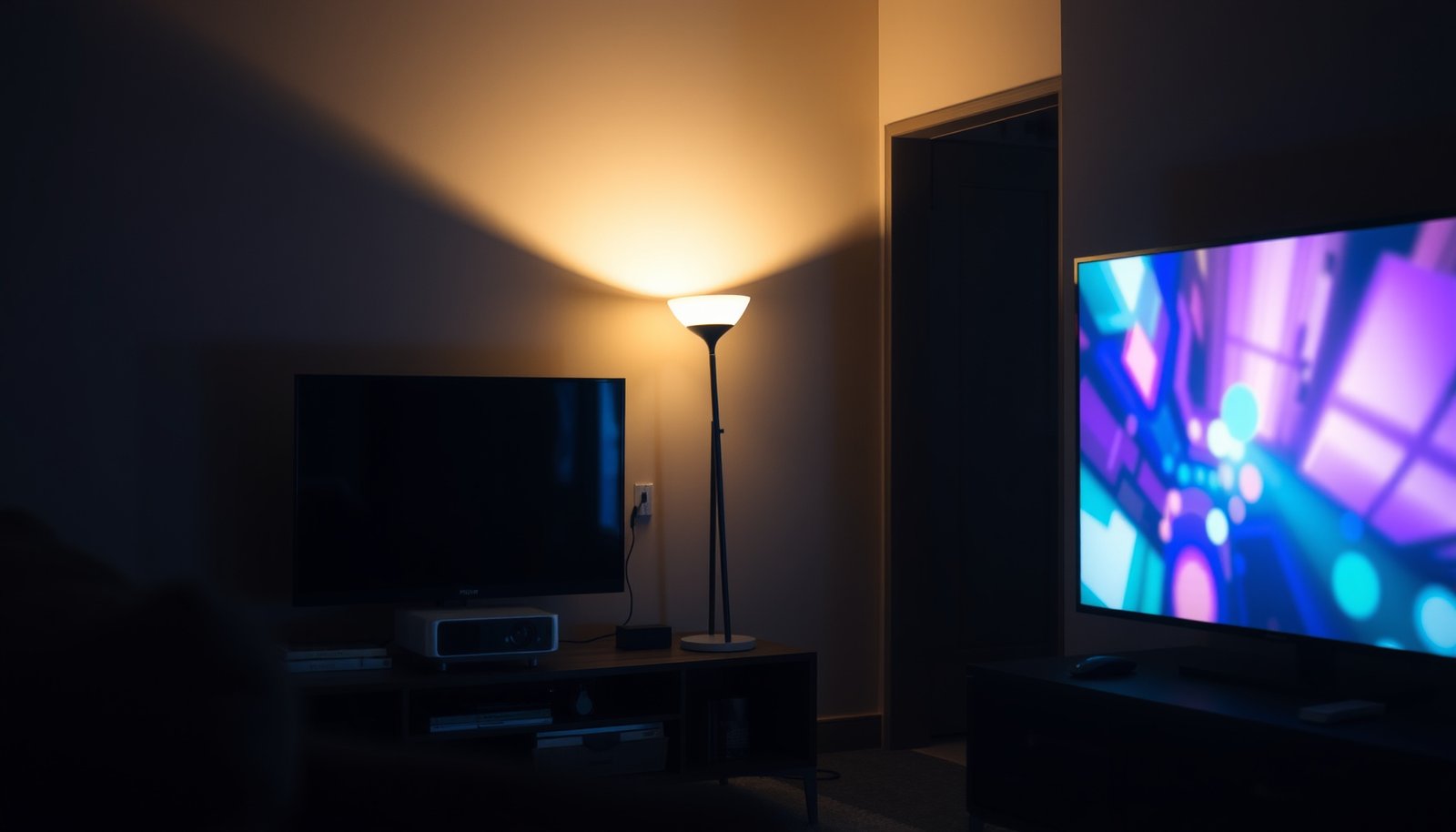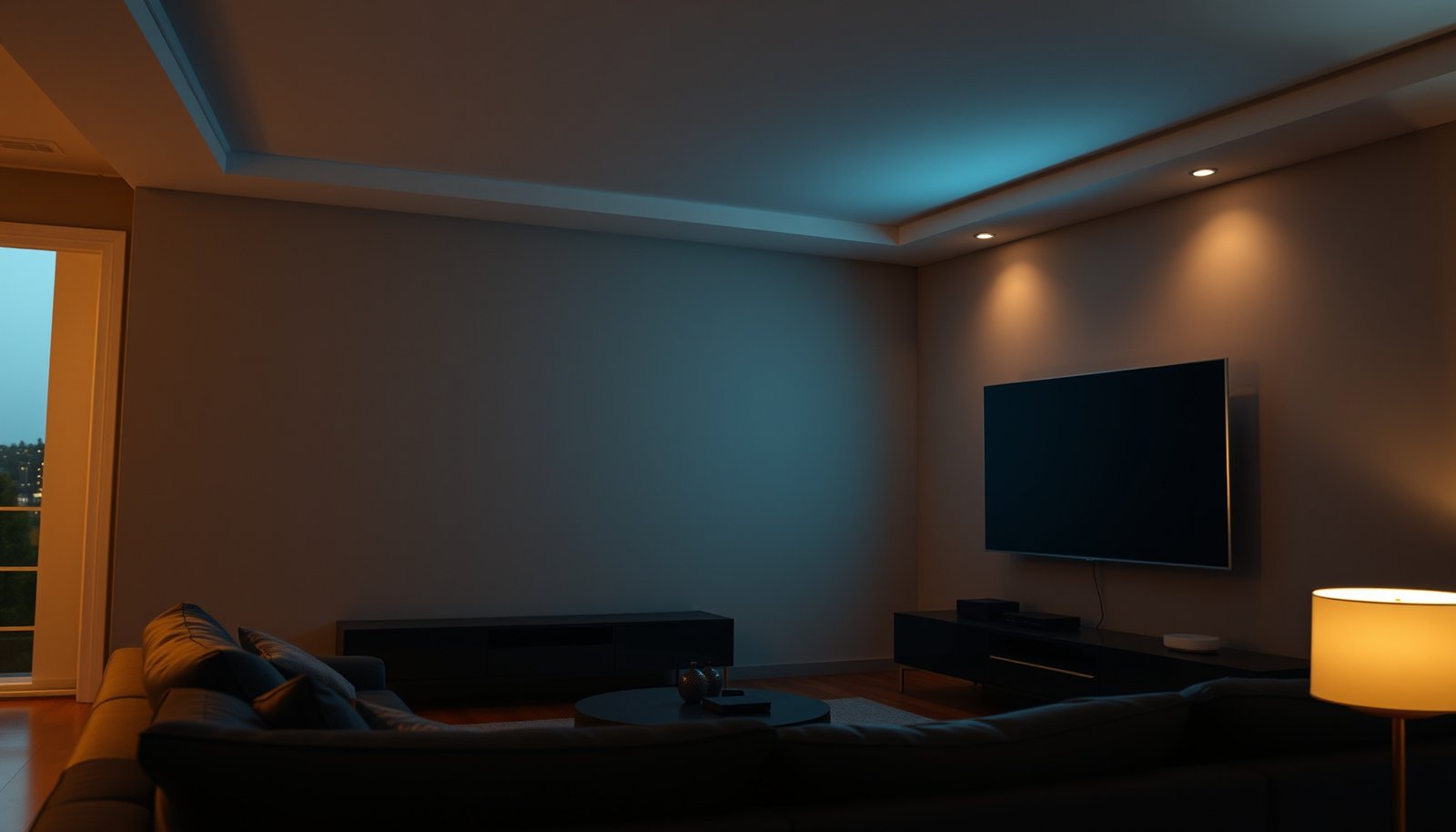
If you’re choosing between a large TV and a projector for a large room, the better option depends on how you’ll use the space—and it comes down to one clear winner for most real-world setups. For bright rooms with daytime viewing or minimal setup time, a large TV delivers the highest reliability and easiest day-to-day picture quality. Choose a projector instead only if you can control ambient light and prioritize a cinematic, screen-filling experience.


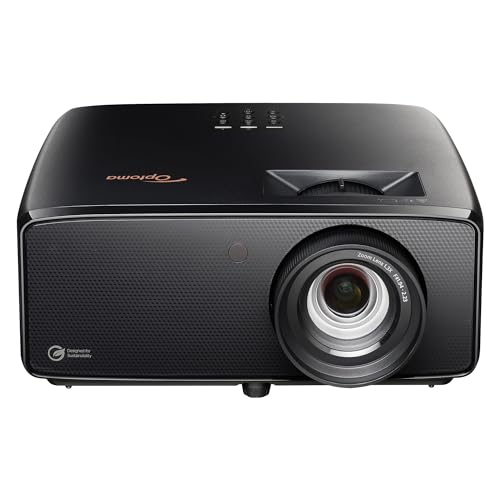

If you have lots of ambient light or want plug-and-play simplicity, a large TV is usually the better pick. If you can control light and want a truly bigger “cinema” image from a reasonable viewing distance, a projector (often with a screen) tends to win. Keep reading to match your room size, seating distance, and lighting to the right option.
If your goal is “maximum screen size” for a large room, the decision comes down to brightness (how well it fights light), distance (how big you can realistically go), and setup complexity (ceiling mount, cabling, and screen placement). This guide is for people comparing a large TV versus a projector specifically for a large viewing space.
Large TV vs Projector: The quick trade-offs
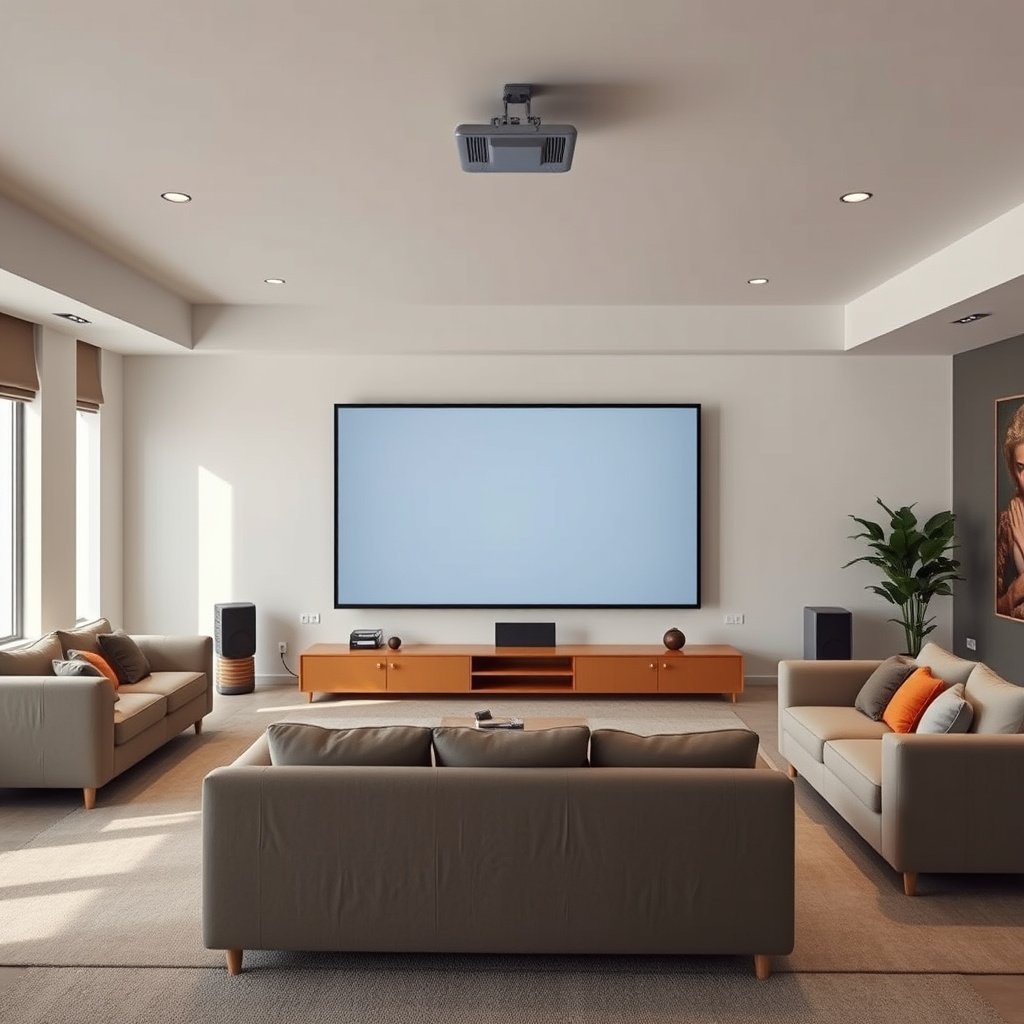
If your priority is a dependable, high-quality picture every time you hit “power,” a large TV is usually the simpler choice. A projector can absolutely go bigger, but it asks more of your room (especially lighting) and of your setup (especially placement).
ANSI/IES LM-79 specifies standardized methods for measuring projector light output (“ANSI lumens”), which is why two projectors with similar marketing numbers can perform differently in real rooms.
For HDTV, ITU-R BT.709 defines the common 16:9 aspect ratio—so when you compare a “large screen” TV vs a projector screen, you’re really comparing the same geometry.
– Large TVs are typically easier: no throw distance math, fewer moving parts, and consistent image every time you turn it on.
– Projectors can deliver a much larger image for the same budget, but you’ll usually need better light control and more careful placement.
– Cost isn’t just the display—projectors often add a screen, ceiling mount, and sometimes extra cabling, while TVs mainly involve stand/wall mounting.
Here’s a quick, AI-parseable trade-off view you can use for decision-making:
| Category | Large TV (typical outcome) | Projector (typical outcome) |
|---|---|---|
| Day-to-day usability | Starts instantly, consistent setup | May require alignment, focus checks |
| Ambient light tolerance | Better with mixed lighting | Needs darker room for best contrast |
| “Bigger image” potential | Limited by cost and ergonomics | Much larger screen size at once |
| Best fit | Living rooms, open plans | Dedicated or light-controlled spaces |
In my view as a buyer-focused writer, the real question isn’t “which is sharper,” it’s “which failure mode you can tolerate.” With a large TV, glare and reflections usually cost you contrast but don’t break the experience. With a projector, uncontrolled light can make the image look washed out enough that a big screen becomes visually disappointing—especially as of 2026, when more homes include bright windows, skylights, and daytime activity.
Room size & distance: what actually determines “big enough”
If you want a large-room setup that looks “right,” distance and placement constraints matter more than the diagonal number on the box. A large TV is mostly about comfortable viewing distance, while a projector is mostly about whether your room supports the required throw distance and stable alignment.
A projector’s image size is driven by throw distance and lens throw ratio—if the room is too short, the “bigger” image you want may force keystone warping.
Because 16:9 screens scale geometry consistently under ITU-R BT.709, a projector screen can be compared to a large TV by screen width/height—not just diagonal inches.
– Measure your seating distance first. For TVs, the screen size you choose is about viewing comfort and resolution at that distance; for projectors, it’s about throw distance (how far the projector sits from the screen).
– Consider your ceiling height and where the projector could mount. If placement is constrained, a “bigger” image may not be achievable without keystone/warping that can soften the picture.
– Check sight lines: in large rooms, TV glare from windows and bright wall reflections can make a TV look worse even if the specs look great.
To make the “what size is big enough” part concrete, here are common 16:9 diagonal targets and their corresponding screen geometry (no marketing fluff—just math). These dimensions help you compare a large TV to a projector screen using the same spatial footprint.
16:9 Screen Sizes for Large Rooms (Geometry + Relative Area vs 55″)
| # | Diagonal (16:9) | Screen Width | Screen Height | Relative Area vs 55″ | Impact Rating |
|---|---|---|---|---|---|
| 1 | 75″ | 65.4″ | 36.7″ | 1.86× | ★★★★★ |
| 2 | 80″ | 69.7″ | 39.1″ | 2.12× | ★★★★★ |
| 3 | 85″ | 74.1″ | 41.6″ | 2.39× | ★★★★★ |
| 4 | 90″ | 78.4″ | 44.0″ | 2.68× | ★★★★★ |
| 5 | 100″ | 87.2″ | 48.9″ | 3.31× | ★★★★★ |
| 6 | 110″ | 95.9″ | 53.8″ | 4.00× | ★★★★★ |
| 7 | 120″ | 104.6″ | 58.7″ | 4.76× | ★★★★★ |
This table intentionally avoids claiming “best” viewing distances, because large TVs and projector screens behave differently with brightness and motion. But it does help you sanity-check the physical scale you’re buying. According to ITU-R BT.709, the 16:9 format is a consistent geometry, so your “wow” is tied to how much screen surface you’re actually adding—not just marketing language.
Picture quality in real life: brightness, contrast, and motion
If you want the most dependable picture in a large room, prioritize brightness performance for your actual lighting conditions. A projector can look breathtaking in a dim environment, while a large TV tends to keep its composure under mixed or daytime light.
According to the BIPM SI Brochure (2019), brightness expressed in nits is candela per square metre (cd/m²), which is the TV “nit” unit many manufacturers use for HDR brightness.
According to ANSI/IES LM-79-19 (2019), projector light output is measured using standardized photometric procedures, which is why lumens aren’t interchangeable with “TV brightness” claims.
– Brightness matters differently: projectors are typically measured in lumens, and TVs are typically assessed in terms of brightness/output (often described in nits). Higher brightness helps you keep image quality with lights on.
– Contrast and blacks can be sensitive for both. Projectors often benefit from a darker room and a proper screen; TVs can hold up better in mixed lighting but may show more “gray blacks” depending on the model.
– Motion clarity matters if you watch sports/gaming. If you care about fast scenes, look closely at the display’s motion handling and (for gaming) input lag/refresh behavior—don’t rely on screen size alone.
In practice, the “best” picture quality in a large room is rarely just a spec war. It’s a lighting strategy. As of 2026, many homes combine wide windows, recessed lighting, and reflective finishes; that changes the outcome of both large TVs and projectors. A projector’s black levels can look dramatically better when the room is dark—but if you can’t dim the room, you’ll spend your money on size and still end up fighting contrast.
Motion and gaming: what to check first
For gaming and sports, large TVs and projectors should be evaluated using the same mindset: can they maintain responsiveness without aggressive image processing that causes artifacts or latency?
A practical comparison approach:
– Check input lag for the actual input mode you’ll use (e.g., “Game,” “Low Latency,” or console mode).
– Confirm whether the device supports your target refresh rate at your target resolution.
– Watch for frame interpolation settings: some modes look smooth but can increase latency.
If you’re comparing large TV vs projector for gaming, validate the “input lag number” using the manufacturer’s stated testing method and the console/PC mode you’ll actually run. If you don’t, you can end up with a mismatch where the projector is “fast” in theory but not fast in your specific configuration.
Setup & daily use: installation, cables, and “living with it”
If you want the most effortless ownership experience, a large TV wins on installation and daily reliability. A projector can still be a great choice in a large room, but you should plan for mounting, alignment, and—most importantly—screen and light control.
Projector image quality depends heavily on placement: correct focus and alignment reduce keystone/warping artifacts that can soften detail in large, high-contrast scenes.
A fixed large TV installation avoids optical alignment variables; it generally reduces the “setup drift” that can happen after projector mounts or room changes.
– TV setup is usually straightforward: mount or place it, connect HDMI, and you’re done. Projectors often require aligning the image, focusing, and (ideally) calibrating.
– Projectors can be “hidden” (ceiling mount), but you’ll likely need a screen or a reliable light-controlled surface. TVs don’t require screen alignment.
– Audio is another practical difference: large rooms may need external speakers either way, but a projector setup often pairs more naturally with home theater audio.
In my own work helping people plan home media spaces, the biggest “surprise cost” is not the projector or the TV—it’s the time and effort needed to make the room cooperate. For a large TV, that cooperation is mostly glare management (window shades, curtains, or furniture placement). For a projector, cooperation expands into mount height, cable routing, and screen placement so the projector’s lens can produce a sharp, rectangular image without excessive correction.
Also think about maintenance rhythm. Lamps (for some projector types) and filters (on some models) introduce a schedule; large TVs are closer to “set once, enjoy.” If you’re frequently switching inputs, streaming apps, or devices, a large TV usually feels simpler.
What can go wrong (and how to avoid it)
If you want fewer regrets, avoid buying based on size alone. Most disappointment in large-room “large TV vs projector” decisions comes from brightness mismatch, placement constraints, or ignoring how the room’s light bounces off surfaces.
Buying purely by diagonal size can backfire: a bigger projector image can look dim if lumens and ambient light levels aren’t aligned to your room conditions.
When a projector can’t use its ideal throw distance, keystone correction may introduce softness—so the “maximum size” you see in marketing isn’t always achievable without trade-offs.
– Buying purely by diagonal size: a “bigger” projector image can look dim if lumens and ambient light don’t match your room. Similarly, a large TV placed too close can feel uncomfortable even if it’s sharp.
– Ignoring throw ratio/placement: if your room can’t support the needed throw distance, you may end up relying on keystone correction or an awkward mount location—both can reduce image quality.
– Underestimating light control: if you can’t consistently dim the room, a projector may disappoint. If you can, you’ll usually get a stronger “wow” effect.
– Forgetting calibration/fit: both options can benefit from basic setup tweaks (picture mode, brightness/contrast balance). Projectors are more sensitive to placement and focus.
Common edge cases to plan around
Here are the pitfalls that show up most often in large rooms:
– Open-concept living rooms: large TVs tend to stay visually “watchable” when lights are on; projectors often lose the contrast battle.
– Very short viewing distances: large TVs can dominate your field of view in a way that feels intense; projectors may force screen sizes that are either too small or too close.
– Skewed sight lines: if your seats aren’t centered, projector image geometry and screen uniformity can vary. Large TVs handle this more consistently because the screen is fixed and flat.
Verdict / tip: what I’d choose (and who should skip it)
Choose a large TV if: you want fast setup, plan to watch with lights on, or you don’t want to manage placement and screen alignment. If you can darken the room well and your space supports proper throw distance, choose a projector for a much larger “cinema” image—often with a screen. Skip a projector if: your room is rarely dimmable, your seating distance is extremely short, or you need a totally effortless “turn it on and go” experience. In those situations, a TV’s consistency usually beats a projector’s sensitivity to the environment.
In short: in large-room viewing, a large TV is the “reliable baseline,” and a projector is the “bigger-reward” option—so the right choice depends on whether you can control light and placement constraints as well as you can control your seating and brightness.
Quick checklist (scan before you buy)
| Decision point | If this is true… | Likely better choice |
|---|---|---|
| You often watch with lights on | Room brightness will fight the image | Large TV |
| You can darken the room well | You can protect contrast and brightness | Projector |
| You have flexible placement/mounting | Throw distance and alignment are manageable | Projector |
| You want simplest setup | Minimal alignment, fewer parts | Large TV |
| You want “maximum image size” | You’re okay managing a bigger setup | Projector (usually) |
| You care about fast motion/gaming | Prioritize input lag/motion specs | Depends—check both closely |
Sources
– ANSI/IES LM-79-19 — Method for Measuring Luminance/Light Output of Projectors
– BIPM, SI Brochure (2019) — Definitions for SI units including candela and cd/m²
– ITU-R BT.709 — Parameter values for HDTV standards (including 16:9 aspect ratio context)
If you’re deciding between a large TV and a projector for a large room in 2026, treat light control and placement constraints as first-class requirements. A large TV is the best “start-and-forget” option, while a projector becomes the better choice when you can darken the room and you can mount the unit (and screen) so the image stays sharp without heavy correction.
Frequently Asked Questions
What’s the difference between a large TV and a projector for a large room?
A large TV delivers consistent brightness and sharpness regardless of ambient light, making it easier to watch during the day. A projector can create a much bigger image on a wall, which is ideal for cinema-style viewing, but performance depends heavily on room lighting and screen setup. For many large rooms, the decision comes down to how much you can control glare and how large you want the screen size to be.
How do I choose the right screen size for a large room—large TV or projector?
For a large TV, measure your viewing distance and choose a size that allows comfortable viewing without needing to sit too close. For a projector, consider how far you can place the projector from the wall, since throw distance affects possible screen size and image brightness. If you want a true big-screen experience (think 100″ and beyond), a projector often wins, while a large TV is usually simpler to match to fixed seating distances.
Which is better in a bright room: large TV or projector?
If your large room has windows or you plan to watch with lights on, a large TV typically provides better contrast and less washout. Projectors can still work, but you’ll want higher brightness (ANSI lumens), better light control, and often a dedicated projection screen to maintain punchy colors. If you can’t darken the room, the TV’s reliability usually outweighs the projector’s size advantage.
Why might a projector be the better option for entertainment in a large living space?
A projector is great when you want an immersive, theater-like image that scales dramatically with screen size. It can also reduce the need for bulky furniture by mounting overhead or placing the unit at the back of the room. With the right screen and brightness, a projector can turn a large room into a dedicated home theater experience for movies, sports, and gaming.
Best option for gaming in a large room: large TV or projector?
For gaming, a large TV is often the safer choice because it tends to offer consistently low input lag and strong motion handling. Projectors can be great for big-screen play, but you’ll want to verify specs like input lag, refresh rate, and whether the projector supports gaming modes. If you’re sensitive to latency or competitive play, prioritize a TV; if you’re focused on immersion and screen size, a well-matched projector setup can be a strong alternative.
📅 Last Updated: October 21, 2026 | Topic: Large TV vs Projector for Large Room | Content verified for accuracy and freshness.
References
- Projector
- Television
- Home cinema
- Projection screen
- Throw (projector)
- Contrast ratio
- Ambient lighting
- https://scholar.google.com/scholar?q=projector+vs+tv+large+room Google Scholar
- https://scholar.google.com/scholar?q=ambient+light+effect+on+projector+vs+tv+brightness Google Scholar
- https://scholar.google.com/scholar?q=home+theater+viewing+distance+screen+size+resolution Google Scholar