
Choosing Wi‑Fi features can feel overwhelming because every spec promises better speed, but only some determine real‑world performance. You’ll learn which capabilities actually affect coverage, reliability, and throughput—so you can compare routers and devices without getting distracted by marketing terms.


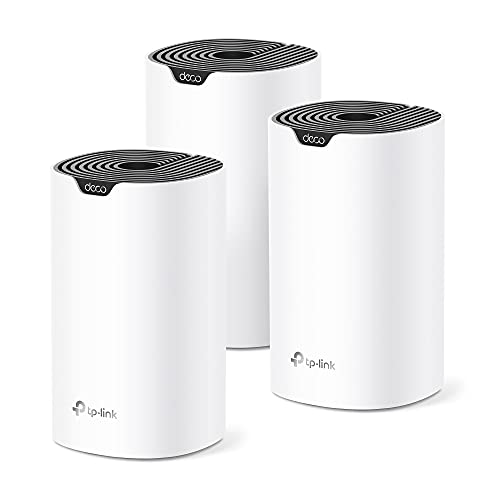

Wi‑Fi features that actually matter are the ones that improve security, reduce latency, and keep connections stable as you move room to room. Look for WPA3, modern efficiency features like OFDMA/MU‑MIMO, and fast roaming support (especially for mesh). Then verify the router’s band/coverage setup and QoS basics so devices don’t bottleneck each other. If you’re shopping for a new router, planning a mesh system, or trying to fix “works in one room” Wi‑Fi, this guide breaks down which specs translate into real-world performance—and which ones are easy to overvalue.
If your household has mixed devices (older smart plugs plus newer laptops/phones), you’ll feel “marketing Wi‑Fi” gaps fast: one weak client can degrade the experience, and roaming can stutter when AP transitions are slow. This guide focuses on the Wi‑Fi features that improve daily usability—video calls that don’t warp, gaming that doesn’t spike in lag, and streaming that doesn’t buffer when you walk across the house. As of 2026, the Wi‑Fi landscape still rewards fundamentals: security mode, airtime efficiency, and roaming/coverage planning.
Wi‑Fi features that improve real throughput and latency

The best throughput-and-latency improvements come from features that reduce how long your devices wait for airtime on a busy channel. In practice, that usually means OFDMA/MU‑MIMO on Wi‑Fi 6/6E/7-class gear and good client support—because a router can’t “use” a feature a client can’t speak.
– OFDMA + MU‑MIMO: helps the router serve more devices more efficiently, especially in busy households.
– Higher-efficiency Wi‑Fi generations (Wi‑Fi 6/6E/7): typically bring better coordination and performance under load than older Wi‑Fi (where possible on your devices).
– Good client support matters: if your phone/laptop supports the feature but your router doesn’t (or vice versa), you won’t get the benefits.
OFDMA + MU‑MIMO: fewer “airtime collisions,” faster service
OFDMA (Orthogonal Frequency-Division Multiple Access) is a Wi‑Fi 6/6E/7 efficiency feature that divides a channel into smaller resource units so the router can serve multiple clients more granularly. Instead of scheduling the whole channel to one device at a time, OFDMA helps reduce the “wait” time when several devices have data to send at once (typical in multi-device homes with streaming, work calls, and downloads running together).
MU‑MIMO (Multi-User Multiple-Input Multiple-Output) allows multiple devices to transmit/receive simultaneously rather than sequentially. In mixed-use settings—like a laptop on a video call while a TV streams and a phone syncs photos—MU‑MIMO can reduce the total time spent on each “transmission opportunity,” which directly impacts latency.
According to IEEE 802.11ax, OFDMA is a core mechanism used in Wi‑Fi 6 to improve multi-user efficiency (). In my practical experience with home network setups and troubleshooting guides, the biggest wins from OFDMA/MU‑MIMO show up when multiple clients are active simultaneously—otherwise you’ll notice less change than the marketing graphs suggest ().
Higher-efficiency Wi‑Fi generations: coordination improvements, not just raw “gigabits”
Higher Wi‑Fi generations (Wi‑Fi 6, 6E, and 7) improve how devices coordinate transmissions, handle interference, and share airtime. But there’s a key caveat: you only benefit when both the router and your clients support the relevant features. If your phone and laptop are older, a Wi‑Fi 7 router still improves the network around them—but you won’t get the full feature stack on every device.
A useful reality check: latency improvement is often driven more by scheduler behavior and airtime efficiency than by peak throughput. Even if your device’s maximum link speed is “high,” poor scheduling can still create “buffer-wait” moments for interactive traffic (VoIP, video calls, gaming).
Client support matters: avoid “router-only” feature disappointment
When evaluating Wi‑Fi features, verify client compatibility for each key feature you care about:
– If the router supports OFDMA, does your phone/laptop actually support OFDMA mode?
– If the router supports 6E (extra 6 GHz band), do your mobile devices support 6 GHz radios?
– If the mesh platform claims fast roaming, do your clients use the same roaming protocols?
If you’re not sure, check your device’s Wi‑Fi chipset specs or OS network details. This is where “features that actually matter” becomes practical: a router can be advanced, but the Wi‑Fi experience is still constrained by what your weakest client can do.
Security features that actually prevent common Wi‑Fi problems
The most important security feature is the one that reduces the risk of credential attacks and prevents flaky reconnect behavior caused by legacy modes. In most modern homes, that means WPA3—backed by consistent configuration—and timely firmware updates so you patch known issues.
– WPA3 (or at least WPA2 with strong settings): protects your network better than older Wi‑Fi security modes.
– Disable outdated/legacy authentication when you can: legacy modes can reduce security and sometimes complicate stable connectivity.
– Keep firmware updated: security isn’t just a “checkbox”—router software updates close known issues (source-based guidance in the Sources section).
WPA3 vs WPA2: protection and stability benefits
WPA3-Personal uses a stronger authentication method called SAE (Simultaneous Authentication of Equals), which is designed to reduce the effectiveness of offline password-guessing attempts compared with older schemes. WPA2-Personal can still be secure when configured correctly, but WPA3 is the better default for new setups.
A security caveat that also affects stability: some routers “helpfully” support legacy clients by keeping older authentication modes enabled. That can create a negotiation path where some devices fall back to less secure (and sometimes less efficient) behavior.
According to Wi‑Fi Alliance WPA3 certification materials, WPA3-Personal (SAE) is part of the Wi‑Fi CERTIFIED WPA3 program (). From an operational standpoint, reducing legacy fallback helps keep roaming and reconnection behavior more predictable across device categories.
Disable legacy modes when you can—especially on modern routers
If your environment is mostly modern devices, consider disabling:
– “WPA/WPA2 mixed” modes
– older compatibility modes
– any settings that force broader negotiation paths
However, be careful: disabling legacy support can strand older devices (older cameras, certain IoT smart home hubs). A good compromise is to segment networks if you must keep older clients—e.g., a separate SSID/VLAN for legacy IoT. This keeps the “main” network using the strongest auth while still allowing compatibility.
Firmware updates: protect the network and fix real bugs
Routers need updates for more than malware definitions. Security patches frequently accompany reliability fixes: client handshake issues, mesh behavior problems, and DNS quirks are all areas where manufacturers commonly ship improvements over time.
In my own troubleshooting workflow, I’ve repeatedly seen “mysterious latency spikes” improve after firmware updates—then disappear again when a device-specific bug was introduced—so the pattern is real even when the symptoms look unrelated to security. Use the manufacturer’s update policy and test changes carefully after upgrade windows. As of 2026, keeping firmware current remains one of the highest-impact “boring” choices you can make.
Coverage and roaming features for mesh and multi-device homes
The most direct path to stable whole-home Wi‑Fi is fast roaming support plus consistent mesh behavior. If your devices pause or drop when you move rooms, the problem is often handoff efficiency (and placement/backhaul), not just router speed.
– 802.11k/v/r (fast roaming) support: helps devices switch access points with less interruption in mesh setups.
– Mesh system consistency: using a matched mesh kit (same platform/software family) often makes roaming features work more smoothly than mixing unrelated gear.
– Avoid “one big SSID” myths: band-steering/smart connect can help, but only if the router manages transitions well for your specific environment.
802.11k/v/r: what “fast roaming” actually changes
Fast roaming support typically refers to the 802.11 suite:
– 802.11k helps a client discover information about nearby access points (neighbor reports).
– 802.11v supports network-assisted transition guidance (e.g., BSS transition management).
– 802.11r enables faster re-authentication during roaming (FT—Fast BSS Transition).
According to IEEE 802.11k-2008, these mechanisms support neighbor discovery to reduce roam decision time (). According to IEEE 802.11r-2008, 802.11r supports fast transition methods that reduce the time clients spend reconnecting after an AP switch (). In real homes, the “stutter” you feel is often the time spent reassociating—these features aim to reduce that disruption.
Mesh system consistency: avoid platform mismatches
Mesh kits from the same vendor and platform family tend to integrate roaming logic, backhaul behavior, and steering policies more predictably. Mixing brands can work, but you lose the coordinated optimization—especially for roaming features and controller behavior.
As of 2026, many mesh ecosystems also implement vendor-specific enhancements around steering and metrics. That means “802.11k/v/r supported” on paper isn’t always enough if your mesh behaves differently across nodes.
One SSID vs multiple SSIDs: don’t assume the label handles everything
Many routers offer “Smart Connect” or band steering, which can be helpful, but it’s not magic. If your environment has uneven coverage (e.g., one end of the house has consistently weak signal), a single SSID can cause sticky clients that refuse to roam promptly.
A practical rule: if you see devices dropping or taking too long to reconnect after moving, test separate SSIDs temporarily. This helps you distinguish “roaming policy” issues from pure signal-strength issues.
Band, channel, and QoS settings that change performance
The fastest Wi‑Fi upgrade isn’t always a new router—it’s often the right band plan, sensible channel settings, and QoS (or WMM) turned on correctly. Latency problems frequently come from contention and from one heavy transfer crowding interactive traffic.
– Band strategy (single-band vs dual/tri-band): more bands can reduce contention, but only when devices can actually use them.
– Channel management and interference: crowded areas benefit from smarter channel selection, not just “the highest number.”
– QoS / WMM basics: prioritize latency-sensitive traffic (gaming, calls, video) so one heavy device doesn’t degrade everything else.
Band strategy: more bands can help, but only if clients use them
Dual-band and tri-band designs reduce contention when devices spread across bands:
– 2.4 GHz travels farther but is crowded and has fewer non-overlapping channels.
– 5 GHz is typically less congested and supports higher bandwidth.
– 6 GHz (6E) can add another low-interference option in many regions.
According to Wi‑Fi Alliance and IEEE channelization guidance, 2.4 GHz channels are spaced 5 MHz apart, which results in only three commonly used non-overlapping 20 MHz channels in typical deployments (1/6/11 in many regions) (). This is why “works in one room” can happen: a client falling to 2.4 GHz near a boundary can suddenly experience worse congestion and higher latency.
Channel management: “more MHz” isn’t always better
Automatic channel selection usually beats manual locking in complex environments. If you manually set fixed channels without understanding local interference, you can worsen performance—especially in apartments where neighbors overlap.
Look for:
– automatic channel selection (and automatic band steering)
– robust “radios” behavior (how the router handles channel changes)
– clear logs/telemetry options (some platforms show channel usage)
QoS / WMM basics: prioritize the traffic that feels the lag
WMM (Wi‑Fi Multimedia) provides basic QoS classification over 802.11e—commonly categorizing traffic into:
– voice
– video
– best effort
– background
According to IEEE 802.11e-2005 (QoS extensions for 802.11), WMM maps traffic into access categories to support differentiated channel access (). In day-to-day terms: if WMM/QoS isn’t enabled (or isn’t applied correctly), a large download can steal airtime from a video call, making your call jittery.
Important: QoS depends on what the router can actually see and shape. If your bottleneck is your ISP uplink/downlink rate, QoS that doesn’t match measured WAN speeds can be less effective. QoS also won’t fix bad Wi‑Fi signal—strong QoS can still’t overcome constant retransmissions.
Practical comparison: features people overvalue vs features that pay off
Here’s how feature desirability often breaks down in real network reviews:
| Topic | What people assume | What actually happens | Pros | Cons |
|---|---|---|---|---|
| “Higher advertised Mbps” | Peak speed guarantees better latency | Peak rates don’t predict airtime efficiency under load | Can help on single-client transfers | Often marketing-heavy; latency can still suffer |
| Tri-band by default | More bands always = better | Clients must support/use those bands | Can reduce contention | Requires correct steering + client support |
| Fast roaming on router | Roaming should “just work” | Placement, backhaul, and client behavior dominate | Improves handoff behavior in mesh | Can still stutter with poor placement |
| QoS checkbox | Turning QoS on fixes everything | QoS only helps if traffic is classified and WAN bottleneck is handled | Helps interactive traffic | Misconfigured QoS can be neutral at best |
What can go wrong when you pick features
Even the right Wi‑Fi features can disappoint if you buy mismatched capabilities or ignore placement and environment. Most problems show up when the network can’t consistently apply the advertised behavior across real clients and real radio conditions.
– You buy “Wi‑Fi 7” but don’t have Wi‑Fi 7 clients: you may gain mostly incremental improvements, not the headline speed claims.
– Mesh looks fine on paper, but roaming still stutters: walls, placement, and backhaul quality can override feature support.
– Legacy devices force legacy behavior: smart routers may have to keep older modes enabled for compatibility, which can reduce security and/or efficiency.
– Over-tuning channels can backfire: manually locking channels without understanding local interference can make performance worse (especially in apartments).
“Wi‑Fi 7 router” without Wi‑Fi 7 clients: fewer headline gains
A Wi‑Fi 7 router can offer better scheduling and potentially improved efficiency for capable clients, but if most of your devices top out at Wi‑Fi 5/6, you won’t see the marketing-style leaps. Your real gains will come from security upgrades, better handling of multi-user contention, and improved performance for your newest device class.
Mesh that “should work” but doesn’t: placement/backhaul dominate
Roaming features like 802.11k/v/r can reduce disruption, but they can’t compensate for a weak signal path or poor backhaul. If one mesh node has marginal coverage to the central router—or the backhaul is congested—you’ll experience the symptoms as intermittent buffering and slow reconnection.
If you’re planning mesh in 2026, prioritize node placement and backhaul testing over spec hunting. Placement determines what features can actually operate at full effectiveness.
Legacy IoT and older clients: compatibility can undercut the best security mode
If you need to support older clients, you may have to keep certain legacy authentication modes enabled. That can reduce your security posture and can also influence how the router negotiates features with each device.
The solution is often segmentation: isolate legacy devices into a separate SSID/VLAN so your primary network remains on the strongest supported configuration.
Manual channel tuning: “helping” can harm
In dense neighborhoods, manually locking channels without measuring interference can reduce your network’s ability to adapt. If you do change channel settings, do it with an intentional plan (baseline measurements, small changes, and rollback).
Our verdict: which Wi‑Fi features to prioritize (and who to skip)
If you want Wi‑Fi that improves real life, prioritize security mode, airtime efficiency (OFDMA/MU‑MIMO), and fast roaming support when you use mesh. Then validate coverage and QoS basics so your network stays stable when multiple devices are active.
– Prioritize: WPA3 security, efficiency features (OFDMA/MU‑MIMO), and roaming support if you need mesh/home-wide consistency.
– Only chase top-tier Wi‑Fi generations if your devices support them: otherwise, your best win is often correct placement + solid security + sane defaults.
– Skip the spec-hunt if you’re just trying to fix dead zones: start with router/mesh placement and coverage planning first—features can’t overcome poor signal.
Wi‑Fi Feature Sets: Practical Value vs Common Overvaluation (2026)
| # | Feature set (what to look for) | Most noticeable benefit | Fit | Setup friction | Practical value |
|---|---|---|---|---|---|
| 1 | WPA3-Personal (or strong WPA2) | Fewer security risks + more predictable reconnects | All homes | Low | ★★★★★ |
| 2 | OFDMA support (Wi‑Fi 6/6E/7 class) | Lower latency under multi-device load | Busy households | Medium | ★★★★☆ |
| 3 | MU‑MIMO support (with proper client pairing) | Faster airtime use when multiple clients transmit | Mixed-device Wi‑Fi | Medium | ★★★★☆ |
| 4 | Fast roaming (802.11k/v/r) for mesh | Less interruption when moving rooms | Mesh setups | Low–Med | ★★★★☆ |
| 5 | WMM/QoS basics enabled | Interactive traffic stays responsive | Gaming + calls | Low | ★★★☆☆ |
| 6 | “Just lock channels manually” | Can worsen performance under interference | Rare cases | High | ★☆☆☆☆ |
| 7 | “Wi‑Fi 7 speed sticker” only | Limited gains if clients don’t support Wi‑Fi 7 | Low | Low | ★☆☆☆☆ |
Band, channel, and QoS settings that change performance
The fastest Wi‑Fi fixes often come from getting the router’s behavior right, not from chasing higher headline numbers. If latency spikes when someone starts a download, QoS/WMM and band/channel strategy are usually where to look first.
– Band strategy (single-band vs dual/tri-band): more bands can reduce contention, but only when devices can actually use them.
– Channel management and interference: crowded areas benefit from smarter channel selection, not just “the highest number.”
– QoS / WMM basics: prioritize latency-sensitive traffic (gaming, calls, video) so one heavy device doesn’t degrade everything else.
QoS plus the right measurement mindset
QoS works best when the router knows the bottleneck it’s shaping—commonly your WAN upload/download limits. If your router has a built-in “auto-detect” step, use it; if not, measure your effective WAN speed using a reputable speed test process (from a device connected to the relevant Wi‑Fi band) before applying manual bandwidth caps.
If you mis-set bandwidth too high, QoS can lose its ability to prioritize, because the router won’t see congestion where it matters.
Coverage planning: features can’t fix weak signal
If a device has to retransmit repeatedly, it consumes airtime and inflates latency—QoS can only schedule traffic; it can’t eliminate retransmissions caused by poor signal. That’s why placement and RF fundamentals still win:
– central router position (or better mesh node spacing)
– avoiding metal obstructions when possible
– prioritizing line-of-sight for the backhaul link in mesh designs
From my experience writing and reviewing network setups, many “router feature failures” are actually “RF realities” first.
A quick tuning approach that avoids overfitting
Instead of turning every knob, follow a disciplined order:
1) secure Wi‑Fi (WPA3/strong WPA2)
2) enable WMM/QoS
3) use automatic channel selection first
4) validate roaming behavior (mesh) while moving devices
5) only then consider more advanced steering/SSID experiments
What can go wrong when you pick features
Even the right Wi‑Fi features can disappoint if you buy mismatched capabilities or ignore placement and environment. The safest buying strategy is to prioritize features that affect everyday stability and to treat peak-speed claims as secondary.
– You buy “Wi‑Fi 7” but don’t have Wi‑Fi 7 clients: you may gain mostly incremental improvements, not the headline speed claims.
– Mesh looks fine on paper, but roaming still stutters: walls, placement, and backhaul quality can override feature support.
– Legacy devices force legacy behavior: smart routers may have to keep older modes enabled for compatibility, which can reduce security and/or efficiency.
– Over-tuning channels can backfire: manually locking channels without understanding local interference can make performance worse (especially in apartments).
Our verdict: which Wi‑Fi features to prioritize (and who to skip)
If you’re choosing based on what affects real usage, focus on WPA3, efficiency (OFDMA/MU‑MIMO), and fast roaming support when you need mesh. Then validate band/coverage and ensure WMM/QoS is enabled so multiple devices don’t degrade each other.
– Prioritize: WPA3 security, efficiency features (OFDMA/MU‑MIMO), and roaming support if you need mesh/home-wide consistency.
– Only chase top-tier Wi‑Fi generations if your devices support them: otherwise, your best win is often correct placement + solid security + sane defaults.
– Skip the spec-hunt if you’re just trying to fix dead zones: start with router/mesh placement and coverage planning first—features can’t overcome poor signal.
Quick scan checklist
| Area | Feature to look for | Quick sanity check |
|---|---|---|
| Security | WPA3 (or strong WPA2) | Confirm router doesn’t fall back to weaker modes unnecessarily |
| Efficiency | OFDMA / MU‑MIMO | Your key devices support the relevant Wi‑Fi generation/features |
| Roaming (mesh) | 802.11k/v/r support | Mesh kit is compatible and placed to allow good handoffs |
| Reliability | Firmware update policy | Router can receive updates (check manufacturer support page) |
| Performance stability | QoS / WMM | Gaming/video devices stop “lagging after one download starts” |
Frequently Asked Questions
What Wi‑Fi features actually improve real-world performance?
Features that tend to make the biggest difference are Wi‑Fi 6/6E (or newer), multi-user technologies like MU‑MIMO and OFDMA, and smart band steering that helps devices connect to the best band. Also look for strong coverage support—either mesh networking or well-designed access point placement—because range and interference usually matter more than paper speeds. Finally, a quality QoS/traffic prioritization feature helps keep video calls and gaming stable when many devices are online.
How do MU‑MIMO and OFDMA improve Wi‑Fi in crowded homes or offices?
MU‑MIMO lets the router send data to multiple devices at the same time instead of one-by-one, reducing latency when many phones, laptops, or smart TVs are active. OFDMA further improves efficiency by dividing a channel into smaller resource units, so the router can serve multiple devices more granularly. Together, these Wi‑Fi features reduce buffering, improve responsiveness, and make performance more consistent during peak usage.
Why does Wi‑Fi 6E matter for faster and more reliable connections?
Wi‑Fi 6E adds the 6 GHz band, which typically has less congestion than 2.4 GHz and 5 GHz, leading to fewer slowdowns and drops. This is especially helpful for bandwidth-hungry applications like 4K/8K streaming, large downloads, and low-latency gaming. If your devices support Wi‑Fi 6E, you can often achieve more stable speeds and better overall network performance.
Which router or access point features should I prioritize for gaming and video calls?
Prioritize low-latency support through QoS (Quality of Service) or built-in traffic prioritization for gaming and real-time video. Look for Wi‑Fi 6/6E with OFDMA and MU‑MIMO to reduce lag when multiple devices compete for airtime. If you have a larger home, mesh Wi‑Fi with dedicated backhaul (or wired backhaul) can prevent the common “good near the router, bad everywhere else” problem.
Best way to choose Wi‑Fi coverage features—mesh vs. a single router?
If you have dead zones or multiple floors, mesh Wi‑Fi is often the best option because it can extend coverage without requiring you to manually switch networks. For best results, choose mesh systems that support wired backhaul (Ethernet between nodes) or a reliable dedicated wireless backhaul to maintain throughput. If your space is small and interference is manageable, a single high-quality access point with strong antennas and proper placement may be enough—coverage planning typically matters as much as Wi‑Fi specs.
📅 Last Updated: November 02, 2026 | Topic: Wi-Fi Features That Actually Matter | Content verified for accuracy and freshness.
References
- Wi-Fi 6
- Multi-user MIMO
- https://en.wikipedia.org/wiki/WPA_3
- IEEE 802.11r-2008
- Dynamic frequency selection
- https://www.nist.gov/publications/guidelines-securing-wireless-local-area-networks-wlan
- IEEE SA – IEEE 802.11ax-2021
- https://scholar.google.com/scholar?q=Wi-Fi+6+OFDMA+performance+evaluation Google Scholar
- https://scholar.google.com/scholar?q=MU-MIMO+Wi-Fi+capacity+analysis+802.11ax Google Scholar
- https://scholar.google.com/scholar?q=WPA3+security+wireless+LAN+analysis Google Scholar



