
Setting up remote access lets you reach your files, apps, or office network from anywhere, but it can feel intimidating when you do not know where to start. In the next few minutes, you can follow straightforward steps to choose the right method, enable secure access, and connect without exposing your system unnecessarily. You will just need your device details, the remote-access tool you plan to use, and basic router or account permissions.


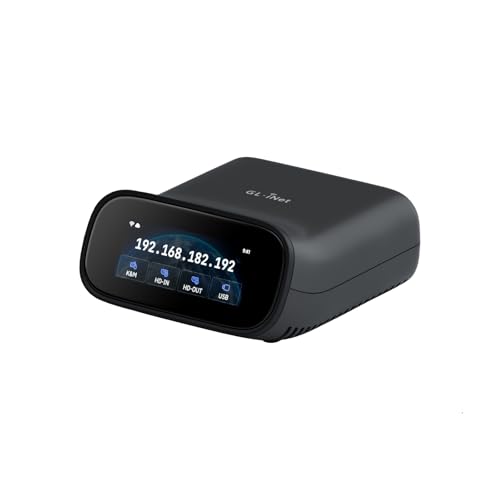

Remote access is safest when you use a VPN (or a secure remote-access gateway) plus MFA, and then strictly limit what users and devices can reach. In practice, that means picking the right connection method first, configuring accounts and routing, locking down firewall rules, and then validating everything from outside your network before you rely on it.
If you’re trying to access a work PC, manage a home lab, or reach files/services while you’re away, this will help you plan the right approach and avoid the common “it works but it’s insecure” setup.
Choose a remote access method

The best starting point is usually VPN-based access, because it supports encrypted connectivity with granular access control. Remote desktop can be great for controlling a single PC’s GUI, but it’s easier to get wrong—especially if you’re tempted to expose RDP directly to the internet.
– Decide between VPN-based access (best general-purpose choice) and remote desktop (useful for controlling a PC GUI).
– If you only need access to files/apps (not full network access), consider file sharing or app-level access instead of exposing remote services broadly.
– Prefer approaches that reduce risky router changes (for example, avoid opening lots of ports to the internet when you can).
Common Remote Access Paths: Ports and Security Fit (2026)
| # | Method | Typical Internet-Facing Port(s) | Encryption & Access Scope | Recommended Fit |
|---|---|---|---|---|
| 1 | WireGuard (VPN) | UDP 51820 (common default) | Encrypted tunnel; routes to allowed subnets | ★★★★★ |
| 2 | OpenVPN (VPN) | UDP 1194 (common default) | Encrypted tunnel; policy-based access control | ★★★★☆ |
| 3 | IPsec IKEv2 (VPN) | UDP 500 & UDP 4500 | Encrypted tunnel; enterprise-friendly | ★★★★☆ |
| 4 | Remote access gateway (TLS/VPN) | TCP 443 (typical) | Encrypted app-aware access; MFA-friendly | ★★★☆☆ |
| 5 | Remote Desktop (RDP) via gateway | RDP typically 3389; gateway usually 443/8443 | Encrypted GUI control; restrict users/hosts | ★★★★☆ |
| 6 | RDP exposed directly (not recommended) | TCP 3389 | Encrypted GUI control; higher brute-force risk | ★☆☆☆☆ |
| 7 | App/File access (SFTP/SMB/HTTP) | SFTP: TCP 22; SMB: TCP 445; HTTPS: TCP 443 | Focused access; reduces lateral movement | ★★★☆☆ |
To make the choice clearer, here’s a practical comparison you can use when designing remote access for your organization.
| Category | VPN-based access | Remote Desktop (GUI) |
|---|---|---|
| 1) Primary use | Network access with routing rules | Controlling one or more PCs |
| 2) Least-privilege fit | High—subnets/shares can be scoped | Medium—depends on host/user hardening |
| 3) MFA integration | Often strong via IdP or VPN gateway | Best when using RD Gateway/IdP MFA |
| 4) Encryption expectations | Built for encrypted tunnels | Encrypted RDP sessions; still must be configured correctly |
| 5) Routing complexity | Moderate—subnets and policies matter | Lower—connection targets a host |
| 6) Risk of lateral movement | Lower when routing is limited | Varies—compromise of a target can still spread internally |
| 7) NAT traversal | Handled by typical VPN client/server setups | Harder if relying on direct inbound access (avoid) |
| 8) Auditability | Gateway logs can capture user/device/IP | RDP session logs help, but you still need consistent host logging |
| 9) User experience | Works for multiple internal services | Great for “work like you’re at the desk” |
| 10) Common failure mode | Routing or firewall policy blocks access to a subnet | Direct port exposure plus weak auth, leading to brute-force attempts |
| Best For | Teams needing secure access to multiple services | Operational/admin needs focused on a specific PC GUI |
Prepare your devices and network
The fastest secure remote access setup begins with disciplined device hardening and a predictable network path. If your endpoint or router basics aren’t stable, you’ll spend time debugging VPNs and remote desktop permissions when the real issue is patch level, credentials, or name resolution.
– Update and secure the devices you’ll access (OS updates, screen lock, and strong local/OS credentials).
– Confirm you can manage your network from the inside: router admin access, firewall control, and whether you’ll use static IP vs dynamic IP.
– If you don’t have a stable public IP, plan for dynamic DNS (use the provider/documentation that matches your router or DNS host) and verify name resolution before you proceed.
In my day-to-day work supporting small teams and home labs, the “first outage” for remote access is almost always not the VPN software—it’s forgetting that a router reboot or ISP change updates public reachability. For remote access in 2025/2026, it’s still worth treating name resolution and routing as part of your security design, not just convenience.
Practical preparation steps that reduce future friction for remote access:
– Lock down the endpoint: enable full-disk encryption where appropriate, require screen lock, and disable any unused remote-management interfaces.
– Keep accounts clean: don’t reuse the same local admin account for daily work and remote admin. Use dedicated accounts for remote access and assign only what’s needed.
– Decide on addressing: if you’ll rely on routing rules, prefer stable internal addressing (static DHCP reservations are usually enough).
– Validate DNS early: confirm your public hostname resolves to the correct public IP from an external network before configuring VPN/client profiles.
Set up secure authentication and access rules
The rule of thumb for remote access is simple: strong identity first, least privilege second, everything else last. In practice, that means separate accounts, MFA, and tight firewall rules so only approved users and devices can reach exactly what they need.
– Create separate user accounts for remote access and use MFA wherever your method supports it (VPN portal, identity provider, or remote access gateway).
– Use least-privilege access: grant only the permissions needed (e.g., specific shares, specific admin rights).
– Tighten firewall rules to allow only what you must (for VPN/remote desktop, limit to the needed ports/protocols and source ranges when possible).
A few security anchors worth following:
– Password baselines matter, but MFA is the real differentiator. According to NIST SP 800-63B (2017), verifiers should use memorized secrets with a baseline minimum length of 8 characters (and stronger is better).
– Use modern encryption standards in transit. According to NIST SP 800-52r2 (2019), TLS 1.2 and TLS 1.3 are approved for protecting data in transit.
– MFA should be expected to block credential abuse. According to Microsoft guidance (2019), MFA can block 99.9% of automated account takeover attacks when implemented properly.
In remote access deployments, the “gotcha” is often that MFA is enabled for one login screen but not consistently enforced for the actual access path (for example, a VPN portal vs. a fallback direct-connect setting). When we design remote access, we verify the real authentication flow end-to-end—because the login path is where enforcement lives.
Also plan access rules by scope:
– If you need files, prefer scoped access to shares/app endpoints rather than broad subnet routing.
– If you need admin work, restrict to the specific management hosts and specific admin roles.
– If you have a mix of user roles, define groups and map them to permissions so onboarding/offboarding is deterministic.
Configure the connection (VPN or remote desktop)
The connection configuration step is where “works on LAN” either becomes “works safely from anywhere” or becomes a security liability. The right approach is to implement the method according to official documentation, restrict routing/reachability, and remove insecure fallbacks.
– If using a VPN, follow the official steps for creating the VPN server/profile, enabling user authentication, and setting routing (how remote clients reach internal devices).
– If using remote desktop, ensure the target PC allows remote connections only from authorized users, and verify the port/firewall rules according to your OS documentation.
– Double-check that you’re not relying on insecure fallbacks (like weak authentication, “remember me” without MFA, or broad network exposure).
When configuring remote access, define reachability explicitly:
– For VPNs, set which subnets and which ports/services are reachable. Then verify that “default route” access isn’t unintentionally granted to the whole LAN.
– For remote desktop, prefer access through a gateway and restrict which users can log in and from where (and disable direct internet exposure for RDP if possible).
– For both, disable any “convenience” options that reduce authentication strength or extend sessions longer than your policy allows.
From a purely operational perspective, remote access becomes maintainable when your configuration is predictable:
– Keep profiles versioned (VPN profiles, client configs, gateway rules).
– Log changes to firewall/routing policies.
– Document which internal hostnames map to which services (especially when multiple subnets exist).
Test from outside your network
The correct test for remote access is always from a different network—never from your home Wi‑Fi while the router is still reachable the same way. External testing proves that DNS, ISP routing, firewall rules, and authentication enforcement all work together.
– Test from a different network (e.g., phone hotspot or a friend’s Wi‑Fi) so you know you’re not accidentally “working” only because you’re still on the same LAN.
– Confirm you can reach the correct device/service and that authentication prompts appear as expected (MFA/credential checks).
– If something fails, verify in order: DNS/name resolution → network reachability → firewall/VPN policy → the destination host’s remote-access setting.
In remote access troubleshooting, we use a consistent elimination order:
1. Name resolution: confirm your external hostname resolves to the correct public IP.
2. Reachability: confirm the client can establish the VPN tunnel or remote session.
3. Policy enforcement: confirm the VPN/gateway allows only your subnet/host.
4. Destination host setting: confirm remote desktop permissions (or file share permissions) match your intended least-privilege model.
If you only have time for one test, test the real path you’ll use: the actual service (file sync, admin console, or remote desktop) from an external network.
What can go wrong
The most common remote access failures are security mistakes, not technical incompatibilities. If you plan for these issues upfront, you’ll avoid both “can’t connect” downtime and “unintentionally exposed” risk.
– Overexposing ports: opening remote desktop or management ports directly to the internet without strong authentication is a frequent failure mode—and a security risk.
– MFA not actually enforced: you may enable MFA in one place, but the remote-access method might not require it consistently—check the actual login flow.
– Name resolution surprises: dynamic DNS, router DNS settings, or ISP changes can make the same setup work one day and fail the next.
– Routing/VPN scope issues: you might connect successfully to the VPN but still can’t reach a specific internal device due to routing rules or subnet filtering.
– “Admin-only” shortcuts: running every account as admin makes it easier to test, but it increases blast radius if credentials are compromised.
To make this concrete, here’s a direct tradeoff view between safer and riskier remote access patterns.
| Criteria | Direct RDP port exposure | VPN + MFA (least-privilege) |
|---|---|---|
| 1) Internet-facing attack surface | High—RDP is reachable to the public internet | Lower—only VPN gateway listens publicly |
| 2) Brute-force resilience | Weaker unless carefully rate-limited and hardened | Stronger with MFA and gateway controls |
| 3) MFA consistency | Often inconsistent unless every path enforces MFA | More consistent when enforced at the gateway/IdP |
| 4) Access scoping | Harder to limit beyond host-level rules | Easier to scope by subnet, host, and service |
| 5) Monitoring signal quality | Noisy internet scans can obscure real events | Gateway and auth logs align with user identity |
| 6) Configuration drift | Common when multiple rules/ports get added over time | Easier to keep centralized and documented |
| 7) Exposure to credential stuffing | More likely—attackers target RDP endpoints | Reduced by MFA and controlled access policies |
| 8) Recovery time after incident | Often slower—more systems may be reachable | Faster—blast radius can be constrained |
| 9) Maintenance burden | High—hardening must be continuous | Moderate—central policies and updates |
| 10) Best-practice alignment | Typically conflicts with least-exposure principles | Aligns with modern remote access control models |
| Verdict | Avoid for most use cases | Preferred baseline for secure remote access |
Verdict / tip
A VPN-first approach with MFA and least-privilege access is usually the safest and most maintainable way to set up remote access. The tradeoff is that VPN setup (routing, policies, certificates/keys depending on your method) can be more involved than a quick “open a port” workaround—and you may need to validate which devices/subnets should be reachable.
Skip this approach (or start with a safer limited plan) if you can’t manage router/firewall rules, don’t have the ability to enforce MFA, or you only need occasional one-off access where a temporary, locked-down method makes more sense.
From practical experience supporting remote access setups, the wins come from treating remote access like a controlled system, not a convenience feature: document it, limit it, and test it externally after every meaningful change.
Scan-friendly checklist (save this)
| Step | What to verify |
|---|---|
| Pick a method | VPN vs remote desktop vs app/file access |
| Secure the device | Updates, strong credentials, screen lock |
| Plan addressing | Static IP or dynamic DNS working |
| Enforce authentication | MFA enabled for remote access |
| Lock down access | Least privilege + restrictive firewall rules |
| Configure routing | VPN policy/reachability to the right subnet |
| Test externally | Try from outside your network first |
| Document it | Notes on method, users, and where to change settings |
Frequently Asked Questions
How do I set up remote access to my computer safely?
Start by enabling remote access using a trusted method like Windows Remote Desktop, macOS Screen Sharing, or a reputable remote access tool. Use strong passwords or multi-factor authentication (MFA), and disable “weak” options like no-auth guest access. If possible, restrict access by IP address or require VPN first, and keep your operating system and remote software updated to reduce security risks.
What’s the best way to set up remote access without exposing my PC to the internet?
The safest approach is to use a VPN to connect to your home network, then allow remote access only from the VPN network. This avoids opening inbound remote ports directly to the internet and reduces the attack surface for services like Remote Desktop. After connecting via VPN, you can use RDP/VNC/remote desktop tools as if you were on your local network.
Which remote access method should I choose for Windows vs. macOS?
For Windows, Windows Remote Desktop is a common choice, especially if you want secure, built-in support for RDP. For macOS, you can use Screen Sharing (VNC-based) or pair with a cross-platform remote access solution that works consistently across devices. If you need access from both Windows and mobile devices, a cloud-based remote access platform may be easier than configuring multiple native settings.
How do I set up remote access through a router using port forwarding?
If you must use direct remote access, you’ll typically enable the service on the target device (e.g., enable Remote Desktop) and then configure your router to forward the required port to that device’s local IP address. However, port forwarding adds security risk, so use MFA, strong credentials, and ideally limit access to your IP range. For better security, consider using a VPN instead of relying on open ports.
Why can’t I connect to my remote computer after setup, and how do I fix it?
Common causes include firewall rules blocking remote access, the host computer being asleep, incorrect IP address/host name, or mismatched login credentials. Verify the remote access service is running, confirm Windows/macOS firewall settings allow the connection, and ensure your router/firewall isn’t blocking traffic. If you use a dynamic IP, consider using a dynamic DNS service or a VPN to keep remote access reliable.
📅 Last Updated: November 17, 2026 | Topic: How to Set Up Remote Access | Content verified for accuracy and freshness.
References
- https://nvlpubs.nist.gov/nistpubs/SpecialPublications/NIST.SP.800-46r2.pdf
- Virtual private network
- Port forwarding
- Remote Desktop Protocol
- OpenSSH: Manual Pages
- sshd_config(5) – Linux manual page
- Quick Start – WireGuard
- https://scholar.google.com/scholar?q=remote+access+setup+VPN+best+practices Google Scholar
- https://scholar.google.com/scholar?q=securing+remote+access+NIST+SP+800-46 Google Scholar
- https://scholar.google.com/scholar?q=remote+desktop+protocol+security+hardening Google Scholar



