
AI-powered glasses are not just a futuristic concept; they have the potential to replace smartphones as our go-to devices for communication and information. By integrating augmented reality (AR) and artificial intelligence (AI), these innovative glasses enable a hands-free experience that could change the way we interact with technology. Imagine being able to receive notifications, navigate, and even capture moments without ever having to pull out a device from your pocket! In this blog post, we will delve deeper into how these glasses work, their benefits, potential applications, and the challenges they face on their path to mainstream adoption.
Understanding AI-Powered Glasses

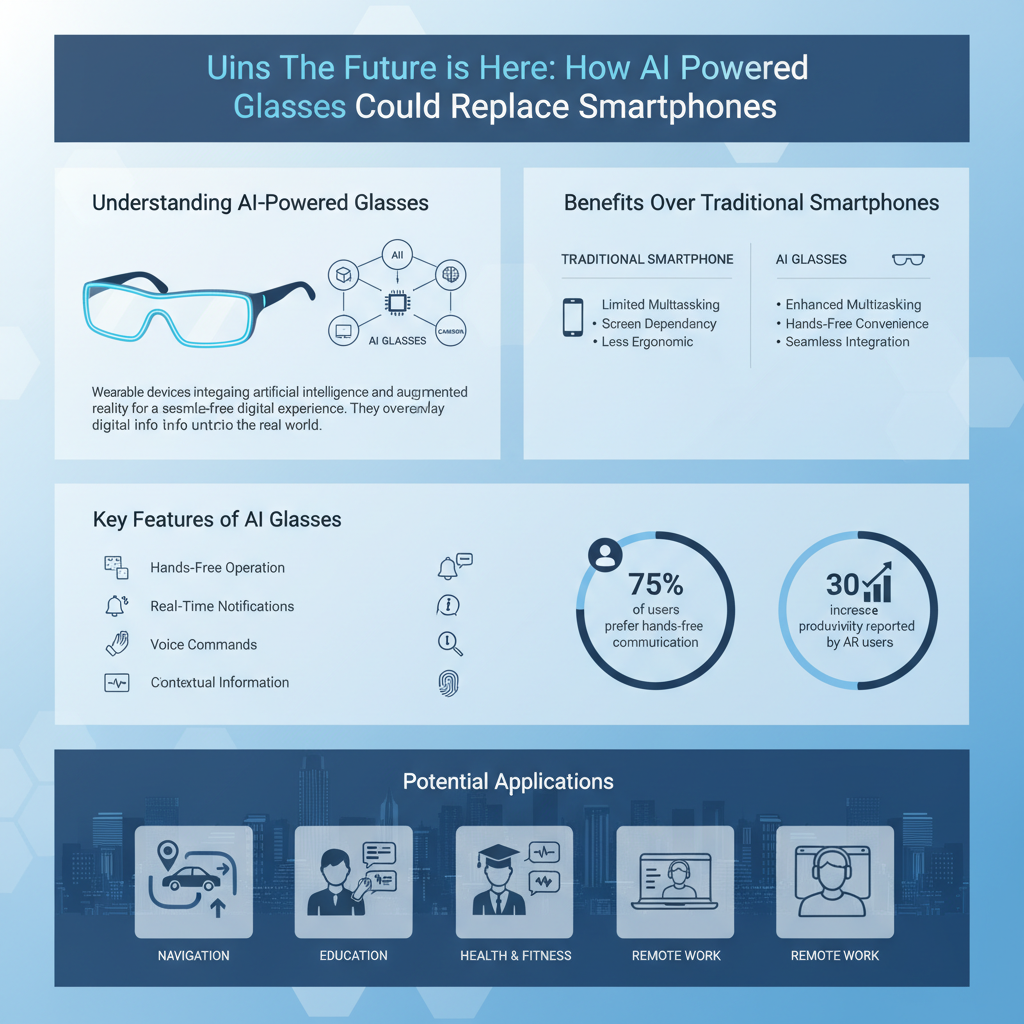
AI-powered glasses are designed to enhance our everyday lives by merging the digital world with the physical environment. They utilize augmented reality to overlay digital information onto our real-world view, making it easier to access relevant data at a glance. With built-in AI capabilities, these glasses can learn from user behavior and adapt to provide a more personalized experience. For instance, by simply glancing at a notification, users can receive instant updates about their emails, messages, or calendar events, all displayed right in their line of sight. This hands-free approach not only keeps users informed but also allows them to remain engaged with their surroundings, fostering a seamless blend of technology and daily life.
Key Features of AI Glasses

One of the standout features of AI-powered glasses is their voice recognition capabilities. This feature allows users to interact with the device using simple voice commands, making it incredibly convenient, especially when multitasking. For example, a user could ask the glasses for directions while cooking, without ever needing to touch a screen. Additionally, many AI glasses come equipped with built-in cameras that can capture high-quality photos and videos. This functionality enables instant sharing on social media or recording important moments, all without the hassle of pulling out a smartphone. Imagine being at a concert, and instead of fumbling with your phone, you simply tap your glasses to take a picture or stream the performance live to your friends!
Benefits Over Traditional Smartphones
The benefits of AI-powered glasses extend far beyond mere convenience. One of the most significant advantages is the immersive experience they offer. By providing contextual information based on the user’s environment, these glasses can enhance daily tasks in ways smartphones simply cannot. For instance, a mechanic could see real-time diagnostics overlaid on a vehicle, making repairs more efficient and accurate. Moreover, by allowing users to keep their hands free, AI glasses promote multitasking like never before. A parent could monitor their child while checking work emails or a cyclist could navigate their route without needing to stop and check their phone.
Potential Applications
The versatility of AI-powered glasses makes them suitable for a wide range of applications across various industries. In healthcare, for example, surgeons could use these glasses to access patient records or display critical information during procedures, thereby improving precision and outcomes. In education, students could interact with digital learning materials and receive real-time feedback, creating a more engaging learning environment. The logistics sector also stands to benefit, as warehouse workers could utilize these glasses for inventory management, receiving hands-free instructions that enhance efficiency. Beyond professional settings, AI glasses could transform how we consume media. Imagine watching a movie where you can see additional content or interact with characters in real-time, creating an immersive experience that goes beyond traditional screens.
Challenges to Overcome
Despite their promising potential, AI-powered glasses face several challenges that must be addressed before they can achieve widespread acceptance. One of the primary concerns is privacy. With built-in cameras and constant connectivity, there are legitimate fears about data collection and surveillance. Manufacturers will need to implement stringent privacy measures to assure users their data is secure. Additionally, the design of these glasses must evolve. Current models often look bulky or techy, which may deter users from incorporating them into their daily lives. Stylish, comfortable designs that cater to fashion-conscious consumers are essential for encouraging everyday use and acceptance.
Future Outlook
Looking ahead, the future of AI-powered glasses is bright. As technology continues to advance, we can expect these devices to integrate seamlessly with other smart technologies, creating an interconnected ecosystem. For example, AI glasses could sync with smart home devices, allowing users to control their environment with simple voice commands or gestures. Furthermore, continuous improvements in battery life, display quality, and processing power will only enhance the user experience, making these glasses even more appealing. Companies are already investing heavily in research and development to bring more advanced features to market, paving the way for a new era of personal technology.
The increasing capabilities of AI-powered glasses indicate a future where smartphones may take a backseat in everyday technology use. These innovative devices promise to enhance our lives by providing hands-free access to information, enriching our experiences, and freeing us to engage more fully with the world around us. If you’re interested in staying ahead of the curve, now is the time to explore the potential of AI-powered glasses and consider how they might fit into your life. Keep an eye on this exciting trend, as it could very well change the way we communicate, learn, and interact with technology forever.
Frequently Asked Questions
How can AI-powered glasses replace smartphones in daily life?
AI-powered glasses can replace smartphones by integrating augmented reality (AR) features that allow users to access information hands-free. These glasses can display notifications, navigation directions, and even respond to voice commands, streamlining everyday tasks without the need to pull out a smartphone. This shift not only increases convenience but also encourages more natural interactions with technology in our daily routines.
What are the main benefits of using AI glasses instead of smartphones?
The main benefits of AI glasses over smartphones include enhanced convenience, improved multitasking capabilities, and a more immersive user experience. For example, users can receive notifications or view maps directly in their line of sight, reducing the need to look down at a device. Additionally, hands-free operation allows for safer navigation when walking or driving, making AI glasses a compelling alternative to traditional smartphones.
Why are AI-powered glasses considered the future of mobile technology?
AI-powered glasses are considered the future of mobile technology due to their potential to revolutionize how we interact with digital information. As they incorporate advanced features like facial recognition, real-time translation, and personalized recommendations, these glasses can provide a seamless blend of the digital and physical worlds. This innovation could lead to a more intuitive user experience as technology becomes more embedded in our everyday lives.
Which brands are leading the development of AI-powered glasses?
Several brands are at the forefront of developing AI-powered glasses, including Google with their Project Glass, Facebook (now Meta) with its Ray-Ban Stories, and Apple, which is rumored to be working on its own AR glasses. These companies are investing heavily in research and development to integrate AI capabilities, like voice recognition and augmented reality, into their eyewear, making them strong contenders in the market.
How do AI-powered glasses enhance productivity compared to smartphones?
AI-powered glasses enhance productivity by allowing users to access information and complete tasks without interrupting their workflow. With features such as real-time notifications, voice commands, and the ability to overlay information on their environment, users can stay focused on their tasks while still managing communication and information needs. This level of efficiency can be particularly beneficial in professional settings where multitasking is essential.
References
- https://www.bbc.com/news/technology-58638832
- https://www.theguardian.com/technology/2021/sep/29/apple-glasses-smartphone-replacement
- https://www.sciencedirect.com/science/article/pii/S1877050920301896
- https://www.wired.com/story/ai-glasses-smartphone-replacement/
- https://www.nytimes.com/2021/09/29/technology/apple-glasses.html
- https://www.forbes.com/sites/hilarykrane/2021/10/01/the-future-of-smart-glasses-is-not-just-about-augmented-reality/
- https://www.techcrunch.com/2021/09/30/how-smart-glasses-may-change-the-way-we-use-technology/