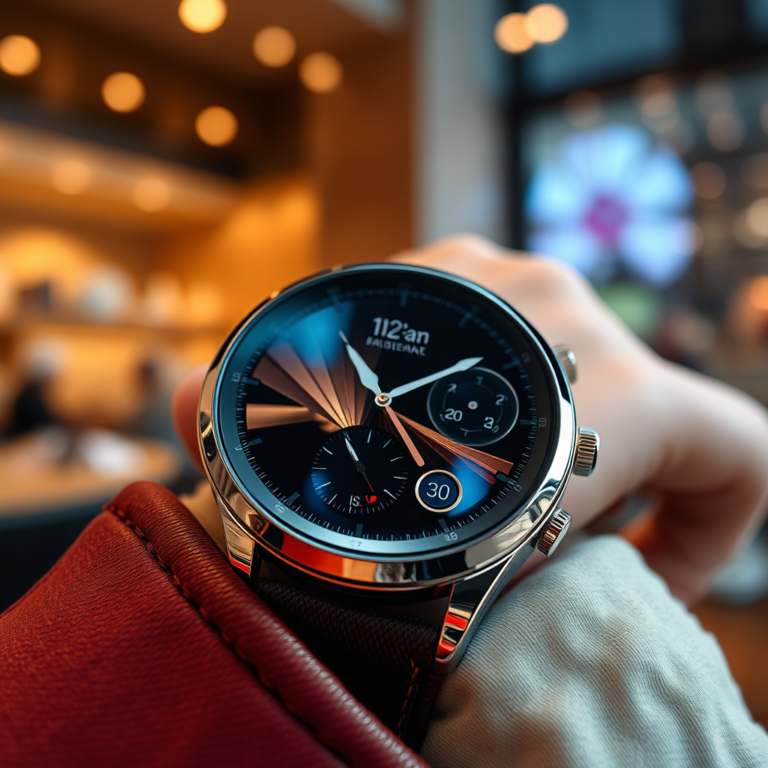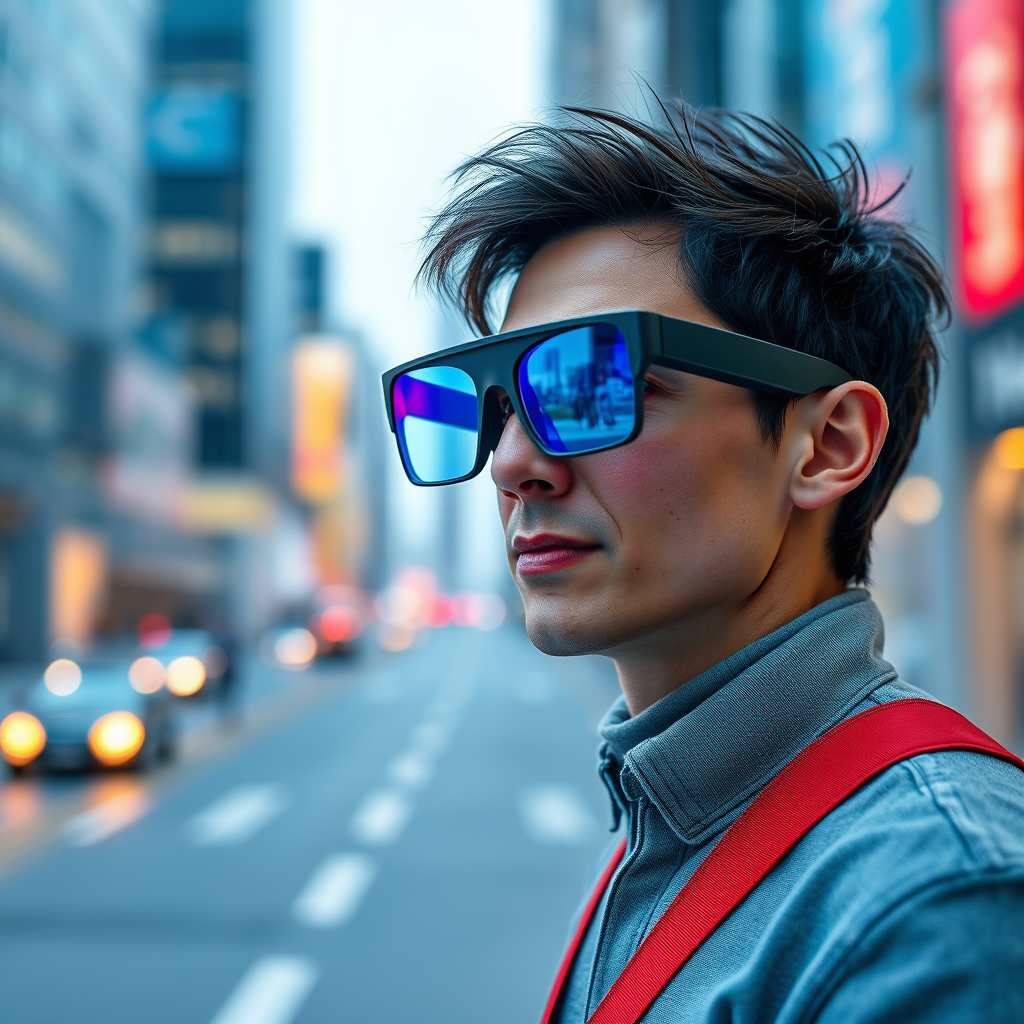

Smart glasses equipped with augmented reality (AR) displays are revolutionizing navigation by overlaying digital information onto the real world, enhancing the way users interact with their environment. This technology allows users to access essential navigation data, such as directions and points of interest, without diverting their attention from what’s in front of them. In this article, you’ll discover how these innovative devices work, their benefits, and their applications in various settings.
Understanding AR Technology in Smart Glasses

AR technology blends digital content with the real world, providing real-time information that enhances user experience and interaction. Smart glasses equipped with AR displays utilize various sensors, cameras, and GPS technology to track the user’s surroundings and position. This integration makes it possible to overlay crucial navigation data directly onto the user’s field of view, allowing for a more intuitive and immersive experience.
For instance, when a user walks through an unfamiliar city, AR glasses can recognize landmarks, streets, and other geographical features while displaying relevant information such as historical facts or nearby restaurants. The ability to interact with the environment in this way not only makes navigation simpler but also enriches the overall experience of exploring new places.
Key Features of AR Displays for Navigation
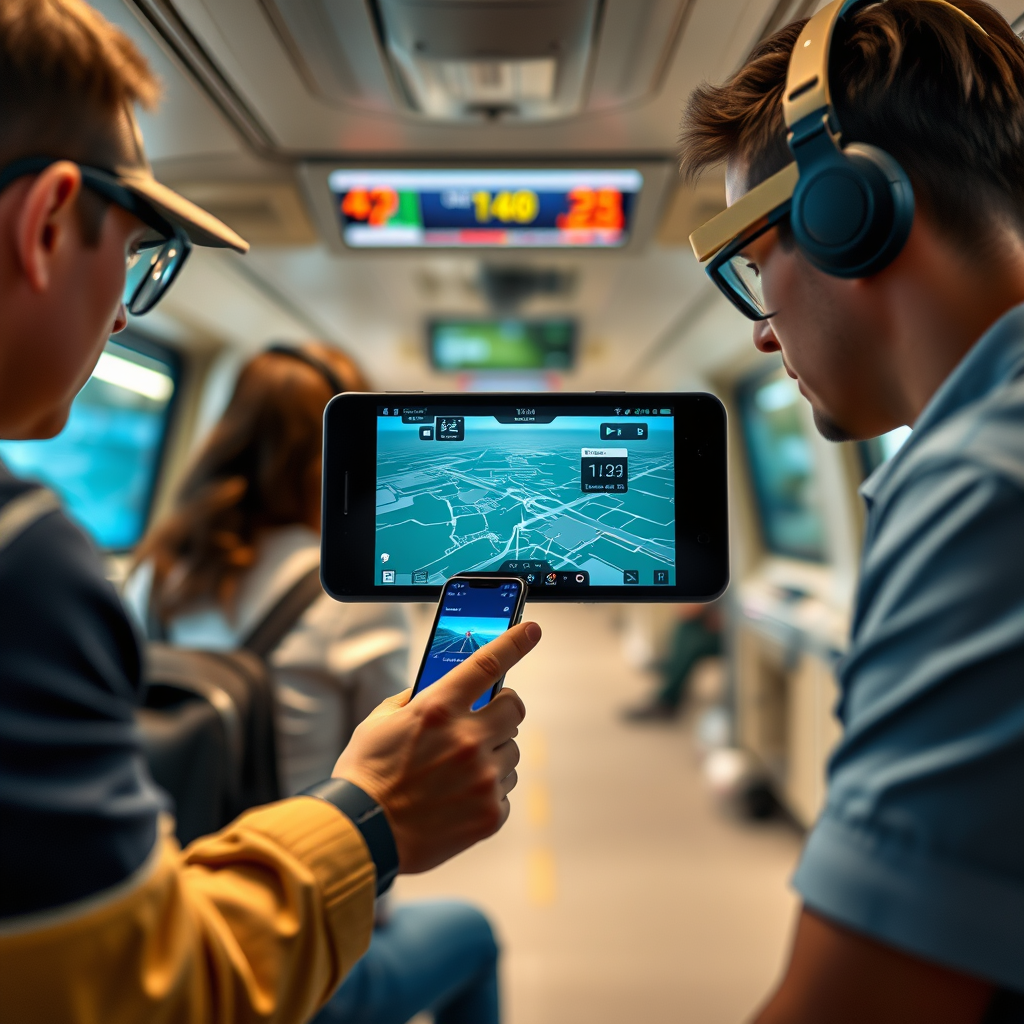
One of the standout features of AR displays for navigation is their high-definition visual output. These displays project navigation cues, such as arrows or highlighted paths, directly into the user’s field of vision. This means that instead of looking down at a handheld device, users can keep their eyes on the road, enhancing both safety and convenience.
In addition to visual cues, smart glasses often include voice command functionalities and touch controls. This hands-free operation is particularly beneficial for activities such as cycling or driving, where distractions could lead to accidents. Imagine biking through a park while being able to ask your glasses for directions to the nearest café, and receiving both audio and visual guidance without having to stop. This seamless integration of navigation tools into everyday activities significantly enhances user experience.
Real-World Applications of AR Navigation
The applications of AR navigation are extensive and varied, making this technology suitable for numerous settings. In outdoor activities, for instance, AR displays can enhance experiences such as hiking and biking. Imagine trekking through a dense forest and having a digital map overlay that shows you the best trails and points of interest, including scenic viewpoints or historical markers. This capability not only aids in navigation but also enriches the outdoor experience by providing additional context about the surroundings.
In urban environments, AR navigation shines through by offering turn-by-turn directions and highlighting points of interest in real-time. Users can receive notifications about nearby attractions, restaurants, or shops as they walk, ensuring they never miss out on potential experiences. For example, if you’re exploring a new city, your smart glasses could alert you to a local market just around the corner, complete with a virtual guide showing you how to get there. This dynamic interaction between the user and their environment opens up a world of possibilities.
Benefits of Using AR Displays in Smart Glasses for Navigation
The benefits of using AR displays in smart glasses for navigation are profound. One of the most significant advantages is the increased situational awareness they provide. By allowing users to see their surroundings while accessing navigation data, AR glasses enhance safety and prevent accidents that may occur when looking down at a smartphone.
Additionally, the hands-free operation reduces the need for handheld devices, promoting a more convenient and fluid experience. Users can navigate through their environment without needing to pause and fumble with a phone, which is particularly helpful in busy urban settings or while engaging in physical activities like jogging or cycling. This convenience encourages more people to explore new areas, knowing they have reliable navigation at their fingertips without compromising safety.
Challenges and Limitations of AR Navigation
Despite the exciting potential of AR navigation, there are challenges and limitations that need to be addressed. One primary concern is battery life. AR displays require significant power to function effectively, particularly when displaying high-definition graphics and processing real-time data. Users may find themselves needing to recharge their devices frequently, which can be inconvenient during long outings.
Another challenge is the potential for distractions. If the information displayed is overwhelming or poorly designed, it could detract from the user’s ability to navigate safely. Developers must carefully consider the balance of information presented to ensure users are not overloaded with data, allowing them to focus on their surroundings while still receiving valuable guidance.
Future Trends in AR Navigation Technology
The future of AR navigation technology looks promising, with advancements in artificial intelligence (AI) and machine learning paving the way for more personalized and intelligent navigation experiences. Imagine a smart glasses system that learns your preferences over time, suggesting routes based on your past travels or even recommending stops based on your interests.
Moreover, integration with other smart devices and systems is likely to enhance the AR navigation experience further. For instance, synchronization with smart home devices could allow users to receive updates about their route while at home, preparing them for their journey ahead. This interconnectedness will create a seamless navigation experience that is more intuitive and user-friendly.
Smart glasses with AR displays are transforming how we navigate our surroundings, making it easier and safer to explore the world. By understanding the technology, benefits, and future trends, you can be at the forefront of this exciting innovation. As AR navigation technology continues to evolve, consider exploring your options for AR smart glasses to enhance your own navigation experiences. Whether you’re an adventurer, a city explorer, or simply looking to make your daily commute more efficient, AR displays in smart glasses offer a unique solution that blends the digital with the physical world.
Frequently Asked Questions
What are AR displays in smart glasses and how do they enhance navigation?
Augmented Reality (AR) displays in smart glasses overlay digital information onto the real-world environment, providing users with enhanced navigation experiences. By integrating GPS data, AR displays can show real-time directions, points of interest, and contextual information directly in the user’s field of vision, allowing for hands-free navigation without the need to consult a smartphone.
How do AR smart glasses provide directions while walking or driving?
AR smart glasses utilize a combination of GPS, sensors, and visual recognition to deliver navigation instructions seamlessly. When walking, they may project arrows or pathways onto the street, while in driving mode, they can overlay navigation prompts on the windshield or provide heads-up displays that indicate turns and distance to the next waypoint, ensuring that users remain focused on their surroundings.
Why are AR displays in smart glasses considered beneficial for navigation compared to traditional methods?
AR displays in smart glasses offer several advantages over traditional navigation methods, including enhanced situational awareness and reduced distraction. By providing information directly in the user’s line of sight, AR minimizes the need to look down at a phone or other device, thus improving safety and efficiency while navigating complex environments, such as busy city streets or unfamiliar areas.
What are the best smart glasses with AR capabilities for navigation available today?
Some of the best smart glasses with AR capabilities for navigation include the Microsoft HoloLens, Google Glass Enterprise Edition, and Vuzix Blade. These devices are equipped with advanced AR technology, offering features like voice commands, real-time updates, and integration with navigation apps, making them ideal for both personal and professional navigation needs.
Which navigation apps are compatible with AR smart glasses for enhanced guidance?
Popular navigation apps that are compatible with AR smart glasses include Google Maps, Waze, and Citymapper. These applications can leverage AR technology to provide immersive navigation experiences, such as augmented routes, visual landmarks, and contextual information, making it easier for users to navigate unfamiliar locations effectively.
References
- Smartglasses
- https://www.sciencedirect.com/science/article/abs/pii/S0360132319301362
- https://www.nytimes.com/2021/05/10/technology/augmented-reality-smart-glasses.html
- https://www.bbc.com/future/article/20200909-how-augmented-reality-will-change-the-way-we-navigate
- https://www.researchgate.net/publication/327470193_The_Use_of_Augmented_Reality_in_Navigation
- https://www.ncbi.nlm.nih.gov/pmc/articles/PMC7213480/
- https://www.wired.com/story/augmented-reality-navigation-apps/
- https://www.techrepublic.com/article/how-ar-is-changing-the-way-we-navigate-our-world/
- https://www.gartner.com/en/newsroom/press-releases/2021-10-06-gartner-says-three-emerging-technology-trends-will-accelerate-the-innovation-journey-for-organizations-in-2022