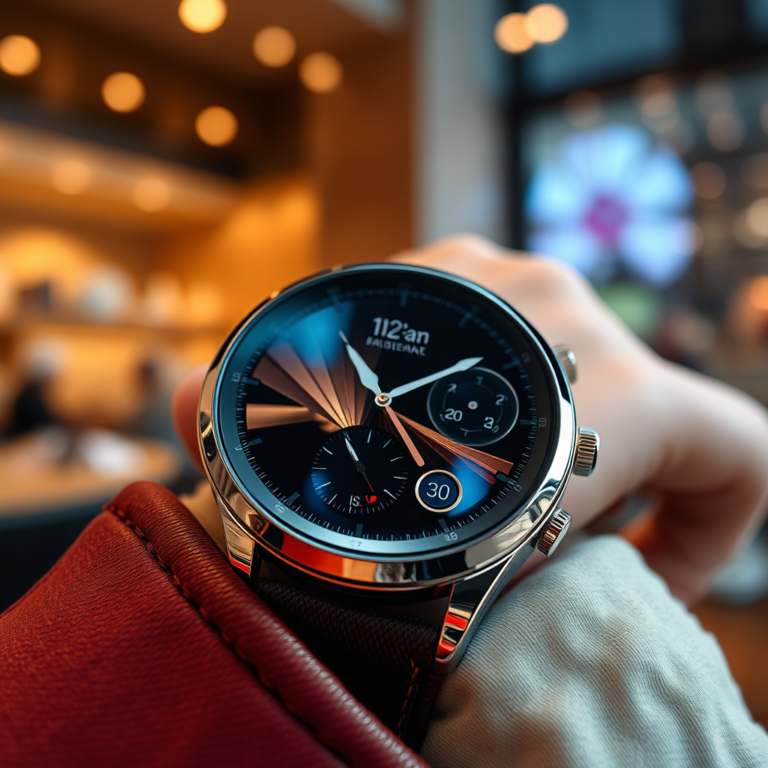

The integration of AI in wearable display interfaces is transforming how we engage with technology, making our interactions more intuitive and personalized. By leveraging advanced algorithms and machine learning, wearables like smartwatches and augmented reality (AR) glasses can adapt to our needs, providing proactive insights and enhancing user experiences. This article delves into the various ways AI enriches functionality, elevates user interaction, and drives innovation in wearable devices, emphasizing its revolutionary potential.
Understanding Wearable Display Interfaces

Wearable display interfaces refer to technology that can be worn on the body and includes devices such as smartwatches, fitness trackers, and AR glasses. These devices typically feature small screens that provide users with real-time information and notifications. Smartwatches, for instance, not only tell time but also allow users to track health metrics, receive messages, and control other smart devices. AR glasses overlay digital information onto the real world, enhancing our perception and interaction with our surroundings.
The importance of user interaction in wearables cannot be overstated. With the increasing amount of data available to users, effective data visualization becomes crucial. Users need to quickly understand their stats, whether it’s tracking fitness goals or navigating through notifications. A well-designed interface can make this information accessible, engaging, and actionable, leading to a more satisfying user experience.
AI’s Impact on User Experience

AI significantly enhances the user experience by personalizing content and recommendations based on individual behavior. Imagine a smartwatch that learns your daily routines and preferences—suggesting workouts, reminders, or even the best times to hydrate based on your activity levels. AI algorithms analyze data from users, enabling wearables to present tailored suggestions that resonate with their users’ lifestyles.
Moreover, adaptive interfaces are a game-changer. These interfaces can learn and evolve over time, adjusting to how users interact with their devices. For instance, if a user frequently checks their messages during morning commutes, the wearable might prioritize message notifications during that time. This level of personalization ensures that the technology feels seamless and intuitive, which encourages users to engage more with their devices.
Enhancing Functionality through AI
AI empowers wearable devices to process data in real-time, delivering actionable insights that enhance functionality. For example, a fitness tracker equipped with AI can analyze heart rate data and provide immediate feedback on the user’s performance during exercise. It can recommend when to push harder or when to take a breather, effectively optimizing workouts for better results.
Integration with health and fitness tracking is another area where AI shines. Devices can now monitor various health parameters like sleep patterns, stress levels, and physical activity, providing comprehensive insights that can lead to improved health outcomes. For instance, if a smartwatch detects irregular heart activity, it can alert the user to seek medical attention, acting as a proactive health companion.
The Role of Machine Learning in Wearables
Machine learning lies at the heart of many AI-driven features in wearables. By utilizing complex algorithms, these devices can analyze vast amounts of user data to uncover patterns and trends. For example, a smartwatch may track a user’s sleeping habits over several weeks to determine the best bedtime for optimal rest.
Predictive analytics is another powerful application of machine learning in wearables. This technology anticipates user needs and actions, allowing for a more proactive approach. If a user regularly exercises at a specific time, the wearable can suggest preparing a workout playlist or setting reminders to stay motivated. By understanding user behavior, wearables can enhance their utility and foster a deeper connection with users.
Challenges and Limitations of AI in Wearables
Despite the numerous benefits, challenges remain in the integration of AI into wearable devices. Privacy concerns are paramount, as users must trust that their data is handled responsibly. With devices continuously collecting personal health and activity data, it’s essential for manufacturers to prioritize transparency and security in their data practices. Users should feel confident that their information is safeguarded from unauthorized access.
Additionally, technical limitations can hinder the effectiveness of AI in wearables. Processing power and battery life are crucial factors that impact performance. Current wearable devices need to balance advanced features with energy efficiency, ensuring that users can rely on their devices throughout the day without frequent recharging. As technology evolves, overcoming these limitations will be key to unlocking the full potential of AI in wearable interfaces.
Future Trends in AI and Wearable Displays
Looking ahead, the future of AI in wearable displays is brimming with exciting innovations. Augmented reality is poised to revolutionize how we interact with our environment, offering immersive experiences that blend digital and physical worlds. For example, AR glasses could provide real-time navigation assistance, overlaying directions directly onto the user’s field of vision.
Advanced sensors are also on the horizon, enabling wearables to gather even more nuanced data about users. Imagine devices that can detect subtle changes in mood or environmental conditions, offering personalized suggestions that enhance well-being. The potential for AI to create more immersive and interactive experiences is limitless, and as technology continues to advance, wearables will likely become even more integral to our daily lives.
The integration of AI into wearable display interfaces is reshaping the landscape of personal technology. As we have explored, it enhances user experience, improves functionality, and paves the way for future advancements. Embrace the ongoing evolution of wearable technology and stay informed about new developments that can enhance your daily life. By understanding the role of AI in wearables, you can make more informed choices about the devices that best suit your needs and lifestyle.
Frequently Asked Questions
What are wearable display interfaces and how do they incorporate AI?
Wearable display interfaces are devices, such as smart glasses, smartwatches, and augmented reality headsets, that present information directly to the user while being worn. They incorporate AI technologies to enhance user experience by providing personalized content, contextual information, and intuitive interactions. For example, AI can analyze user behavior and preferences to offer tailored notifications or adapt the display brightness based on environmental conditions.
How does AI improve the functionality of wearable display interfaces?
AI significantly enhances the functionality of wearable display interfaces by enabling features like voice recognition, gesture control, and real-time translation. These advancements allow users to interact with their devices more naturally and efficiently, reducing the need for physical inputs. Additionally, AI algorithms can process data from sensors to provide actionable insights, such as health monitoring metrics or navigation assistance, improving the overall usability of these devices.
Why is AI critical for the future of wearable display technology?
AI is critical for the future of wearable display technology because it empowers devices to become smarter, more intuitive, and more responsive to user needs. By leveraging machine learning and data analytics, AI can predict user preferences and automate tasks, making devices not just tools but personalized companions. As the demand for seamless integration of technology into daily life grows, AI will play a pivotal role in advancing the capabilities of wearable devices, ensuring they remain relevant and practical.
Which industries benefit the most from AI-driven wearable display interfaces?
Several industries benefit significantly from AI-driven wearable display interfaces, including healthcare, logistics, and entertainment. In healthcare, these devices can monitor patient vitals and provide real-time analytics, improving patient care. In logistics, augmented reality glasses can assist workers in warehouse management by displaying inventory information and navigation paths. Meanwhile, in entertainment, AI can enhance user experiences in gaming and media consumption through immersive augmented reality applications.
What are the best examples of AI applications in wearable display interfaces today?
Some of the best examples of AI applications in wearable display interfaces include Google Glass, which uses AI for voice commands and contextual information display, and the Apple Watch, which offers health monitoring features powered by AI algorithms. Other notable examples include Microsoft HoloLens, which utilizes AI for spatial mapping and interactive experiences, and fitness trackers that leverage AI to analyze user activity patterns and provide personalized fitness recommendations. These devices exemplify how AI can enhance functionality and user engagement in wearable technology.
References
- Wearable technology
- https://www.sciencedirect.com/science/article/pii/S1877050921002458
- https://www.nature.com/articles/s41598-021-03807-0
- https://www.ncbi.nlm.nih.gov/pmc/articles/PMC7318225/
- https://www.bbc.com/future/article/20210729-how-ai-is-changing-wearable-technology
- https://www.researchgate.net/publication/331321021_Artificial_Intelligence_in_Wearable_Technology
- https://www.usatoday.com/story/tech/2021/09/29/how-ai-wearable-tech-changes-healthcare/5862075001/
- https://www.frontiersin.org/articles/10.3389/frai.2021.00001/full