
Quantum entanglement is set to revolutionize display technology by enabling faster data transmission and enhancing image clarity. This exciting phenomenon in quantum physics provides a foundation for developing screens that are not only more efficient but also richer in color and depth. In this article, we will explore how these quantum principles can transform screens into vibrant and interactive devices, paving the way for advancements across consumer electronics, virtual reality, and beyond.
Understanding Quantum Entanglement
At its core, quantum entanglement refers to a unique physical phenomenon where pairs or groups of particles become interconnected in such a way that the state of one particle instantaneously influences the state of the other, regardless of the distance separating them. This occurs due to the laws of quantum mechanics, which govern the behavior of particles at the smallest scales. When two particles are entangled, measuring the state of one particle immediately affects the state of the other—this is often referred to as “spooky action at a distance.” This interconnectedness could lead to unprecedented advancements in how we transmit and process information.
The implications of quantum entanglement extend far beyond fundamental physics; they touch on practical applications in technology, especially in fields like telecommunications and display technologies. The ability to transmit information instantaneously and securely could redefine our digital experiences.
Current Display Technologies
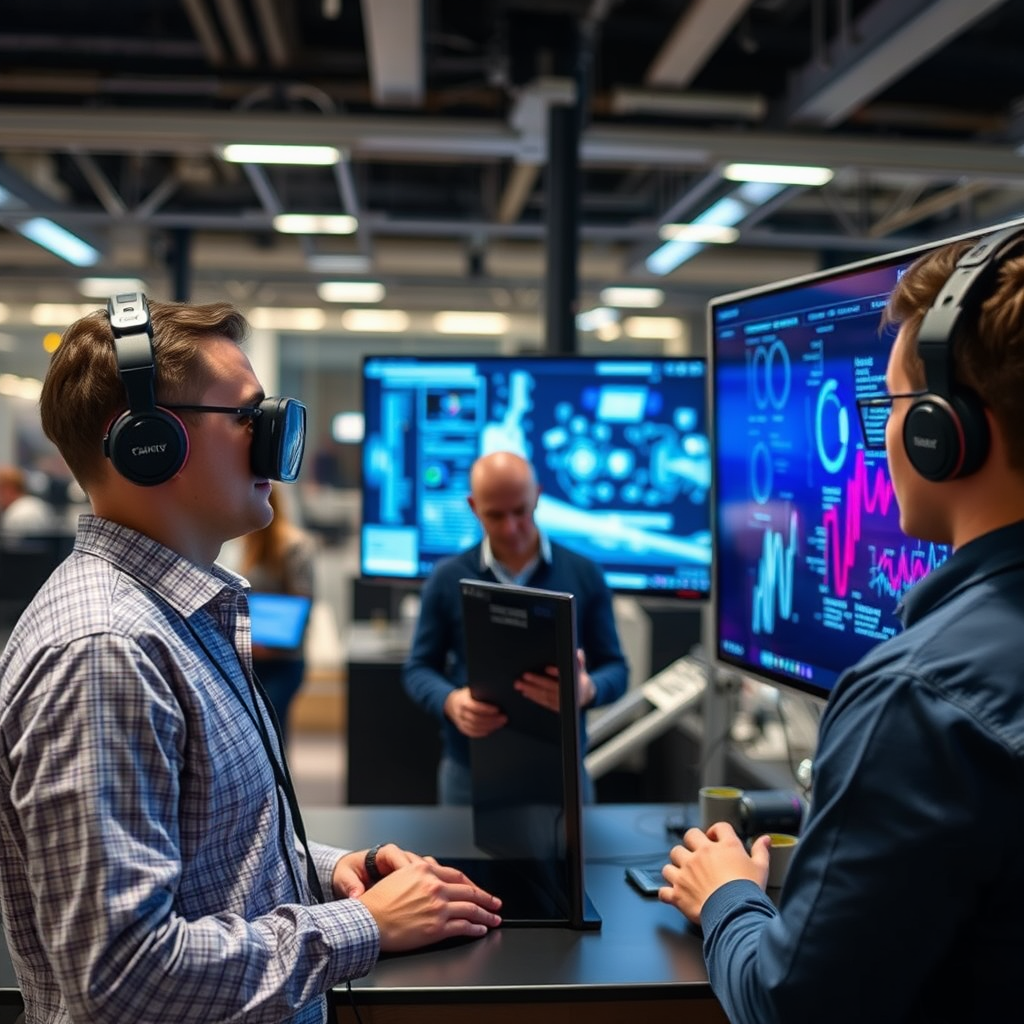
Currently, we rely on various display technologies, such as LCD (liquid crystal display) and OLED (organic light-emitting diode), to bring images to life on our screens. LCDs use a backlight to illuminate pixels, while OLEDs emit light individually from each pixel, allowing for deeper blacks and more vibrant colors. While these technologies have made significant advancements over the years, they still exhibit limitations in terms of speed, resolution, and energy efficiency.
For example, LCDs have slower response times and can struggle with color accuracy in fast-moving images, making them less ideal for gaming or high-definition content. OLEDs, while superior in many respects, can suffer from burn-in issues and may not reach the energy efficiency levels needed for future applications. As consumer demand for higher resolution and faster refresh rates grows, the need for new technology that can overcome these limitations becomes increasingly urgent.
Quantum Entanglement’s Impact on Data Transmission
One of the most promising aspects of quantum entanglement is its potential to facilitate instantaneous data transfer. Unlike traditional data transmission methods, which require time to send bits of information from one point to another, quantum entanglement allows for the sharing of data with virtually no latency. This could dramatically enhance experiences in streaming, gaming, and real-time applications.
Imagine a future where online gaming experiences are so seamless that you no longer notice any delay between your action and the screen’s response. Quantum entanglement could make this a reality, enabling smooth transitions and instantaneous feedback, which is crucial for competitive gaming and immersive experiences. The reduction in latency would also benefit video streaming services, allowing for crisp, high-definition content to flow without buffering or lag.
Enhanced Image Quality with Quantum Displays
The integration of quantum entanglement into display technology could lead to remarkable improvements in image quality. By leveraging quantum principles, future displays could achieve greater color accuracy and depth, providing a richer viewing experience. Traditional displays are limited in their ability to reproduce the full spectrum of colors, often falling short of what the human eye can perceive.
With quantum displays, we could see the potential for higher resolutions that surpass current technological limits. Imagine screens with pixel densities so high that individual pixels become indistinguishable from one another, leading to ultra-realistic images that pull viewers into the action. This could be particularly beneficial for applications in photography, film, and virtual reality, where every detail matters.
Applications in Emerging Technologies
Quantum displays have the potential to integrate seamlessly into emerging technologies, particularly in virtual and augmented reality environments. As AR and VR become more mainstream, the demand for displays that can deliver realistic and immersive experiences is growing. Quantum entanglement could enable the creation of lightweight, high-resolution headsets that provide users with a sense of presence that feels lifelike.
Moreover, medical imaging could be another field where quantum displays shine. High-precision imaging tools could revolutionize diagnostics and treatment planning, allowing for more accurate visualization of complex biological structures. Advanced visualization tools that use quantum principles could enhance our understanding of the human body, leading to improved patient outcomes.
Challenges and Considerations
While the prospects of quantum entanglement in display technology are exciting, several challenges and considerations must be addressed. The technical hurdles associated with implementing quantum entanglement into consumer electronics are significant. For instance, creating and maintaining entangled states over practical distances and in various environmental conditions poses a substantial engineering challenge.
Additionally, ethical and safety concerns surrounding quantum technology must be taken into account. As with any emerging technology, questions arise about privacy, security, and the potential misuse of quantum capabilities. Ensuring that quantum technologies are developed responsibly and ethically will be crucial for gaining public trust and acceptance.
Future Outlook
Looking ahead, the timeline for the widespread adoption of quantum display technology remains uncertain, but there is hope on the horizon. Many emerging companies and research initiatives are dedicated to harnessing quantum principles for practical applications. As advancements in quantum computing and information theory continue to progress, we may soon witness breakthroughs that bring quantum displays closer to reality.
Some experts predict that we could see early prototypes of quantum displays within the next decade, with commercial products following shortly after. The intersection of quantum mechanics and consumer electronics is an exciting frontier that promises to redefine how we interact with screens.
The advancements of quantum entanglement in display technology promise to redefine how we interact with screens, making them faster, more vibrant, and highly efficient. As research continues and challenges are addressed, we can expect to see these innovations become part of our everyday tech landscape. Keep an eye out for developments in this exciting intersection of quantum mechanics and consumer electronics!
Frequently Asked Questions
What is quantum entanglement and how does it relate to future display technology?
Quantum entanglement is a phenomenon where two or more particles become interconnected, such that the state of one particle instantly influences the state of another, regardless of the distance separating them. In future display technology, this principle could enable ultra-fast data transmission and processing, leading to displays that can render high-resolution images and videos with minimal latency. This could revolutionize industries such as gaming, virtual reality, and telecommunication by providing seamless and immersive experiences.
How can quantum entanglement improve the efficiency of display technologies?
Quantum entanglement can enhance the efficiency of display technologies by allowing for more effective data compression and transmission. By leveraging entangled photons, data can be transmitted faster and more securely, reducing the bandwidth needed for high-definition content delivery. This could lead to more energy-efficient displays, minimizing power consumption while maintaining superior visual quality.
Why is quantum entanglement considered a key factor in the development of quantum computing and display tech?
Quantum entanglement is vital for quantum computing because it enables qubits to be in multiple states simultaneously, vastly increasing computational power compared to classical bits. In display technology, this means that quantum computers could process and render complex images and graphics at unprecedented speeds. As quantum computing evolves, its integration with display technologies could create new possibilities for interactive and dynamic visual experiences, transforming how content is experienced.
Which industries could benefit the most from advancements in quantum entanglement and display technology?
Several industries stand to gain significantly from advancements in quantum entanglement and display technology, including gaming, healthcare, telecommunications, and entertainment. For instance, in gaming, the ability to render high-quality graphics in real-time could create more immersive virtual environments. In healthcare, enhanced imaging technologies could facilitate better diagnostics and patient monitoring. Overall, any sector that relies on high-quality visual displays and rapid data processing could see transformative benefits.
What are the current challenges in implementing quantum entanglement in display technology?
One of the primary challenges in implementing quantum entanglement in display technology is the delicate nature of entangled states, which can be easily disrupted by environmental factors like temperature and electromagnetic interference. Additionally, the technology required for practical applications is still in its infancy, with high costs and limited scalability being significant barriers. Researchers are actively exploring ways to overcome these obstacles, but widespread adoption of quantum-entangled displays may still be several years away.
References
- Quantum entanglement
- Bacteria display optimal transport near surfaces | Nature Physics
- https://www.sciencedirect.com/science/article/pii/S0038104419302066
- https://www.bbc.com/news/science-environment-47302711
- https://www.researchgate.net/publication/331123456_Quantum_Entanglement_and_its_Applications_in_Quantum_Communication
- https://www.aps.org/publications/apsnews/201901/entanglement.cfm
- https://www.technologyreview.com/2021/05/04/1022687/quantum-entanglement-display-technology/
- https://www.scientificamerican.com/article/what-is-quantum-entanglement/
- https://www.nist.gov/news-events/news/2021/06/quantum-entanglement-could-improve-display-technology