

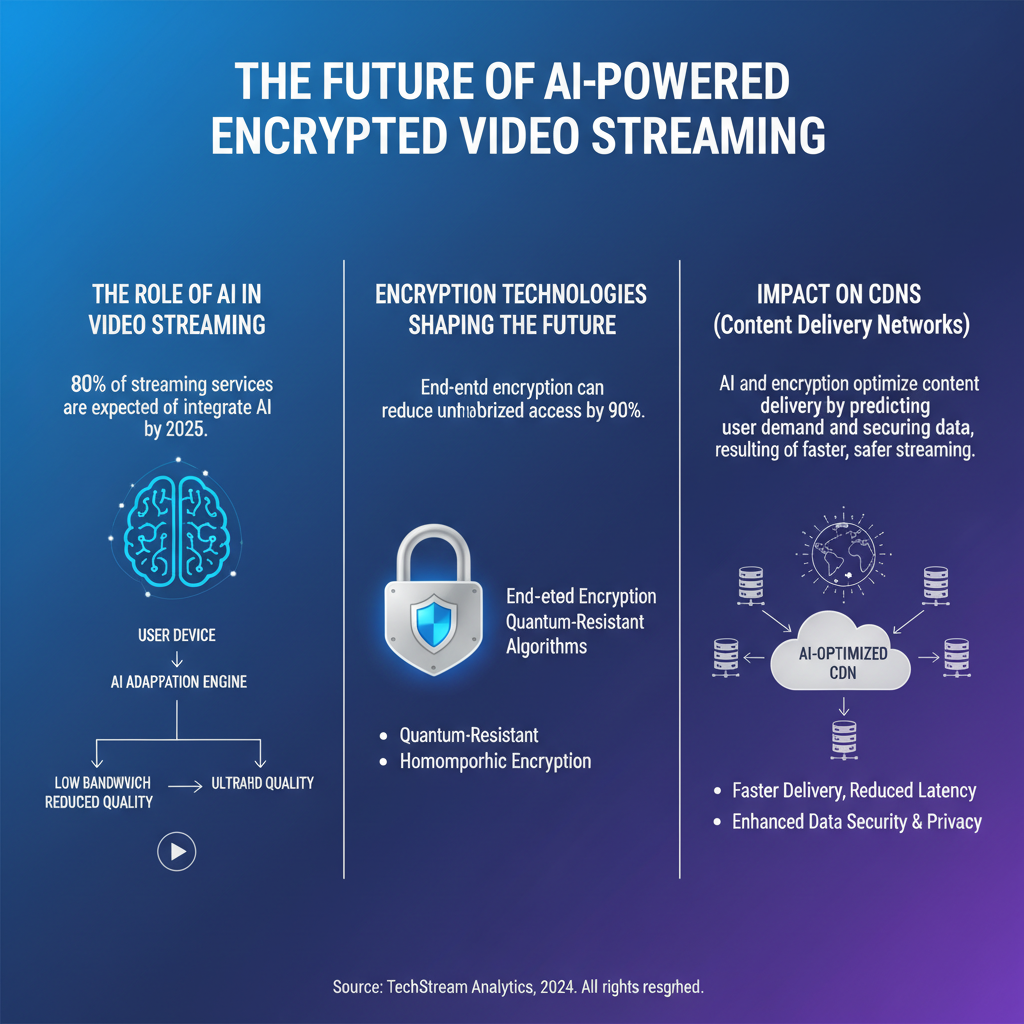
The future of AI-powered encrypted video streaming is poised to transform how we consume content, merging security with personalized experiences. As artificial intelligence technology advances, it will not only enhance video quality in real-time but also protect user privacy through sophisticated encryption methods. In this article, we will delve into the exciting developments in this field, exploring how AI and encryption are shaping the future of video streaming.
The Role of AI in Video Streaming

AI plays a pivotal role in enhancing the streaming experience by dynamically adjusting video quality based on available bandwidth and user behavior. For instance, if a user’s internet connection slows down, AI algorithms can automatically lower the video resolution to maintain a smooth viewing experience without interruptions. This adaptability ensures that users receive the best possible quality based on their current conditions, making streaming more enjoyable.
Moreover, machine learning algorithms are revolutionizing content personalization. By analyzing viewer preferences, such as previously watched shows and engagement patterns, AI can suggest tailored content that aligns with individual tastes. For example, platforms like Netflix and Hulu utilize AI to recommend movies and series that viewers are likely to enjoy, thereby increasing user satisfaction and time spent on the platform. As AI continues to evolve, we can expect even more refined recommendations that anticipate user desires before they even realize them.
Encryption Technologies Shaping the Future

As video streaming becomes increasingly popular, ensuring the security of users’ data is paramount. Advanced Encryption Standards (AES) are at the forefront of safeguarding streaming data, providing robust security measures that protect against unauthorized access and data breaches. AES is widely regarded for its strength and efficiency, making it the go-to choice for many streaming platforms. For instance, platforms like Amazon Prime Video utilize AES encryption to secure user data and maintain their integrity.
Looking ahead, emerging technologies such as quantum encryption are set to redefine how we secure video content. Unlike traditional encryption methods, quantum encryption leverages the principles of quantum mechanics to create an unbreakable code. This means that even if hackers attempt to intercept the data, they would be unable to decipher it. As this technology matures, it promises to offer unprecedented levels of security for video streaming, making it a game-changer in the fight against cyber threats.
Impact on Content Delivery Networks (CDNs)
AI’s integration into Content Delivery Networks (CDNs) is a significant advancement that enhances overall streaming performance. By leveraging AI to predict traffic patterns, CDNs can optimize their resources, ensuring that content is delivered swiftly and efficiently. For example, during peak viewing times, AI can redistribute traffic across various servers to minimize latency and buffering, leading to a seamless viewing experience.
Furthermore, encrypted streaming through CDNs is crucial for compliance with various regulations, such as the General Data Protection Regulation (GDPR) in Europe. By ensuring that content is securely delivered, CDNs can help content providers adhere to legal requirements while maintaining user trust. This not only protects sensitive user data but also enhances the reputation of streaming services as responsible digital providers.
User Experience and Personalization
User experience is at the heart of AI-powered encrypted video streaming. AI algorithms can analyze individual viewing habits to deliver a highly personalized experience. For example, if a user frequently watches documentaries about nature, the platform can suggest similar content, enhancing the likelihood of user engagement. This focus on personalization not only makes users feel valued but also encourages them to spend more time on the platform.
Moreover, the enhanced security measures that come with encryption foster a stronger sense of trust among users. Knowing that their data is protected allows viewers to engage more freely with content, leading to higher retention rates. As streaming platforms continue to prioritize both personalization and security, users will likely experience a deeper connection to the content they consume.
Regulatory Considerations
With the growing use of AI and encryption in video streaming, regulatory considerations are becoming increasingly important. Data privacy laws, such as GDPR and the California Consumer Privacy Act (CCPA), require content providers to handle user data responsibly. As streaming services integrate AI-driven personalization and encryption, they must navigate the complex landscape of compliance to avoid potential legal pitfalls.
Content providers need to strike a balance between innovation and regulatory adherence. This means investing in secure technologies while being transparent about data usage and privacy policies. By prioritizing compliance, streaming services can build trust with their audience and ensure that user data is handled responsibly.
Future Trends and Predictions
Looking ahead, the integration of AI and encryption technologies in video streaming is expected to lead to smarter and more immersive streaming solutions. As AI continues to evolve, we may see innovations such as enhanced virtual reality experiences, where users can enjoy content in entirely new ways. Imagine watching a movie where you can interact with the characters or explore the setting in 360 degrees, all while knowing that your data is secure.
Additionally, advancements in AI could lead to even greater personalization, with platforms predicting not just what users want to watch next, but also how they might want to experience it. For example, AI might suggest interactive content based on a user’s emotional responses, creating a truly bespoke viewing experience.
The evolution of AI-powered encrypted video streaming indicates a promising future where security and personalization go hand in hand. As these technologies develop, they will not only enhance user experiences but also reshape the landscape of digital content delivery. Embrace these advancements and stay informed about the latest trends in streaming technology.
Frequently Asked Questions
What is AI-powered encrypted video streaming and how does it work?
AI-powered encrypted video streaming combines advanced encryption technologies with artificial intelligence to secure video content during transmission. This process typically involves using AI algorithms to analyze and optimize video quality while ensuring that the data is encrypted to protect against unauthorized access. By utilizing techniques such as machine learning, these systems can dynamically adjust streaming parameters for optimal performance and security.
How can AI enhance the security of video streaming services?
AI enhances the security of video streaming services by detecting and mitigating potential threats in real-time. For instance, AI algorithms can analyze user behavior patterns to identify anomalies that may indicate hacking attempts or unauthorized access. Additionally, AI can automate the encryption processes, ensuring that sensitive content remains protected throughout its lifecycle, thus providing a safer viewing experience for users.
Why is encryption important for video streaming platforms?
Encryption is crucial for video streaming platforms because it safeguards sensitive content from piracy and unauthorized distribution. By encrypting video streams, service providers can protect intellectual property and maintain compliance with legal regulations regarding content protection. Furthermore, encryption helps to build trust with users, assuring them that their viewing habits and personal information are secure from potential breaches.
What are the best practices for implementing AI-powered encryption in video streaming?
The best practices for implementing AI-powered encryption in video streaming include choosing robust encryption algorithms, regularly updating encryption protocols, and employing AI-driven monitoring tools to detect security issues. Additionally, platforms should focus on user authentication mechanisms and access controls to further enhance security. Continuous evaluation of the encryption strategy based on emerging threats and technological advancements is also essential for maintaining a secure streaming environment.
Which industries can benefit the most from AI-powered encrypted video streaming?
Several industries can greatly benefit from AI-powered encrypted video streaming, including entertainment, education, and telehealth. In entertainment, it helps protect films and shows from piracy; in education, it secures online classes and sensitive student data; while in telehealth, it ensures the confidentiality of patient information during virtual consultations. As video content becomes increasingly integral to these sectors, the need for secure and efficient streaming solutions will continue to grow.
References
- Streaming television
- https://www.bbc.com/news/technology-57867359
- https://www.sciencedirect.com/science/article/pii/S1877050921000600
- https://www.nytimes.com/2021/06/03/technology/ai-video-streaming.html
- https://www.researchgate.net/publication/328196012_Artificial_intelligence_in_video_streaming
- https://www.nist.gov/news-events/news/2021/06/nist-develops-advanced-encryption-methods-video-streaming
- https://www.itu.int/en/ITU-T/focusgroups/ai/Pages/default.aspx
- https://www.wired.com/story/what-is-ai-powered-video-streaming/
- https://www.techrepublic.com/article/the-future-of-ai-and-video-streaming/