Neural Radiance Fields (NeRFs) are a groundbreaking technology that utilizes advanced artificial intelligence to create stunning 3D representations from 2D video inputs. By transforming flat images into immersive visual experiences, NeRFs are changing the landscape of video production and consumption. This article will delve into how NeRFs operate, their innovative applications, and the impressive technology driving their capabilities.




What are Neural Radiance Fields (NeRFs)?
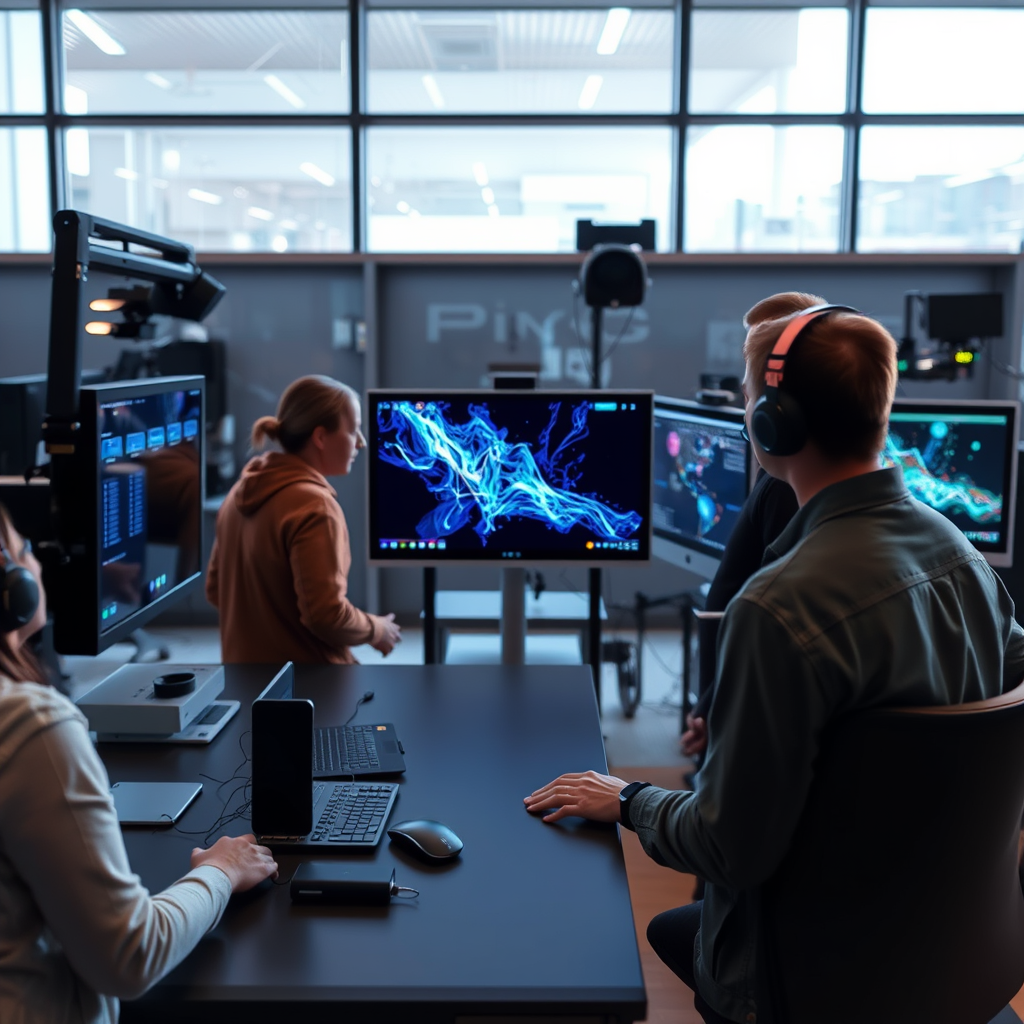
Neural Radiance Fields, commonly referred to as NeRFs, are a type of neural network specifically engineered to synthesize new views of intricate 3D scenes from 2D images. The brilliance of NeRFs lies in their ability to represent scenes as continuous volumetric fields, seamlessly capturing both geometric shapes and color information. This means that instead of merely generating flat images, NeRFs can recreate a full 3D environment that can be viewed from multiple angles, providing a more realistic and immersive experience.

Imagine taking a photograph of a beautiful landscape. A traditional image captures a moment in time, but a NeRF can take that same image and transform it into a 3D scene that can be navigated and explored. This capability not only enhances visual storytelling but also opens up new avenues for virtual reality and augmented reality applications, making them more engaging than ever before.
The Technology Behind NeRFs

At the heart of NeRFs is a sophisticated combination of deep learning algorithms that work together to understand and reconstruct three-dimensional environments. By employing neural networks, these systems learn the underlying structures and details of a scene, enabling them to generate new perspectives based on the input data.
NeRFs primarily rely on ray tracing to accurately render images from various angles. This technique involves tracing the path of light rays as they travel through the scene, allowing for the simulation of realistic lighting and shadow effects. Additionally, NeRFs utilize voxel grids, which are three-dimensional pixel representations, to store and manage spatial information. By combining these technologies, NeRFs can produce high-fidelity images that closely resemble the original 2D inputs, capturing intricate details and textures.
An excellent example of NeRF technology in action is the work done by researchers at UC Berkeley, who developed a system capable of generating 3D models of furniture from just a few images. This showcases the versatility of NeRFs and their potential to revolutionize industries beyond entertainment, such as e-commerce and interior design.
How NeRFs Process Video Data
When it comes to processing video data, NeRFs shine by analyzing multiple frames to create a comprehensive 3D model of the scene. Unlike still images, videos provide a continuous stream of information that helps NeRFs understand how objects move and interact over time. This temporal data is crucial as it enhances the realism and fluidity of animations, allowing for smoother transitions and more lifelike representations.
For instance, consider a video of a bustling city street. A NeRF can analyze successive frames to capture the movement of cars, pedestrians, and even the changing light as the day progresses. By integrating this temporal information, NeRFs can generate a dynamic 3D model that not only looks realistic but also behaves as it would in the real world. This ability to account for time adds depth to storytelling, making it possible to create immersive experiences that draw viewers into the narrative.
Applications of NeRFs in Video
The applications of NeRFs in video production are vast and varied. One of the most prominent uses is in the realm of video games, where they are employed to render realistic environments. Game developers are increasingly turning to NeRF technology to create immersive worlds that allow players to explore intricate landscapes from any angle, enhancing the overall gaming experience.
In film production, NeRFs are revolutionizing the creation of breathtaking visual effects and virtual sets. By generating detailed 3D models from 2D footage, filmmakers can create stunning backgrounds, intricate character animations, and even entire virtual worlds without the need for extensive physical sets. This not only saves time and resources but also provides filmmakers with greater creative freedom to push the boundaries of their storytelling.
For example, the 2022 film “The Matrix Resurrections” utilized advanced NeRF technology to create complex visual effects that captivated audiences. By blending practical effects with AI-generated environments, the filmmakers were able to transport viewers into a visually stunning alternate reality.
Benefits of Using NeRFs in Video Production
One of the most significant benefits of utilizing NeRFs in video production is the substantial reduction in the time and resources required for 3D modeling. Traditionally, creating 3D models can be a labor-intensive process, often involving teams of artists and extensive software. With NeRFs, creators can generate high-quality 3D representations more efficiently, freeing up time for other creative tasks.
Moreover, NeRFs enhance the viewer experience through more immersive and dynamic visuals. By providing realistic 3D representations, they allow audiences to engage with content in a way that feels authentic and lifelike. This heightened sense of realism can lead to deeper emotional connections with the story and characters, making it a powerful tool for storytellers.
Challenges and Limitations of NeRFs
Despite their impressive capabilities, NeRFs are not without challenges and limitations. One significant issue is the computational intensity required for rendering. The intricacies involved in creating high-quality 3D models can lead to long rendering times, especially for complex scenes with numerous details. This can be a barrier for smaller studios or independent creators who may lack access to high-powered computing resources.
Additionally, the need for extensive training data can limit the applicability of NeRFs in some contexts. To produce accurate and detailed 3D models, NeRFs require a substantial amount of input data, which may not always be available. In scenarios where data is scarce, the effectiveness of NeRFs can be compromised, leading to less-than-ideal results.
Future of NeRF Technology in Video
The future of NeRF technology in video production is promising, with ongoing advancements in hardware and algorithms expected to optimize performance and accessibility. As computing power continues to grow, the efficiency of NeRF rendering will improve, allowing for quicker turnaround times and broader adoption across various industries.
Moreover, the potential for integration with augmented and virtual reality is exciting. Imagine stepping into a fully interactive 3D environment that has been created using NeRF technology. This could transform not only entertainment but also education, training, and online shopping, creating experiences that are engaging and realistic.
As we look ahead, it’s clear that NeRF technology will play an increasingly vital role in how we create and consume video content. By harnessing the power of AI and deep learning, creators can push the boundaries of storytelling and immerse audiences in ways we never thought possible.
The technology behind Neural Radiance Fields is revolutionizing how we produce and experience video content. By understanding the principles and applications of NeRFs, creators can harness this powerful tool for innovative storytelling. As the potential of NeRFs continues to unfold, we encourage you to explore how you might incorporate this exciting technology into your own projects and creative endeavors!
Frequently Asked Questions
What are AI-Powered Neural Radiance Fields (NeRFs) and how do they function in video applications?
AI-Powered Neural Radiance Fields (NeRFs) are advanced machine learning techniques that synthesize novel views of complex 3D scenes from 2D images. By leveraging neural networks, NeRFs learn to represent a scene’s geometry, lighting, and appearance, allowing for the generation of realistic video content. This process involves encoding spatial information and viewing angles, enabling the rendering of new frames that seamlessly blend with existing footage.
How do NeRFs improve video quality compared to traditional rendering techniques?
NeRFs enhance video quality by providing more accurate representations of light interactions within a scene, resulting in photorealistic visuals with intricate details and depth. Unlike traditional rendering methods that often rely on pre-defined models and textures, NeRFs use learned representations, which allows them to capture complex effects like reflections and refractions, producing higher fidelity results that significantly elevate viewer immersion.
Why are Neural Radiance Fields considered revolutionary for 3D video content creation?
Neural Radiance Fields are considered revolutionary because they enable creators to generate 3D video content with significantly less data than conventional methods. By requiring only a handful of 2D images to create a fully realized 3D scene, NeRFs reduce the complexity and time associated with traditional 3D modeling and animation processes. This democratizes access to high-quality content creation, making it more feasible for independent filmmakers and smaller studios to produce visually stunning projects.
What are the main challenges in implementing NeRFs for real-time video processing?
One of the primary challenges in implementing NeRFs for real-time video processing is the computational intensity required for training and rendering. NeRFs need substantial processing power and time to generate frames, which can hinder their use in dynamic environments. Additionally, optimizing these models to work efficiently on consumer-grade hardware while maintaining high-quality outputs remains a technical hurdle that developers are actively addressing.
Which industries can benefit most from the application of AI-Powered NeRFs in video production?
Various industries can benefit from the application of AI-Powered NeRFs, particularly those involved in gaming, film production, virtual reality (VR), and architectural visualization. In gaming, for instance, NeRFs can create immersive environments with lifelike details, enhancing player experience. Similarly, the film industry can utilize NeRFs for visual effects and complex scene rendering, while architecture firms can present designs in a more engaging and interactive manner, allowing clients to visualize projects in 3D space before they are built.
References
- https://en.wikipedia.org/wiki/Neural_Radiance_Fields
- https://www.sciencedirect.com/science/article/pii/S0925231223011288
- Array programming with NumPy | Nature
- https://www.microsoft.com/en-us/research/publication/nerf-3d-visualization-neural-radiance-fields/
- https://www.technologyreview.com/2022/07/20/1066957/ai-neural-radiance-fields-3d-video/
- https://www.bbc.com/news/technology-58212378
- https://www.researchgate.net/publication/353863456_Neural_Radiance_Fields_for_3D_Video_Generation
- Distant Transfer Learning via Deep Random Walk | Proceedings of the AAAI Conference on Artificial…