

The future of cloud gaming is here, and it’s bringing a seamless, lag-free experience for players around the globe. Thanks to significant advancements in technology and infrastructure, gamers can now enjoy smooth gameplay, even in the most challenging environments. The days of frustrating lag and slow loading times are being replaced by crystal-clear graphics and fast-paced action. In this article, we’ll delve into the factors that are driving this remarkable global shift towards lag-free gaming.
The Rise of 5G Technology

The introduction of 5G networks is one of the most significant developments in reducing latency for cloud gaming. Unlike its predecessors, 5G technology dramatically reduces the time it takes for data to travel from the user’s device to the game server and back, ensuring a swift response time. With 5G, gamers can experience data transmission speeds that are several times faster than 4G, which translates to a more responsive gaming experience.
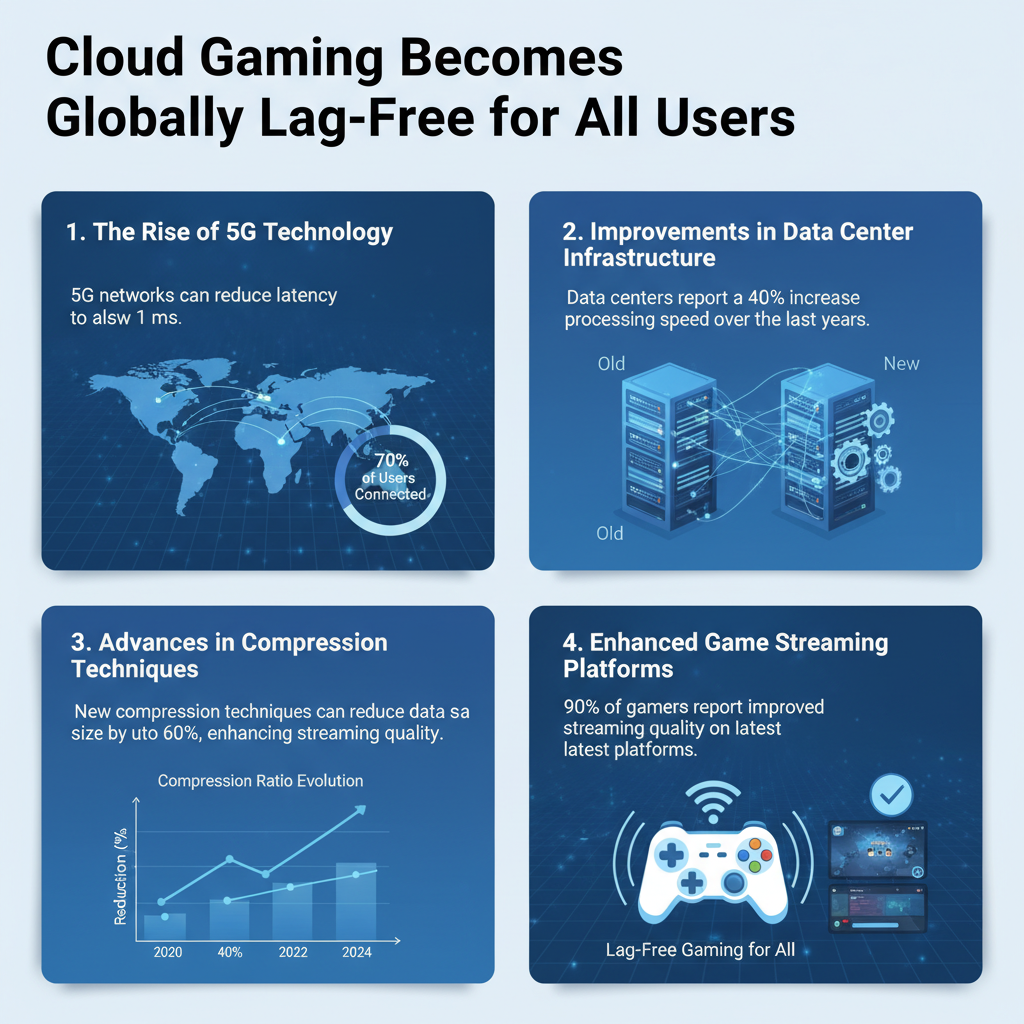
Moreover, enhanced bandwidth capabilities allow for smoother gameplay and richer graphics. With 5G, players can stream games in high-definition without the previous concerns of buffering or pixelation. For example, a game that requires high-resolution graphics, like “Cyberpunk 2077,” can be streamed effortlessly, allowing players to immerse themselves fully without interruptions. As more cities roll out 5G infrastructure, the potential for cloud gaming becomes even more promising.
Improvements in Data Center Infrastructure

Another crucial factor contributing to a lag-free gaming experience is the substantial investment major gaming companies are making in data center infrastructure. By establishing new data centers closer to users, companies can significantly reduce the distance that data must travel. This reduction in distance minimizes latency, providing a smoother gaming experience.
Additionally, technologies such as virtualization and edge computing are optimizing how games are delivered. Edge computing processes data closer to the user, allowing for faster response times and reduced lag. Companies like Microsoft with Azure Gaming and Google with Stadia are leading the charge in building robust data centers that cater specifically to the needs of gamers worldwide. This localized approach ensures that players can enjoy their favorite titles without the frustration of latency issues.
Advances in Compression Techniques
The complexity of streaming high-quality games has historically posed challenges in terms of data usage and lag. However, recent advances in compression techniques are helping to overcome these obstacles. New algorithms are now capable of minimizing the amount of data needed for streaming without sacrificing the quality of the gaming experience.
For instance, improved video encoding technologies allow data to be compressed more efficiently, leading to high-quality visuals that load quickly. Techniques such as adaptive bitrate streaming adjust the quality of the video stream based on the user’s connection speed, ensuring that even players with slower internet connections can enjoy a decent experience. This innovation is particularly beneficial for games with rich graphics, as it allows for an enjoyable experience without the need for extensive bandwidth.
Enhanced Game Streaming Platforms
In the race towards a lag-free gaming experience, major streaming platforms are incorporating advanced technologies and practices to ensure top performance. Services like NVIDIA GeForce Now, PlayStation Now, and Xbox Cloud Gaming are continuously refining their platforms to minimize lag and enhance overall user experience.
User-friendly interfaces and proactive server management play a crucial role in this evolution. These platforms are designed to be intuitive, making it easy for players to find and launch their favorite games quickly. Additionally, they utilize smart load balancing techniques to distribute player traffic evenly across servers, reducing the potential for bottlenecks that can cause lag. This commitment to user experience is helping to propel cloud gaming into the mainstream, making it a preferred option for gamers everywhere.
Global Internet Connectivity Initiatives
The global push for better internet connectivity is another vital component in the quest for lag-free cloud gaming. Many efforts are underway to improve internet access in underserved regions, ensuring that players around the world can participate in cloud gaming without issues related to connectivity.
Partnerships with local internet service providers (ISPs) are also enhancing connectivity for cloud gaming services. For example, initiatives like Google’s Project Loon aimed to provide internet access through balloon technology in remote areas, showcasing innovative solutions to connectivity challenges. As internet access becomes more widespread, the potential for cloud gaming expands, creating a more inclusive gaming community.
User Experience and Community Feedback
As cloud gaming technology evolves, user experience remains at the forefront of its development. Gamers are increasingly reporting positive experiences, with many noting the significant improvements in lag reduction and overall performance. This feedback is invaluable, as it drives further advancements in technology and service offerings.
Forums, social media, and gaming communities play a crucial role in voicing opinions and sharing experiences. Platforms like Reddit and Discord provide spaces where players can discuss their cloud gaming journeys, share tips, and provide constructive feedback to service providers. This vibrant community engagement supports continuous innovation and helps companies adapt to the needs of their users.
Future Trends in Cloud Gaming
Looking ahead, the future of cloud gaming is as exciting as it is unpredictable. Anticipating the role of artificial intelligence (AI) in gaming could open new doors for personalized gaming experiences. AI could be used to analyze player behavior and preferences, allowing for tailored game recommendations and dynamic difficulty adjustments that enhance engagement.
Furthermore, developments in virtual reality (VR) and augmented reality (AR) gaming are poised to revolutionize how we experience games. Imagine being able to stream a VR game directly into your headset with no lag, creating an immersive experience that feels as real as being in the game itself. As technology continues to progress, the possibilities for cloud gaming are limitless.
As we summarize the key advancements and trends, it’s clear that cloud gaming is evolving rapidly towards a lag-free experience globally. The rise of 5G technology, improvements in data center infrastructure, advances in compression techniques, and enhanced streaming platforms are all contributing to this exciting transformation. With growing efforts to improve global internet connectivity and an engaged gaming community providing valuable feedback, the future of cloud gaming looks brighter than ever. As technology continues to improve, players can expect even better performance and accessibility. Stay informed on the latest developments, and consider joining the cloud gaming revolution today!
Frequently Asked Questions
What is cloud gaming and how does it eliminate lag?
Cloud gaming, also known as game streaming, allows players to access and play video games over the internet without needing powerful local hardware. By leveraging high-performance servers to process game data and stream it directly to users’ devices, cloud gaming minimizes latency and can provide a near lag-free experience globally. This technology utilizes advanced algorithms and improved internet infrastructure, making it possible for gamers to enjoy high-quality graphics and responsive gameplay from virtually anywhere.
How can I ensure a lag-free cloud gaming experience?
To achieve a lag-free cloud gaming experience, it’s essential to have a stable and fast internet connection, ideally with a speed of at least 15 Mbps for HD gaming. Additionally, using a wired Ethernet connection instead of Wi-Fi can significantly reduce latency. Selecting a cloud gaming service with servers close to your location and adjusting in-game settings for lower latency can also help ensure smooth gameplay without interruptions.
Why is cloud gaming becoming more popular worldwide?
Cloud gaming is gaining popularity due to its accessibility and convenience. Players can enjoy high-quality gaming experiences without investing in expensive hardware, as games are streamed directly from the cloud. Furthermore, the global expansion of high-speed internet and advancements in technology have made it easier for gamers to connect and play seamlessly, contributing to its growing appeal across diverse audiences.
Which cloud gaming services offer the best lag-free performance?
Some of the leading cloud gaming services known for their lag-free performance include NVIDIA GeForce NOW, Google Stadia, and Xbox Cloud Gaming (formerly known as Project xCloud). These platforms utilize advanced cloud infrastructure and have implemented various optimizations to minimize latency. When choosing a service, consider factors like server locations, game library, and subscription costs to find the best fit for your gaming needs.
What devices can I use for cloud gaming to avoid lag?
Cloud gaming can be accessed on various devices, including PCs, laptops, smartphones, tablets, and smart TVs. To minimize lag, ensure that your device meets the recommended specifications for the cloud gaming service you choose. Additionally, using up-to-date operating systems and browsers, along with a reliable internet connection, can further enhance your experience, allowing for smooth gameplay across different platforms.
References
- Cloud gaming
- https://www.bbc.com/news/technology-57231771
- https://www.theguardian.com/games/2021/jun/16/cloud-gaming-explained-what-is-it-and-why-does-it-matter
- https://www.forbes.com/sites/johnarcher/2021/05/14/what-is-cloud-gaming-and-how-does-it-work/
- https://www.nytimes.com/2020/11/12/technology/cloud-gaming.html
- https://www.cnbc.com/2021/01/07/how-cloud-gaming-is-changing-the-video-game-industry.html
- https://www.npr.org/2020/11/12/933086773/cloud-gaming-promises-to-make-high-quality-games-accessible-to-more-people
- https://www.wired.com/story/cloud-gaming-future/
- https://www.techrepublic.com/article/cloud-gaming-what-it-is-and-why-it-matters/
- https://www.sciencedirect.com/science/article/pii/S1877050919312120