

Mounting surround sound speakers correctly is crucial for achieving the best audio experience. To ensure your sound system delivers immersive sound, you must consider speaker placement, room acoustics, and installation techniques. In this article, you’ll discover effective strategies for positioning and mounting your speakers to enhance your home theater or audio setup.
Understanding Surround Sound Speaker Placement
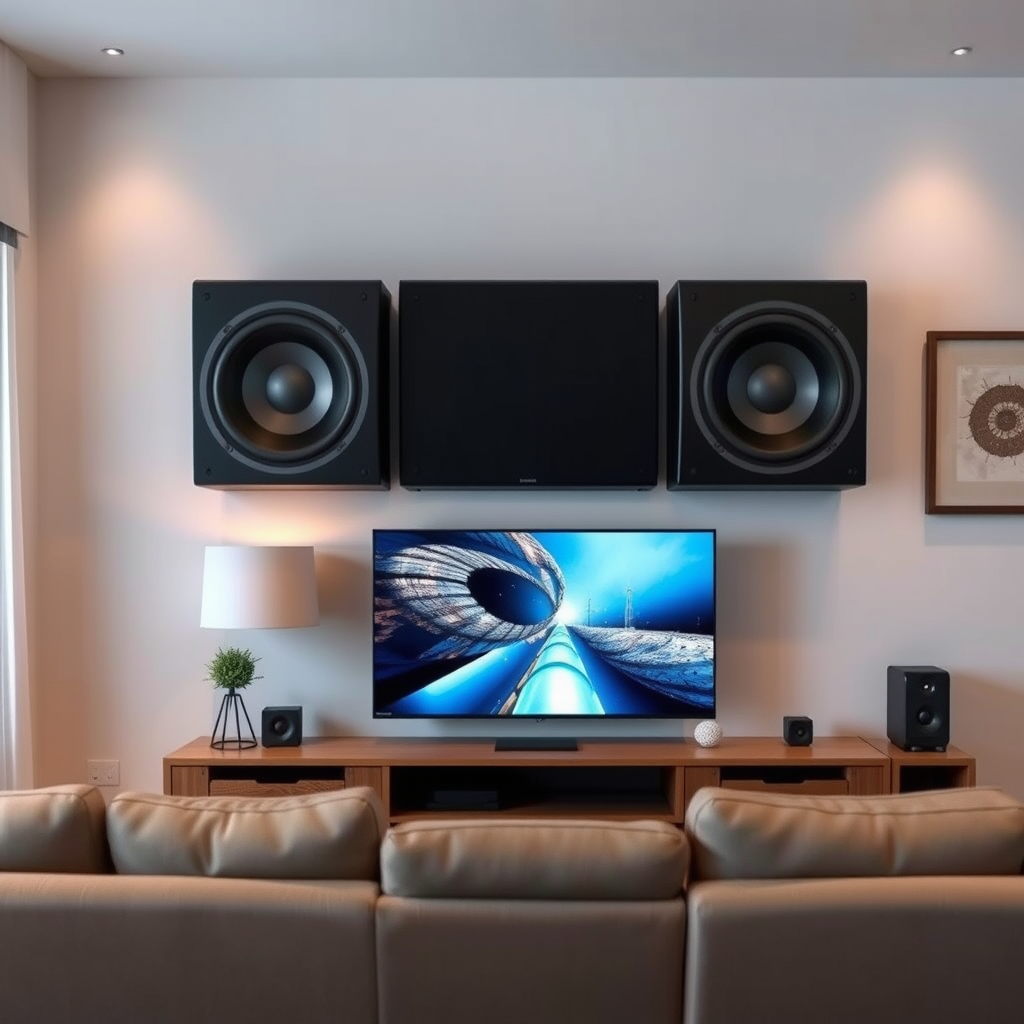
When it comes to surround sound, speaker placement is everything. The most common setups are 5.1 and 7.1 configurations, which refer to the number of speakers and subwoofers used. In a 5.1 system, you have five speakers and one subwoofer, while a 7.1 system adds two additional speakers for an even more immersive experience.
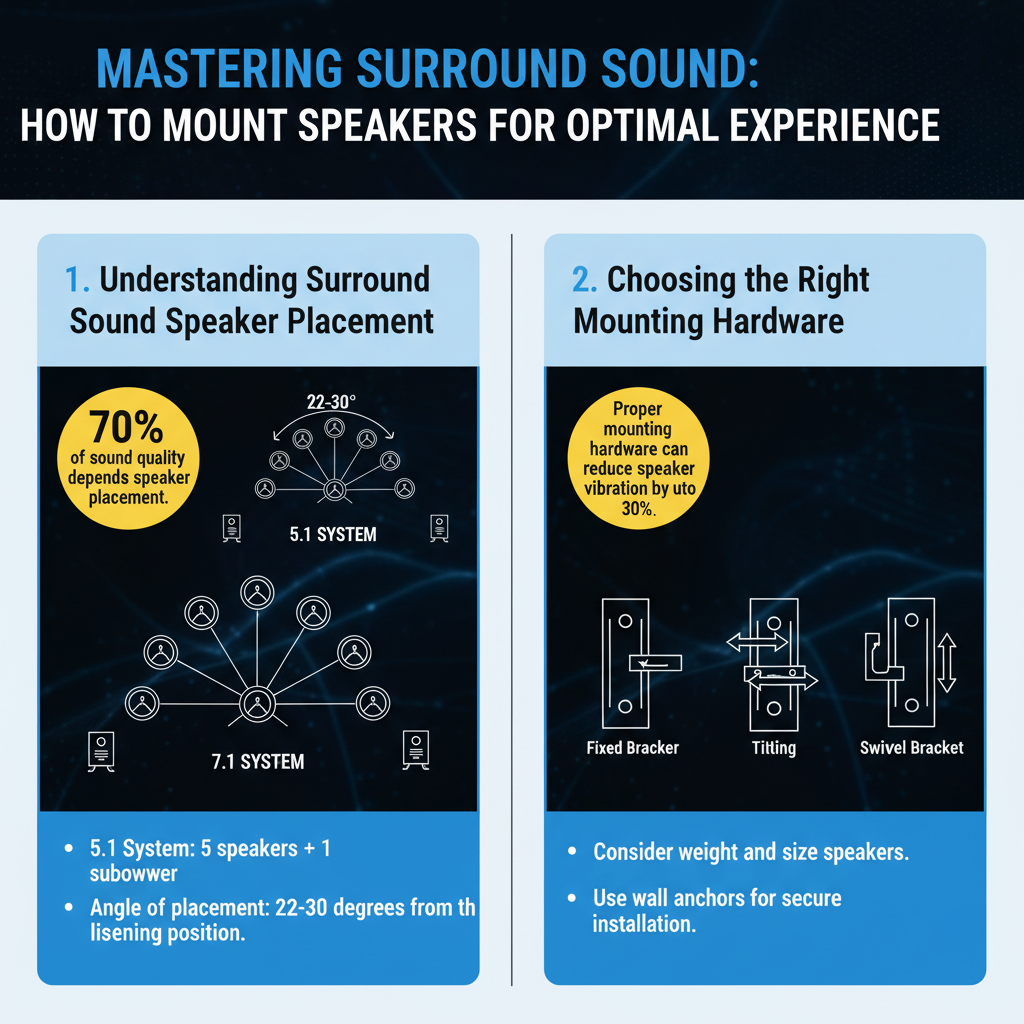
For a 5.1 setup, position your front left and right speakers at ear level, about 22-30 degrees from your viewing position. The center speaker should be directly above or below your screen. Place the surround speakers slightly above ear level, ideally 90-110 degrees from your listening position, and the subwoofer can be placed in a corner or along the front wall to enhance bass response. If you’re going for a 7.1 setup, the additional speakers should be placed behind the listening area, ideally at ear level, to create a full surround sound experience.
Choosing the Right Mounting Hardware
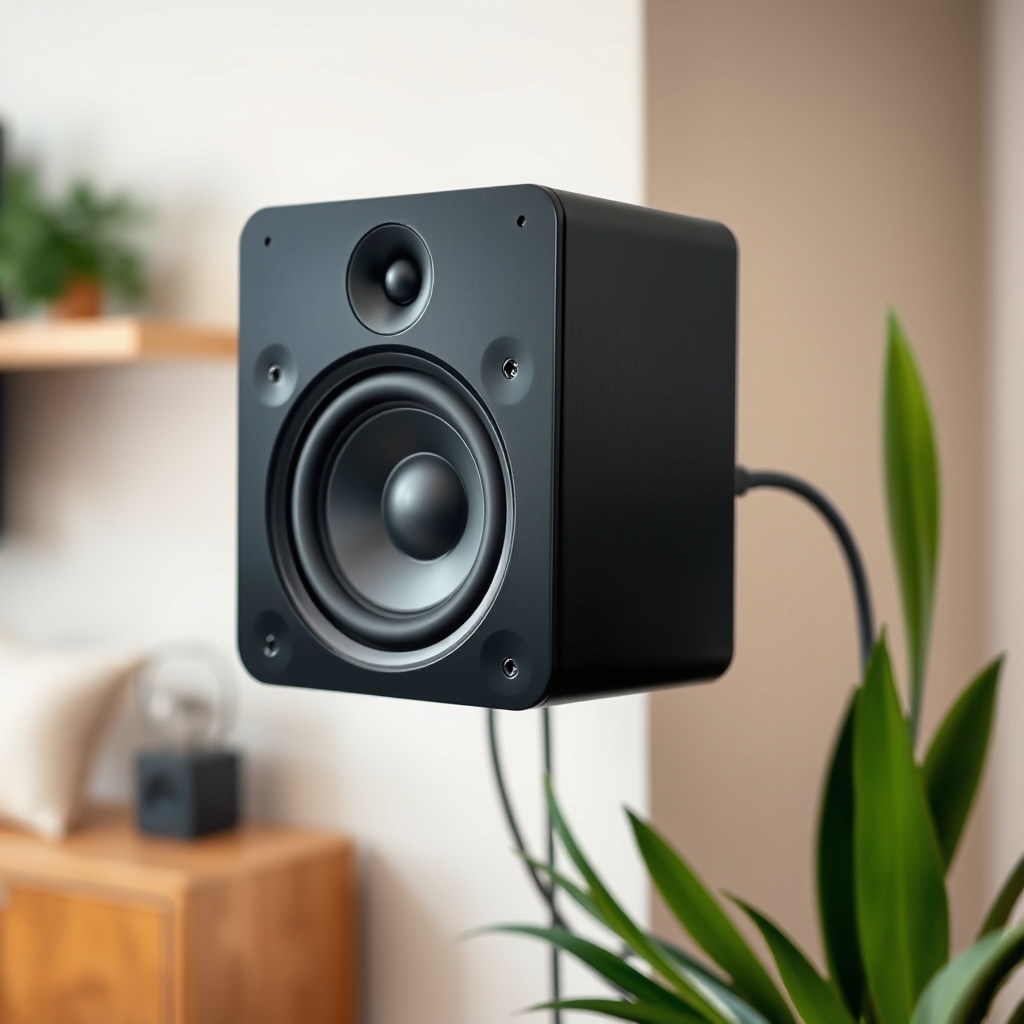
Selecting the appropriate mounting hardware is just as important as the placement of your speakers. First, consider the type and weight of your speakers. Lightweight bookshelf speakers can often be mounted with simple brackets, while heavier models may require more robust wall mounts or ceiling mounts.
Wall mounts are ideal for speakers that need to be positioned high or in tight spaces, while ceiling mounts can be great for surround speakers in a 7.1 setup, as they can create a more enveloping sound. Bookshelf stands offer flexibility and mobility, which can be particularly useful if you like to rearrange your space frequently. Make sure to choose mounts that are compatible with your speaker brand and model for a secure fit.
Preparing Your Room for Installation
Before diving into the installation, take a moment to assess your room’s acoustics. Hard surfaces reflect sound, while soft materials absorb it, so consider adding rugs, curtains, or acoustic panels to soften the sound and reduce echoes. This can significantly enhance the quality of your audio experience.
Additionally, be mindful of your furniture placement. Large pieces like sofas or bookshelves can obstruct sound waves, which can muddy your audio. Try to arrange your furniture in a way that keeps the sound pathways clear, allowing for an unobstructed audio experience. It’s also worth noting that the layout of your room can affect sound distribution, so experiment with different configurations if needed.
Step-by-Step Mounting Process
Now that you’re ready to install, gather all the necessary tools and materials. You’ll typically need a drill, level, measuring tape, and the mounting hardware you selected. Start by marking the positions for your speakers based on your earlier placement decisions.
Using a level, ensure that your mounting brackets are straight before securing them to the wall or ceiling. When installing heavy speakers, it’s advisable to locate wall studs for added support, as drywall alone may not hold the weight. Once the brackets are securely fastened, attach the speakers, double-checking that everything is level and stable. This systematic approach will help you avoid any common pitfalls during installation.
Testing and Fine-Tuning Your Setup
With your speakers mounted, it’s time to test the sound quality from various listening positions. Play a variety of audio, from movies to music, to assess the balance and clarity of sound. Walk around the room; you should experience a seamless audio experience regardless of where you sit.
Make adjustments as necessary—this might involve tilting the speakers slightly or repositioning them within their mounts. Don’t hesitate to tweak distances or angles; sometimes, even a small adjustment can make a big difference in sound quality. Many modern receivers also come with calibration tools that can help optimize your setup automatically, providing a great starting point for adjustments.
Common Mistakes to Avoid
While setting up surround sound speakers can be straightforward, there are common mistakes you’ll want to avoid. One of the biggest is placing speakers too high or too low. Ideally, your ear level should align with the center of the speaker when seated.
Another mistake is neglecting cable management. Exposed cables not only detract from your room’s aesthetics but can also pose tripping hazards. Use cable clips or raceways to keep everything organized and out of sight. Also, take care not to block any of the speaker’s drivers with furniture, as this can negatively impact sound quality.
Enhancing Your Surround Sound Experience
To truly elevate your audio experience, consider integrating additional components like a soundbar or subwoofer. A soundbar can enhance dialogue clarity, while a subwoofer deepens the bass, giving your audio a fuller, richer sound.
Experiment with different audio settings on your receiver to find the perfect sound profile for your tastes. Many modern receivers offer a variety of settings tailored for movies, music, and gaming, allowing you to customize your experience based on what you’re watching or listening to.
Mounting your surround sound speakers correctly is essential for achieving an optimal audio experience. By following the guidelines on placement, hardware selection, and installation techniques, you can create a home theater that immerses you in sound. Take action now and start optimizing your sound system for the best possible experience.
Frequently Asked Questions
What is the best height to mount surround sound speakers for optimal audio experience?
The ideal height for mounting surround sound speakers typically ranges from 5 to 7 feet off the ground, depending on the size of your room and seating arrangement. Front speakers should be at ear level while seated, while surround speakers can be slightly above ear level, angled downwards towards the listening area. This setup helps create an immersive audio experience, enhancing sound clarity and spatial effects.
How do I determine the right placement for my surround sound speakers?
To determine the best placement for your surround sound speakers, consider the layout of your room and the listening position. As a rule of thumb, the front left and right speakers should form a 22-30 degree angle from the center seat, while the center channel should be directly in front. Place the surround speakers to the sides or slightly behind the listening area, ideally 90-110 degrees from the center for a balanced soundstage.
Why is speaker placement crucial for surround sound systems?
Speaker placement is crucial for surround sound systems because it directly affects the sound quality and immersive experience. Proper positioning ensures that sound waves reach the listener in a cohesive manner, minimizing echoes and dead spots. When surround speakers are correctly placed, they create a three-dimensional audio environment, allowing you to feel fully engaged in movies and music.
What are the best mounting options for surround sound speakers?
The best mounting options for surround sound speakers include wall mounts, bookshelf stands, and ceiling mounts, depending on your room layout and aesthetic preferences. Wall mounts are ideal for saving space and achieving a clean look, while bookshelf stands provide flexibility in positioning. Ceiling mounts can be effective for surround speakers, allowing them to project sound downwards, enhancing the immersive experience.
Which tools do I need to mount surround sound speakers correctly?
To mount surround sound speakers correctly, you will need a few essential tools: a stud finder to locate wall studs for secure mounting, a level to ensure that the speakers are straight, a drill for installing screws and anchors, and a screwdriver for assembly. Additionally, a measuring tape will help you achieve the correct height and distance from the listening area, ensuring optimal performance.
References
- Surround sound
- https://www.cnet.com/home/audio/how-to-choose-the-best-surround-sound-system/
- https://www.crutchfield.com/S-qYF0D5u1XkY/learn/how-to-set-up-your-surround-sound-system.html
- https://www.soundguys.com/surround-sound-setup-19640/
- https://www.techhive.com/article/3232953/how-to-set-up-your-surround-sound-system.html
- https://www.pcmag.com/how-to/how-to-set-up-surround-sound-in-your-home-theater
- https://www.wired.com/story/how-to-set-up-surround-sound/
