
Creating a more immersive sound experience with Dolby Atmos involves utilizing its advanced audio technology to enhance the auditory environment in your home. By setting up the right equipment, calibrating your audio settings, and choosing compatible content, you can elevate your audio experience significantly. This article will guide you through each step to fully harness the power of Dolby Atmos.
Understanding Dolby Atmos Technology
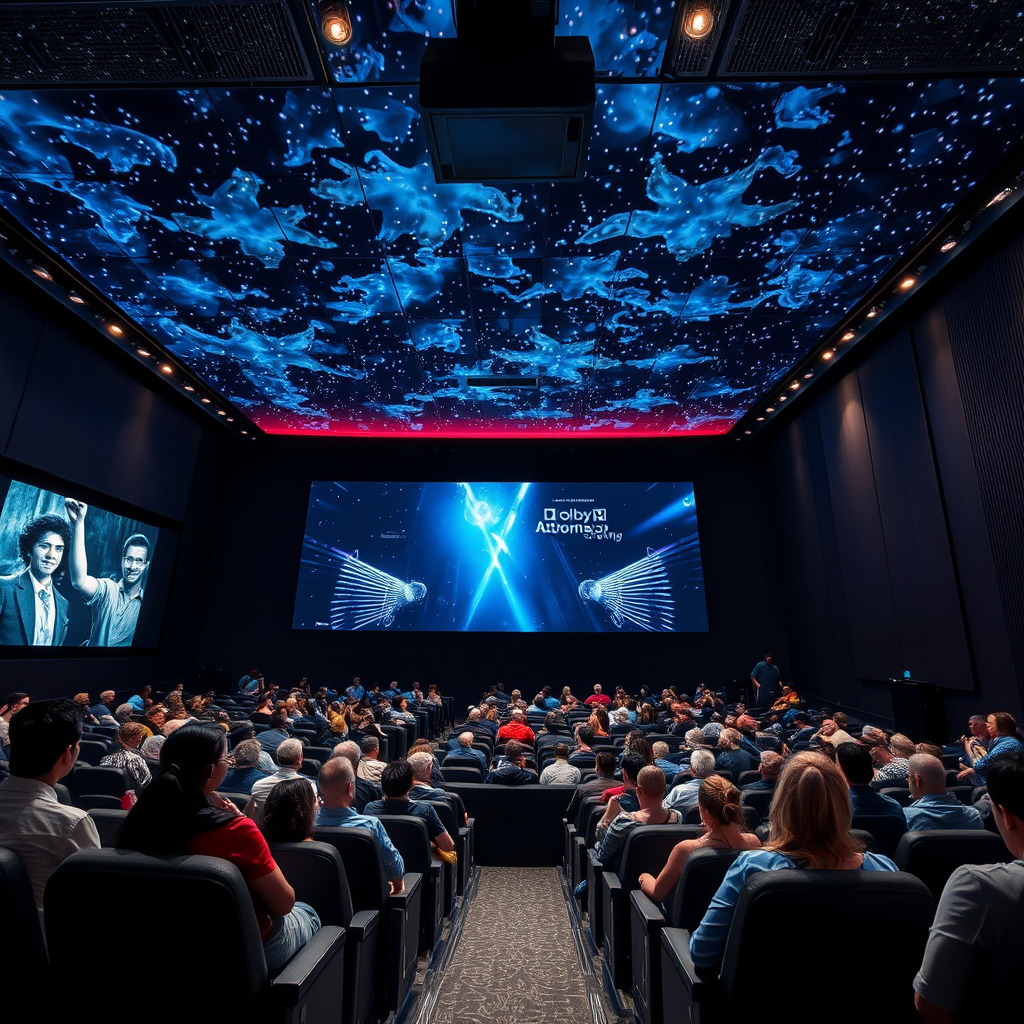
Dolby Atmos is a revolutionary audio technology that offers a three-dimensional sound experience, allowing audio elements to move freely around you, creating an immersive soundstage. Unlike traditional surround sound systems that confine sound to specific channels, Dolby Atmos enables sound designers to position sounds in a three-dimensional space, adding height to the audio experience. This capability enhances the realism of sound in movies, games, and music by making it feel as though sound is coming from above as well as from all around.
Moreover, Dolby Atmos is versatile in its application. It supports both traditional surround sound systems with multiple speakers and soundbars, making it accessible for various home setups. This flexibility allows users to enjoy immersive audio experiences whether they have a full home theater or a simplified audio solution.
Choosing the Right Equipment
To fully enjoy the benefits of Dolby Atmos, investing in the right equipment is essential. First and foremost, you will need a compatible AV receiver that supports Dolby Atmos. Many modern receivers come equipped with this technology, enabling seamless integration with your audio system.
Additionally, selecting appropriate speakers is crucial. For a complete immersive experience, opt for speakers that can deliver height channels. This may involve ceiling-mounted speakers or upward-firing modules that reflect sound off the ceiling, allowing it to envelop the listener. Brands like Klipsch and Yamaha offer excellent options that can be integrated into a Dolby Atmos setup.
Here’s a quick guide to the types of equipment you might consider:
– AV Receiver: Look for models with Dolby Atmos support and adequate power output for your space.
– Speakers: Ensure they include height capabilities or consider upward-firing speakers.
– Soundbar: If space is limited, opt for a soundbar that supports Dolby Atmos and has built-in upward-firing speakers.
Setting Up Your Audio System
Creating an optimal audio environment requires careful placement of your speakers. The arrangement should maximize sound directionality and height to fully exploit Dolby Atmos technology. Ideally, you should set up your speakers in a layout that corresponds to the recommended Dolby Atmos configurations—5.1.2 or 7.1.4, for example, where the last number indicates the number of height speakers.
For those looking to enhance their setup, consider using ceiling-mounted speakers or upward-firing modules. Upward-firing speakers are designed to bounce sound off the ceiling, creating a sensation of height without the need for additional installation.
📋 DATA
Top Dolby Atmos-Compatible Speakers (2024)
| # | Speaker Model | Type | Height Channel | Price |
|---|---|---|---|---|
| 1 | Klipsch RP-8060FA | Floor-standing | Yes | $1,299 |
| 2 | Yamaha NS-IC800 | In-Ceiling | Yes | $249 |
| 3 | SVS Prime Elevation | Bookshelf | Yes | $599 |
| 4 | Onkyo SKH-410 | Upward-Firing | Yes | $199 |
| 5 | Polk Audio TSi500 | Floor-standing | No | $799 |
| 6 | Sony HT-ST5000 | Soundbar | Yes | $1,499 |
| 7 | Bose Lifestyle 650 | Home Theater System | Yes | $3,999 |
📈 CHART
Top Streaming Services with Dolby Atmos Content (2024)
Calibrating Your Audio Settings
Once your audio system is set up, calibrating your audio settings is crucial for achieving optimal sound quality. Many AV receivers come with built-in calibration tools that use a microphone to assess your room’s acoustics and make automatic adjustments. These settings ensure that each speaker is balanced and that sound is directed appropriately for the best experience.
For more advanced users, consider using calibration apps like Dirac Live or Sonos Trueplay, which offer detailed adjustments based on your specific listening environment. Pay particular attention to the equalizer settings, speaker distances, and levels to ensure the most balanced sound reproduction.
Tips for Calibration:
– Use an SPL Meter: This device can help measure sound levels and ensure they are balanced across all speakers.
– Room Acoustics: Consider the materials in your room, such as rugs and curtains, which can absorb sound and affect the overall audio experience.
– Trial and Error: Don’t hesitate to make small adjustments and test various configurations to find what sounds best for your space.
Selecting Compatible Content
To fully experience the immersive capabilities of Dolby Atmos, it’s essential to select content that is specifically mixed for this audio format. Check for movies, games, and music that are labeled as Dolby Atmos to ensure you are getting the most out of your system.
Streaming services are increasingly adopting Dolby Atmos technology, with platforms like Netflix, Disney+, and Amazon Prime Video offering a growing library of titles mixed in Dolby Atmos. This content not only utilizes the technology but also showcases the full range of sounds available, from subtle ambient noises to explosive action sequences.
When searching for new content, look for the following:
– Movies: Many blockbuster films are now released with Dolby Atmos soundtracks.
– Games: Both current and upcoming video games are incorporating Dolby Atmos for a more immersive gaming experience.
– Music: Streaming services like Tidal and Apple Music have begun offering tracks mixed in Dolby Atmos.
Enhancing the Experience with Accessories
To further enhance your Dolby Atmos experience, consider adding accessories that can significantly improve sound quality. A dedicated subwoofer can deepen bass response and make sound effects more impactful, which is particularly beneficial for action movies and music genres like hip-hop and EDM.
Additionally, ensure you use high-quality HDMI cables to maintain a reliable audio signal between your devices. Cables that support HDMI 2.0 or higher are essential for transmitting high-bandwidth audio formats like Dolby Atmos.
Suggested Accessories:
– Subwoofer: Look for models from brands like SVS or Klipsch for powerful bass.
– HDMI Cables: Ensure cables are rated for 18Gbps for optimal performance.
– Audio Switches: If you have multiple devices, consider an audio switch that supports Dolby Atmos for seamless transitions.
Maintaining Your Sound System
Regular maintenance of your sound system is essential to ensure it continues to perform at its best. This includes checking for firmware updates on your AV receiver and speakers, which can enhance compatibility and improve sound quality.
Furthermore, cleaning your audio equipment is important. Dust can accumulate in speakers and electronics, negatively impacting sound quality. Use a soft cloth and a gentle cleaner to keep your devices in top condition.
Maintenance Tips:
– Firmware Updates: Regularly check the manufacturer’s website for updates.
– Speaker Cleaning: Gently clean speaker grills and surrounds to prevent dust buildup.
– Inspection: Regularly inspect cables for wear and tear, replacing them as necessary to maintain audio quality.
Summarizing the key points, creating an immersive sound experience with Dolby Atmos requires the right equipment, proper setup, and quality content. By investing time in calibration and selecting the best audio sources, you can transform your listening environment. Start setting up your Dolby Atmos system today and experience sound like never before!
Frequently Asked Questions
What is Dolby Atmos and how does it enhance sound experience?
Dolby Atmos is an advanced sound technology that creates a three-dimensional audio experience by adding height channels to traditional surround sound. This allows sound to move freely around the listener, providing a more immersive experience whether you’re watching movies, playing video games, or listening to music.
How can I set up my home theater for Dolby Atmos?
To set up your home theater for Dolby Atmos, you need a compatible AV receiver and speakers that support the technology. Additionally, positioning overhead speakers or using upward-firing speakers can enhance the sound experience, allowing audio to envelop you from all directions for a truly immersive effect.
Why should I choose Dolby Atmos over traditional surround sound systems?
Choosing Dolby Atmos over traditional surround sound systems provides a more dynamic and realistic audio experience. The technology allows for precise sound placement, creating a more engaging environment that can significantly enhance your enjoyment of films, music, and gaming.
What equipment do I need for a Dolby Atmos setup?
For a Dolby Atmos setup, you’ll need an AV receiver that supports Dolby Atmos, compatible speakers (like ceiling or upward-firing speakers), and a source device such as a Blu-ray player or streaming service that offers Dolby Atmos content. Investing in quality cables and soundproofing can also improve your overall experience.
Which streaming services offer Dolby Atmos content?
Major streaming services like Netflix, Amazon Prime Video, Disney+, and Apple TV+ offer a growing library of content in Dolby Atmos. Subscribing to these services not only grants access to immersive audio experiences but also enhances your viewing pleasure with high-quality visual content.
References
- Dolby Atmos
https://en.wikipedia.org/wiki/Dolby_Atmos - https://www.sciencedirect.com/topics/engineering/dolby-atmos
https://www.sciencedirect.com/topics/engineering/dolby-atmos - https://pubmed.ncbi.nlm.nih.gov/30072645/
https://pubmed.ncbi.nlm.nih.gov/30072645/ - https://www.bbc.com/news/technology-44614031
https://www.bbc.com/news/technology-44614031 - https://www.theguardian.com/technology/2019/jul/15/how-dolby-atmos-is-changing-the-way-we-watch-films
https://www.theguardian.com/technology/2019/jul/15/how-dolby-atmos-is-changing-the-way-we-watch-films - https://www.nytimes.com/2018/08/31/movies/dolby-atmos-sound.html
https://www.nytimes.com/2018/08/31/movies/dolby-atmos-sound.html - https://www.nature.com/articles/s41598-020-69237-4
https://www.nature.com/articles/s41598-020-69237-4 - https://www.mayoclinic.org/healthy-lifestyle/consumer-health/in-depth/understanding-sound-and-hearing/art-20045042
https://www.mayoclinic.org/healthy-lifestyle/consumer-health/in-depth/understanding-sound-and-hearing/art-20045042 - Google Scholar Google Scholar
https://scholar.google.com/scholar?q=Dolby+Atmos+immersive+sound+experience - Google Scholar Google Scholar
https://scholar.google.com/scholar?q=creating+immersive+audio+experiences+Dolby+Atmos