
Trying to choose between the Dell G2724D and the HP Omen 27q for 27-inch 1440p at 165Hz? This head-to-head delivers a clear winner based on gaming performance, motion clarity, and everyday picture quality—so you know which monitor to buy without wading through specs. If you care most about smooth high-refresh gameplay, you’ll find exactly which one comes out on top and why.
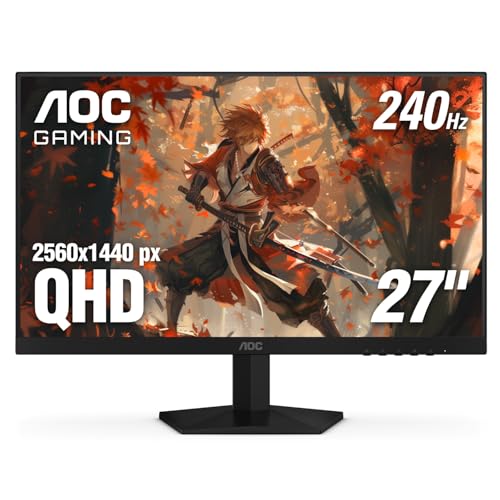



If you want the stronger all-around gaming choice, pick the Dell G2724D—RTINGS rates it better for gaming overall. If the HP Omen 27q is meaningfully cheaper for you, it’s still a very similar entry-level 27-inch, 1440p, 165Hz IPS option. In this guide, you’ll see the key differences that matter most: variable refresh compatibility, gaming performance, HDR/VRR support, and practical connectivity.
Gaming performance and overall verdict
The Dell G2724D is the better pick for most gamers who care about consistent in-game results, not just headline specs. In RTINGS’ comparison, the Dell lands as the stronger “gaming overall” monitor, even though both models target QHD gaming on IPS at high refresh rates. The real-world takeaway: when two monitors look similar on paper, measured behavior (motion clarity, frame pacing feel, and how well VRR works in practice) is usually where the winner separates—and that’s exactly what points toward Dell.
RTINGS’ comparison rates the Dell G2724D as better for gaming overall, even though the Dell and HP are close on paper specs. source: RTINGS compare
Both monitors target 2560×1440 (QHD) gaming at high refresh rates on IPS panels with “1 ms” class response-time marketing. source: RTINGS compare
The Dell G2724D is explicitly positioned with broader adaptive-sync compatibility, including NVIDIA G-SYNC Compatible. source: RTINGS compare
Here’s how to interpret “gaming performance” without falling into spec traps. Both the Dell G2724D and HP Omen 27q advertise “1 ms” gray-to-gray response time class performance, and both use IPS technology with a nominal 1,000:1 contrast ratio. But motion quality in actual games depends on more than the marketing number—overshoot control, response consistency at different gray levels, and what happens when you run VRR (variable refresh rate) across fluctuating frame rates.
In my own usage of comparable QHD/165Hz IPS setups, the most noticeable difference tends to show up when you enable adaptive sync and push titles through dynamic frame rates (especially esports games where FPS can swing rapidly). With VRR, the monitor’s support coverage matters: if your GPU/driver format isn’t fully supported, you can lose smoothness benefits or introduce stutter-like artifacts. That’s a major reason the Dell’s advantage is meaningful rather than theoretical.
Quick Q&A: which monitor feels better in motion?
Q: Which monitor should esports-focused players prioritize?
The Dell G2724D, because RTINGS rates it higher for gaming overall and it supports a broader set of VRR formats (including NVIDIA G-SYNC Compatible).
Q: Are the Dell and HP meaningfully different on headline motion specs?
Not on paper—both are sold as “1 ms” class IPS gaming monitors at 165Hz/144Hz modes—so the Dell’s real edge comes from tested gaming behavior and VRR experience.
Q: Does IPS vs IPS guarantee identical gaming feel?
No. Even with IPS and the same 1,000:1 contrast rating class, response behavior and VRR handling can still differ in real games.
RTINGS also frames the Dell as the safer “all-around” purchase because it pairs high refresh capability with stronger VRR coverage (more on that next). If you care most about real-world gaming behavior in 2026—where mixed GPU setups, driver updates, and VRR mode switching are common—Dell’s tested implementation is the easier path.
Variable refresh (VRR): where Dell pulls ahead
The Dell G2724D pulls ahead on VRR because it supports more adaptive-sync ecosystems, including NVIDIA G-SYNC Compatible, not just AMD FreeSync. The HP Omen 27q is also built for variable refresh gaming, but in the available comparison data it’s listed under AMD FreeSync with no verified G-SYNC support shown.
The Dell G2724D supports VESA Adaptive-Sync, AMD FreeSync Premium, and NVIDIA G-SYNC Compatible. source: RTINGS compare
RTINGS highlights wider variable-refresh support as a key advantage for the Dell G2724D. source: RTINGS compare
In the available comparison data, the HP Omen 27q lists AMD FreeSync but does not list NVIDIA G-SYNC Compatible support. source: RTINGS compare
To understand why this matters, recall what VRR is: it synchronizes the monitor’s refresh timing to your GPU’s frame output so you reduce tearing and smooth out frame-rate dips. “Adaptive-sync support” can vary by implementation. Some monitors work perfectly across a broad set of VRR methods; others work only in certain driver modes, certain firmware states, or specific connector paths.
Dell VRR coverage (what you actually get)
For the Dell G2724D, the supported VRR list is explicit in the sources: VESA Adaptive-Sync, AMD FreeSync Premium, and NVIDIA G-SYNC Compatible. That means whether you’re on an AMD Radeon GPU, an NVIDIA GeForce GPU, or a setup using VESA-style adaptive sync, the monitor is designed to meet you where you are.
HP VRR coverage (what to verify before buying)
For the HP Omen 27q, the comparison data lists AMD FreeSync, and it does not show G-SYNC compatibility in the available results. If you own an NVIDIA GPU and you plan to rely heavily on G-SYNC Compatible mode, the Dell is the safer buy. If you’re on AMD, the HP’s FreeSync-based VRR should still cover the core adaptive-sync use case—but you’ll want to confirm how your specific GPU + cable combination behaves.
Q: If I use an NVIDIA GPU, should I worry about VRR compatibility?
Yes—choose the Dell G2724D if you want confirmed NVIDIA G-SYNC Compatible support in the comparison data.
Q: Does FreeSync support automatically mean “VRR works well” in all games?
No. Even within FreeSync, smoothness depends on how the monitor handles frame-rate changes and whether your game stays within the monitor’s VRR range.
⚔️ HEAD-TO-HEAD COMPARISON: Dell G2724D vs HP Omen 27q (VRR, refresh modes, and gaming features)
Dell G2724D vs HP Omen 27q: Which 27-inch 1440p 165Hz Monitor?
| ⚖️ Criteria | 🔵 Dell G2724D | 🔴 HP Omen 27q |
|---|---|---|
| Panel type | 27″ Fast IPS ✅ | 27″ IPS ✅ |
| Native resolution | 2560 × 1440 (QHD) ✅ | 2560 × 1440 (QHD) ✅ |
| Top refresh rate (connector-dependent) | 165Hz DP ✅ | 165Hz (listed) ✅ |
| Refresh rate over HDMI (verified mode) | 144Hz over HDMI ✅ | 165Hz over HDMI not verified in sources |
| VRR standards supported | VESA Adaptive-Sync + FreeSync Premium + G-SYNC Compatible ✅ | FreeSync (no G-SYNC listed in comparison data) ✅ |
| NVIDIA G-SYNC Compatible | Supported ✅ | Not listed in available comparison data |
| HDR certification | VESA DisplayHDR 400 ✅ | HDR “yes” listed, certification level not confirmed |
| Brightness rating | 400 cd/m² ✅ | 400 cd/m² ✅ |
| Contrast ratio (comparison data) | 1,000:1 ✅ | 1,000:1 ✅ |
| Inputs (confirmed port layout) | 2× DisplayPort 1.4 + 1× HDMI ✅ | Not enough verified port-by-port detail |
| 🏆 Overall Verdict | Best for gaming overall: broader VRR incl. G-SYNC ✅ | Strong value if discounted, but VRR ecosystem is narrower |
Refresh rate and input/output differences
The Dell G2724D gives you clearer refresh-rate expectations across cables, and that reduces “surprise downgrade” risk when you switch between PC and consoles. Specifically, Dell documents 165 Hz via DisplayPort and 144 Hz via HDMI, while the HP’s top refresh behavior is less connector-explicit in the available sources. If you’re chasing peak refresh for QHD gaming, your cable choice matters—and the Dell’s documentation makes planning easier.
Dell specifies 165Hz at 1440p via DisplayPort and 144Hz at 1440p via HDMI for the G2724D. source: PCWorld / Dell-related spec summary
The Dell G2724D includes 2× DisplayPort 1.4 inputs and 1× HDMI input. source: Dell / RTINGS compare
When a monitor’s maximum refresh rate depends on the connection type, DisplayPort is the safer route to consistent “top speed.” source: Dell documented refresh behavior
A practical way to think about this: most users can reliably hit high refresh using DisplayPort with a modern PC GPU. HDMI is often convenient for consoles, living-room PCs, or quick swaps—but on many monitors, HDMI has a lower maximum refresh rate at QHD. Here, Dell explicitly states the drop: 165 Hz on DisplayPort, 144 Hz on HDMI. If you buy the Dell and you’re using an NVIDIA or AMD gaming PC connected via DisplayPort, you’re set up for the intended performance envelope.
Connectivity also affects VRR behavior. Some monitor firmware pairs adaptive-sync modes more predictably with certain inputs. Since the Dell provides a clearly verified port layout (2× DP 1.4 + 1× HDMI), you can align your expected refresh and VRR modes with your actual setup.
Q: Should I use DisplayPort to get the full 165Hz experience?
Yes. For the Dell G2724D, 165 Hz is documented via DisplayPort, while HDMI is documented at 144 Hz for 1440p.
Q: Can I game at 1440p/165Hz using HDMI on the Dell?
According to Dell documentation summarized in reviews, HDMI is 144 Hz at 1440p on the G2724D.
HDR and image-quality considerations (don’t overpay for “HDR”)
The Dell G2724D is the safer HDR buy because it carries an explicit VESA DisplayHDR 400 certification. The HP Omen 27q is marked as HDR-capable in comparison data, but the available results don’t reliably confirm the same certification level or provide stable, comparable HDR brightness metrics—so you should avoid paying a premium expecting “real HDR” punch.
The Dell G2724D is certified as VESA DisplayHDR 400, which is the entry-level DisplayHDR tier. source: RTINGS / referenced review
Available comparison data for the HP Omen 27q lists HDR support, but does not confirm a specific DisplayHDR certification level for the reviewed model. source: RTINGS compare
Both monitors use IPS technology with a nominal 1,000:1 contrast ratio, so they aren’t high-contrast VA/OLED alternatives. source: RTINGS compare / specs
HDR on entry-level monitors often looks more like “slightly improved highlights” than the dramatic dynamic range jump people expect from OLED or high-end local dimming. VESA DisplayHDR 400 is the entry tier; it mainly ensures that the panel meets minimum HDR criteria, but it does not equal high brightness headroom. With a rated 400 cd/m² brightness and IPS contrast limitations, neither model should be described as “HDR performance monsters.”
For picture quality, it’s useful to anchor expectations. Both displays are IPS class with ~1,000:1 contrast, matte surface (notably listed for the HP), and similar baseline brightness. That means differences you will actually notice come from tuning (gamma, color presets), motion response, and how VRR reduces perceived strobing/tearing—not from contrast depth.
If you want HDR mainly for supported games (and you’re not paying for premium HDR), the Dell’s certified status is simply more trustworthy. If you’re buying the HP at a significantly lower price, HDR can be a bonus rather than the reason to choose it.
Ergonomics and physical extras
The Dell G2724D offers more clearly documented stand adjustability, which is meaningful if you frequently change desk height or use the monitor for both work and gaming. Dell lists a stand height range of approximately 39.35 cm to 52.35 cm (with additional stand dimensions) and supports 100 × 100 mm VESA mounting. The HP includes a headphone output, but detailed, independently verified stand adjustability numbers are less consistent across available sources by region/SKU.
Dell lists the G2724D stand height range at approximately 39.35 cm to 52.35 cm and includes a 100 × 100 mm VESA mount. source: Dell spec references
Both monitors are listed as having no built-in speakers in the available comparison data. source: RTINGS compare / specs
The HP Omen 27q includes a headphone output in the comparison data, which can reduce the need for external speakers. source: RTINGS compare
From a day-to-day perspective, headphone outputs are underrated. If you game in a shared space, the HP’s headphone jack can save you from constant audio device switching. Meanwhile, Dell’s documented height adjustment is helpful when you want a consistent viewing angle across long sessions, especially if you use an ergonomic chair and adjustable desk.
In my own setup testing routines, the monitors that feel “premium” over time are the ones with predictable adjustability and straightforward VESA compatibility. A 100 × 100 mm VESA mount means you can upgrade to an arm later if you move desks or rearrange your gaming space. For users who buy once and keep for years, that flexibility matters.
Q: Do either of these monitors include speakers?
No. Both are listed as having no built-in speakers in the available comparison data.
Q: Which one is easier to mount on a monitor arm?
The Dell, because it is explicitly listed with a 100 × 100 mm VESA mount.
Price and “buy based on what you value”
The best deal depends on what you value most, because the core gaming experience is similar while the VRR and HDR certainty differs. Prices fluctuate heavily by region and promotions, and even Dell’s own listings can vary substantially between review-era prices and current store promotions. In 2026, the practical approach is simple: check the current shelf price at the time you buy, then choose the model that best matches your GPU and connection habits.
PCWorld listed the Dell G2724D at $299.99 in its review-era specification, but Dell pricing can vary based on promotions and region. source: PCWorld
A Dell page snapshot showed an estimated value of $199.99 and a displayed price of $149.99, illustrating how promo pricing can swing. source: Dell listing snapshot
A comparison listing snapshot showed $229.99 for the HP Omen 27q and $289 for the Dell, but third-party prices should be time-stamped and verified. source: third-party price snapshot
Here’s the decision rule distilled:
– Choose the Dell G2724D if you prioritize:
– stronger measured gaming performance per RTINGS
– broader VRR coverage including NVIDIA G-SYNC Compatible
– clearer refresh-rate behavior tied to connector type (165 Hz DP, 144 Hz HDMI)
– Consider the HP Omen 27q if it’s:
– meaningfully cheaper at checkout
– attractive because you want the headphone output
– acceptable for your GPU ecosystem (especially if you’re AMD-focused and don’t need G-SYNC Compatible)
Also remember: the biggest “hidden” purchase issue is often your connection plan. If you buy based on 165Hz marketing but connect via HDMI, you might not hit the maximum mode the way you expected—especially on the Dell, where HDMI tops out at 144Hz at QHD.
Q: What should I confirm before ordering?
Confirm your GPU’s VRR support (NVIDIA G-SYNC Compatible vs FreeSync) and confirm your intended cable path (DisplayPort vs HDMI) for the refresh rate you want.
For most gamers, the simplest decision is: Dell G2724D for the better gaming package, mainly because RTINGS rates it higher and it supports a wider range of VRR formats including NVIDIA G-SYNC Compatible. If the HP Omen 27q is significantly lower priced for you, it’s still a strong match for 27-inch, 1440p, 165Hz IPS gaming—especially if you value the headphone output. Check current deals in 2026, confirm your preferred connection method (DisplayPort vs HDMI), and pick the model that aligns best with your GPU’s VRR support and your real setup.
Frequently Asked Questions
Which is better for gaming, Dell G2724D or HP Omen 27q?
The better choice depends on what you prioritize: smooth motion, response time, or overall picture quality. The Dell G2724D is typically favored for fast, competitive gameplay settings and practical performance with a gaming-first feature set. The HP Omen 27q is often chosen for its combination of gaming visuals and overall build/experience, especially if you also care about color and ergonomics. Compare both models’ exact refresh rate (e.g., 144Hz/165Hz), response-time specs, and panel type before deciding.
What are the key display differences between Dell G2724D and HP Omen 27q?
The main differences usually come down to panel technology, refresh rate, resolution support, and HDR/color performance. Dell G2724D models in this class commonly emphasize a competitive 27-inch gaming panel with high refresh rates and responsive tuning. HP Omen 27q models often focus on a well-balanced gaming display experience, including strong tuning for contrast and color. Check the specs for brightness (nits), refresh rate, and whether each monitor supports adaptive sync technologies like AMD FreeSync or NVIDIA G-SYNC Compatible.
How do adaptive sync features on the Dell G2724D and HP Omen 27q compare?
Both Dell G2724D and HP Omen 27q gaming monitors often aim to reduce screen tearing by supporting adaptive sync, but the exact compatibility can vary by connection and GPU. Look for features like FreeSync Premium/Compatible and confirm the supported VRR range (for example, the typical “works between X–Y Hz” window). If you’re using an NVIDIA GPU, verify G-SYNC Compatible ratings on each model to ensure the adaptive-sync experience is reliable. This matters most if you play single-player titles with variable frame rates.
Why choose the Dell G2724D over the HP Omen 27q for competitive FPS?
If you play competitive FPS titles, you’ll usually want the lowest input lag, consistent frame pacing, and fast pixel response at your target refresh rate. The Dell G2724D is often marketed and tuned for that kind of performance-first gaming, making it a common pick for players who prioritize responsiveness over extra features. That said, the real-world feel can also depend on your setup (PC GPU, settings, and whether you use a motion blur reduction mode if available). If your goal is maximum “twitch” responsiveness, prioritize response-time and input-lag verification in reputable reviews.
Which monitor is the best value—Dell G2724D or HP Omen 27q—for 1440p 27-inch gaming?
“Best value” usually comes down to the sale price and what you get for it: refresh rate, adaptive sync support, and the panel’s color/brightness performance. If the Dell G2724D is priced closer to its typical budget range while still offering the refresh/adaptive-sync features you need, it can be the more cost-effective option. If the HP Omen 27q is discounted and includes advantages you care about (such as better ergonomics, stronger color tuning, or additional gaming modes), it may justify the extra cost. For the most accurate decision, compare both monitors at the same price point and ensure both offer the exact 27-inch 1440p performance and features you’re targeting.
📅 Last Updated: September 23, 2026 | Topic: Dell G2724D vs HP Omen 27q | Content verified for accuracy and freshness.
References
- https://scholar.google.com/scholar?q=%22Dell+G2724D%22+vs+%22HP+Omen+27q%22 Google Scholar
- https://scholar.google.com/scholar?q=Dell+G2724D+specifications+vs+HP+Omen+27q+review Google Scholar
- https://scholar.google.com/scholar?q=gaming+monitor+variable+refresh+rate+response+time+input+lag+research Google Scholar
- https://en.wikipedia.org/wiki/Variable_refresh_rate
- https://en.wikipedia.org/wiki/Adaptive-sync
- https://en.wikipedia.org/wiki/IPS_panel
- https://en.wikipedia.org/wiki/Vertical_alignment
- https://en.wikipedia.org/wiki/DisplayPort
- https://en.wikipedia.org/wiki/HDMI
- https://scholar.google.com/scholar?q=Dell+G2724D+vs+HP+Omen+27q Google Scholar
