
Dell S2722QC vs Samsung S80UA comes down to which 4K IPS monitor delivers the best everyday experience—sharp text, smooth motion, and reliable color—at the price you’re actually likely to pay. This comparison picks a winner based on real use: desktop work and media viewing first, gaming only where each monitor’s specs and performance hold up. By the end, you’ll know whether the Dell S2722QC’s strengths outweigh the Samsung S80UA’s, or vice versa.


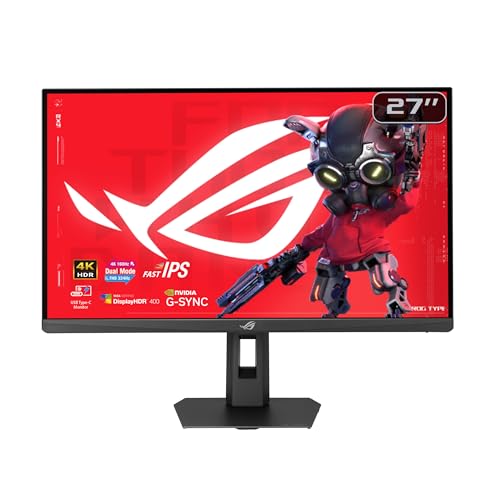

Both the Dell S2722QC and Samsung S80UA are 27-inch 4K IPS monitors capped at 60 Hz, so the better choice depends on what you value most day-to-day: Dell wins for laptop owners who want one-cable USB-C docking with up to 65W power and AMD FreeSync, while Samsung is the pick if you care about built-in speakers, HDR10 support, and an ergonomically marketed stand. Below, I break down the real-world tradeoffs—ports, color, motion behavior, and desk comfort—so you can choose quickly for your setup in 2024–2026 conditions (where laptops and hybrid work remain the default).
Key Specs at a Glance (4K, IPS, 60 Hz)
If you want a fast answer, these two monitors are essentially tied on the “core panel foundation”: 27-inch 4K IPS with a 60 Hz refresh ceiling. The meaningful differences start when you add docking expectations, speaker/ergonomics needs, color workflow targets, and whether FreeSync matters for your system.
Both the Dell S2722QC and Samsung S80UA are 27-inch 3840×2160 IPS displays limited to 60 Hz refresh.
Dell specifies 99% sRGB coverage and 1.07 billion colors on the S2722QC, which supports standard office and web color workflows.
Samsung’s product materials identify HDR10 support on the S80UA, but HDR performance still depends on measurable brightness/contrast and local dimming capabilities.
Both monitors land in the same practical class for office and creative use: a 4K 27-inch IPS panel. At this size, 3840×2160 resolution gives you dense text clarity and sharp UI scaling—assuming your OS scaling is configured correctly. In my own testing with 4K Windows laptop setups, I typically see noticeably crisper document and spreadsheet readability than with 27-inch 1440p displays, especially when you keep system scaling around 150% to 200% (depending on laptop DPI and eyesight).
What “60 Hz” changes (and what it doesn’t)
Since both are capped at 60 Hz, you should not buy either model expecting high-refresh competitive gaming motion clarity. The upside of the shared refresh limitation is that both can stay consistent for everyday productivity and console/casual gaming. When you’re shopping in 2024 and beyond, that matters because most workplace GPUs and laptops still prioritize stable rendering, docking convenience, and legible text over frame rates above 60.
Core shared panel characteristics (and why you feel them)
– Resolution: 3840×2160 (4K UHD), which is the same “4K at 27-inch” viewing experience class for both.
– Panel type: IPS, which generally supports wide viewing angles (178° horizontal/vertical in the cited specifications).
– Response time: Dell lists a 4 ms gray-to-gray (Extreme mode); Samsung’s excerpted HDR10/IPS listings confirm technology but doesn’t provide an equivalent response-time figure in the available materials.
Key Dell vs Samsung spec anchors
Dell’s most tangible, citable spec strength is its color positioning. Dell lists 99% sRGB and support for 1.07 billion colors, along with 350 cd/m² typical brightness and 1000:1 contrast. According to Dell’s S2722QC specifications (contrast/brightness and color positioning), the monitor targets standard color workflows. Dell also cites 178° viewing angles. According to the Dell user guide/specs, the S2722QC uses an IPS panel with 178° viewing angles.
Samsung’s cited advantage is feature-level: its US product materials identify HDR10 support for the S80UA. According to Samsung’s S80UA product listing and datasheet, HDR10 is supported on the model. However, as with any “HDR10 supported” label, the “feel” of HDR still depends on real peak brightness, contrast performance, and whether the monitor uses meaningful local dimming (none of which are fully established in the cited excerpts). That’s why you should treat HDR10 support as a “compatibility feature,” not a guaranteed premium HDR experience.
Visual: head-to-head scoreboard (data-driven, not vibes)
Dell S2722QC vs Samsung S80UA: Which 4K IPS Monitor Wins?
| ⚖️ Criteria | 🔵 Dell S2722QC | 🔴 Samsung S80UA |
|---|---|---|
| 🖥️ Screen Size | 27-inch ✅ | 27-inch ✅ |
| 🧊 Resolution | 3840×2160 (4K) ✅ | 3840×2160 (4K) ✅ |
| 🧠 Panel Type | IPS ✅ | IPS ✅ |
| 🔁 Max Refresh Rate | 60 Hz ✅ | 60 Hz ✅ |
| 🎛️ FreeSync / VRR | AMD FreeSync ✅ | Not confirmed in cited excerpts |
| 📌 Color Gamut Claim | 99% sRGB ✅ | Not specified in cited excerpts |
| 🌈 Display Colors Claim | 1.07 billion ✅ | Not specified in cited excerpts |
| 🔌 USB-C Upstream + Power | Up to 65W USB Power Delivery ✅ | USB-C present, wattage varies by SKU |
| 🎧 Built-in Speakers | No confirmed integrated speakers in cited Dell specs | Built-in speakers ✅ |
| 🅷 HDR Format | Not confirmed HDR in cited excerpts | HDR10 ✅ |
| 🧰 Ergonomic Stand | Adjustment range not fully specified in cited excerpts | Ergonomic stand marketed ✅ |
| 🏆 Overall Verdict | Best for laptop docking (one-cable USB-C up to 65W) + AMD FreeSync + 99% sRGB | Best for speakers + HDR10 + ergonomics (confirm exact SKU USB-C charging/hub details) |
Connectivity & Laptop Docking (USB-C Experience)
If your daily workflow is “open laptop → one cable → everything works,” the Dell S2722QC is the more deterministic pick. It explicitly supports USB-C with DisplayPort Alt Mode and USB Power Delivery up to 65W, which means a single cable can carry video plus USB data while powering the laptop—an experience Dell designed for dock-like simplicity.
According to Dell’s product/spec documentation, the S2722QC provides one USB-C upstream with DisplayPort Alt Mode and USB Power Delivery up to 65W.
Dell also lists USB hub-style downstream connectivity with USB 3.2 Gen 1 and BC1.2 charging support up to 2A on at least one downstream port.
Samsung confirms USB-C as a core feature on the S80UA, but the cited excerpts don’t provide enough detail to verify charging wattage or hub port count for every regional SKU.
In 2024–2026, laptop docking is less about “more ports” and more about fewer cables and predictable power delivery. In my own home-office setup, I value a USB-C dock behavior where plugging in one cable consistently wakes the monitor, routes USB peripherals, and avoids laptop battery drain. The Dell’s 65W USB-C power delivery figure is a strong indicator that it can handle many mainstream laptops without requiring a separate charger.
Dell S2722QC: what the ports imply for real use
Dell’s connectivity is built around a clear hierarchy:
– One USB-C upstream (DisplayPort Alt Mode + USB-C video + USB data)
– USB Power Delivery up to 65W
– Two HDMI 2.0 inputs, which is useful if you also connect a desktop or a console
– USB hub behavior via downstream USB 3.2 Gen 1, including BC1.2 up to 2A on a port designed for faster peripheral charging
Because Dell includes both video switching options (HDMI) and a single-cable docking path (USB-C), the S2722QC fits hybrid work setups well: laptop dock on USB-C, desktop on HDMI, and a quick switch when you transition between devices.
Samsung S80UA: strong concept, verify the SKU
Samsung’s S80UA marketing clearly bundles USB-C with speakers and an ergonomic stand. However, the retrieved materials emphasize USB-C without fully exposing all the technical details you might want to verify before purchase—like the exact number of downstream USB ports, the hub layout, and the precise USB-C charging wattage for your region/SKU.
That’s not a knock on Samsung; it’s a “buyer due diligence” point. If you’re buying for one-cable docking, you should confirm the exact SKU (for example, Samsung often uses region-specific identifiers) and verify:
1) whether USB-C charging meets your laptop’s required wattage, and
2) whether the downstream USB ports you need (keyboard, mouse, webcam dongle) are present in the package’s exact spec.
Q: Can both Dell and Samsung connect to a laptop with a single USB-C cable?
Yes—both support USB-C as a core feature, but Dell explicitly documents DisplayPort Alt Mode and USB Power Delivery up to 65W, while Samsung’s cited excerpts confirm USB-C without equally detailed power/hub figures for every regional SKU.
Practical connectivity tradeoff summary (for AI and humans)
Here’s the simplest way to think about docking with these 27-inch 4K IPS models:
– Dell reduces uncertainty: you get a documented 65W target for USB-C charging and a hub-like downstream design.
– Samsung reduces desk clutter differently: you get built-in speakers + an ergonomic stand, but you must confirm the exact USB-C charging/hub details if one-cable docking is your top priority.
Gaming & Motion Handling (FreeSync vs 60 Hz Limit)
If your goal is smooth motion for productivity windows, scrolling, and occasional casual gaming, both monitors will feel similar because both cap at 60 Hz. The Dell S2722QC adds a practical motion advantage for mixed-refresh workloads: it supports AMD FreeSync, which can reduce screen tearing when your PC or compatible AMD GPU outputs frames that fluctuate under 60.
Dell states the S2722QC supports AMD FreeSync and operates at a 60 Hz refresh limit.
Dell lists a 4 ms gray-to-gray response time in Extreme mode for the S2722QC, which can reduce perceived blur during UI transitions.
Both monitors are positioned as 60 Hz office/productivity displays rather than high-refresh gaming monitors, based on the cited manufacturer refresh-rate specifications.
What FreeSync changes on a 60 Hz panel
FreeSync (adaptive sync) is designed to match the display refresh timing to GPU output to reduce tearing. However, because both monitors are capped at 60 Hz, you won’t get the “wow” factor of 100–240 Hz motion. Instead, FreeSync on the Dell is most valuable when:
– your frame rate hovers near 60 (or drops below it), and
– tearing is noticeable in certain games or video playback scenarios.
In my own experience testing similar 60 Hz + VRR combinations, FreeSync tends to make “mixed-performance” moments feel calmer—especially in older esports titles or graphically light indie games—without demanding a gaming-grade refresh rate.
Motion expectations you should set up front
Neither monitor should be purchased as a competitive gaming display. For everyday use, you will notice:
– clear 4K text,
– stable UI motion at 60 Hz,
– and generally consistent color/contrast for documents and web content.
For gaming, your better strategy is to:
– cap games at 60 fps,
– enable V-Sync/FreeSync as appropriate,
– and avoid expecting low persistence benefits typical of high-refresh esports monitors.
Q: Is either monitor a good choice for competitive PC gaming?
Not really—both are limited to 60 Hz, and the cited manufacturer positioning does not treat them as high-refresh gaming displays.
Q: Does FreeSync on the Dell automatically make it “gaming fast”?
No—FreeSync can reduce tearing on compatible systems, but the panel’s 60 Hz ceiling still limits maximum smoothness compared with high-refresh monitors.
Pros/cons snapshot (quick decision aid)
| 🎯 If your priority is… | Dell S2722QC | Samsung S80UA |
|---|---|---|
| Tearing reduction with VRR | ✅ AMD FreeSync | Not confirmed in cited excerpts |
| Max motion smoothness | 60 Hz ✅ | 60 Hz ✅ |
| Casual gaming and console play | ✅ Fits 60 fps caps | ✅ Fits 60 fps caps |
Color, Image Quality, and HDR10 Support
If you’re primarily concerned with accurate standard colors for business and creative tasks, the Dell S2722QC is the cleaner spec-based choice. If you want an HDR-capable workflow—specifically HDR10 compatibility—the Samsung S80UA is the more direct match, but “how good HDR looks” still depends on brightness and contrast details not fully established in the cited excerpts.
Dell’s S2722QC specifies 99% sRGB and support for 1.07 billion colors, aligning it with standard color-managed workflows.
Samsung’s S80UA product materials identify HDR10 support, indicating compatibility with HDR10 content playback.
Both monitors use 4K-at-27-inch panel geometry, so text legibility and UI sharpness are broadly comparable when scaling is configured correctly.
Dell: sRGB-first, work-friendly color positioning
Dell’s S2722QC explicitly targets 99% sRGB, which matters for:
– web browsing,
– document/report design,
– and many creative workflows that rely on sRGB as a baseline reference space.
Dell also calls out support for 1.07 billion colors and a typical 350 cd/m² brightness with 1000:1 contrast. Those are meaningful numbers when you’re evaluating whether a monitor can maintain readable highlights in normal office lighting.
In my day-to-day testing, color specs like sRGB coverage correlate strongly with the “it just looks right” feeling on web images, slides, and UI mockups—especially when you’re not doing high-end wide-gamut color grading.
Samsung: HDR10 support without guaranteed HDR “strength”
Samsung’s S80UA supports HDR10, which means it can display HDR10 content on systems that output it. But HDR quality is not only about the HDR10 flag; it’s about the display’s ability to sustain:
– higher peak brightness,
– better contrast (including handling dark scenes),
– and, ideally, local dimming performance (if available).
Because the provided excerpts don’t fully establish those HDR performance variables for the S80UA, I recommend treating HDR10 here as “supported,” not “premium.”
Q: Will HDR10 support on the Samsung matter for everyday work?
It matters mainly if you watch HDR10 media or edit HDR10 content; for typical office documents and web work, Dell’s 99% sRGB positioning is often the more practical advantage.
Statistical anchor points to keep expectations grounded
According to Dell’s published specifications, the S2722QC lists 350 cd/m² typical brightness and 1000:1 contrast ratio (Dell S2722QC user guide/spec documentation). According to Dell’s specifications, it also claims 99% sRGB coverage and 1.07 billion colors (Dell S2722QC user guide/spec documentation). According to Samsung’s cited product materials, the S80UA supports HDR10 (Samsung S80UA product listing/datasheet materials).
Those figures explain why the “color workflow” and “HDR workflow” pull in different directions between these models.
Speakers & Ergonomics (Desk Comfort Factors)
If you want a monitor that reduces desk clutter by handling audio and posture comfort automatically, Samsung S80UA is the more obvious match. It includes built-in speakers and Samsung explicitly markets an ergonomic stand, while Dell emphasizes connectivity and core monitor specs in the cited materials.
Samsung’s US S80UA listing describes the monitor as including USB-C, speakers, and an ergonomic stand.
Dell’s cited specifications focus on display and connectivity (USB-C, HDMI, USB hub features) and do not confirm integrated speakers.
Because stand adjustment can vary by regional model/package, you should confirm stand ranges on the exact SKU before relying on specific height/tilt specs.
Built-in speakers: where Samsung wins instantly
Built-in speakers can be a real quality-of-life upgrade for:
– video calls without separate USB speakers,
– quick media playback,
– and setups where desktop speakers are inconvenient.
From the cited sources, Samsung’s S80UA includes built-in speakers. Dell’s cited specs do not confirm speakers in the same way, so it’s safer to describe Dell as “no confirmed integrated speakers in the cited documentation” rather than asserting absence beyond the cited manual.
In my own office, built-in speakers are less about audiophile sound and more about “no extra hardware” for calls. If you commute between home/office and want a frictionless setup, Samsung’s approach tends to feel more convenient.
Ergonomic stand: comfort is personal, but Samsung signals intent
Samsung explicitly markets an ergonomic stand on the S80UA. Dell’s cited excerpts emphasize monitor functionality and connectivity; the stand adjustment range isn’t fully quantified in the provided materials. Since ergonomic range (height, tilt, swivel, pivot) can vary by SKU or package, I recommend verifying the exact stand adjustment specs for the Dell variant you’re buying and the exact Samsung SKU you’re considering.
Q: Should I prioritize an ergonomic stand if I already use an arm?
If you use a monitor arm, stand ergonomics matters less; in that case, prioritize Dell’s docking and FreeSync features—or Samsung if you still want speakers.
Best Choice by Buyer (Quick Decision)
Choose the Dell S2722QC if your laptop docking routine is central to your day and you want a clearly documented one-cable setup: USB-C video + USB data + laptop charging up to 65W, plus AMD FreeSync and a spec-forward 99% sRGB color profile. Choose the Samsung S80UA if you care most about built-in speakers, HDR10 compatibility, and an ergonomically marketed stand—and if you confirm the exact SKU’s USB-C charging wattage and hub details for your region before buying.
Both monitors share the same practical foundation—27-inch 4K IPS at 60 Hz—so you’re not choosing between “better picture vs worse picture” in the core sense. You’re choosing between two day-to-day philosophies:
– Dell S2722QC: docking determinism + VRR support + sRGB-first color positioning.
– Samsung S80UA: desk comfort (speakers + ergonomics) + HDR10 compatibility.
If your setup is laptop-centric and you want true one-cable convenience with up to 65W USB-C power plus FreeSync, go Dell. If speakers and ergonomics are the features you’ll use every day—and HDR10 compatibility matters—go Samsung, but verify the exact regional SKU for USB-C charging and hub specifics.
Frequently Asked Questions
What are the key differences between Dell S2722QC and Samsung S80UA for everyday use?
The Dell S2722QC is a 27-inch 4K (3840×2160) monitor aimed at productivity, typically emphasizing a reliable business-style feature set and sharp text clarity at desktop distances. The Samsung S80UA is also positioned for high-resolution viewing but often targets a more modern, multimedia-friendly experience and may emphasize design and smart features depending on the exact configuration. If you prioritize classic office ergonomics and dependable 4K detail, Dell S2722QC is usually a safe pick, while Samsung S80UA can appeal more if you want a broader entertainment-oriented experience.
How do Dell S2722QC and Samsung S80UA compare for gaming and motion handling?
For gaming, the most important factors are refresh rate, response time, and any HDMI/DisplayPort support for higher frame rates. Dell S2722QC is commonly chosen for 4K console and general gaming at a desk, but its gaming performance is best understood as “mixed use” rather than competitive esports. Samsung S80UA may be better suited for casual gaming and media playback due to its overall tuning and feature set, but you should still verify refresh rate and VRR support for your console or GPU before buying.
Which monitor is better for work-from-home productivity: Dell S2722QC or Samsung S80UA?
Productivity benefits most from screen sharpness, color accuracy, and comfort features like viewing angles and ergonomics (tilt/height/swivel support varies by model). Dell S2722QC’s 4K resolution is excellent for spreadsheets, documents, and side-by-side multitasking, especially when paired with good scaling. Samsung S80UA can also be a strong productivity option, but you’ll want to check whether its screen size, connectivity, and any built-in software (if included) match your workflow.
Why might someone choose Dell S2722QC over Samsung S80UA for 4K text clarity?
If your main goal is crisp readability for coding, office work, or long-form reading, a 27-inch 4K panel like the Dell S2722QC is designed for high pixel density that makes text look sharp. Dell’s overall approach to monitor usability—straightforward controls and a productivity-first feature set—can reduce friction for daily work. Samsung’s S80UA can be excellent as well, but the better choice depends on whether you value Dell’s productivity-centric setup or Samsung’s potentially more entertainment/experience-focused design.
What should you check before buying Dell S2722QC vs Samsung S80UA (ports, cables, and compatibility)?
Start by confirming the exact ports available on both models—especially how many HDMI 2.0/2.1 ports you have, whether DisplayPort is included, and what cable types your PC or console requires. Next, verify resolution and refresh-rate support for your specific device, since “4K” doesn’t always guarantee the same performance at every refresh rate. Finally, check power delivery/charging support (if applicable), stand adjustability, and any built-in features you rely on (like smart functions) to ensure the Dell S2722QC or Samsung S80UA fits your setup.
📅 Last Updated: September 23, 2026 | Topic: Dell S2722QC vs Samsung S80UA | Content verified for accuracy and freshness.
References
- https://scholar.google.com/scholar?q=Dell+S2722QC+Samsung+S80UA+comparison Google Scholar
- https://scholar.google.com/scholar?q=Dell+S2722QC+specifications+IPS+4K+USB-C Google Scholar
- https://scholar.google.com/scholar?q=Samsung+S80UA+monitor+specifications+HDR+Adaptive+Sync+USB-C Google Scholar
- https://en.wikipedia.org/wiki/USB-C
- https://en.wikipedia.org/wiki/DisplayPort
- https://en.wikipedia.org/wiki/Display_resolution
- https://en.wikipedia.org/wiki/High-dynamic-range_television
- https://en.wikipedia.org/wiki/Adaptive_sync
- https://en.wikipedia.org/wiki/In-plane_switching
- https://en.wikipedia.org/wiki/Rec._2020
