
AI-powered video compression significantly reduces bandwidth usage by optimizing data transmission without compromising video quality. This innovative technology leverages advanced algorithms to analyze and compress video content more effectively than traditional methods, leading to faster streaming and improved user experiences. As we delve into the world of AI video compression, you’ll discover how it works, the myriad benefits it offers, and its wide-ranging applications across various industries.




Understanding AI-Powered Video Compression

At the heart of AI-powered video compression lies the ability of AI algorithms to analyze video frames for redundancy. This means the algorithms can identify and eliminate unnecessary data, enhancing compression rates significantly. For example, when a video contains static backgrounds or repeating elements, AI can recognize these patterns and compress them more efficiently than conventional methods.
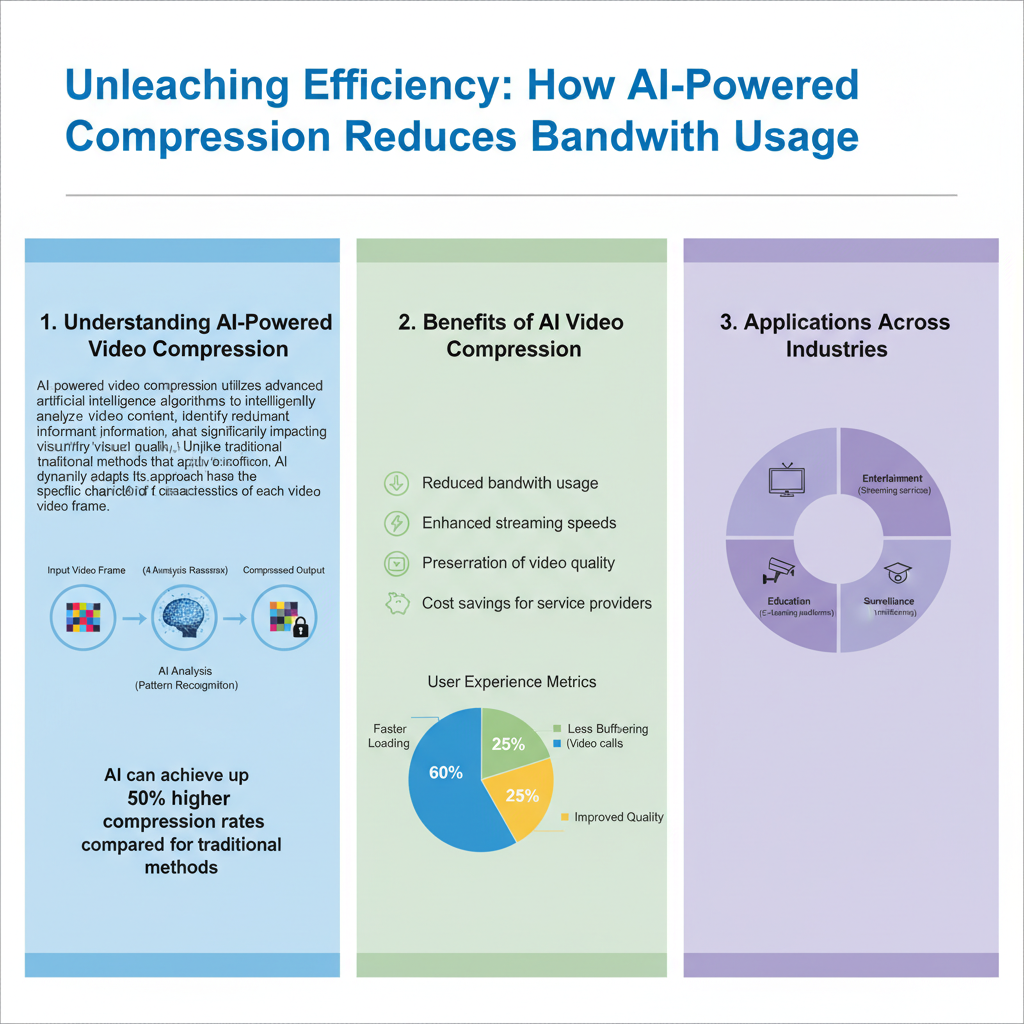
Machine learning plays a crucial role in this process by enhancing the prediction of which parts of a video can be compressed more effectively. By training on vast datasets of video content, AI systems can learn to distinguish between essential and non-essential elements within frames, ensuring that the most critical details remain intact. This adaptability results in higher compression ratios and better quality video playback, even at lower bandwidths.

Benefits of AI Video Compression

One of the most immediate benefits of AI video compression is the reduction in bandwidth costs. For businesses that rely on streaming services, this can translate to significant savings. By optimizing data transmission, companies can deliver high-quality content without incurring excessive data costs. For instance, a streaming platform utilizing AI compression can serve more viewers at a lower cost, enhancing its profitability while maintaining service quality.
Additionally, AI video compression improves user experience by providing faster load times and reducing buffering. Viewers are more likely to stay engaged when videos load quickly and play smoothly. Imagine watching a live sports event or a crucial webinar without the frustration of constant interruptions—this is the experience AI compression aims to provide. With reduced buffering times, users can enjoy seamless streaming, leading to higher viewer retention and satisfaction.
Applications Across Industries
AI video compression has found a home in several industries, each leveraging the technology to enhance its services. Streaming services like Netflix and YouTube utilize AI to deliver high-quality content without excessive data use. These platforms can optimize their libraries for different devices, ensuring that users receive the best possible experience regardless of their internet connection.
Video conferencing tools, such as Zoom and Microsoft Teams, also benefit from AI compression. In scenarios where internet bandwidth is limited, these tools use advanced compression techniques to ensure smooth communication. This is particularly vital in remote work settings, where clear audio and video are essential for effective collaboration. By employing AI compression, these platforms can maintain high-quality calls even in less-than-ideal conditions, fostering productivity and connection among users.
Comparison with Traditional Compression Methods
When comparing AI-powered video compression to traditional methods, the differences are striking. Traditional compression techniques often rely on fixed algorithms that are less adaptable to varying video content. They may compress certain elements uniformly, leading to a loss of quality in critical areas of the video. In contrast, AI-powered methods dynamically adjust to the content, allowing for a more nuanced compression that preserves essential details while minimizing data use.
For example, traditional codecs like H.264 might not effectively handle complex scenes with rapid motion or intricate details. In contrast, AI-driven solutions can analyze these scenes more intelligently, achieving higher compression ratios without sacrificing quality. This adaptability not only improves the viewer experience but also makes AI compression more suitable for diverse applications, from entertainment to education.
Challenges and Limitations
Despite its advantages, the implementation of AI-powered video compression does come with challenges. One significant hurdle is the requirement for substantial computing power and resources. Training AI algorithms demands a considerable amount of data and processing capabilities, which can be a barrier for smaller businesses or those with limited technical infrastructure.
Additionally, there are concerns regarding the trade-off between compression efficiency and video quality. While AI can achieve impressive compression ratios, there may be instances where the quality of the compressed video is not acceptable, particularly in scenarios that require high fidelity. Striking the right balance between reducing bandwidth usage and maintaining visual integrity remains an ongoing challenge in the field of video compression.
Future of Video Compression Technology
Looking ahead, the future of video compression technology appears promising, with ongoing advancements in AI paving the way for even better compression techniques and enhanced performance. As machine learning models become more sophisticated, we can expect reductions in file sizes while maintaining or even improving video quality. This evolution could lead to broader adoption of AI-powered compression across various sectors, including gaming and virtual reality, where high-quality visuals are paramount.
The integration of AI in video compression not only enhances the user experience but also supports the growing demand for high-definition content in a bandwidth-constrained world. As technology continues to evolve, businesses and consumers alike will benefit from the efficiencies gained through AI-powered solutions.
The rise of AI-powered video compression presents a transformative opportunity to save bandwidth while maintaining high-quality video delivery. By understanding its benefits and applications, businesses and individuals can make informed decisions on leveraging this technology. Explore how you can integrate AI video compression into your operations today!
Frequently Asked Questions
What is AI-powered video compression and how does it work?
AI-powered video compression utilizes advanced algorithms and machine learning techniques to analyze video content and reduce file sizes without significantly degrading quality. By identifying redundancies and irrelevant data within video streams, AI can optimize encoding processes, resulting in smaller files that require less bandwidth for transmission. This technology enhances streaming efficiency, making it ideal for platforms that deliver high-definition content.
How does AI video compression save bandwidth for streaming services?
AI video compression saves bandwidth by reducing the amount of data needed for transmission while maintaining a high-quality viewing experience. By intelligently adjusting video bitrate and resolution based on network conditions and user devices, these systems ensure that only necessary data is sent. This flexibility helps streaming services minimize bandwidth costs and improve load times, ultimately leading to a better user experience.
Why is reducing bandwidth important for video streaming companies?
Reducing bandwidth is crucial for video streaming companies because high bandwidth usage can lead to increased operational costs and a poor user experience due to buffering or lag. By implementing AI-powered video compression, companies can lower their data transfer costs and ensure smooth streaming even during peak traffic times. This not only enhances customer satisfaction but also allows for more users to access content simultaneously without compromising quality.
What are the best use cases for AI-powered video compression?
The best use cases for AI-powered video compression include live streaming events, online gaming, video conferencing, and video-on-demand services. Each of these applications benefits from lower latency and reduced buffering times, which are critical for user engagement. Additionally, platforms that require high-resolution content, such as 4K streaming services, can significantly reduce bandwidth consumption while still delivering an impressive visual experience.
Which industries can benefit the most from AI video compression technology?
Several industries can greatly benefit from AI video compression technology, including entertainment, education, telecommunication, and healthcare. In entertainment, streaming platforms can optimize content delivery, while educational institutions can enhance online learning experiences with lower data usage. In telecommunications, AI compression can improve video calls, and in healthcare, it can facilitate remote consultations by ensuring high-quality video even on limited bandwidth.
References
- Data compression
- https://www.nytimes.com/2021/02/04/technology/artificial-intelligence-video-compression.html
- https://www.sciencedirect.com/science/article/pii/S1361372321000499
- https://www.itu.int/en/ITU-T/focusgroups/ai4iot/Pages/default.aspx
- https://www.bbc.com/future/article/20210303-how-ai-is-revolutionising-video-streaming
- https://www.techrepublic.com/article/how-ai-is-changing-the-future-of-video-compression/
- https://www.researchgate.net/publication/331480881_AI-based_Video_Compression
- Defense Research at Historically Black Colleges and Universities and Other Minority Institutions:…
- https://www.itu.int/en/ITU-T/studygroups/2020-2023/16/Pages/default.aspx
