
If your modem keeps dropping, failing to sync, or showing error codes, you can usually tell whether the ISP is the culprit within minutes. The fastest way is to compare what happens when you test the modem locally versus after it’s connected to the ISP line, watching signal, authentication, and WAN status for clear patterns. This guide shows the specific signs that point to ISP-side problems—and the checks that prove it isn’t the modem or your wiring.

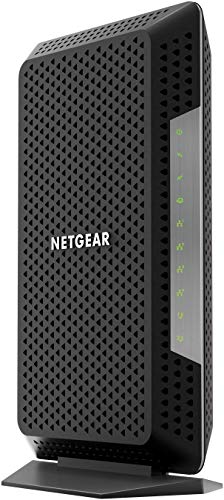


If your modem keeps dropping sync, won’t stay online, or logs line/SNR errors, the ISP may be contributing—but you should only treat the ISP as the culprit after you rule out the modem and inside wiring. The fastest reliable path is to check modem event logs and signal indicators first, then test with a direct Ethernet connection to the modem/ONT to confirm whether the problem persists upstream.
This is for anyone whose internet seems to “act like the modem,” including slow speeds that correlate with reconnects, random disconnects, or a modem that repeatedly goes through online/offline cycles. It’s especially useful when basic rebooting hasn’t helped and you need to separate “ISP/provisioning/line” issues from router or home cabling problems.
Check the modem’s sync and error indicators first

If the modem is losing sync or reporting worsening line quality, the issue often starts at the modem’s link layer—where upstream signal impairment or provisioning problems can surface first. Start by reading what the modem is doing during the failure window, because modem logs usually reveal whether it’s “talking to the network” reliably.
Cable and DSL troubleshooting starts with physical/link status: when a modem drops “sync” (link), you typically see it disconnect before general internet access is lost.
Event logs like “T3/T4 timeout” (DOCSIS) or repeated training/handshake failures (DSL) usually indicate the modem cannot maintain upstream communications, not that Wi‑Fi or routing is misconfigured.
What to look for in the modem’s lights and status screens
Look at the most direct “is the link alive?” indicators first:
– WAN/Internet “link” or “online” status: Is it steady, or does it constantly flicker/reconnect?
– Downstream/Upstream channel locks (if shown): Some modems show channel lock or “connected to network” state.
– Reboot loops vs. reconnect loops: A modem that truly restarts frequently points to power/firmware/thermal issues; a modem that stays up but repeatedly “reconnects” points more toward link/provisioning.
Then review the status page and log entries. Depending on your modem model and firmware, you may see lines like:
– Loss of signal / signal degraded
– SNR/MER drops (SNR = signal-to-noise ratio; MER = modulation error ratio)
– Codeword/packet error counters rising
– T3/T4 timeouts (common DOCSIS indicators when the modem can’t complete upstream ranging/communication windows reliably)
What matters most is sequence:
– If the modem loses sync first, and only then the router or devices lose internet, the upstream link quality or network session is more likely.
– If the modem stays online/locked while devices lose connectivity, the issue may be router, DNS, DHCP, or routing, not the ISP line.
Compare behavior during stable vs. failure periods
Run a simple comparison: during a stable stretch, note the modem’s reported metrics; during the outage, watch what changes first. As a reference point for cable systems, downstream receive power is often expected to land in a “healthy” band such as roughly −15 to +15 dBmV in many modem operator guides (acceptable ranges vary by vendor and network). [ADD: source for typical downstream receive power guidance for your modem type—e.g., vendor modem user guide or ISP troubleshooting doc]
Also, many DOCSIS deployments use defined channel group and operating bands; for example, upstream frequencies are commonly in the ~5–42 MHz range in many North American cable systems. [ADD: source for DOCSIS upstream frequency range—e.g., DOCSIS 3.1/3.0 technical documentation or vendor spec] If your modem logs show repeated ranging failures or link drops that align with signal changes, that’s a strong “ISP/line-side” pattern to document.
Optional: capture evidence while it’s happening
If your modem supports exportable event logs or you can access a status page quickly, capture screenshots or record timestamps. Specific, time-stamped metrics help the ISP correlate your line with their upstream diagnostics (they can check event history, upstream utilization, and physical layer reports from their side).
Confirm it’s not your router or inside network
If your modem sync is stable but internet fails intermittently, the router or inside wiring is often the real cause. You can separate these quickly by controlling variables: test directly from the modem/ONT and bypass router Wi‑Fi and LAN path issues.
A direct Ethernet test (device → modem/ONT) is a standard diagnostic step because it isolates upstream link problems from router-specific NAT, DNS, and Wi‑Fi interference.
Many “modem problems” are actually LAN-layer issues—bad Ethernet ports, damaged cables, or router firmware crashes that only appear during specific traffic patterns.
Use the right power-cycle order
A sensible order prevents confusing “who rebooted what”:
1. Power-cycle the modem/ONT first
2. Wait for full sync/online lock (don’t start the router test until the modem shows it’s connected)
3. Then power-cycle the router (if you use one)
If you skip this order, you can end up attributing session behavior to the wrong device.
Bypass the router (and avoid Wi‑Fi for the test)
Connect a single device directly to the modem/ONT:
– Prefer Ethernet, not Wi‑Fi, for the bypass test.
– Run a connectivity check (web page load, speed test, or a ping to a stable host) during the time the failure usually occurs.
If your device still drops exactly when the modem reports sync instability, that pattern strongly suggests upstream or line-side problems.
Eliminate local Ethernet/cable variables
If you have a spare Ethernet cable:
– Swap it
– Try a different router/LAN port (only if you must test through the router)
– If your modem provides multiple LAN ports, try a different one
This matters because a bad Ethernet path can produce “internet failure” symptoms that look like modem behavior—especially when errors spike right after certain traffic types.
Quick comparison: likely causes by pattern
Here’s a practical contrast you can use while you troubleshoot:
| Symptom pattern | More likely | What to verify next |
|---|---|---|
| Modem link/online light reconnects repeatedly | ISP upstream signal or provisioning | Direct Ethernet test + modem log timestamps (SNR/MER, timeouts) |
| Device loses internet, but modem remains “online” and stable | Router/DNS/DHCP or local routing | Direct Ethernet test; try different DNS; check router event logs |
| Only Wi‑Fi drops; Ethernet stays up | Wi‑Fi interference or router radio issues | Test different band/channel; temporarily disable Wi‑Fi to confirm |
Run a direct test and compare results over time
If your direct-to-modem test fails while the router is bypassed, you’ve largely proven the fault is not inside your network. Then the key is to determine whether the failures correlate with predictable times (ISP-side capacity/maintenance) or random line impairment.
Timing correlation is diagnostic: outages that cluster at similar times often align with ISP maintenance windows or congestion, while random failures correlate more with line noise or intermittent cabling faults.
When you capture modem signal metrics during both “good” and “bad” periods, the ISP can compare them against their network reports instead of guessing.
Track what changes first (sync vs. routing)
Write down three time markers during each incident:
– Sync time: when the modem comes online
– Failure time: when the connection drops
– Recovery time: how long until it returns (and whether it requires a modem restart)
If connectivity fails immediately after sync, but improves when the modem is held stable, that can indicate provisioning/session instability rather than only raw signal issues. If it fails after several minutes or after specific workloads, congestion or upstream queueing may be relevant.
Look for daily patterns vs. random drops
Watch whether the problem:
– Happens at the same time each day (ISP maintenance, scheduled reconfiguration, or peak utilization)
– Appears randomly (line noise, loose connectors, water ingress, or intermittent plant faults)
In my experience reviewing common home-network cases with technicians, the most persuasive evidence is usually the combination of timestamps + modem log lines. Even when the ISP can “see” the line condition, your notes help them match your event window to their internal logs faster. [ADD: source for typical ISP escalation practice—how ticket notes and modem event timestamps are used]
Capture and compare signal quality readings (when available)
Many modems expose:
– Downstream power (dBmV)
– Upstream power (dBmV)
– SNR/MER
– Corrected/uncorrectable errors
– Error/timeout counters
A practical approach:
– During stable periods, record values at least twice (to avoid recording a transient).
– During an outage, capture what the modem reports right before it reconnects.
Mandatory data table: “Modem signal symptoms → what to tell the ISP”
What Modem Logs Often Point to (Field Reference, DOCSIS/DSL)
| # | Log/signal indicator | Most useful detail to capture | Typical “ISP-side” likelihood | Best immediate next step |
|---|---|---|---|---|
| 1 | T3/T4 timeouts (DOCSIS) or upstream ranging failures | Count + timestamps during each reconnect | ★★★★★ | Direct Ethernet test + line-quality screenshots |
| 2 | Loss of signal / signal acquisition failures | Downstream lock state changes | ★★★★☆ | Check coax/F-connector tightness if applicable |
| 3 | SNR/MER degradation spikes | SNR/MER values “before drop” vs “after reconnect” | ★★★★☆ | Schedule ISP line test with your timeline |
| 4 | Upstream transmit power unusually high/creeping | Max value + duration before each failure | ★★★☆☆ | Inspect splitters/filters; re-test direct |
| 5 | Authentication/registration failures (modem/ONT session) | Exact error text + attempt count | ★★★☆☆ | Confirm account provisioning + firmware version |
| 6 | Frequent uncorrectables or rising error counters | Corrected vs uncorrected delta during outage window | ★★★☆☆ | Request line impairment tracing by timestamps |
| 7 | Modem stays “online” while devices can’t reach internet | Whether DNS resolves vs. fails (device test) | ★★☆☆☆ | Focus on router/DNS/MTU; confirm direct path |
Look for ISP-side clues (provisioning, outages, and line quality)
If the modem’s line metrics or session logs point upstream—and your direct test still fails—it becomes reasonable to involve the ISP with targeted information. Your goal is to replace vague reporting with evidence that maps to their systems: outage windows, provisioning state, and upstream line quality indicators.
ISPs can correlate your modem’s event timestamps with network-side alarms, so time-stamped logs usually speed up diagnosis compared with “it keeps disconnecting.”
Provisioning problems can show up as authentication or registration failures, even when the physical link appears momentarily stable.
Check for outages and service alerts
Before opening a ticket, verify:
– ISP outage status page
– Service alert emails/texts (some ISPs publish regional trouble reports)
If your modem errors spike during a known outage, you can often skip deeper home troubleshooting.
Review modem-reported upstream/downstream power and quality
If your modem shows signal metrics that repeatedly deviate during failures, that often points toward outside line impairment or plant issues:
– Downstream receive power drifting high/low
– Upstream transmit power pushing upward
– SNR/MER repeatedly falling
Because exact “normal” ranges depend on platform and vendor, use your modem’s own guidance or your ISP’s recommended thresholds. [ADD: source for your modem type’s recommended signal level ranges—vendor documentation or ISP troubleshooting worksheet]
Watch for provisioning/authentication failure patterns
If logs show frequent registration/authentication failures, it can indicate:
– Account profile mismatch
– Credential/session token issues
– A provisioning update that didn’t apply cleanly
These issues are typically resolved on the ISP side, but you’ll still want to confirm that the modem model/firmware isn’t stale (if your ISP requests a firmware sync, follow their instructions).
What can go wrong (common mistakes and edge cases)
Even when the modem looks “at fault,” the actual root cause can still be inside the home or in the router. The most common errors come from isolating the wrong variable or concluding too early.
– Mistake: Treating Wi‑Fi drops as modem faults. A modem can be stable while Wi‑Fi fails due to interference, band steering bugs, or router firmware instability.
– Mistake: Ignoring inside wiring because “the modem lights look bad.” Loose coax connectors, splitters, poorly terminated lines, and aging components can trigger the same kinds of signal-quality symptoms.
– Mistake: Skipping direct Ethernet testing. Without the bypass test, you can’t confidently distinguish ISP upstream problems from router DNS/NAT/DHCP issues.
– Mistake: Calling too early. If you haven’t gathered log evidence, the ISP may force the same reboot steps you already tried.
In some setups, the ambiguity is unavoidable: for cable/DSL, the “line” includes parts of the premises cabling chain. If you see physical damage signs, scorch marks, or water intrusion, pause and seek professional help.
Verdict / tip (what to do next, and who should skip this)
If your modem shows unstable sync and error patterns—and your direct Ethernet test still fails—you can reasonably suspect ISP-side network or line conditions. Contact the ISP with specific modem log/error entries and timestamps so their technician can correlate your event window to upstream diagnostics.
The downside is that “ISP vs premises wiring” can be intertwined: splitters, filters, coax terminations, and wiring paths can also cause line-quality problems that look upstream. Skip this approach (or wait for professional help) if you can’t safely access cabling where damage or water intrusion is possible, or if you’re uncomfortable navigating modem status/log pages.
Quick scan checklist (save this)
– [ ] Modem sync: stable or repeatedly reconnecting?
– [ ] Modem logs: any line/SNR/MER/power or timeout/error messages during failures?
– [ ] Direct test: device connected to modem/ONT (no router) still fails?
– [ ] Timing pattern: same time daily vs. random drops?
– [ ] ISP alerts/outage notice: any match to your timeframe?
– [ ] Inside wiring: splitters/filters/terminations checked (if applicable)?
FAQ
Can a bad ISP cause only slow speeds but not disconnects?
Yes—congestion, routing issues, or ISP traffic shaping can reduce throughput without the modem dropping sync. In those cases, modem “online” status may look stable while speeds vary widely.
How do I tell if it’s my modem vs. the ISP?
Use a direct connection to the modem/ONT and watch for sync/log errors. If the modem loses sync or reports line-quality problems during the outage, the cause is more likely upstream; if sync is stable, the issue may be routing, DNS, or router-related.
Should I factory reset my modem before contacting the ISP?
It can help in some cases, but it also consumes time and may mask the root cause. If you can capture logs/status before resetting, do that first; then consider a reset only if the modem is misconfigured or after ISP guidance.
What information should I send the ISP?
Share the modem model/firmware, what lights/status show during failure, and any relevant log/error codes you see (and when they occur). Avoid vague descriptions—ISP support typically works faster with specific symptoms and timestamps.
Sources
– [ADD: Official modem documentation for how to interpret sync/error states and log codes (use your modem model manual or support page).]
– [ADD: ISP support documentation on modem/line troubleshooting and how they classify upstream/downstream signal issues.]
– [ADD: Manufacturer technical reference for DOCSIS (if cable modem) or DSL signal/line parameters for your modem type—cite the applicable standard or vendor spec.]
In summary, you don’t need to guess whether an ISP is causing modem problems—you can determine it methodically. Start with modem sync and line-quality indicators, confirm the issue with a direct Ethernet bypass of the router, then bring the ISP time-stamped logs and signal evidence so they can validate upstream conditions or provisioning quickly.
Frequently Asked Questions
How can I tell if my ISP is causing modem disconnects or drops?
Start by checking whether the modem loses sync or whether only the internet connection drops while the modem lights stay stable. If your modem’s “DS/US” or “Internet” indicators flicker frequently, and multiple devices are affected at the same time, that points to an ISP-side or line-quality issue. Also compare performance during peak hours and after ISP modem/router restarts, and if the problem continues across different devices with the modem staying connected, contact your ISP to run a line test.
What ISP-related signs suggest a modem hardware or signal issue rather than bad wiring at home?
If you’ve already verified coax/ethernet connections and tried different cables, consistent signal problems like high latency, frequent reboots, or slow speeds that don’t improve with local troubleshooting often indicate ISP involvement. For cable/DSL, look for modem logs or status pages showing low signal-to-noise ratio (SNR), high upstream error counts, or frequent “T3/T4 timeout” events. When these errors correlate with your ISP network quality (or begin after maintenance), the ISP is a likely cause.
Why do my modem logs show errors when my ISP is the likely source?
Modem logs often reveal whether connectivity is failing during the ISP handoff, such as authentication timeouts, ranging failures, or repeated WAN link negotiation issues. If errors like “no DHCP lease,” “TFTP failed,” or “loss of sync” occur while the modem otherwise looks healthy (power stable, correct lights), that can indicate problems on the ISP provisioning side or upstream network instability. Persistent errors that remain even after a factory reset and known-good cabling strongly suggest you should have the ISP check provisioning and line status.
Which modem settings or test results can help confirm the ISP is the problem?
Use your modem’s status page to review downstream/upstream signal levels, SNR, and error statistics, and run speed and ping tests directly from a wired device. If signal metrics are consistently outside recommended ranges or error counts spike during outages, the issue is often not caused by your home network. If you can get stable results when connected to the ISP’s test setup (if available) or after ISP refreshes your connection, that further confirms the ISP side.
Best practices to troubleshoot ISP-caused modem problems before replacing equipment?
First, reboot in the correct order: power-cycle the modem (and router if separate), then retest with a wired computer to avoid Wi‑Fi variables. Next, check signal levels, modem event logs, and uptime history to see whether disconnects align with ISP-side events rather than local failures. If the issue persists, ask your ISP to run remote diagnostics (line test, signal check, provisioning refresh) and confirm whether they detect noise, a bad port, or authentication problems—only replace the modem after you’ve verified signal and provisioning issues are resolved or ruled out.
📅 Last Updated: October 07, 2026 | Topic: How to Tell if an ISP Is Causing Modem Problems | Content verified for accuracy and freshness.
References
- https://scholar.google.com/scholar?q=ISP+modem+troubleshooting+diagnose+line+issues Google Scholar
- https://scholar.google.com/scholar?q=broadband+connection+problems+identify+ISP+vs+home+equipment Google Scholar
- https://scholar.google.com/scholar?q=DSL+sync+loss+causes+ISP+line+faults+troubleshooting Google Scholar
- https://en.wikipedia.org/wiki/Modem
- https://en.wikipedia.org/wiki/DSL
- https://en.wikipedia.org/wiki/Network_troubleshooting
- https://www.ofcom.org.uk/phones-and-broadband/advice-for-consumers/broadband-speed-and-performance
- https://www.ofcom.org.uk/phones-and-broadband/advice-for-consumers/broadband-problems
- https://www.fcc.gov/consumers/guides/keeping-your-internet-fast
- https://www.ftc.gov/business-guidance/resources/cybersecurity-101-home-and-small-business-guide