
If you program on a monitor, 120Hz vs 144Hz isn’t a spec-sheet debate—it’s about what feels smoother when you’re typing, scrolling code, and switching windows. For most programmers, 120Hz is the practical winner because it delivers the majority of the motion clarity at a lower cost and with fewer hardware demands. Choose 144Hz only if your PC is consistently pushing high frame rates and you want the smallest possible edge in cursor and scroll fluidity.
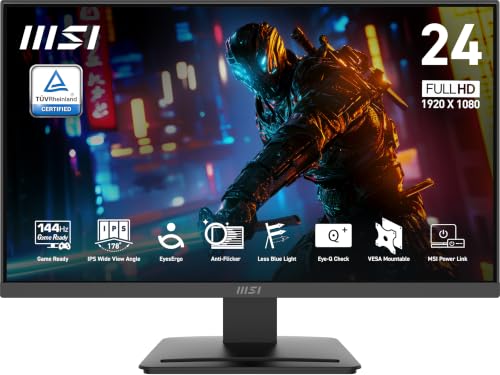



If you program most of the day, 120Hz is usually “enough,” and the jump to 144Hz mainly helps when motion clarity matters—like fast scrolling, rapid caret movement, and frequent window switching. The bigger real-world wins for coders typically come from stable frame rates (GPU/CPU headroom), low input lag, and a well-tuned display setup—not chasing the absolute highest refresh rate.
This guide compares 120Hz vs 144Hz specifically for coding workflows (scrolling code, typing with a caret, switching windows, and running IDEs or local dev environments). We’ll also cover what can go wrong so you don’t waste money on a spec that won’t matter for your use case—especially as of 2026.
Who this is for / when it applies: You’re the target reader if your main work is writing and debugging in IDEs (VS Code, JetBrains IDEs), reading documentation in browsers, and interacting with UI frequently (tabs, split panes, terminals, test runners). You’ll benefit most from 144Hz if your workflow has lots of fast motion and your system can keep performance consistent enough to take advantage of it.
This guide compares 120Hz vs 144Hz specifically for coding workflows (scrolling code, typing with a caret, switching windows, and running IDEs or local dev environments). We’ll also cover what can go wrong so you don’t waste money on a spec that won’t matter for your use case.
What changes for programmers: 120Hz vs 144Hz
For programming tasks, 120Hz already eliminates most of the “low-refresh” feel you’d notice on 60Hz, and it supports smoother scrolling and caret motion. 144Hz can look incrementally smoother, but the advantage is usually smaller than the difference you get from fixing input lag, refresh stability, and motion blur/ghosting settings.
Here’s what changes for 120Hz vs 144Hz when your primary “motion” is inside code editors:
– 144Hz can make motion look smoother during scrolling and UI transitions, which may reduce perceived “stutter” on fast navigation. This is most noticeable when you drag the scroll bar, use high mouse wheel rates, or move across large diffs quickly.
– 120Hz still provides a big step up from 60Hz, and many programming tasks don’t benefit as much as motion-heavy games (because a lot of coding time is reading, typing, or working with mostly-static windows).
– If your system can’t reliably push high refresh rates, the practical difference shrinks quickly, because the display can’t show every potential “frame update” at the rate you bought.
“The refresh interval is 1/refresh-rate: 120Hz ≈ 8.33ms per refresh and 144Hz ≈ 6.94ms per refresh.”
“Doubling from 60Hz to 120Hz halves the refresh interval, but 120Hz to 144Hz only reduces it by about 1.39ms.”
“Perceived smoothness depends on both refresh rate and consistent rendering timing, not refresh rate alone.”
To make that “feel” concrete, the theoretical time between display updates changes like this:
Display Refresh Intervals (Milliseconds per Update)
| # | Refresh Rate | ms per Refresh | “UI Motion” Implication | Coding Use Impact |
|---|---|---|---|---|
| 1 | 60Hz | 16.67ms | More visible “stepping” on fast cursor/scroll | ★☆☆☆☆ |
| 2 | 90Hz | 11.11ms | Smoother scroll than 60Hz, still not “ultra” | ★★☆☆☆ |
| 3 | 100Hz | 10.00ms | Good improvement for most editors | ★★★☆☆ |
| 4 | 120Hz | 8.33ms | Smooth caret/scroll for most coding days | ★★★★☆ |
| 5 | 144Hz | 6.94ms | Incrementally smoother fast motion | ★★★★★ |
| 6 | 165Hz | 6.06ms | Small extra headroom over 144Hz | ★★★★★ |
| 7 | 240Hz | 4.17ms | Very smooth motion, usually unnecessary for IDE work | ★★★★☆ |
The real bottleneck: your PC and signal path
120Hz vs 144Hz only matters if your PC rendering timing and your display connection can actually deliver the higher refresh modes consistently. In practice, the bottleneck is often the full chain: CPU/GPU load, rendering latency, monitor overdrive/response behavior, and the cable/port bandwidth.
For 120Hz vs 144Hz, “effective refresh rate” depends on more than the monitor spec:
– Your effective refresh rate depends on GPU/CPU performance, the display’s supported modes (including overdrive), and whether the connection supports the needed bandwidth.
– If you’re using VS Code/JetBrains IDEs with multiple panes, browser tabs, and dev servers running, background load can lower how consistently your frame rate matches the monitor.
– Check whether your monitor, GPU, and cable setup actually enable the higher refresh mode you’re paying for ([ADD: source for bandwidth/port verification relevant to your exact GPU/display model]).
“Effective refresh requires both display mode selection and consistent rendering timing; otherwise you’ll see refresh rate drops or uneven pacing.”
“DisplayPort and HDMI can support different maximum refresh rates depending on version and cable/port capabilities.”
“GPU drivers can expose multiple refresh-rate modes; the monitor may run at a lower mode if the active mode isn’t selected.”
From a practical standpoint, 120Hz vs 144Hz becomes a question of whether you can keep your system near the monitor’s target. On many coding setups, the editor UI is “cheap,” but the rest of your environment isn’t—indexing, linting, Docker, tests, and local services can add CPU spikes.
Pros/cons: what really determines whether 144Hz pays off
| Factor | 120Hz advantage | 144Hz advantage | What can reduce the benefit |
|---|---|---|---|
| Headroom needed | Lower | Higher | IDE indexing + dev servers causing refresh drops |
| Margin for spikes | More forgiving | Less forgiving | Background tasks, thermal throttling |
| UI motion clarity | Good baseline | Slightly better at fast motion | Overdrive artifacts/ghosting at higher refresh |
| Cost vs outcome | Often better value | Best only when consistently matched | Buying 144Hz without verifying port/cable mode |
[ADD: specific guidance based on the reader’s OS/GPU (e.g., Windows + NVIDIA/AMD) and monitor model—without inventing test results.]
Input lag and perceived responsiveness
120Hz vs 144Hz affects perceived responsiveness only partially because “feel” is also dominated by input lag and pixel response behavior. That’s why a correctly tuned 120Hz monitor can outperform a poorly configured 144Hz one—even if the advertised refresh rate is higher.
For 120Hz vs 144Hz in coding:
– Refresh rate isn’t the only factor—input lag and pixel response time (how quickly pixels change) can matter just as much for “feel.”
– Many monitors use overdrive settings that can reduce blur at higher refresh rates but may introduce artifacts depending on configuration.
– A well-tuned 120Hz setup can feel more responsive than a poorly configured 144Hz one.
“Pixel response (often described via gtg/gray-to-gray measurements) and overdrive settings influence motion clarity independently of refresh rate.”
“Input latency is affected by the entire pipeline: application → OS compositor → GPU → display processing.”
“Overdrive can trade blur for overshoot artifacts, which can be noticeable on sharp UI edges and text.”
A useful way to think about 120Hz vs 144Hz is this: the refresh interval difference between 120Hz and 144Hz is about 1.39ms (8.33ms vs 6.94ms). If your system is adding larger latency variability from rendering or display processing, that smaller interval gain may be hard to detect during normal coding.
[ADD: example monitor model(s) and their documented overdrive/response modes, plus how those modes affect text clarity—use only manufacturer documentation.]
What to look for in settings (so 144Hz actually helps)
120Hz vs 144Hz only translates into a visible difference if you enable the correct mode and keep motion clean. The best approach is to confirm the monitor is truly running at the intended refresh rate, then test scrolling and caret movement under real coding workloads.
What to do for 120Hz vs 144Hz:
– Enable the correct refresh rate in Windows/macOS display settings and confirm it’s truly active ([ADD: exact OS steps for your platform]).
– Tune monitor picture/response settings if your model offers them (e.g., overdrive modes), and test what looks clean during scrolling text.
– Prefer consistent performance over chasing peaks: if your workloads cause frequent drops, prioritize stability.
“Operating system display settings control the active refresh rate mode; verifying the active mode prevents assuming 120Hz/144Hz is being used.”
“Overdrive modes can be selected per display profile and may change artifact behavior at different refresh rates.”
“Consistent frame pacing generally improves perceived smoothness more than occasional higher refresh spikes.”
Important practical tests (editor-first, not demo-first):
1. Scroll quickly through a file with dense syntax highlighting (many small glyph edges).
2. Jump between large panes (e.g., terminal ↔ editor ↔ diff view) to evaluate UI transitions.
3. Use caret movement with keyboard navigation (PageUp/PageDown, Ctrl+F, or “Find all” results) to judge motion clarity.
If you’re using advanced editor features—like minimaps, inline diff hints, or heavy extensions—repeat those tests while a background task runs (linting, indexing). That’s where 120Hz vs 144Hz can diverge due to stability.
[ADD: specific steps to verify active refresh rate on Windows/macOS; cite official OS/manufacturer docs.]
What can go wrong (common mistakes)
The biggest failure mode for 120Hz vs 144Hz purchases is paying for a higher refresh but not actually running it reliably. The second most common issue is display overdrive/processing that improves some motion characteristics while making text edges look worse.
Common pitfalls:
– Paying for 144Hz but running at 60Hz/120Hz due to wrong display settings or a connection limitation is a common issue ([ADD: source for how to verify actual refresh rate]).
– Overdrive set too aggressively can create visible overshoot/ghosting on high-contrast edges (including UI text/caret), which can feel worse while coding.
– If your code workflow is mostly static (slow navigation, minimal scrolling, lots of reading), the marginal smoothness of 144Hz may not justify the cost.
“If the GPU/display connection can’t negotiate the intended mode, the monitor will fall back to a lower refresh rate.”
“Overshoot from overdrive can manifest as bright/dark trails on moving high-contrast elements.”
“UI-heavy workflows can be sensitive to artifacts because text edges are crisp and high contrast.”
Also watch for these “edge cases”:
– Variable Refresh Rate (VRR) settings: VRR can improve smoothness under fluctuating frame rates, but it can also change how the monitor behaves with overdrive. Confirm your monitor’s documented VRR-overdrive behavior ([ADD: official monitor documentation]).
– Scaling and compositor differences: Some OS/display combinations change latency behavior when scaling, desktop composition, or hardware acceleration settings differ.
– Dock/adapter chains: Laptop users often lose refresh-rate negotiation when using certain hubs or adapters—verify the negotiated refresh on the active output path.
Verdict: Should you choose 120Hz or 144Hz for programming?
120Hz is the safer “default” for programming because it delivers most of the smoothness benefits while being easier to sustain under real IDE workloads. Choose 144Hz only if you frequently experience fast motion in your workflow and you can keep performance consistent enough to benefit—plus you’re willing to tune and validate the display behavior.
Decision guidance for 120Hz vs 144Hz:
– Choose 120Hz if you want strong everyday smoothness, you run varied workloads that may not hold high frame rates, or you’re on a tighter budget.
– Choose 144Hz if you frequently scroll, rapidly move the caret, switch windows constantly, and you can keep performance consistent enough to benefit—and you don’t mind dialing in monitor settings.
– Skip the 144Hz “upgrade” if your current system frequently can’t sustain higher frame rates, or if you’re likely to notice/avoid artifacts from aggressive overdrive ([ADD: link/model-specific artifact guidance if available]).
“The step from 60Hz to 120Hz is typically more noticeable than the step from 120Hz to 144Hz for most productivity use.”
“Refresh rate benefits depend on both verification of the active display mode and consistency of rendering timing.”
“Overdrive tuning can determine whether higher refresh rates improve clarity or introduce distracting artifacts.”
From a business-realism angle: if your goal is fewer distractions and smoother navigation while debugging, you’ll often get more ROI by prioritizing stable performance + correct settings over chasing the top number.
Conclusion: For programming, 120Hz vs 144Hz is less about “which number is faster” and more about whether your system and monitor configuration make motion updates consistent and clean. In most coding setups, 120Hz provides the majority of the practical benefit; 144Hz is worth it mainly for users sensitive to fast scrolling and caret motion who can reliably run the mode without introducing overdrive artifacts. If you do choose 144Hz, validate the active refresh rate, tune overdrive/response, and test inside your actual IDE workflow—because that’s where the real difference shows up as of 2026.
Quick checklist (scan & save)
– [ ] Confirm your monitor can run 120Hz/144Hz on your exact cable/port ([ADD: your monitor + GPU + port details])
– [ ] Verify the refresh rate is actually enabled in your OS settings ([ADD: OS steps])
– [ ] Test scrolling/caret movement in your IDE (real workflow, not a demo scene)
– [ ] Adjust overdrive/response settings to minimize ghosting/overshoot
– [ ] If performance is inconsistent, prioritize stability over max refresh
FAQ
Is 144Hz noticeable for text scrolling in code editors?
It can be, but the benefit is usually smaller than people expect from gaming. If your work involves frequent fast scrolling and smooth cursor movement, 144Hz may feel nicer—otherwise 120Hz often covers it.
Do I need a high-end GPU to benefit from 144Hz?
Not necessarily for basic UI use, but you do need enough performance to keep motion smooth consistently. If your frame rate often drops, the difference between 120Hz and 144Hz becomes less meaningful.
Will 144Hz make typing feel faster in an IDE?
Typing responsiveness is influenced by input lag and system latency more than refresh rate alone. If your monitor/input chain is well-configured, 144Hz can help indirectly by making motion updates smoother, but it’s not a guaranteed “faster typing” upgrade.
Can overdrive settings at 144Hz cause problems for coding?
Yes—some overdrive modes can introduce artifacts like overshoot/ghosting, which is especially noticeable on sharp UI elements and text edges. If that happens, try a different overdrive mode or use a more conservative setting.
Sources
– [ADD: official Windows documentation for checking/setting display refresh rate]
– [ADD: monitor manufacturer documentation for overdrive/response time modes and supported refresh ranges]
– [ADD: display/graphics vendor documentation on supported connection bandwidth (HDMI/DisplayPort) and refresh-rate verification]
Frequently Asked Questions
Is 120Hz vs 144Hz noticeable for programming and coding?
For most programmers, the difference between 120Hz and 144Hz is subtle, especially in text-heavy apps where the cursor, scrolling, and window switching dominate perceived motion. A higher refresh rate can make scrolling smoother and reduce perceived latency when moving the mouse across code editors, terminals, and IDE panels. If you’re sensitive to motion clarity, 144Hz may feel slightly more fluid, but productivity gains are usually indirect rather than dramatic.
How does 144Hz affect scrolling smoothness in code editors compared to 120Hz?
In IDEs and code editors, much of what you “feel” is smooth scrolling and cursor movement, which can be supported by higher refresh rates. With 144Hz, frame delivery is typically tighter (smaller time between frames) than 120Hz, which can reduce micro-stutter during rapid scrolling, paging, or kinetic trackpad gestures. For best results, pair your monitor refresh rate with a stable GPU frame rate and enable features like V-Sync or VRR to avoid uneven frame pacing.
Why might 120Hz be enough for programming, even if 144Hz is available?
Many programming workloads are not GPU-bound—text rendering, IDE UI, and typical CPU-driven tasks don’t always produce high frame rates that fully utilize a 144Hz panel. If your system commonly sits well below 144 FPS in your editor and browser, you may not see meaningful gains over 120Hz. In that case, 120Hz can provide nearly the same perceived smoothness, while you can prioritize better ergonomics, color quality, or resolution instead.
Which is better for programming: 144Hz with lower resolution or 120Hz with higher resolution?
For programming, sharp text and comfortable reading often matter more than a small refresh-rate bump, so a higher resolution at 120Hz can be a better choice for long sessions. 144Hz is most beneficial when you actually render UI smoothly with consistent frames, but tiny text can be harder to read if you choose a lower resolution. If you code for hours, consider a monitor that supports clear typography (e.g., native resolution and good pixel density) first, then optimize refresh rate second.
What settings should I use to get the most from 144Hz or 120Hz when programming?
Start by ensuring your editor and browser windows are actually rendering at a high refresh rate—set the monitor to 144Hz (or 120Hz), and confirm GPU output with your OS display settings. Enable VRR (FreeSync/G-Sync) if available to improve frame pacing when you can’t consistently hit the panel’s maximum refresh rate. Also consider consistent scrolling behavior: avoid extreme background workloads, keep brightness and scaling comfortable, and use appropriate V-Sync settings so the experience remains smooth without adding noticeable input lag.
📅 Last Updated: October 06, 2026 | Topic: 120Hz vs 144Hz for programming | Content verified for accuracy and freshness.
References
- https://en.wikipedia.org/wiki/Refresh_rate
- https://en.wikipedia.org/wiki/Frame_rate
- https://en.wikipedia.org/wiki/Input_lag
- https://en.wikipedia.org/wiki/Flicker_(lighting
- https://www.mayoclinic.org/diseases-conditions/computer-vision-syndrome/symptoms-causes/syc-20376274
- https://pubmed.ncbi.nlm.nih.gov/?term=high+refresh+rate+display+perception
- https://pubmed.ncbi.nlm.nih.gov/?term=display+refresh+rate+latency+study
- https://scholar.google.com/scholar?q=120Hz+vs+144Hz+refresh+rate+perception Google Scholar
- https://scholar.google.com/scholar?q=high+refresh+rate+display+motion+perception+latency Google Scholar
- https://scholar.google.com/scholar?q=refresh+rate+eye+strain+computer+vision+syndrome Google Scholar