Satellite internet speeds have indeed made substantial advancements, and in many cases, they now match or even exceed those of traditional fiber optic connections. This exciting evolution in technology means that consumers in rural and underserved areas can finally access fast, reliable internet service without being tethered to the limitations of cable infrastructure. In this article, we’ll explore how satellite technology has progressed, the factors that have contributed to increased speeds, and what this all means for you as a consumer seeking dependable internet solutions.
The Evolution of Satellite Internet Technology

The landscape of satellite internet has transformed dramatically over the past few years. Traditionally, satellite internet relied on geostationary satellites positioned high above the Earth, which often resulted in high latency and slower speeds. However, new technological advancements, particularly the deployment of low Earth orbit (LEO) satellite constellations, are changing the game. Companies like SpaceX’s Starlink and OneWeb have launched thousands of small satellites into LEO, significantly reducing the distance that signals must travel.
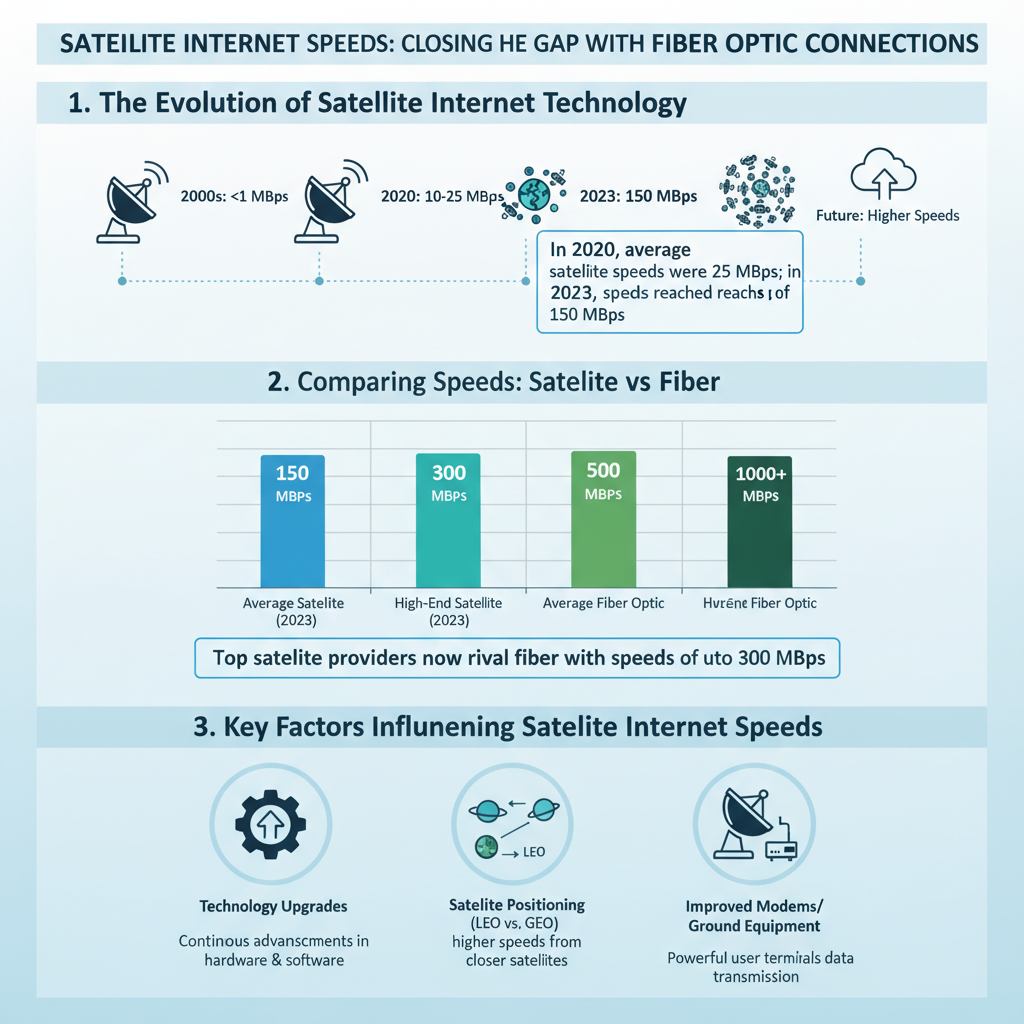
These LEO satellites orbit the Earth at altitudes ranging from about 180 to 2,000 kilometers (roughly 112 to 1,242 miles), compared to the 35,786 kilometers (22,236 miles) of traditional geostationary satellites. This shorter distance leads to reduced latency, which is critical for activities like online gaming and video conferencing. As a result, users can now experience much faster download and upload speeds, making satellite internet a more viable option for everyday use.
Comparing Speeds: Satellite vs. Fiber

When it comes to internet speeds, statistics show that satellite internet is closing the gap with fiber optic connections. While fiber optic networks can offer speeds upwards of 1 Gbps (1,000 Mbps) in urban areas, satellite internet providers have made significant strides. For instance, Starlink reports average download speeds between 50 to 150 Mbps, with some users experiencing speeds even higher during optimal conditions.
Real-world performance, however, can vary depending on several factors, including the user’s location and the specific provider. Many users have praised satellite services for their reliability in remote areas where fiber optic cables are non-existent. For instance, in places like rural Montana or Alaska, satellite internet has become an essential lifeline for families and businesses, where fiber connectivity simply isn’t available. As more users share their experiences, it’s clear that satellite can offer competitive speeds, especially in underserved regions.
Key Factors Influencing Satellite Internet Speeds
Several key factors influence the internet speeds users experience with satellite technology. Bandwidth and satellite capacity play crucial roles. Bandwidth refers to the amount of data that can be transmitted in a given time frame. As satellite providers launch more satellites and expand their constellations, they increase the available bandwidth, leading to higher speeds and more reliable service for users.
However, environmental conditions can also impact performance. Weather events like heavy rain, snow, or storms can interfere with satellite signals, leading to temporary slowdowns or interruptions. For example, users in areas prone to severe weather might notice fluctuations in their internet speeds during storms. It’s essential for potential customers to consider these factors when choosing satellite internet, particularly if they live in regions that experience frequent adverse weather.
Benefits of Satellite Internet Over Fiber
One of the most significant advantages of satellite internet is its availability in regions where fiber optic connections are limited or non-existent. Rural areas, mountainous regions, and places with challenging terrain often lack the infrastructure necessary for fiber installations. Satellite internet fills this gap, providing connectivity to millions of users who would otherwise be without reliable service.
Additionally, satellite internet offers flexibility and mobility that fiber cannot. Many satellite internet providers offer portable solutions that allow users to take their internet connection with them, whether they’re camping in the woods or traveling across the country in an RV. This aspect of satellite technology makes it an attractive option for digital nomads or those who frequently relocate.
Challenges Facing Satellite Internet Providers
Despite the advancements in satellite technology, providers face several challenges. Data caps are one significant concern; many satellite plans come with monthly data limits that may not be suitable for heavy users or families. For instance, while fiber optic plans may offer unlimited data, satellite services often require users to be mindful of their consumption, particularly during peak usage times.
Another challenge is service reliability. Although satellite technology has improved, interruptions can occur due to various factors, including weather, satellite maintenance, or even network congestion during peak hours. As established fiber providers continue to expand their networks, satellite internet companies must find ways to differentiate themselves and ensure that they remain competitive in the marketplace.
Future Trends in Satellite Internet Technology
Looking ahead, the future of satellite internet technology appears promising. As more LEO satellites are launched and existing constellations expand, we can expect to see further improvements in speeds and service reliability. In addition to technological advancements, partnerships between satellite providers and tech companies could lead to groundbreaking innovations. For example, collaborations focused on developing better ground equipment or enhanced user terminals could significantly improve user experiences.
Moreover, advancements in artificial intelligence and machine learning may help optimize satellite operations, making it easier for providers to manage bandwidth and enhance network performance. As the landscape continues to evolve, consumers can anticipate even more competitive offerings in the satellite internet space, providing them with a broader range of choices.
The rapid advancements in satellite internet technology mean it can now compete with fiber optic connections, offering viable options for many users. As the industry evolves, staying informed on both options will help you choose the best solution for your internet needs. Consider exploring satellite internet providers in your area to see if they can meet your connectivity requirements. With the potential for high speeds and improved accessibility, satellite internet is becoming an increasingly attractive option for consumers everywhere.
Frequently Asked Questions
What are the average speeds of satellite internet compared to fiber internet?
Satellite internet providers typically offer speeds ranging from 25 Mbps to 150 Mbps, while fiber internet can provide speeds from 100 Mbps up to 1 Gbps or more. However, advancements in satellite technology, such as low Earth orbit (LEO) satellites, have begun to narrow this gap, with some providers reporting speeds that can compete closely with fiber. Users should assess their specific needs, as factors like latency and data caps also play a crucial role in performance.
How does satellite internet achieve speeds that rival fiber connections?
Satellite internet achieves competitive speeds through advancements in technology, particularly with the launch of LEO satellites that orbit closer to Earth. This reduces latency and allows for faster data transmission compared to traditional geostationary satellites. Additionally, newer satellite technologies utilize advanced modulation techniques and higher frequency bands, enabling more efficient data throughput and faster internet speeds.
Why might satellite internet be a better option than fiber for some users?
Satellite internet can be a superior choice for users in rural or remote areas where fiber infrastructure is lacking or non-existent. Its ability to provide high-speed internet access without the need for extensive physical cabling makes it an attractive option for underserved communities. Additionally, satellite internet can offer more flexible installation options, making it easier for users to get connected quickly.
What are the main disadvantages of satellite internet compared to fiber?
Despite the emerging competitive speeds, satellite internet often suffers from higher latency, which can impact activities like online gaming or video conferencing. Furthermore, users may face data limitations or throttling during peak usage times, which is less common with fiber connections. Reliability can also be affected by weather conditions, leading to potential interruptions in service that fiber networks typically do not experience.
Which satellite internet providers offer speeds that rival fiber, and how can I choose the best one?
Prominent satellite internet providers like Starlink, Viasat, and HughesNet are known for offering competitive speeds that can rival fiber. When choosing the best provider, consider factors like available speeds, monthly data caps, latency, customer service, and installation costs. Reading user reviews and comparing service plans can also help you make an informed decision tailored to your internet usage needs.
References
- Satellite Internet access
- https://www.bbc.com/news/technology-59319118
- https://www.reuters.com/technology/spacexs-starlink-satellite-internet-service-makes-gains-us-2021-08-04/
- https://www.theguardian.com/technology/2021/jun/09/satellite-internet-starlink-fiber-optic-speed-space-x
- https://www.nytimes.com/2020/10/05/technology/spacex-starlink-internet.html
- https://www.techcrunch.com/2021/10/07/starlink-satellite-internet-gets-faster/
- https://www.sciencedirect.com/science/article/pii/S2213138820300011
- https://www.nasa.gov/feature/nasa-satellite-internet-speed-test-2021