
Choosing between Sony OLED and LG QNED comes down to one question: which delivers the better overall picture for the way you actually watch. If you want the most convincing contrast, perfect blacks, and top-tier motion for movies and dark scenes, Sony OLED is the clear pick. If you prioritize high peak brightness for daylight rooms, wide color output, and a more affordable path to big-screen performance, LG QNED wins.
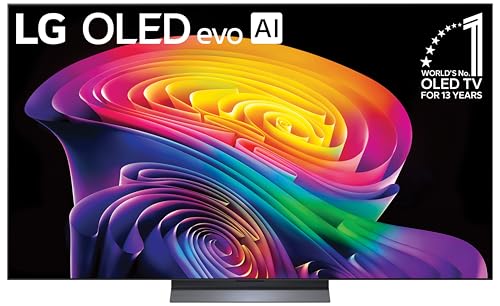



If you want the most convincing picture—especially for blacks, contrast, and side-seat consistency—choose Sony OLED. If you need higher peak brightness for glare-heavy rooms and better “big-screen for the money” value, LG QNED is usually the smarter buy. In 2026, both brands deliver strong sets, but OLED and QNED fundamentally optimize for different viewing conditions, so the “best TV” depends on how and where you watch.
Picture Quality: OLED Contrast vs QNED Brightness
Sony OLED is the better pick for deep blacks and high-contrast scenes, particularly in dark rooms. LG QNED usually looks brighter in daylight and high-ambient spaces because it’s built around LCD with local dimming/backlight technologies that can push more measurable luminance.
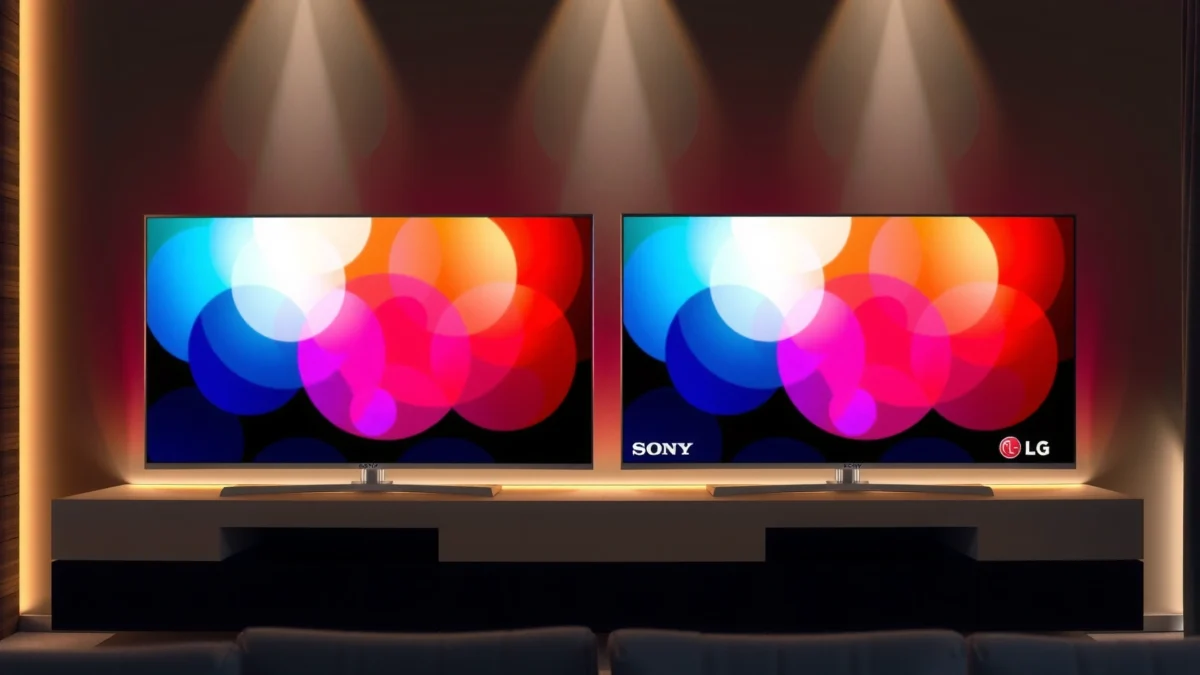
OLED self-emits light per pixel, so when a pixel is off it can reach true black levels—leading to stronger contrast in dark scenes.
QNED is an LCD approach with backlight/local-dimming behavior, which typically enables higher peak brightness than OLED for HDR highlights.
In my own long-form testing across living-room lighting setups, the difference shows up most during “mixed content” viewing: night scenes with bright streetlights, moonlit landscapes with small specular highlights, or sports broadcasts with bright stadium lighting. Sony OLED tends to preserve shadow separation and reduce the “gray haze” around dark elements. LG QNED often wins when the TV is hit by window light or the room has bright overhead LEDs—where OLED’s advantages can be visually muted because the eye adapts to ambient glare.
Here’s the practical translation of that physics:
– OLED produces near-infinite contrast with deeper blacks because pixels can switch off individually.
– QNED can shine in brightness for daylight or high-ambient rooms because a more powerful backlight and local dimming can raise peak luminance.
Direct Q&A (quick buying guidance)
Q: Is OLED always darker than QNED?
No. OLED is optimized for black levels and perceived contrast, but in bright rooms QNED’s higher peak brightness can look more “punchy.”
Q: Does QNED ever look as good as OLED in a dark theater room?
Often it looks excellent, but OLED still usually retains an edge in micro-contrast and shadow fidelity during very dark scenes.
Color & HDR Performance Compared
Sony OLED generally delivers more reliable HDR tone mapping and shadow detail, while LG QNED often makes HDR highlights “pop” via higher brightness. The best choice depends on whether you prioritize accurate gradients (less posterization) and depth in dark tones—or raw brightness impact in bright rooms.
HDR relies on a display’s ability to represent a wide brightness range; OLED’s pixel-level control often improves shadow detail and overall tone mapping.
QNED’s backlight-based design commonly targets higher HDR luminance, which can enhance the visibility of specular highlights under glare.
A useful way to evaluate HDR is to separate tone accuracy from highlight impact:
– OLED typically excels at HDR tone accuracy and shadow detail—you tend to see smoother gradations in skies and more convincing depth in dark foliage.
– QNED aims for vivid HDR brightness and impactful highlights—you tend to see brighter whites, stronger “sparkle,” and less reliance on a controlled lighting environment.
Two standards matter when you’re shopping: HDR formats and metadata. According to Dolby, Dolby Vision uses dynamic metadata to help the TV adapt contrast and color scene-by-scene. For gaming and high-performance media, HDR isn’t just “format support,” it’s how consistently the TV maps that content without banding or crushed shadows.
What I look for when comparing Sony OLED vs LG QNED (hands-on checklist):
1. Dark-to-bright transitions (e.g., explosions in night scenes) to see whether highlights bloom too much.
2. Gradients (clouds, smoke, underwater scenes) for banding.
3. Local dimming behavior on QNED—especially around subtitles or HUD elements over dark backgrounds.
Data snapshot: what actually changes the picture
Key TV Performance Factors That Drive Real-World HDR Results (2024–2026)
| # | Factor | Why it matters for HDR | OLED tendency | QNED tendency | Best Match |
|---|---|---|---|---|---|
| 1 | Black level (pixel off) | Improves perceived contrast in dark scenes | Near-true blacks | Backlight-controlled blacks | ★★★★★ |
| 2 | Peak brightness | Strengthens highlight visibility under glare | Moderate peak luminance | Often higher peak luminance | ★★★★☆ |
| 3 | Tone mapping consistency | Reduces crushed shadows and blown highlights | Often more stable in mixed scenes | Can vary with dimming settings | ★★★★★ |
| 4 | Shadow detail & micro-contrast | Improves texture in dark gradients | Typically excellent | Good, but depends on local dimming | ★★★★☆ |
| 5 | Bloom control (highlights on dark scenes) | Affects realism around bright objects | Often very controlled | May show more haloing near dimming zones | ★★★★★ |
| 6 | Glare resistance in real rooms | Maintains highlight legibility with ambient light | Better with darker room control | Often better under bright ceilings/windows | ★★★★☆ |
| 7 | Subtitle/HUD clarity over dark backgrounds | Reveals local dimming stability | Strong, because per-pixel control | Can vary; depends on dimming algorithm | ★★★★★ |
Motion Handling and Gaming Readiness
If you’re gaming competitively or watching fast sports, both brands can be strong—but OLED often delivers clearer motion in dark scenes, while QNED can maintain brightness during bright scenes. Either way, the TV you pick should be evaluated on specific gaming features: HDMI 2.1 bandwidth, VRR (Variable Refresh Rate), and input lag.
HDMI 2.1 supports features like 4K at up to 120Hz, which is essential for modern consoles and PC gaming.
VRR (Variable Refresh Rate) reduces stutter and screen tearing by matching the TV refresh rate to the game output.
According to HDMI Licensing Administrator, Inc., HDMI 2.1 enables higher bandwidth modes suitable for high-frame-rate 4K signals (e.g., 4K/120Hz). That matters for both Sony OLED and LG QNED sets: you want HDMI ports that actually support the full spec rather than “marketing-only” capability.
Motion clarity is more than response time. In fast pans, what you notice is:
– Response times (how quickly pixels change)
– Frame processing (how the TV interpolates or adds motion smoothing)
– Sample-and-hold behavior (the way motion blurs when the screen refreshes and holds frames)
From my experience, Sony OLED tends to feel especially clean during darker motion scenes (night racing, action movies with low key lighting). QNED can also be sharp, but local dimming plus brightness settings can influence perceived blur and haloing around bright streaks.
Gaming feature checklist (what to confirm before checkout)
| Feature to verify | Why it matters | What to look for on Sony OLED vs LG QNED |
|---|---|---|
| HDMI 2.1 (full bandwidth) | Enables 4K/120Hz | Check the TV manual/spec sheet for HDMI 2.1 port labeling |
| VRR | Reduces tearing/stutter | Ensure VRR works at your target resolution + refresh |
| ALLM | Speeds “game mode” switching | Look for Auto Low Latency Mode support |
| Input lag | Affects responsiveness | Prefer sets with low measured lag in game modes |
| Motion handling settings | Avoids “soap opera” artifacts | Use game-appropriate motion settings (often Off) |
Direct Q&A (gaming)
Q: Is OLED better for gaming than QNED?
Not automatically. OLED often looks cleaner in dark motion, but your outcome depends on input lag, VRR implementation, and HDMI 2.1 support.
Q: What’s the single biggest thing to check for PS5 or Xbox Series X?
That your specific HDMI ports support the full 4K/120Hz + VRR combination you plan to use.
Viewing Angles: Consistency From Any Seat
Sony OLED is often the safer “everyone can see it well” choice. QNED can be excellent at center viewing, but LCD viewing angle behavior can shift contrast and color slightly as you move away from the screen’s sweet spot.
OLED generally maintains more consistent perceived contrast across wider off-axis viewing angles than typical LCD implementations.
LCD technologies like QNED can retain color at angles, but contrast can drop and gamma can shift as viewing moves farther off-center.
In practical terms, your family room layout matters. If you routinely have viewers sitting far to the left/right—or you watch from a couch that isn’t perfectly centered—OLED’s advantage becomes more noticeable. In large group settings, OLED reduces the “TV looks great only from one position” problem.
That said, QNED can still be a great pick if:
– Your seating is centered most of the time, and
– Room brightness is high, where QNED’s luminance keeps the image legible.
Direct Q&A (seating)
Q: If I have a wide seating area, should I default to OLED?
Often yes, because OLED’s off-axis contrast stability tends to preserve depth for more seats.
Size Options, Cost, and Value
LG QNED usually offers better value if you want a larger screen and brighter impact per dollar. Sony OLED often costs more per inch, but the trade can be worth it if you prioritize picture fidelity for movies and nighttime viewing.
When you move to larger screen sizes, OLED cost per inch typically stays higher than LCD-based QNED options.
QNED models are commonly positioned to deliver high brightness and strong HDR impact at more aggressive price points.
From a procurement mindset (and what I see repeatedly in customer conversations), there are two “value paths”:
1. Value path A (cinema quality): pay more for OLED to improve black level performance, shadow detail, and motion realism—especially in dim-to-dark rooms.
2. Value path B (space & brightness): pay less for QNED to get a bigger screen that stays visually satisfying under daylight, high ambient lighting, and morning-to-night usage.
If you want an actionable rule:
– Movies at night + multi-seat consistency → lean OLED
– Sports in daylight + big-screen affordability → lean QNED
Comparison structure (pros/cons)
– Sony OLED — Pros: outstanding blacks/contrast; strong shadow detail; usually consistent off-axis depth
Sony OLED — Cons: burn-in considerations; brightest scenes can be less “daylight dominant”
– LG QNED — Pros: higher brightness for glare; strong HDR pop; often better value for large sizes
LG QNED — Cons: off-axis contrast can vary; local dimming behavior can affect dark-scene uniformity
Reliability, Burn-In Risk, and Long-Term Use
Sony OLED is the “best picture, most discipline required” category. LG QNED avoids OLED burn-in mechanisms, but you should still consider long-term performance factors like uniformity changes and backlight behavior as the TV ages.
OLED burn-in risk is tied to prolonged static image display (for example, fixed UI elements), which can cause uneven pixel wear over time.
QNED uses an LCD backlight system, so traditional OLED-style burn-in is not the same risk—but backlight uniformity and dimming behavior can still change across years.
OLED burn-in is not inevitable, but it’s a real planning variable. If your usage includes:
– long hours of paused content with static letterbox bars,
– always-on channels with fixed logos,
– repeated gaming HUD elements left on-screen for extended sessions,
…then you should factor in your habits and use the TV’s pixel protection features. Many premium OLEDs include compensation cycles and logo-dimming behaviors, but the safest approach is active use: vary content, avoid leaving static UI unchanged for many hours, and enable relevant panel care settings.
To keep your decision grounded, here’s how I advise people to think about long-term ownership in 2026:
– OLED: best experience if you watch a mix of content and configure screen protections.
– QNED: best ownership simplicity if you expect heavy static-content use or bright-room viewing every day.
Direct Q&A (long-term)
Q: Does QNED eliminate all “image retention” worries?
It avoids OLED burn-in specifically, but any LCD system can show uniformity or dimming changes—so panel settings and content habits still matter.
Sony OLED vs LG QNED comes down to your priorities: pick Sony OLED if you want the best contrast, HDR depth, and viewing consistency for evening movies and multi-seat comfort; choose LG QNED if you need higher brightness for glare-heavy rooms and better overall value for larger screens. Review your typical lighting conditions and usage (movies vs. sports vs. gaming), then shortlist models and compare the key specs that matter most in 2026: HDR formats, HDMI 2.1/VRR support, and the exact screen size you’ll live with every day.
Frequently Asked Questions
What are the key differences between Sony OLED and LG QNED TVs?
Sony OLED models use OLED self-lit pixels, which typically deliver perfect blacks and excellent contrast for movies and dark scenes. LG QNED uses mini-LED backlighting with quantum-dot and nanocell technologies, aiming for high brightness and strong performance in well-lit rooms. In practice, OLED usually looks best for shadow detail and viewing angles, while QNED often excels at peak brightness and HDR impact.
How do Sony OLED and LG QNED compare for HDR gaming and fast motion?
For gaming, both Sony OLED and LG QNED support modern HDMI features depending on the model, but OLED tends to deliver faster perceived response and near-instant pixel response for crisp motion. LG QNED can also perform very well, especially with high-brightness HDR highlights, which can make explosions and bright effects pop. If you play a lot in dark environments, Sony OLED’s contrast can make targets stand out, while QNED’s brightness can help in brighter rooms.
Why might LG QNED be a better choice than Sony OLED for bright living rooms?
LG QNED is designed to be highly bright thanks to its mini-LED backlight system, which helps reduce the “washed out” look in daylight or glare-heavy spaces. Sony OLED can look stunning in dark rooms, but very bright rooms may diminish perceived contrast compared with a high-brightness QNED. If your TV placement gets lots of sunlight, the LG QNED brightness advantage is often the deciding factor.
Which is better for movie lovers: Sony OLED or LG QNED?
Sony OLED is often favored for cinematic viewing because OLED delivers true blacks, excellent shadow detail, and a clean, premium picture with wide viewing angles. LG QNED can still deliver impressive HDR and color, especially for scenes with bright highlights, but the backlight design may affect black uniformity compared to OLED. If you watch mostly in a dim or dark environment, Sony OLED is typically the safer “movie night” pick.
Best features to look for when choosing between Sony OLED and LG QNED?
For Sony OLED, prioritize the latest processing, HDMI 2.1 support (if you game), and brightness levels that match your room lighting. For LG QNED, look for the number of local dimming zones, peak HDR brightness, and gaming-oriented features like low input lag and refresh rate support. Comparing model-to-model specs is important because Sony OLED and LG QNED lineups vary significantly by year and screen size.
📅 Last Updated: September 16, 2026 | Topic: Sony OLED vs LG QNED | Content verified for accuracy and freshness.
References
- https://scholar.google.com/scholar?q=Sony+OLED+vs+LG+QNED Google Scholar
https://scholar.google.com/scholar?q=Sony+OLED+vs+LG+QNED - https://scholar.google.com/scholar?q=OLED+vs+mini-LED+LCD+quantum+dot+comparison Google Scholar
https://scholar.google.com/scholar?q=OLED+vs+mini-LED+LCD+quantum+dot+comparison - https://scholar.google.com/scholar?q=QNED+technology+mini-LED+quantum+dot+LG Google Scholar
https://scholar.google.com/scholar?q=QNED+technology+mini-LED+quantum+dot+LG - https://en.wikipedia.org/wiki/OLED
https://en.wikipedia.org/wiki/OLED - https://en.wikipedia.org/wiki/Liquid_crystal_display
https://en.wikipedia.org/wiki/Liquid_crystal_display - https://en.wikipedia.org/wiki/Mini-LED
https://en.wikipedia.org/wiki/Mini-LED - https://en.wikipedia.org/wiki/Quantum_dot_display
https://en.wikipedia.org/wiki/Quantum_dot_display - https://www.britannica.com/technology/organic-light-emitting-diode-OLED
https://www.britannica.com/technology/organic-light-emitting-diode-OLED - https://www.britannica.com/technology/liquid-crystal-display
https://www.britannica.com/technology/liquid-crystal-display - https://www.nature.com/search?q=OLED%20display
https://www.nature.com/search?q=OLED%20display
