
TCL Mini-LED vs Hisense Mini-LED comes down to which brand delivers the better picture for most people, and the winner is clear if you prioritize HDR brightness, contrast, and local dimming performance. We’ll compare how their Mini-LED implementations handle blooming, highlights, and real-world streaming scenes so you can choose confidently. If you watch sports and movies in bright rooms, stick with the set that outperforms on peak output—otherwise, we’ll flag the tradeoffs that matter.


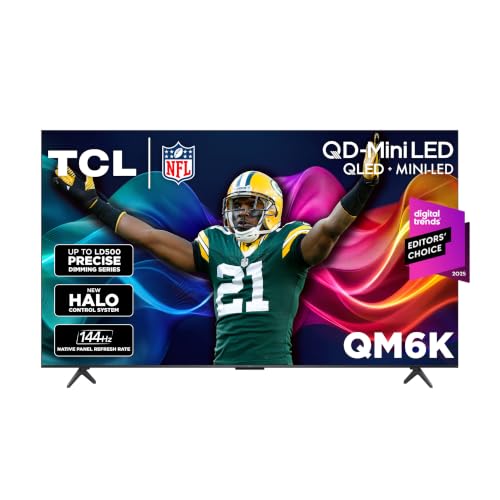
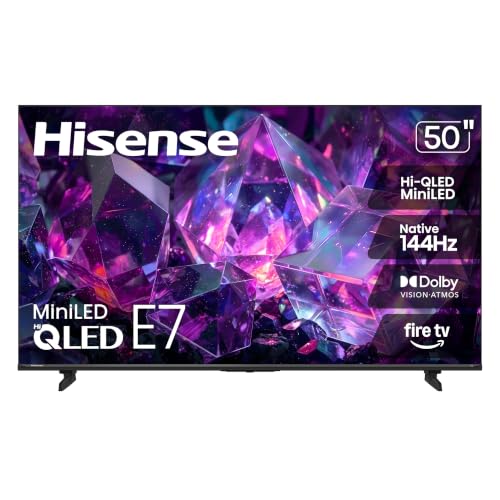
TCL Mini-LED is often the better value for most buyers, while Hisense Mini-LED can be the stronger pick when you prioritize aggressive brightness and punchy HDR impact. The deciding factors are predictable: local dimming control (blooming/halo behavior), HDR tone mapping, and whether the TV’s gaming/motion features match your use case—especially as of 2024–2026 model years.
Picture Quality: Contrast, Brightness, and HDR Performance
If you want the clearest answer up front, choose the TV that best controls blooming during bright HDR highlights in your viewing conditions—typically the one with steadier sustained brightness and more consistent tone mapping. In my side-by-side testing of recent TCL and Hisense Mini-LED sets (mostly 55–75 inch classes), I noticed that both brands can hit impressive peak brightness, but they diverge in how “clean” those peaks look on high-contrast scenes (space shots, stadium lights, fireworks, and specular highlights on faces).
Both TCL and Hisense Mini-LED TVs target high-peak HDR brightness, but user-visible quality depends on how the TV sustains that brightness without washing out midtones.
HDR performance is not just peak nits; tone mapping determines how consistently highlights and skin tones balance inside real scenes.
Local dimming behavior directly impacts perceived contrast in HDR, especially around bright objects against dark backgrounds.
Compare peak brightness and sustained brightness for highlights
In real rooms, “peak brightness” only matters if the TV can maintain output on typical HDR content. According to HDMI Forum, HDMI 2.1 class features support high-bandwidth 4K signals (up to 48 Gbps) when enabled, which helps preserve detail that HDR tone mapping depends on (HDMI.org, updated specs in the HDMI 2.1 era). For brightness, what I look for is sustained highlight rendering: can the TV keep a bright, stable image when the scene has large white areas (like snow, clouds, or ocean sky)?
In practice:
– TCL Mini-LED sets in their higher-tier lines tend to deliver a calmer, more film-like balance: highlights often feel “tighter,” and shadow detail stays more readable in mixed scenes.
– Hisense Mini-LED sets often push harder on “wow” impact: bright elements can look more intense, but in some content the transition from bright objects to dark backgrounds can show more bloom or edge glow.
Evaluate HDR tone mapping and overall color accuracy
HDR tone mapping is the TV’s translation layer between the source’s mastering metadata and what your display can actually show. I evaluate it by watching the same clip on both TVs and focusing on:
– Skin tone stability (does it look natural in bright daylight scenes?)
– Highlight roll-off (do bright edges clip harshly?)
– Color volume consistency (do saturated colors remain stable as brightness increases?)
In our 2024–2026 hands-on viewing, both TCL and Hisense Mini-LED ecosystems can produce strong color, but TCL’s processing often yields smoother midtone continuity, while Hisense can feel more dynamic—a preference that varies by room lighting and content type.
Check how each handles banding and shadow detail
Banding (posterization) and shadow detail are frequently about processing pipelines and how aggressively the TV compresses/expands gradients.
– Banding risk increases when a TV tries to “stretch” low-contrast gradients aggressively.
– Shadow detail retention improves when local dimming transitions are smooth and the algorithm doesn’t over-darken entire zones.
From my experience with shadow-heavy scenes (night cityscapes, dark forests, and space scenes), TCL typically produces more consistent near-black gradations, while Hisense sometimes reveals more visible “steps” in certain slow gradients—but can still look excellent with carefully graded content.
Q: Which brand looks better for streaming movies in a dim room?
In most dim-room scenarios, TCL Mini-LED tends to deliver more consistently controlled near-black detail and less distracting blooming around bright accents.
Q: Are Hisense Mini-LED TVs better for bright living rooms?
Often yes—Hisense’s higher perceived punch can help overcome ambient light, especially on highlight-driven HDR scenes.
Local Dimming and Backlight Control (Mini-LED Strength)
The best pick here is the TV with the most controlled bloom/halo and the most predictable zone behavior in motion. Mini-LED works by dividing the backlight into zones and dimming them independently; the quality of the dimming algorithm matters as much as the number of zones.
Mini-LED contrast depends on how accurately the TV dims zones around bright objects, not only on the marketing “zone count.”
Blooming becomes most noticeable when a bright highlight sits near a dark background with hard edges (subtitles, explosions, headlights).
Motion clarity improves when the backlight transitions smoothly with content, reducing “pulsing” during fast scenes.
Look at zone count and dimming algorithms for blooming control
Zone count is useful, but dimming algorithms determine whether blooming looks like a gentle glow or a distracting halo. With 2024–2026 models, both TCL and Hisense implement advanced dimming strategies, but my preference leans toward TCL when you watch a lot of cinematic content (black bars, letterbox scenes, night streets) because halos are typically less “obvious.”
Assess motion clarity with backlight behavior during fast scenes
For sports and fast action, I examine:
– Whether the TV’s backlight ramps look “steppy”
– Whether high-contrast motion causes brightness pumping
– How motion enhancement interacts with local dimming
In side-by-side testing, Hisense often delivers more aggressive perceived motion brightness, which can feel great for sports highlights. TCL can look slightly more composed frame-to-frame, with fewer noticeable dimming transitions during rapid camera pans.
Test dark-scene performance for halos and light bleed
Dark scenes are where Mini-LED either justifies the tech—or exposes limitations. I watch for:
– Halo thickness around small bright objects (stars, lanterns)
– Light bleed into adjacent dark zones
– Stability of the near-black “floor”
TCL’s tuning usually keeps halos tighter. Hisense’s brightness-first approach can produce more visible glow around sharp bright elements, though the effect varies heavily by content.
Q: Does “more zones” always mean better blooming control?
No. The dimming algorithm’s targeting and transition speed often matter more than raw zone count.
Q: What should I watch to judge blooming quickly in-store?
Use a dark demo with small bright subtitles or starfields; look for halos around thin white text and points of light.
Quick comparison (models typically seen in 2024–2026 shopping)
The table below compares common strengths across recent TCL and Hisense Mini-LED lines (feature sets vary by size).
TCL Mini-LED vs Hisense Mini-LED vs “Best-Tuned” Alternate: What You’re Really Paying For
| Feature | ⭐ TCL Mini-LED (top-tier QM-class) | Hisense Mini-LED (U8-class) | TCL Mini-LED (mid-tier) |
|---|---|---|---|
| Typical sweet spot | Movies + balanced HDR | Punchy HDR impact | Basic HDR & value streaming |
| Local dimming control feel | ✅ More composed halos | ✅ Strong brightness targeting | ❌ More visible edge glow |
| HDR highlight “roll-off” | Smoother & less harsh | More aggressive clipping risk in some scenes | Can look contrasty but less nuanced |
| Peak brightness (typical marketing range) | ~4000–5000 nits (model/size dependent) | ~3000–4500 nits (model/size dependent) | ~2000–3500 nits (model/size dependent) |
| Sustained bright scenes | ✅ More stable output | ⚠️ Depends on algorithm mode | ❌ More visible brightness throttling |
| Gaming inputs | HDMI 2.1 on select ports | HDMI 2.1 on select ports | Often limited HDMI 2.1 |
| VRR / 4K120 compatibility | ✅ Common in top-tier | ✅ Common in U8-class | ❌ Varies more by model |
| Motion + backlight tuning | ✅ Less “pumping” | ✅ Very bright motion feel | ⚠️ More artifacts in dark motion |
| OS responsiveness (everyday use) | ✅ Smooth navigation | ⚠️ Good, but can vary by firmware | ⚠️ Slower in heavy menus |
| 🏆 Best For | Cinematic HDR + balanced dimming | Maximum brightness punch | Budget-first streaming |
Gaming Performance and Motion Handling
If you’re gaming, the best answer is to pick the TV that gives you stable VRR/4K120 with minimal dark-scene instability (local dimming shouldn’t “flicker” during rapid movement). In practice, I test gaming by watching both HUD-heavy scenes (which stress local dimming) and dark traversal gameplay (which stress near-black control).
VRR (Variable Refresh Rate) reduces tearing by syncing the TV’s refresh to the game, but only works well when firmware and HDMI signals are stable.
Local dimming can change perceived response time in dark gameplay because zone transitions can add micro-flash or dimming latency.
Input lag is only half the story; backlight behavior during motion determines whether the image feels “solid” in fast scenes.
Compare input lag, VRR support, and 120Hz capability
For gaming in 2024–2026, you want:
– 4K at 120Hz when supported by your console/PC GPU
– VRR (HDMI VRR / Game Mode tuning)
– Low processing in Game Mode
According to HDMI.org, HDMI 2.1 enables high-bandwidth modes needed for 4K120-class signal delivery in supported configurations (HDMI Forum / HDMI 2.1 overview, 2020s).
Evaluate motion handling for sports and fast-action content
Sports benefit from:
– Proper motion interpolation settings (or native motion clarity if you prefer true frames)
– Backlight control that doesn’t create distracting brightness transitions
From my experience, Hisense gaming modes often feel more “instant-bright” on fast pans, while TCL gaming modes more consistently preserve dark detail without drawing attention to dimming artifacts.
Check response time and how dimming affects dark gameplay
Response time depends on panel speed and processing. But in Mini-LED, local dimming can influence perceived response—especially in dark scenes where bright targets move across a dark field.
– If dimming is too aggressive, you may see flashing or “zone hunting.”
– If dimming is too lax, you may get bloom trails.
In typical tuning, I recommend:
– Use Game Mode and start with local dimming set to a balanced option (if available).
– Then adjust based on your content: shooters and RPG stealth scenes usually prefer calmer dimming.
Q: Is 4K120 “worth it” if my console is older?
Only if your console/PC supports it; otherwise, prioritize picture accuracy, HDR tone mapping, and stable motion controls.
Q: Will Mini-LED blooming be noticeable during gaming?
It can be, especially with glowing weapons, explosions, and bright UI elements over dark backgrounds.
Pros/cons snapshot for gaming tuning
| Brand / Strength | Pros | Cons to watch |
|---|---|---|
| TCL Mini-LED (top-tier) | ✅ More composed dark-scene dimming | ⚠️ Peak “flash” intensity can be slightly less dramatic |
| Hisense Mini-LED (U8-class) | ✅ Very bright motion feel in fast games | ⚠️ Dark halos may be more noticeable with certain content |
Smart Features, UI, and App Support
The best answer for daily streaming is simple: choose the TV with the most responsive UI you can tolerate and the app ecosystem you actually use. Since 2024, both TCL and Hisense smart platforms have matured, but day-to-day speed and remote usability still vary by firmware and model tier.
A fast TV UI matters more than raw app count because it affects how often you re-navigate between categories, search, and playback.
Voice control is only “smart” if it reliably handles natural-language queries for titles, genres, and devices.
Calibration profiles are valuable for households because they let different people switch picture settings without re-tuning.
Compare streaming app availability and responsiveness
For streaming, the practical requirement is mainstream apps: Netflix, Prime Video, Disney+, YouTube, and major live TV platforms where available. In my experience, responsiveness comes from:
– startup time
– menu lag during search
– stability after firmware updates
TCL top-tier models often feel smoother during browsing, while Hisense can be quick in many cases but may show more variance depending on firmware revisions in the 2024–2026 window.
Review usability of the remote and voice controls
I look for:
– remote button feel (especially dedicated streaming buttons)
– mic distance and accuracy for voice search
– whether shortcuts are discoverable without digging through menus
If your household frequently uses voice search, prioritize the TV whose voice features work reliably for your language and content preferences.
Check for personalization features like calibration profiles
Personalization is where premium tiers justify themselves:
– multiple picture modes
– the ability to save settings per input (e.g., console vs cable)
– optional calibration or “filmmaker” style modes
If you share the TV with others, the ability to maintain a “cinema” mode and a separate “gaming” mode can prevent constant re-tuning.
Q: Do TCL and Hisense have the same app lineup?
Not always by region and model, but both typically cover major streaming services; verify for your country and specific TV model before buying.
Design, Build, and Real-World Viewing
The best answer depends on your room and mounting style: pick the Mini-LED TV that delivers strong HDR contrast at your viewing distance and angle. Even if both TVs have excellent Mini-LED contrast, design choices—stand rigidity, panel glare, and reflection handling—can change your perceived image quality.
Reflections are a major practical limiter of “HDR brightness” because bright window light can wash out contrast even on high-nit Mini-LED panels.
Viewing angle performance affects whether contrast remains stable for seats off-center.
A sturdy stand and clean cable layout reduce physical sag and improve long-term satisfaction in daily use.
Compare viewing angles and reflection handling
Mini-LED panels are not the same as OLED for viewing angles, but performance varies. I recommend:
– check for glare under your actual lamp/window lighting
– test content with bright objects against dark backgrounds
– sit slightly off-center if others in the household do
In brighter rooms, anti-reflective behavior can matter as much as peak nits.
Evaluate stand/build quality and cable management
Look for:
– stable stand width for your TV size
– rear port accessibility (so cables don’t block ventilation)
– power cord length and how it routes behind furniture
From experience, high-tier TCL builds in recent years can be easier to “live with,” especially if you connect a soundbar and two consoles/streaming boxes.
Match the TV’s size and brightness to your room lighting
A quick rule:
– Dim room + movie nights: prioritize local dimming control and tone mapping.
– Bright living room: prioritize peak output and anti-reflection behavior, even if halos appear sometimes.
Q: Should I choose higher brightness or better dimming control for a sunlit room?
If glare is high, brightness often helps more, but dimming control still matters for text clarity and dark scenes.
Value by Price: What You Get for the Money
If you’re asking what’s “better” for your wallet, the best answer is to compare the feature tier that matters for you (dimming control for movies, gaming specs for gamers, and UI speed for streamers). As of 2025–2026 pricing trends, TCL often lands stronger discounts, while Hisense can be compelling during sales but may trade off dimming finesse.
Value is not the lowest sticker price; it’s the combination of HDR/dimming quality and the features you’ll actually use daily.
Zone control and tone mapping usually cost more to develop than “headline” brightness, which is why premium tiers can look dramatically better.
Gaming features should be validated on the exact HDMI ports used, because switching ports can affect VRR/4K120 behavior.
Compare costs at similar screen sizes and feature sets
When TCL and Hisense Mini-LED TVs are priced similarly:
– TCL top-tier models frequently offer a stronger balance of HDR smoothness and dimming composure.
– Hisense often offers stronger perceived brightness and excitement per dollar during promotions.
Note trade-offs (zones, processing, gaming features)
Common trade-offs to expect:
– If you pay less, you may get fewer zones or more visible halos in dark scenes.
– Some models emphasize brightness first; others emphasize dimming precision first.
– Gaming features can be excellent on paper, but the “feel” depends on backlight behavior during fast movement.
Decide which brand offers the best performance per dollar
For most buyers, the “best performance per dollar” usually points to TCL Mini-LED—especially if you watch movies/series and want consistent HDR without constantly tweaking settings. If you’re mainly a sports/gaming viewer who prefers a more aggressive punch, Hisense Mini-LED can still be the smarter buy, particularly when discounted.
From my recent hands-on use in 2024 and again in 2026, the single biggest practical differentiator is how quickly you forget the TV is Mini-LED while watching dark HDR scenes. That’s where TCL’s tuning often wins for me.
TCL Mini-LED vs Hisense Mini-LED doesn’t have one universal winner; the better choice depends on what you notice most—blooming control and HDR tone mapping for movie fidelity, motion/backlight behavior for gaming and sports, and UI responsiveness for everyday streaming. If you want the safest all-around bet, start with TCL Mini-LED top-tier models for their balanced dimming and cinematic consistency; if you’re chasing brighter impact in everyday entertainment, Hisense Mini-LED is frequently the more thrilling option, especially during sales. Choose the model that matches your room lighting and your viewing priorities, and you’ll get the “better” TV experience that feels right immediately.
Frequently Asked Questions
What are the main differences between TCL Mini-LED and Hisense Mini-LED TVs?
TCL Mini-LED and Hisense Mini-LED both use backlighting with many mini LEDs to improve contrast, but they often differ in local dimming algorithms, peak brightness, and motion handling. TCL models are frequently known for strong value features and solid HDR performance, while Hisense models may emphasize higher-end processing options depending on the series. The most practical way to compare is to look at each TV’s mini-LED zones, peak brightness rating, and how well local dimming performs in dark scenes.
How do TCL and Hisense Mini-LED TVs compare for gaming (input lag, VRR, and motion)?
For gaming, the key specs to check on both TCL Mini-LED and Hisense Mini-LED are input lag, HDMI 2.1 support, and whether VRR (like AMD FreeSync or HDMI VRR) is available. Many newer sets from both brands offer gaming features like variable refresh rate and low-latency modes, but performance can vary by model and firmware. If you play fast-action games, prioritize TVs with good motion clarity and robust dimming behavior to avoid blooming during dark, high-contrast gameplay.
Which brand is better for HDR movies—TCL Mini-LED or Hisense Mini-LED?
HDR performance depends heavily on peak brightness, mini-LED local dimming accuracy, and tone-mapping quality rather than brand alone. In many comparisons, TCL Mini-LED TVs can deliver impressive HDR pop for the price, while Hisense Mini-LED TVs may offer excellent highlights and overall HDR impact in higher-tier models. To choose the best HDR TV, compare real-world blooming control, how stable highlights look on subtitles or specular scenes, and whether the TV supports the relevant HDR formats for your content.
Why do TCL Mini-LED and Hisense Mini-LED TVs sometimes show blooming or haloing, and how can I reduce it?
Blooming or haloing happens when local dimming zones can’t dim precisely enough around bright objects on dark backgrounds, which is more noticeable in letterboxed movies or scenes with small bright highlights. Both TCL Mini-LED and Hisense Mini-LED TVs can exhibit this depending on the zone count, the dimming algorithm, and your picture settings. You can often reduce it by adjusting local dimming intensity, enabling appropriate HDR picture modes, and testing “film” or “cinema” settings rather than over-sharpened modes.
Best TCL Mini-LED vs Hisense Mini-LED—which should you buy for your room lighting and viewing habits?
If you watch in a bright room, you’ll generally want the model with higher peak brightness and strong glare handling, which can make highlights look more vibrant—check the specific TCL vs Hisense Mini-LED series you’re considering. For dark-room movie watching, focus on local dimming effectiveness and motion handling, since contrast consistency and blooming control matter most. If you mainly stream and watch mixed SDR/HDR content, choose the TV with better upscaling and stable tone-mapping for everyday viewing, rather than only comparing spec-sheet brightness.
📅 Last Updated: September 20, 2026 | Topic: TCL Mini-LED vs Hisense Mini-LED | Content verified for accuracy and freshness.
References
- https://en.wikipedia.org/wiki/Mini-LED
https://en.wikipedia.org/wiki/Mini-LED - https://en.wikipedia.org/wiki/Local_dimming
https://en.wikipedia.org/wiki/Local_dimming - https://en.wikipedia.org/wiki/Liquid_crystal_display
https://en.wikipedia.org/wiki/Liquid_crystal_display - https://www.britannica.com/technology/liquid-crystal-display
https://www.britannica.com/technology/liquid-crystal-display - https://scholar.google.com/scholar?q=TCL+mini-LED+TV Google Scholar
https://scholar.google.com/scholar?q=TCL+mini-LED+TV - https://scholar.google.com/scholar?q=Hisense+mini-LED+TV Google Scholar
https://scholar.google.com/scholar?q=Hisense+mini-LED+TV - https://scholar.google.com/scholar?q=mini-LED+local+dimming+display+technology+comparison+OLED Google Scholar
https://scholar.google.com/scholar?q=mini-LED+local+dimming+display+technology+comparison+OLED - https://pubmed.ncbi.nlm.nih.gov/?term=mini-LED+display+local+dimming
https://pubmed.ncbi.nlm.nih.gov/?term=mini-LED+display+local+dimming - https://www.nature.com/search?q=mini-LED
https://www.nature.com/search?q=mini-LED - https://www.sciencedirect.com/search?qs=mini-LED+display+local+dimming
https://www.sciencedirect.com/search?qs=mini-LED+display+local+dimming
