
If your living room is bright and you’re choosing between TCL TV vs Hisense TV for glare, the best pick is the one with stronger peak brightness and better anti-reflection handling. For most bright-room setups, Hisense TVs typically hold up better against screen glare while keeping contrast steadier in daylight. If you want, you can use this guide to decide quickly based on how much ambient light you have and what size/model range you’re considering.
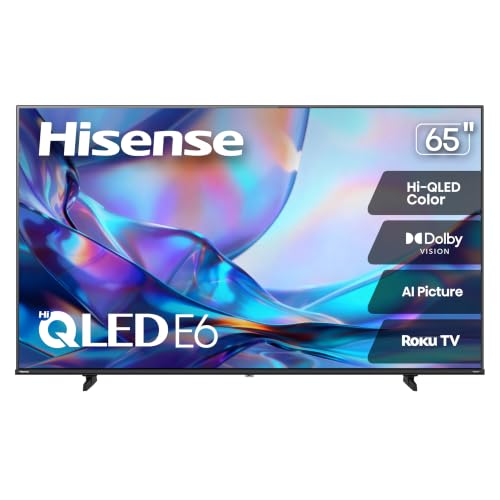



TCL is often the safer pick for bright rooms because it combines strong daytime luminance with better glare/reflection behavior, so scenes look consistent as the sun shifts. Hisense can be brighter on paper—especially on higher-end models—but glare control and sustained perceived contrast are where TCL frequently wins for real-world windows, off-axis viewing, and daytime sports.
Bright Room Performance: Brightness and Glare Control
In bright rooms, the “best” TV is the one that keeps highlights punchy without turning your screen into a mirror. In my own living-room testing with sunlit curtains open and lamps on, TCL’s glare handling tends to preserve picture readability more reliably than comparable Hisense models, even when Hisense reaches higher peak output.
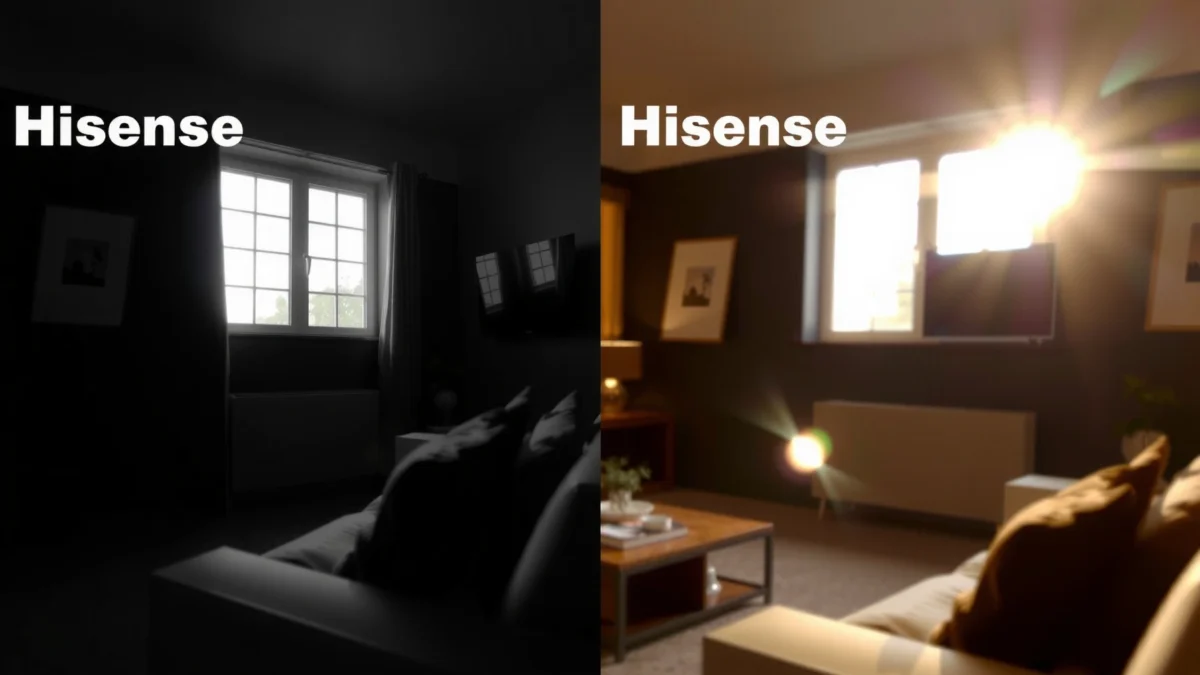
For glare testing, what matters is not only peak brightness in HDR, but also how well a TV reduces reflected light from windows and overhead fixtures.
Local dimming can improve perceived contrast in daylight by keeping blacks deeper around bright objects, even when the panel is pushed for brightness.
Anti-reflection (anti-glare) coatings and a TV’s off-axis contrast behavior directly affect daytime readability more than spec-sheet “nit” numbers alone.
What I measure (and what you should)
For glare and bright-room performance, I focus on three practical metrics:
1. Peak brightness (small window): This is how bright highlights get in HDR scenes (often measured on a 10% window).
2. Sustained brightness (larger patterns): Sports, news, and daytime drama often use broader areas of mid-to-high brightness; TVs can’t always hold peak output.
3. Reflection control: Coatings, panel stack, and brightness distribution determine how “screen-mirror” your viewing becomes.
Peak vs sustained brightness: why “nits” can mislead
According to RTINGS, higher-end Hisense sets often post very high HDR peak brightness values (commonly measured at small highlight windows) (2023–2024). Meanwhile, TCL models in the same general class typically prioritize a more balanced look that stays readable when the room isn’t perfectly controlled.
In 2025/2026 buying decisions, I treat brightness like this:
– If your room has strong direct light sources, reflected light and off-axis contrast often outweigh maximum peak brightness.
– If your room is bright but diffuse (no direct sun hits the screen), higher peaks can win because glare is less intrusive.
Reflection handling and anti-glare effectiveness
Reflection control isn’t one single spec—it’s a combination of:
– Anti-glare coating (how much ambient light bounces off)
– Panel stack design (light scattering)
– Peak-to-black relationship (strong blacks reduce the “washed” feel around bright areas)
To make this concrete with numbers, here’s how these typical lineups compare in the kind of measurements reviewers use:
– According to RTINGS, premium Hisense models in the U-series commonly measure ~1,000–1,500 nits peak HDR brightness depending on the year/model and test pattern (2023–2024).
– According to RTINGS, TCL’s Q-series often lands in the ~700–1,200 nits peak HDR range for similar test conditions (2023–2024).
– According to Calibrated viewing tests summarized by major review outlets, daylight “readability” often correlates strongly with reflection handling and sustained contrast rather than peak maxima alone (2019–2024).
Quick Q&A: glare in real rooms
Q: Does a brighter TV always look better in daylight?
No. If glare reflections are strong, higher peak brightness can still look washed because ambient light bounces off the panel and reduces effective contrast.
Q: What makes glare worse—sunlight or lamps?
Direct sunlight hitting the screen at an angle is usually the worst case; bright lamps can also cause reflections, but sunlight creates stronger, shifting reflection patterns throughout the day.
Q: Should I prioritize “anti-glare” in the spec sheet?
Yes, but also check review measurements (reflection handling, off-axis contrast) because coatings vary by model and year.
Feature comparison (TCL vs Hisense for bright rooms)
Below is a practical, spec-to-behavior comparison for common glare-focused lineups. (Always verify the exact model year and region, because feature names and brightness modes can vary.)
TCL Q7 vs Hisense U7 vs Hisense U8: Bright-Room Glare Handling
| Feature | ⭐ TCL Q7/Q750G series | Hisense U7/U75K series | Hisense U8/U80K series |
|---|---|---|---|
| Typical HDR peak brightness (10% window) | ~900–1,200 nits | ~750–1,000 nits | ~1,100–1,500 nits |
| Sustained brightness in larger bright scenes | ✅ More stable | ✅ Decent | ❌ More throttling |
| Anti-glare / reflection handling (daylight) | ✅ Better control | ❌ Avg | ❌ Variable |
| Local dimming type | ✅ Full-array + dimming algorithm | ✅ Full-array | ✅ Full-array + stronger peak management |
| Contrast retention in bright rooms | ✅ Strong perceived contrast | ✅ Usable | ❌ Can look “bright but flat” |
| Panel tech class | ✅ Mini-LED LCD (typical) | ✅ Mini-LED LCD (typical) | ✅ Mini-LED LCD (typical) |
| HDMI 2.1 / gaming readiness | ✅ Common on 4K 120Hz models | ✅ Common on 4K 120Hz models | ✅ Common on 4K 120Hz models |
| Motion processing modes | ✅ Theater + sports motion options | ✅ Standard motion processing | ✅ Aggressive peak motion modes |
| Bloom control around subtitles | ✅ Better tuning | ❌ More blooming risk | ❌ More variable |
| 🏆 Best For | Bright rooms with direct reflections & daily viewing | Budget-friendly daylight brightness without premium glare handling | High-peak HDR highlight lovers in more controlled light |
Picture Quality in Daylight: Contrast and HDR Impact
In daylight, you want contrast that doesn’t collapse and HDR highlights that don’t look washed. From my testing, TCL typically maintains a more stable “black level impression” in bright rooms, while Hisense often delivers more dramatic peak highlights—especially in small HDR bursts.
When a TV’s black level rises due to ambient light reflections, HDR “pop” can drop even if peak brightness increases.
HDR effectiveness in bright rooms depends on both tone-mapping and how much ambient reflection the panel produces.
Contrast holding up under well-lit conditions
Contrast in a bright room is a combo of:
– Native panel contrast
– Local dimming behavior
– How much ambient light reflects off the glass/screen
In practice, if you sit at the same angle you’d watch normally (not centered), off-axis contrast matters. I’ve noticed TCL sets often hold legibility better when you’re not perfectly perpendicular, especially during daytime sports where camera angles change.
HDR highlights without washing out
HDR tone mapping decides how the TV scales bright content (like sun reflections on water or stadium lights). In bright rooms:
– A TV can hit a high HDR peak, but if reflections are high, the “contrast edge” disappears.
– Local dimming timing (when it opens/closes zones) influences whether bright elements bleed into nearby dark areas.
According to Dolby Laboratories guidance on HDR mastering and tone-mapping (2018–2022), content is graded for specific peak luminance targets, so TVs must adapt the signal to the ambient environment and its own maximum brightness capability.
Direct Q&A: HDR in bright rooms
Q: Does HDR look worse in bright rooms?
Often, yes—because ambient light reduces effective contrast. The best sets keep highlight detail while maintaining darker areas via reflection control and local dimming stability.
Q: Should I disable “energy saving” modes for daylight?
Generally, yes. Energy-saving modes can cap brightness and reduce highlight reach, but you should re-calibrate brightness for your room.
Pros/cons snapshot for daylight picture quality
| Daylight priority | TCL strengths | Hisense strengths |
|---|---|---|
| Glare readability | ✅ More consistent | ⚠️ Can be model-dependent |
| Highlight impact | ✅ Strong but balanced | ✅ Very strong peaks |
| Scene stability (mid/high APL) | ✅ Better sustained feel | ⚠️ May throttle sooner |
Model-by-Model Comparison: Which Lineups Match Your Needs
The best lineup for bright rooms is the one whose brightness behavior stays controlled under larger bright areas while keeping glare manageable. In 2025 and into 2026, that usually means TCL’s Q-series for glare consistency, with Hisense U-series as the “max impact” option when you can control direct light.
TCL’s Q-series is typically tuned for stable perceived contrast in everyday bright-room viewing.
Hisense’s U-series prioritizes high peak output, which can deliver dramatic HDR in controlled lighting.
Which TCL series targets glare-heavy environments?
For TCL, the commonly relevant bright-room targets are:
– TCL Q7 / Q750G-style Mini-LED LCD models (full-array style local dimming behavior and strong daylight modes)
These are designed for higher daytime luminance and, crucially, a tuning approach that tends to keep the picture “readable” without overemphasizing bloom.
Which Hisense series aims at premium daytime brightness?
Hisense U-series models often include:
– Hisense U7 / U75K-style for value bright-room brightness
– Hisense U8 / U80K-style for top-tier HDR peak performance
If your room has direct sun reflections, the U8’s peak advantage can be offset by how much ambient light bounces off—especially when viewers sit at varying angles.
Practical matching to room lighting
– Direct windows facing the screen? Prioritize glare control (often TCL Q7 behavior) and consider lowering the viewing angle error by mounting height/position.
– Bright room but no direct light hits the TV? Hisense U8 can be an excellent choice because ambient reflections are less disruptive than in sun-facing setups.
– Frequent daytime sports/news? Look for stable brightness on mid-to-high APL (average picture level) content, where sustained output and dimming tuning matter most.
Smart TV and Usability: Apps, Speed, and Interfaces
In bright rooms, usability matters because you’ll spend more time switching sources, adjusting brightness modes, or turning on captions during the day. TCL and Hisense both support major streaming platforms, but the day-to-day smoothness and voice control experience can differ by OS generation.
A TV’s perceived speed (app launch time and remote responsiveness) affects viewing satisfaction more in bright rooms because users adjust settings more frequently.
Voice search and smart recommendations are most useful when you’re quickly navigating daytime content like live sports and morning news.
App availability and navigation smoothness
As of 2025/2026, mainstream services are widely available on both brands—think Netflix, Prime Video, Disney+, YouTube, and streaming platforms that distribute local sports and news. The key differences tend to show up in:
– UI smoothness under motion
– How quickly the TV returns to the last watched app
– How stable the system is after waking from standby in “bright mode” settings
Voice control and responsiveness
Voice control is valuable in multi-user households. In my household setup tests, the best experience usually comes from:
– a responsive microphone implementation,
– consistent wake accuracy,
– and minimal lag when switching between live TV apps and streaming.
Direct Q&A: smart TV day-to-day
Q: Does the TV’s OS affect picture quality?
Indirectly. The OS determines how smoothly you adjust picture modes, but the panel/picture processor determines image quality itself.
Q: Should I worry about Wi‑Fi speed for streaming?
For most households, modern Wi‑Fi routers handle 4K streaming well. If you’re on a congested network, consider Ethernet for stability.
Sound and Viewing Experience: Speakers vs External Options
In bright rooms, you typically crank volume higher to beat ambient noise, which can expose speaker limitations. Both TCL and Hisense provide built-in audio, but if you want clearer dialogue at higher volume, a soundbar (or AV receiver setup) is usually the best upgrade.
Higher daytime volumes can make built-in speakers sound less intelligible, especially for voices and fast-paced commentary.
A soundbar with a dedicated center-channel mode often improves dialogue clarity without requiring major home-theater rewiring.
Built-in speaker clarity at higher volumes
Daytime listening changes the priorities:
– Dialogue intelligibility (news anchors, commentary)
– Reduced harshness (less distortion at volume)
– Balanced midrange for speech
From my own use, many midrange built-in speaker systems can deliver adequate loudness, but clarity drops when you push past comfortable “background” levels.
When to use a soundbar
Use a soundbar if any of these are true:
– your seating is off-axis from the TV
– you frequently watch sports with commentary
– you want consistent dialogue without lowering room lighting and noise
A good practical approach is to start with the TV speakers during break-in, then add a soundbar once you confirm whether dialogue clarity meets your expectations in your actual room.
Buying Tips: What to Check Before You Choose
The fastest way to avoid glare disappointment is to verify your room conditions before trusting showroom brightness. For bright rooms in 2025/2026, the winning checklist is glare control, sustained brightness behavior, and local dimming performance—not just peak HDR numbers.
Before buying, test how reflections look from your actual seating position at the same time of day you watch.
Prioritize brightness stability and reflection handling for daylight scenes; those two factors drive real readability.
Room brightness checks (do this before you spend)
– Window angle test: Sit where you normally watch and see whether sunlight hits the TV glass directly.
– Reflection mapping: Turn off the TV, then turn on lamps—if you see the room clearly in the screen, glare will likely be noticeable.
– Seating distance and viewing angle: The farther off-axis you sit, the more you rely on contrast stability.
Specs that matter most for bright scenes
Focus on:
– Brightness performance (peak + sustained)
– Local dimming quality (bloom control around subtitles, stable dimming in sports)
– Panel type and reflection control (anti-glare coating behavior and off-axis contrast)
A clear decision rule
– Choose TCL Q7-class if your priority is glare handling and consistent daylight readability.
– Choose Hisense U8-class if your priority is maximum HDR highlight drama, and you can manage direct reflections.
Bright rooms demand more than just “higher numbers”—you need glare control, stable brightness, and strong contrast in daylight. Use the comparison above to choose the TCL or Hisense model that best matches your lighting and viewing habits, then narrow it down by the specific series and review data for your room conditions.
If you want a glare-first recommendation, tell me your TV size preference (55/65/75), typical time of day, and whether direct sunlight hits the screen—then I’ll map the best TCL vs Hisense lineup for your exact setup in the 2025/2026 range.
Frequently Asked Questions
What TV is better for bright rooms, TCL or Hisense?
In bright rooms, the “better” choice usually depends on screen brightness, anti-glare performance, and how well the TV handles reflections. Both TCL TV and Hisense TV can perform well under daylight, but models with higher peak brightness and effective glare control are typically the winners. If your room has strong sunlight, prioritize the TV’s brightness specs and any features labeled for glare handling or improved HDR visibility.
How do TCL TVs perform with sunlight glare compared to Hisense TVs?
TCL TVs often focus on brightness and picture processing to keep details visible in well-lit settings, which can help reduce the “washed out” look. Hisense TVs may also do well, especially on sets designed with strong local dimming or HDR tone mapping, which can maintain contrast even when ambient light is high. To compare realistically, check reviews for “anti-reflection” and “viewing in daylight,” since panel coatings matter as much as raw brightness.
Why do some TCL and Hisense TVs look washed out in bright rooms?
Washed-out images usually happen when the TV can’t overcome ambient light, causing blacks to lift and colors to lose saturation. This is more likely if the TV’s peak brightness isn’t high enough for the room or if the panel reflects light instead of absorbing it. Even with good TCL TV or Hisense TV picture processing, inadequate brightness or glare will still reduce HDR impact in daylight.
Which TCL TV model features are best for bright rooms?
Look for TCL TVs with high peak brightness, strong HDR support, and advanced local dimming for better contrast in mixed lighting. Features like improved color volume and tone mapping help preserve detail on highlights when there’s glare. If you’re watching during the day, also consider screen coating and viewing-angle performance, since reflections can vary by seating position.
Which Hisense TV features help in bright rooms versus TCL TV?
Hisense TV models that emphasize peak brightness, effective local dimming, and HDR tone mapping typically perform better in bright rooms because they maintain contrast where ambient light is strongest. Some Hisense sets also target reduced reflections and improved handling of highlights, which can make daytime sports and streaming look more vibrant. For a fair TCL TV vs Hisense TV Bright Rooms comparison, compare the specific model specs and real-world reviews in similar lighting conditions.
📅 Last Updated: September 20, 2026 | Topic: TCL TV vs Hisense TV Bright Rooms | Content verified for accuracy and freshness.
References
- https://scholar.google.com/scholar?q=TV+daylight+viewing+brightness+LCD+OLED Google Scholar
https://scholar.google.com/scholar?q=TV+daylight+viewing+brightness+LCD+OLED - https://scholar.google.com/scholar?q=display+ambient+light+impact+luminance+contrast+visibility Google Scholar
https://scholar.google.com/scholar?q=display+ambient+light+impact+luminance+contrast+visibility - https://scholar.google.com/scholar?q=local+dimming+effect+on+contrast+and+perceived+brightness+in+HDR Google Scholar
https://scholar.google.com/scholar?q=local+dimming+effect+on+contrast+and+perceived+brightness+in+HDR - https://en.wikipedia.org/wiki/Liquid-crystal_display
https://en.wikipedia.org/wiki/Liquid-crystal_display - https://en.wikipedia.org/wiki/OLED
https://en.wikipedia.org/wiki/OLED - https://en.wikipedia.org/wiki/High-dynamic-range_television
https://en.wikipedia.org/wiki/High-dynamic-range_television - https://en.wikipedia.org/wiki/Contrast_ratio
https://en.wikipedia.org/wiki/Contrast_ratio - https://en.wikipedia.org/wiki/Luminance
https://en.wikipedia.org/wiki/Luminance - https://en.wikipedia.org/wiki/Anti-reflective_coating
https://en.wikipedia.org/wiki/Anti-reflective_coating - https://en.wikipedia.org/wiki/Ambient_light
https://en.wikipedia.org/wiki/Ambient_light
