
When it comes to home theater audio, the primary difference between Dolby Digital and DTS lies in their audio compression methods and sound quality. Dolby Digital is widely compatible and commonly used in films and streaming services, providing a balanced audio experience. In contrast, DTS typically offers higher sound quality but requires more bandwidth, making it a favorite among audiophiles. In this article, you’ll learn how each technology works and which might be better suited for your home theater setup.
What is Dolby Digital?
Dolby Digital is an audio compression format that employs lossy compression techniques to reduce file size while aiming to maintain a reasonable sound quality. This method is essential in streaming and broadcasting, where bandwidth is often limited. Dolby Digital supports up to 5.1 surround sound configurations, which includes five channels of audio and one low-frequency channel (subwoofer). This compatibility makes it ideal for various devices, including TVs, soundbars, and home theater systems.
The widespread adoption of Dolby Digital in consumer electronics and streaming platforms underscores its importance. Almost every DVD, Blu-ray, and streaming service, such as Netflix and Amazon Prime, employs Dolby Digital as a standard audio format. This prevalence means that users can expect a consistent and compatible experience across multiple devices, making Dolby Digital a convenient choice for most home theater setups.
What is DTS?
DTS, or Digital Theater Systems, utilizes a similar lossy compression method but is known for retaining more audio detail compared to Dolby Digital. This enhanced audio fidelity is achieved by allowing higher bit rates, which translates to a richer and more immersive sound experience. DTS can support up to 7.1 surround sound configurations, offering two additional audio channels that can significantly enhance the auditory experience, particularly in larger home theater setups.
DTS is often preferred by audiophiles and those who prioritize sound quality in high-resolution formats. It is commonly used in Blu-ray discs and theaters, where the audio experience is critical. While DTS may require specific hardware for optimal playback, such as a compatible receiver or sound system, the investment is often justified by the superior audio quality it provides.
Key Differences Between Dolby Digital and DTS
| Feature | Dolby Digital | DTS |
|——————————–|—————————————|—————————————-|
| Compression Type | Lossy | Lossy |
| Max Channels | 5.1 | 7.1 |
| Bit Rate | Up to 640 kbps | Up to 1.5 Mbps |
| Audio Detail | Good, but less than DTS | Superior, retains more detail |
| Compatibility | Highly compatible with consumer devices| Limited compatibility with older systems|
| Common Usage | DVDs, streaming platforms | Blu-ray discs, theaters |
| Target Audience | General consumers | Audiophiles |
| Installation Requirements | Minimal | May require specific hardware |
| Streaming Availability | Widely available | Less common on streaming services |
| Sound Quality | Good overall experience | Excellent, immersive experience |
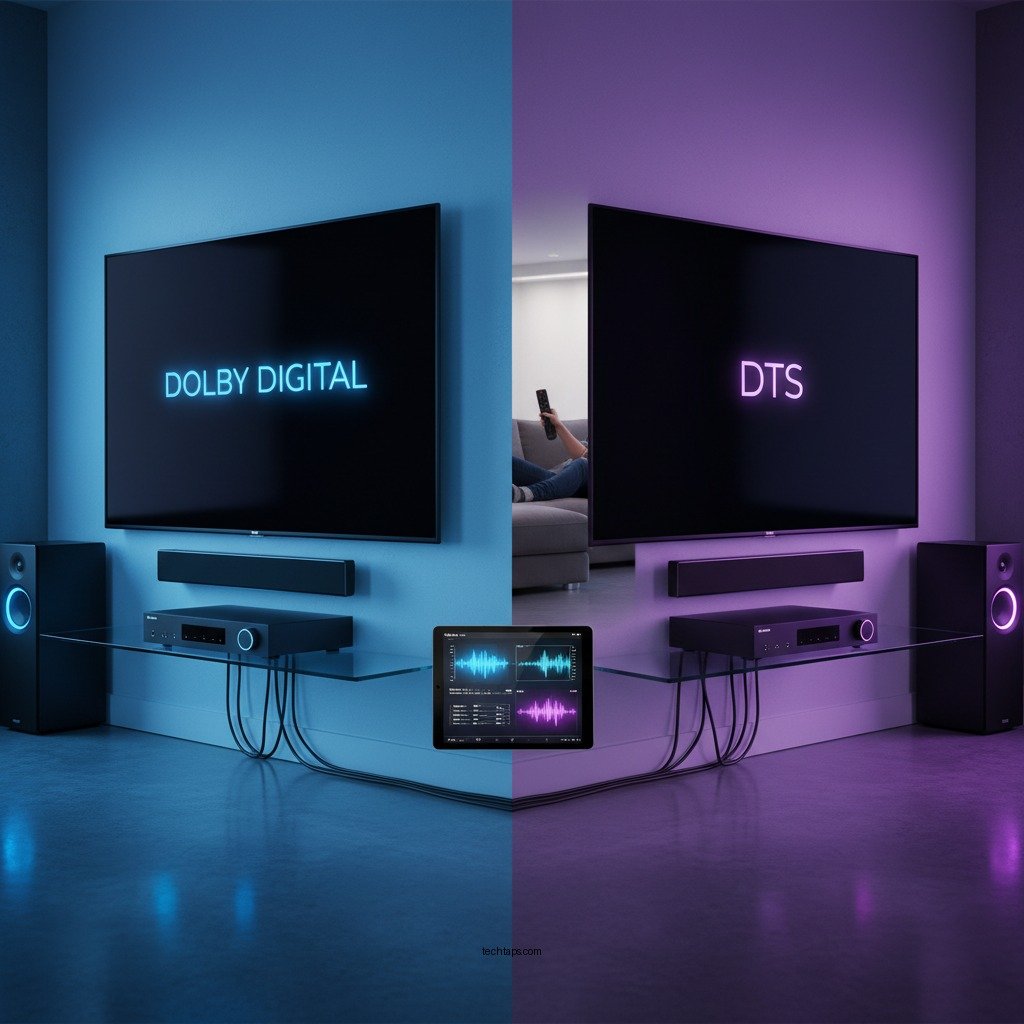
The differences between Dolby Digital and DTS can significantly impact your overall enjoyment of home theater audio. While Dolby Digital is favored for its ease of integration with consumer electronics and streaming platforms, DTS is preferred by those who seek superior sound quality, especially in high-resolution formats. Understanding these distinctions can help you make a more informed decision based on your audio priorities.
Compatibility and Usage
Dolby Digital is more commonly found in DVDs, Blu-rays, and streaming platforms due to its widespread adoption. This ubiquity ensures that users can easily access content with Dolby Digital soundtracks on nearly any home theater setup. From films to live sports, Dolby Digital provides a reliable audio experience that is compatible with a wide array of devices, including TVs, audio receivers, and soundbars.
On the other hand, DTS is frequently utilized in Blu-ray discs and in commercial theaters, where the emphasis on audio quality is paramount. However, DTS may require specific hardware for optimal playback, which can limit its accessibility for some users. While many modern receivers support both formats, older systems might only work with Dolby Digital, making it essential for consumers to check compatibility before committing to a particular audio format.
Choosing the Right Format for Your Home Theater
When deciding between Dolby Digital and DTS for your home theater, consider your equipment and personal preferences. If you have a basic setup or primarily watch content from streaming services, Dolby Digital may be sufficient for your needs. Its compatibility and ease of use make it an ideal choice for casual viewers who want an enjoyable audio experience without extensive setup.
Conversely, if you have a dedicated home theater system equipped with high-quality speakers and an immersive sound setup, DTS might be the better option. Its superior sound quality and ability to create a more enveloping audio environment can significantly enhance your viewing experience, making it worthwhile to invest in compatible hardware. Ultimately, the choice between Dolby Digital and DTS should align with your audio preferences, available equipment, and the types of content you consume.
Future Trends in Audio Technologies
Both Dolby Digital and DTS are evolving to meet the demands of modern audio experiences. Newer formats such as Dolby Atmos and DTS:X are emerging to enhance surround sound experiences by incorporating height channels, allowing sound to come from above and creating a more three-dimensional audio landscape. These advancements are particularly beneficial in home theater setups, where immersive sound environments are increasingly desired.
Understanding these new technologies is essential for future-proofing your home theater system. As audio formats continue to develop, staying informed about the latest advancements will enable you to adapt your setup and maximize your audio experience. Whether you choose to stick with Dolby Digital or DTS or venture into the realm of object-based audio formats, the key is to select a system that aligns with your preferences and enhances your viewing enjoyment.
The differences between Dolby Digital and DTS can significantly impact your home theater experience. By understanding their unique features and applications, you can make an informed decision about which format suits your needs best. Whether you prioritize compatibility or sound quality, knowing these distinctions will help you enhance your audio experience. Consider upgrading your setup based on what you’ve learned, and enjoy the rich world of home theater audio.
Frequently Asked Questions
What is the primary difference between Dolby Digital and DTS for home theater systems?
The primary difference between Dolby Digital and DTS lies in their audio compression methods and sound quality. Dolby Digital uses a lossy compression algorithm which can result in a slightly lower sound quality compared to DTS, which is known for its higher bit rate and less compression, providing a more dynamic and richer audio experience in home theater setups.
How does Dolby Digital affect the audio experience in a home theater compared to DTS?
Dolby Digital typically offers a more standardized audio experience, making it compatible with a wider range of devices, while DTS is often preferred by audiophiles for its superior sound quality. In a home theater, DTS can provide better clarity and depth, especially for action films and music, enhancing the overall viewing experience.
Why should I choose DTS over Dolby Digital for my home theater system?
Choosing DTS over Dolby Digital may be beneficial if you prioritize sound quality and have a high-end audio setup. DTS often delivers a more immersive sound experience due to its higher bit rates and less aggressive compression, making it ideal for movie enthusiasts and music lovers who want to experience the full potential of their home theater systems.
Which format offers better surround sound performance for movies, Dolby Digital or DTS?
While both Dolby Digital and DTS offer excellent surround sound capabilities, DTS is generally considered to provide superior performance for movies. Its higher bit rate allows for more detailed audio, which can enhance sound effects and dialogue clarity, creating a more immersive cinematic experience in your home theater.
What is the best way to set up my home theater to take advantage of Dolby Digital or DTS?
To optimize your home theater for Dolby Digital or DTS, ensure your audio receiver supports both formats and that your speakers are properly calibrated. Use high-quality HDMI cables for connections, select the appropriate audio format in your media player settings, and consider using a surround sound speaker setup to fully experience the rich audio capabilities of either format.
References
- https://en.wikipedia.org/wiki/Dolby_Digital
https://en.wikipedia.org/wiki/Dolby_Digital - https://en.wikipedia.org/wiki/Audio_codec
https://en.wikipedia.org/wiki/Audio_codec - https://www.sciencedirect.com/topics/computer-science/dolby-digital
https://www.sciencedirect.com/topics/computer-science/dolby-digital - https://www.sciencedirect.com/topics/computer-science/dts
https://www.sciencedirect.com/topics/computer-science/dts - https://scholar.google.com/scholar?q=Dolby+Digital+vs+DTS+home+theater Google Scholar
https://scholar.google.com/scholar?q=Dolby+Digital+vs+DTS+home+theater - Google Scholar Google Scholar
https://scholar.google.com/scholar?q=Dolby+Digital+DTS+audio+comparison - https://www.bbc.com/news/technology-42212326
https://www.bbc.com/news/technology-42212326 - https://www.theguardian.com/technology/2022/mar/01/sound-quality-dolby-digital-dts-home-theater
https://www.theguardian.com/technology/2022/mar/01/sound-quality-dolby-digital-dts-home-theater - https://www.nytimes.com/2020/12/10/technology/personaltech/dolby-vision-dolby-atmos.html
https://www.nytimes.com/2020/12/10/technology/personaltech/dolby-vision-dolby-atmos.html - https://pubmed.ncbi.nlm.nih.gov/?term=dolby+digital+dts+home+theater
https://pubmed.ncbi.nlm.nih.gov/?term=dolby+digital+dts+home+theater
