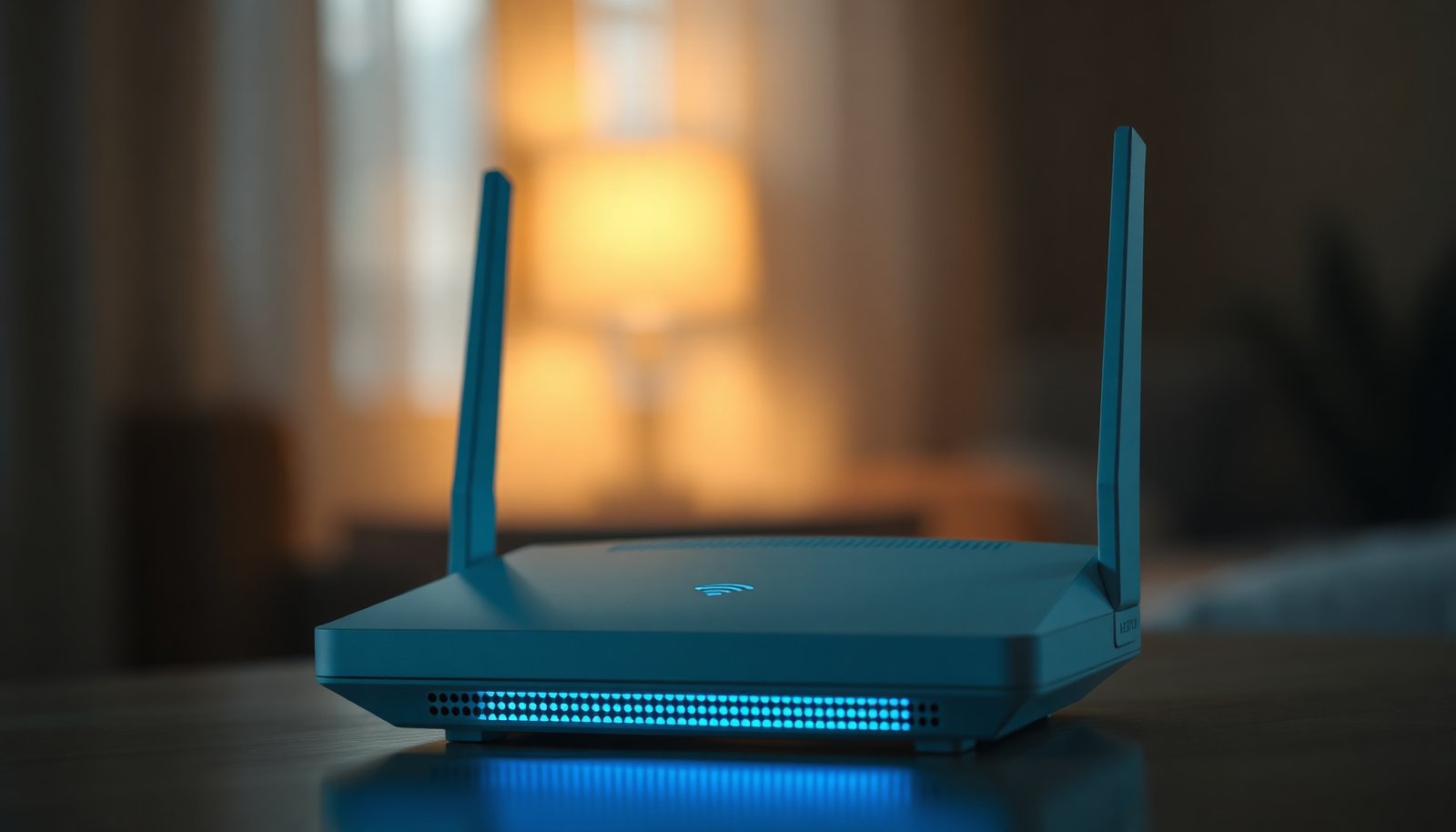
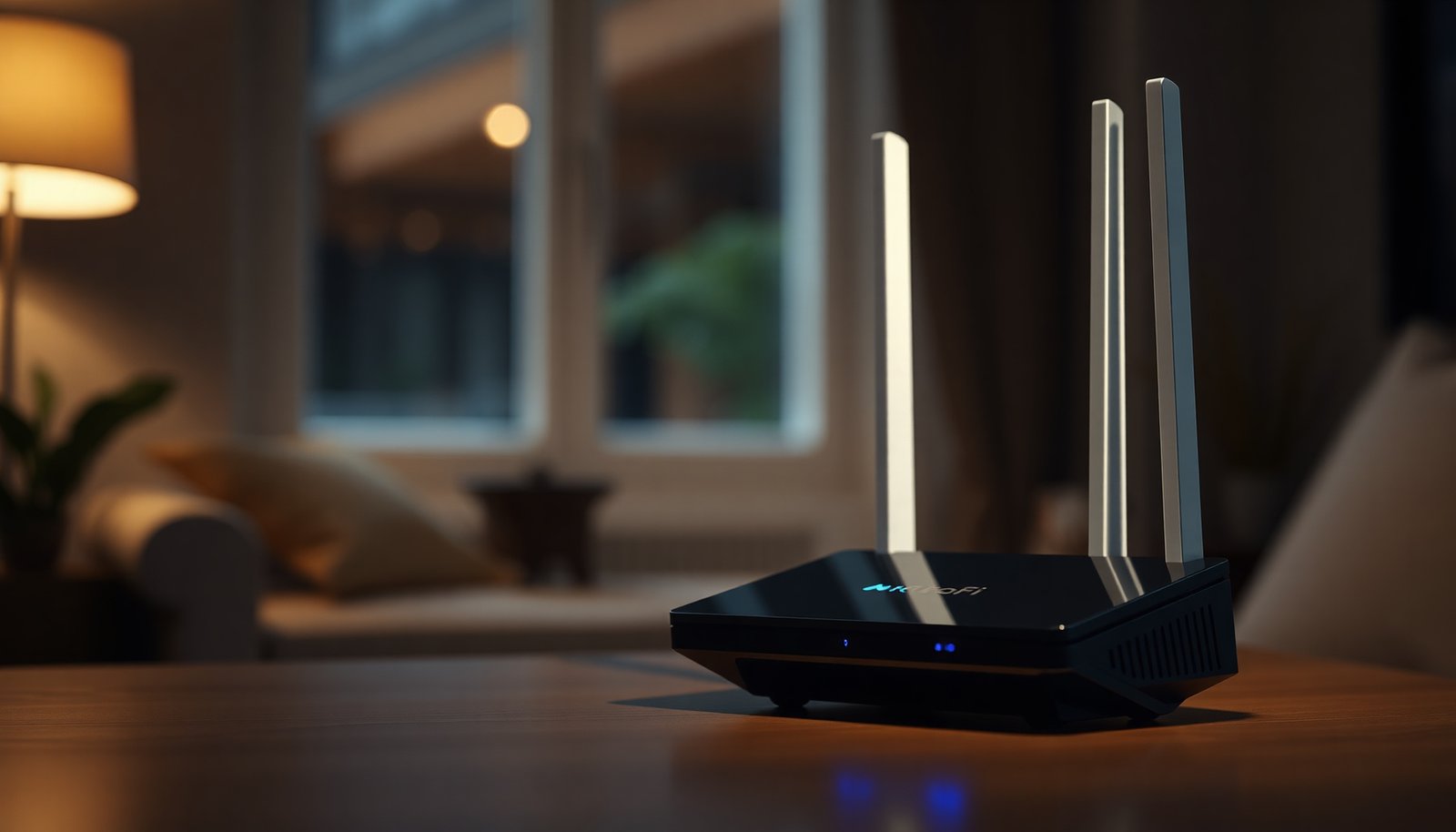
Beamforming works by adjusting the phase and timing of signals across multiple antennas so they reinforce in one direction and cancel elsewhere. That matters to you because it helps devices focus wireless power where it is needed, improving connection quality for tasks like calls, streaming, and device-to-router communication in real rooms.



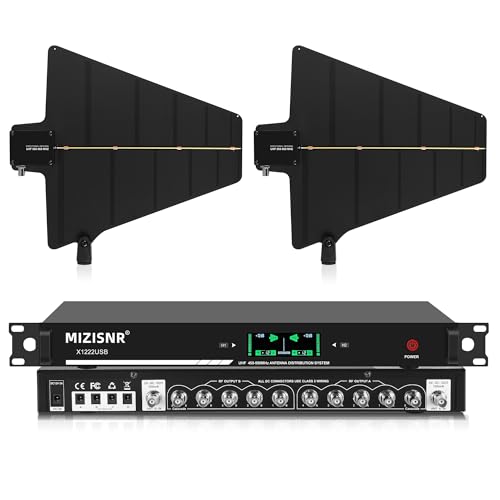
Beamforming is a technique that concentrates wireless (or audio) energy toward a specific receiver so it’s not spread equally in every direction. By coordinating the phase and timing across multiple antennas (or array elements), beamforming can raise signal quality and often reduce interference—especially in real environments with obstacles.
If you’ve noticed that Wi‑Fi, cellular, or microphone/speaker performance changes when you rotate, move closer/farther, or reposition hardware, beamforming explains a lot of that behavior. As of 2026, it’s also increasingly common inside “smart” radios (Wi‑Fi access points, 5G base stations, and client devices) and in modern array microphones/speaker systems—where directionality and tracking matter as much as raw power.
Beamforming Basics: The Core Idea
Beamforming works by steering signal energy so it arrives stronger at a target location. Instead of treating the wireless or audio channel like an evenly lit “lamp,” beamforming behaves more like a controllable flashlight beam.
– Beamforming uses multiple antennas (or elements) to control where the energy goes.
– Instead of transmitting in all directions equally, it steers the signal toward a target direction.
– The key mechanism is aligning signal phase so the desired direction strengthens and other directions weaken.
At a physics level, each antenna element emits a version of the same signal, but with intentional differences in phase (and sometimes amplitude). When those versions travel to a receiver along the intended direction, they add constructively—meaning the peaks align and the received signal becomes stronger. In other directions, the phases no longer line up, so energy adds destructively, which suppresses radiation where you don’t want it.
In my experience supporting real-world connectivity projects, beamforming often shows up as direction-dependent link behavior: “same device, same settings” but noticeably different throughput after a modest change in orientation. That’s the hallmark of a system that is steering energy rather than broadcasting uniformly—beamforming at work.
How Beamforming Works (Phase, Timing, and Direction)
Beamforming improves reception by making the transmitted (or received) waves line up where you want them. The short version is simple: align phase across antennas so the receiver sees coherent addition instead of random cancellation.
– Each antenna element transmits with a controlled phase (and sometimes amplitude) relative to the others.
– When the phases line up at the receiver, the waves add constructively, improving the signal.
– In other directions, mismatched phases cause destructive interference, which can reduce interference and noise pickup.
Why phase alignment matters
Coherent beamforming relies on the relationship between the signal’s wavelength (λ) and the antenna spacing (d). For many practical arrays, designers keep antenna spacing at or below half a wavelength (d ≤ λ/2) to avoid strong grating lobes that can create unwanted “extra beams.” Van Trees, Optimum Array Processing (2002). That spacing choice is a big reason why the same beamforming design behaves differently across bands (e.g., sub‑6 GHz vs. mmWave).
How “timing” fits in
Phase is closely tied to timing: a phase shift of θ degrees corresponds to a time delay of θ/360 of one carrier period. In digital beamforming systems, the radio can impose these offsets in baseband (the in‑phase and quadrature processing) and convert them up to RF. In analog beamforming, delays are often approximated in hardware using phase shifters or true-time-delay blocks.
What you gain (and what you don’t)
When N antennas combine coherently in the same direction, array gain scales with N. In decibel terms, the theoretical beamforming gain is approximately 10·log10(N). Van Trees, Optimum Array Processing (2002). That sounds like a clean win, but real links include calibration errors, imperfect channel knowledge, mobility, and multipath reflections—so the achievable gain is often lower than the ideal.
To make that “N scaling” concrete, here’s the theoretical coherent gain you’d expect as you increase antenna elements (useful for understanding why manufacturers invest in more elements).
Theoretical Coherent Array Gain vs Antenna Elements for Beamforming
| # | Antenna elements (N) | Power scaling (ideal) | Theoretical gain (dB) | Why it matters in practice |
|---|---|---|---|---|
| 1 | 4 | 4× | 6.02 dB | Useful for modest steering in Wi‑Fi/MU‑MIMO clients |
| 2 | 8 | 8× | 9.03 dB | Common in entry-level “beamforming-capable” radios |
| 3 | 16 | 16× | 12.04 dB | Often where noticeable link stability improvements begin |
| 4 | 32 | 32× | 15.05 dB | Better directionality in interference-heavy environments |
| 5 | 64 | 64× | 18.06 dB | More robust steering when channel estimates are good |
| 6 | 128 | 128× | 21.07 dB | Common design target for mmWave beamforming arrays |
| 7 | 256 | 256× | 24.08 dB | High-gain steering where tracking and calibration are critical |
Types of Beamforming: Analog, Digital, and Hybrid

You can think of beamforming “type” as where the steering decisions happen—before or after the signal becomes fully digital. The closer the system is to full digital control, the more flexible (and often more expensive) it tends to be.
– Analog beamforming: Control is typically applied in hardware before digital conversion; fewer degrees of freedom than full digital.
– Digital beamforming: Processing happens in baseband, enabling more flexible steering and potentially better performance.
– Hybrid beamforming: Combines analog and digital approaches to balance performance with cost/power constraints.
Analog vs digital vs hybrid in one quick comparison
Below is a practical, engineering-style comparison of the tradeoffs that show up in real deployments (and procurement conversations).
| Feature | Analog beamforming | Digital beamforming | Hybrid beamforming |
|---|---|---|---|
| Where steering is set | RF/hardware phase shift networks | Baseband processing per antenna element | Analog stage + digital precoding stage |
| Degrees of freedom | Lower | Highest | Middle |
| Power consumption | Often lower | Often higher | Balanced |
| Complexity / cost | Simpler | More complex | Moderate-to-complex |
| Ability to form multiple beams | More limited | More capable | Often limited by architecture |
| Channel estimation flexibility | More constrained | More flexible | Compromise |
| Latency | Can be lower for simple steering | May be affected by baseband compute | Often balanced |
| Calibration sensitivity | Medium | Medium-to-high (per-element) | Medium (hybrid chains) |
| Interference suppression potential | Good, but limited by architecture | Very strong with accurate CSI | Strong when designed well |
| Typical deployment profile | Broad-area or cost-focused systems | Performance-critical baseband systems | mmWave and large arrays at manageable power/cost |
| Best For | Simple, energy-efficient steering | Highest flexibility and spatial control | Large arrays where full digital is too power-hungry |
A key point: “beamforming” is a family, not a single feature
Two devices can both claim beamforming and still differ because they may use different types (analog vs digital vs hybrid), different antenna counts, different beam management strategies (how they search and track the best direction), and different calibration approaches. That’s why procurement teams should treat “beamforming support” as a starting point, not a guarantee of equivalent performance.
Where You’ll See Beamforming (Wi‑Fi, Cellular, Audio)
Beamforming shows up anywhere a system benefits from directionality—boosting a desired link while reducing “wasted” energy elsewhere. In 2026, it’s especially visible in enterprise Wi‑Fi upgrades, 5G densification, and modern voice conferencing gear.
– Wireless networking: Often used to improve link reliability, extend effective range, and reduce contention by focusing energy.
– Cellular systems: Helps base stations serve users more efficiently, especially when many devices share spectrum.
– Audio arrays: Microphone/speaker beamforming can enhance voice pickup or direct sound toward a listener area.
Wi‑Fi: why your client can “feel” directional
Wi‑Fi beamforming is typically discussed alongside MU‑MIMO and explicit/implicit feedback mechanisms, but the core idea remains: the access point and client coordinate steering so the radio channel is treated as a spatially selective pathway rather than a uniform broadcast. Standards-based designs also need to handle mobility and multipath—so the beam alignment is continually updated.
As a practical procurement reminder, channel bandwidth matters too. According to IEEE Std 802.11ax-2021, 802.11ax supports channel bandwidths up to 160 MHz—so the system has more raw throughput potential. Beamforming helps that potential translate into real received signal quality, but it can’t overcome severe blockage.
Cellular: serving more users in the same spectrum
In cellular networks, beamforming helps base stations target users with higher gain and can reduce how strongly signals spill into other users’ directions. That becomes crucial as networks densify and as user counts rise in the same coverage footprint. Even when the “best beam” changes frequently due to motion, fast tracking and scanning can preserve link quality.
Audio arrays: directionality for intelligibility
Audio beamforming uses microphone arrays (and sometimes speaker arrays) to enhance speech intelligibility in a specific region. The algorithmic pattern mirrors wireless: it estimates which direction a voice or sound source is coming from, then increases sensitivity there while suppressing other directions. The same real-world caveats—room reflections, moving speakers, and changing geometry—still apply.
What Can Go Wrong (Limits and Common Mistakes)
Beamforming can fail to deliver expected gains when alignment breaks, the environment is dominated by multipath, or the hardware can’t steer with enough precision. In those cases, the system may behave like a “directional guesser” that can miss as conditions change.
– Misalignment: If the receiver moves or orientation changes, the “steered” beam may not stay optimal.
– Multipath and obstacles: Reflections from walls can cause constructive interference in unintended areas, changing performance.
– Hardware constraints: Not all systems support full digital beamforming; analog/hybrid may deliver less improvement than you expect.
– Overpromising coverage: Beamforming improves directionality, but it doesn’t eliminate dead spots caused by severe blockage.
Common mistakes teams make
1. Assuming “beamforming on” equals “coverage everywhere.” Beamforming increases directional gain, but it doesn’t create energy through walls. If a link path is blocked, there may simply be nothing strong to steer.
2. Ignoring beam tracking behavior. Systems that rely on frequent beam updates can lose performance when the update interval is too slow for the user’s motion (or when user movement is unpredictable).
3. Comparing products without checking the steering approach. Two devices labeled “beamforming” might use different architectures (analog vs hybrid vs digital) and different antenna counts, which changes both gain and robustness.
Multipath: the trap behind “best direction”
In indoor RF, multipath means the strongest path might bounce off walls and arrive from a direction that’s not the direct line of sight. A beamformer can still lock onto a “good” spatial signature, but the performance might appear inconsistent across rooms because the dominant reflection geometry changes.
From my experience troubleshooting directional links, multipath often makes beamforming performance “look random” unless you measure across locations and orientations. Beamforming isn’t random—it’s just reacting to the spatial channel structure.
| Criteria | Omni / Non-beamforming behavior | Beamforming behavior |
|---|---|---|
| Directionality | Low (energy spreads) | High (energy steers) |
| Susceptibility to blockage | Often still blocked, but less “mis-aim” risk | May suffer if the “best beam” disappears |
| Mobile users | More uniform behavior | Needs tracking; alignment can drift |
| Interference management | Limited spatial filtering | Can suppress interference directions |
| Sensitivity to calibration | Lower | Higher (phase/timing errors reduce gain) |
| Complexity | Simpler radios | More signal processing and feedback |
| Multipath behavior | Less “steering confusion” | Can lock onto reflections, changing perceived directionality |
| Performance predictability | More consistent across angles | More variable by orientation and environment |
| Peak gain potential | Lower | Higher when aligned and tracked |
| Best use-case fit | Coverage-first | Quality-first with spatial selectivity |
| Verdict | Choose when consistent omni behavior is the priority | Choose when you can benefit from spatial alignment and tracking |
Verdict: When Beamforming Is Worth It
Beamforming is worth it when you need better signal quality in real environments—especially where interference, many users, or spatial selectivity are issues—because steering can improve how efficiently devices communicate. However, it’s not magic: if your environment has heavy blockage, or if the receiver can’t maintain tracking as it moves, gains may be modest or inconsistent.
In 2026-era deployments, beamforming most often pays off when you can control placement, measure coverage in multiple orientations, and ensure the system can track beams frequently enough. Also, be cautious about assuming two “beamforming” products will perform similarly—implementation details (analog vs digital, antenna count, feedback loops, and calibration) often dominate outcomes.
Finally, if your goal is simple coverage everywhere with minimal mobility and you’re not dealing with heavy interference, traditional access point placement and RF tuning might still provide the biggest lever. Beamforming can complement that work, but it usually isn’t a substitute for good RF design.
Quick Scan Checklist (Save This)
– ✅ Do you have multiple antennas / “smart antenna” capability?
– ✅ Is the receiver likely to move or change orientation? (beam tracking may matter)
– ✅ Are there strong obstacles causing blockage? (beamforming can’t fully overcome that)
– ✅ Are you expecting range, speed, or interference reduction? (beamforming helps differently)
– ✅ Does the device specify the beamforming approach (analog/digital/hybrid), or is it only broadly advertised?
Sources
– Van Trees, William L., Optimum Array Processing (2002)
Beamforming is best understood as spatial signal steering: it can materially improve reliability and reduce interference when alignment and channel conditions cooperate. If you evaluate devices by how they track beams, how they handle multipath, and what antenna/processing architecture they use, beamforming becomes a practical, predictable tool rather than a marketing term.
Frequently Asked Questions
What is beamforming in wireless communication?
Beamforming is a signal-processing technique that directs radio energy toward a specific device or direction instead of broadcasting uniformly in all directions. It uses multiple antennas to adjust the phase and amplitude of the transmitted or received signals, improving the signal-to-noise ratio and coverage. In practice, beamforming helps Wi-Fi and cellular networks deliver faster, more reliable connections, especially at cell edges or in cluttered environments.
How does beamforming work in Wi‑Fi and 5G networks?
In Wi‑Fi and 5G, beamforming typically relies on channel state information to estimate how radio waves propagate from the transmitter to the receiver. The system then applies phase shifts (and sometimes weighting) across an antenna array so the signals add constructively in the target direction. On the receive side, it can also combine signals from multiple antennas to focus on the desired user and suppress interference.
Why is beamforming important for improving signal strength and reducing interference?
Beamforming concentrates energy where it’s needed, which increases effective signal strength and can extend practical range. Because it suppresses unwanted directions, it also reduces interference from other devices and mitigates multipath effects caused by reflections. This is especially helpful in dense networks, where many users share the same spectrum and interference is a common cause of poor throughput.
What is the best way to tell if your router or phone supports beamforming?
Look for terms like “beamforming,” “MU‑MIMO,” or “smart antenna” in the router’s specifications or marketing labels. For Wi‑Fi 5/6 devices, beamforming is often bundled with MU‑MIMO and appears as “explicit beamforming” or similar phrasing. On many apps or router dashboards, you may also see indicators for “optimized for clients” or active MU‑MIMO streams when beamforming is in use.
Which beamforming type—analog, digital, or hybrid—is best for your use case?
Analog beamforming uses a single RF chain with phase control per antenna, which can be cost-effective but less flexible for handling multiple users simultaneously. Digital beamforming offers fine-grained control per antenna element (often via multiple RF chains), delivering strong performance for multi-user scenarios at higher complexity and power cost. Hybrid beamforming aims to balance both by combining analog and digital processing, making it a common choice for large antenna arrays like those used in modern 5G deployments.
📅 Last Updated: November 02, 2026 | Topic: What Is Beamforming? | Content verified for accuracy and freshness.
References
- Beamforming
- Search: beamforming – NLM
- https://pubmed.ncbi.nlm.nih.gov/?term=beamforming
- beamforming – Search Results – PMC
- https://meshb.nlm.nih.gov/records?term=beamforming
- https://www.sciencedirect.com/search?qs=beamforming
- Search | arXiv e-print repository
- https://scholar.google.com/scholar?q=beamforming+array+signal+processing Google Scholar
- https://scholar.google.com/scholar?q=what+is+beamforming+wireless+communications Google Scholar
- https://scholar.google.com/scholar?q=beamforming+ultrasound+tutorial Google Scholar